


Dartmouth sits directly across Halifax Harbour from downtown Halifax in the province of Nova Scotia, Canada. With a population of roughly 101,000, it is the second-largest community within Halifax Regional Municipality (HRM) — the amalgamated government that has encompassed Dartmouth since 1996 — though Dartmouthians have never quite forgiven that merger and continue to identify fiercely with their city's distinct character. The two communities are linked by the Macdonald Bridge (1955) and the MacKay Bridge (1970), and by the Dartmouth Ferry, which has been crossing the harbour since 1752, making it one of the oldest saltwater passenger ferry services in North America. The Mi'kmaw name for the area, Boonamoogwaddy ("the crossing place"), captures this fundamental geography: Dartmouth has always been defined by the water between it and its larger neighbour.
The city sits on a gently rolling drumlin landscape that contains more than 50 lakes within its municipal footprint — a geological inheritance from the last ice age that earned Dartmouth its enduring nickname, the City of Lakes. Sullivan's Pond, Lake Banook, Micmac Lake, Lake Charles, and dozens of smaller bodies of water thread through residential neighbourhoods, parks, and green corridors. Lake Banook in particular has hosted international-level flatwater canoe and kayak racing for decades, and it sits just minutes from Downtown Dartmouth at Banook Park. The city's terrain rises gently from the harbour waterfront to a plateau of suburban development and eventually the highway corridors of Dartmouth Crossing and Eastern Passage.
A brief history
European settlement at Dartmouth began in 1750, one year after Halifax was founded across the harbour, when the British colonial government established a small community to guard the landward approaches to the new military port. That community was immediately caught up in the violence of the Expulsion of the Acadians (1755) and the ongoing wars between the British and the Mi'kmaq, and early Dartmouth was attacked and largely destroyed multiple times. The Quaker Whalers arrived in the 1780s and 1790s, establishing a whaling and coopering industry that gave the community economic stability; their legacy is preserved in the Quaker Whalers House, one of the oldest surviving structures in HRM. The 19th century brought rope manufacturing, the Starr Manufacturing Company (the first industrial company in Canada to manufacture ice skates, whose "Acme" skates went around the world and gave Dartmouth a claim to having invented the modern hockey skate blade), and a diversifying industrial waterfront.
The 20th century transformed Dartmouth through industrialization and suburbanization. Imperial Oil's Dartmouth refinery was one of the largest employers in Atlantic Canada for decades. The bridges brought waves of residential development as Halifax professionals crossed the harbour to raise families on Dartmouth's cheaper, quieter streets. City status was granted in 1961. By 1996, amalgamation into HRM extinguished that city designation — a wound in local identity that the provincial government partially acknowledged in 2014 by restoring the "City of Dartmouth" name for ceremonial and promotional purposes. The African Nova Scotian communities of Preston, Cherry Brook, and Lake Loon on Dartmouth's eastern margins represent one of the longest-established Black communities in Canada, with roots going back to the Black Loyalists who arrived after the American Revolutionary War and the Black Refugees who came after the War of 1812. Their history and culture are central to Dartmouth's full identity.
Music identity
Dartmouth's most consequential musical figure is Joel Plaskett, who has built one of the most beloved careers in Canadian indie rock from a Dartmouth base spanning more than three decades. Plaskett first emerged as the frontman of Thrush Hermit — the Halifax-Dartmouth indie rock band that was central to the 1990s Atlantic Canadian scene alongside Sloan, The Super Friendz, Eric's Trip (Moncton), and the broader murderecords label ecosystem. When Thrush Hermit dissolved in 1999, Plaskett launched the Joel Plaskett Emergency, a power-trio configuration that became arguably the most beloved band in Atlantic Canada: driving rock and roll built from Neil Young-informed guitar, Maritime storytelling, and an unpretentious warmth that packs venues from Dartmouth to Vancouver. His 2009 triple album "Three" — three discs, each with nine songs, each song title beginning with a different word — contains "Dartmouth Crossing", a wry portrait of Dartmouth's big-box retail sprawl that became something of an anthem for anyone who grew up navigating that particular Nova Scotian suburban landscape.
Plaskett's studio, The New Scotland Yard, has been operating in Dartmouth since the early 2000s and has functioned as one of the most important recording facilities in Atlantic Canada. Artists including Matt Mays, Mo Kenney, Dave Sampson, and many others have recorded there, making Plaskett not only Dartmouth's most famous artist but also the region's most productive indie music hub-builder. His annual Joel Plaskett Emergency Christmas Shows at The Rebecca Cohn Auditorium in Halifax (across the harbour) have become one of the most beloved annual music traditions in the region, selling out in minutes year after year.
The broader Halifax-Dartmouth indie rock scene of the 1990s and 2000s was disproportionately influential on Canadian music. Sloan — formed at NSCAD University in Halifax and initially signed to murderecords before moving to major labels — brought a Big Star-informed power-pop to global attention; though Halifax-based, the band's members had Dartmouth connections and the HRM scene was their origin point. murderecords, founded by Sloan's Chris Murphy and Patrick Pentland, was one of the most significant Canadian indie labels of the 1990s, distributing and breaking artists across both sides of the harbour. The label's aesthetic — DIY, guitar-driven, rooted in 1960s and 1970s rock archetypes, warmly but not preciously nostalgic — reflects the broader HRM indie character that Dartmouth contributed to as much as Halifax.
Matt Mays is another HRM-rooted artist whose rock and roll — recorded largely with Plaskett's involvement — represents Dartmouth's broader scene. Mo Kenney, a Dartmouth-area singer-songwriter whose intimate indie folk-pop has been championed by Plaskett (who produced her albums), represents the quieter, songwriter-focused dimension of the scene. The Stanfields and The Trews (Antigonish-based but HRM-connected) represent the broader Nova Scotian rock tradition that intersects with Dartmouth's scene.
Hip-hop has roots in the Halifax-Dartmouth corridor through the underground rap scene of the 1990s and 2000s. Buck 65 (Richard Terfry) — from Mount Uniacke, Nova Scotia — developed his leftfield, sample-based hip-hop in the Halifax-Dartmouth environment before signing to Germany's Warner Music imprint and building an international following. Classified (Luke Boyd) is from nearby Enfield, NS, but built his career in close connection with the HRM scene; his multiple Juno Award-winning hip-hop — self-produced, rooted in Nova Scotian identity, mixing wit and introspection — has made him the most commercially successful rapper from Atlantic Canada. Both artists reflect the Maritime hip-hop tradition: resourceful, independent, occasionally quirky, always self-aware.
The African Nova Scotian musical tradition rooted in the Preston and Cherry Brook communities on Dartmouth's eastern edge connects to one of the longest Black music lineages in Canada. Gospel, R&B, and soul traditions have been sustained through churches and community organizations in these communities since the 18th and 19th centuries. The East Preston Empowerment Academy and affiliated community institutions have worked to document and sustain this cultural heritage. The connection between Dartmouth's Black communities and the broader African diaspora music traditions running through gospel into soul, R&B, and contemporary hip-hop represents a distinct and often underrecognized thread in the city's music identity.
Mi'kmaw cultural expression — drum traditions, song, and ceremony — is present through the Millbrook First Nation (near Truro) and other Mi'kmaw communities connected to the HRM region, and has become more publicly visible through collaborative events and cultural programming at Dartmouth and Halifax venues.
Venues and neighbourhoods
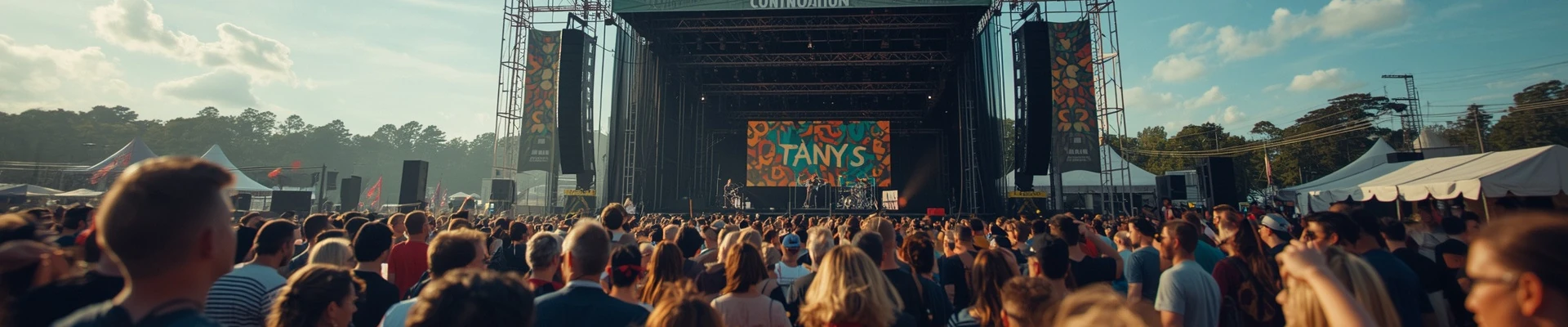
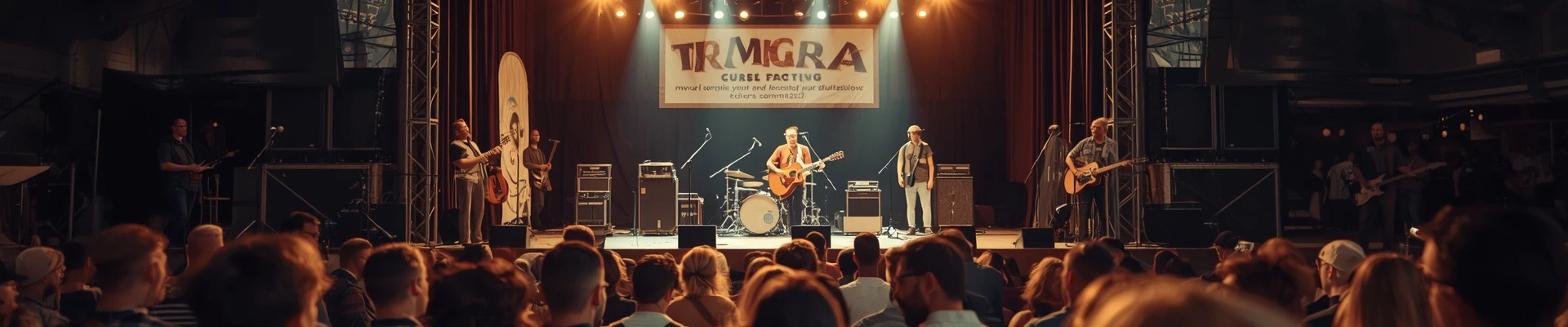
Dartmouth's own venue infrastructure is modest — the city functions as a residential and cultural complement to Halifax's larger venue ecosystem, and most major concerts draw Dartmouthians across the harbour. The key Dartmouth-side spaces include Alderney Landing, the cultural and civic hub at the Dartmouth Ferry Terminal, which programs the outdoor Live at the Alderney summer concert series and hosts community events, film screenings, and cultural festivals year-round. The Dartmouth Sportsplex hosts larger community events. Sullivan's Pond and Banook Park serve as outdoor festival grounds. The Portland Street and Downtown Dartmouth corridor anchors the cluster of bars and restaurants with live music programming — the Waterfront strip has historically been a hub for local bands.
Across the harbour, Halifax's venue infrastructure is where Dartmouth musicians and audiences converge for major shows. The Rebecca Cohn Auditorium (1,000-capacity, at the Dalhousie Arts Centre) is the prestige hall for solo artists and chamber performances. The Marquee Ballroom (500-capacity) is Halifax's premier indie rock and touring club. The Seahorse Tavern has been a bedrock Halifax bar-rock venue for decades. The Carleton programs folk, singer-songwriter, and jazz acts in an intimate room. Scotiabank Centre (10,000-capacity arena) hosts stadium-scale touring acts. The Halifax Forum programs mid-size events. The Dartmouth-Halifax transit link — particularly the ferry — means that the musical geography of the two cities is deeply integrated; Dartmouth bands play Halifax venues and vice versa without the transit friction that separates more geographically distant communities.
Cole Harbour, in Dartmouth's eastern suburbs, is internationally famous as the birthplace of Sidney Crosby — and while hockey is not music, the town-hero mythology around Crosby reflects the same Maritime working-class community character that runs through Dartmouth's music: unpretentious, proud, resistant to pretension.
Festivals and signature events
The Dartmouth Natal Day Festival in early August celebrates the city's civic holiday with outdoor concerts, a parade, midway, and community programming at Banook Park — one of the most consistently attended community festivals in HRM. The Live at the Alderney outdoor summer concert series programs roots, folk, and pop acts on the Dartmouth Ferry Terminal waterfront. The Dartmouth Fringe Festival programs experimental and indie theatre with accompanying music events. HFX Jazz + Arts Festival (Halifax-based but region-wide) brings jazz and world music to both sides of the harbour. East Preston Natal Day celebrates the African Nova Scotian community's civic holiday in August with cultural performances and community gathering.
The annual Joel Plaskett Emergency Christmas Shows — technically at the Cohn in Halifax — function as a Dartmouth cultural institution: the show is so identified with Plaskett and so beloved by his local fanbase that it belongs to the fabric of both cities.
What ties it all together
Dartmouth's defining musical signature is intimacy and independence — the character of a community that has always had to assert its own identity against a larger neighbour across the water, and that has produced artists who embody exactly that disposition. Joel Plaskett's career is the clearest expression of it: rooted in place, uninterested in fashionable reinvention, built on three decades of direct connection with audiences from a home studio on the Dartmouth side of the harbour. The murderecords and HRM indie rock tradition of the 1990s — Thrush Hermit, Sloan, the Super Friendz — grew from the same environment of resourcefulness and community that makes Dartmouth what it is. The African Nova Scotian communities of Preston and Cherry Brook bring a gospel and R&B heritage that runs deeper than most observers recognize. And the City of Lakes itself — 50 bodies of water threaded through a suburban landscape that opens onto one of the world's great natural harbours — provides the physical backdrop for a music scene that is small in scale but generous in spirit, built on real relationships, real rooms, and the conviction that the view from the Dartmouth side of the harbour is just as good as the view from Halifax.