

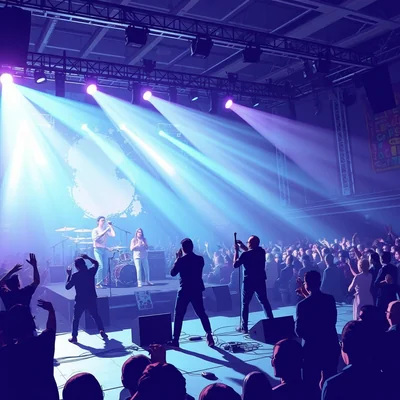
Halifax is the capital of Nova Scotia and the largest city in Atlantic Canada, with roughly 472,000 residents inside the Halifax Regional Municipality and more than 480,000 in the greater metropolitan area. Sitting on one of the world's largest natural harbours on the Atlantic coast of Nova Scotia, ringed by the Bedford Basin to the north and McNabs Island at the harbour mouth, it is the economic, governmental, and cultural capital of the Maritime provinces — the four provinces of New Brunswick, Nova Scotia, Prince Edward Island, and Newfoundland and Labrador that form the eastern fringe of the country. Halifax is home to six universities including Dalhousie University, the Nova Scotia College of Art and Design (NSCAD), and the University of King's College (the oldest English-language university in Canada), and that university density has fed an arts and music scene that has, over the past 30 years, produced one of the most internationally acclaimed indie rock scenes in Canadian history.
A brief history
The harbour was Mi'kmaq territory — known as Kjipuktuk ("great harbour") — for thousands of years before British governor Edward Cornwallis established the town of Halifax in 1749 as a military and naval base to counter French power in the region. The city grew as a British garrison town, an Atlantic trade port, and the administrative capital of British Nova Scotia. Through the 19th century Halifax grew as a shipbuilding, fishing, and trans-Atlantic commerce hub, and the city's harbour was the departure point for some of the most consequential 19th-century Atlantic crossings. The devastating Halifax Explosion of December 6, 1917 — when the munitions ship SS Mont-Blanc collided with another vessel in the Narrows, triggering the largest human-made explosion before the nuclear age, killing nearly 2,000 people and injuring 9,000 more — remains the defining trauma of the city's collective memory. Through the 20th century Halifax grew as a Naval base (Canadian Forces Base Halifax is the headquarters of Maritime Command), a university hub, and the service and government capital of the Maritimes. Successive waves of migration — Black Loyalists and Black Nova Scotians with deep roots going back to the late 18th century (Africville, the historically Black community destroyed by urban renewal in the 1960s, remains a painful civic memory), Mi'kmaq, Scottish, Irish, Acadian, and more recently Lebanese, South Asian, Caribbean, and West African communities — have built a city that is roughly 7% Black and 5% South Asian, with one of the oldest African-Canadian populations in the country.
Music identity
Halifax's most internationally famous musical chapter is the extraordinary concentration of indie rock talent that emerged from the city in the late 1980s and early 1990s. Sloan — Chris Murphy, Patrick Pentland, Jay Ferguson, and Andrew Scott — formed in Halifax in 1991 while attending the Nova Scotia College of Art and Design and built one of the most acclaimed and beloved Canadian indie rock catalogues of the past 30 years through Smeared (1992), Twice Removed (1994, widely regarded as one of the greatest Canadian albums ever made), One Chord to Another (1996), and a continuous output of hook-laden, Beatles-influenced power-pop that continues to the present. Sloan's continued Halifax ties and their reputation as one of the great working-band success stories in Canadian music make them the city's most beloved musical export.
The Thrush Hermit, formed in Halifax in 1990 by Joel Plaskett, Rob Benvie, Ian McGettigan, and Cliff Gibb, became one of the most critically acclaimed Canadian indie rock bands of the mid-1990s through Smart Bomb (1994) and Sweet Homewrecker (1997). Plaskett went on to a solo and Joel Plaskett Emergency career that has made him one of the most beloved figures in Canadian music — his Three (2009), a triple album recorded in Halifax and deeply rooted in Nova Scotia geography and memory, is one of the most acclaimed Canadian albums of the 21st century. Plaskett's Dartmouth, Nova Scotia roots and his ongoing presence in Halifax through the New Scotland Yard studio he operates and the Paragon Recording Studios he uses keep him as the anchor of the modern Halifax scene.
The Halifax scene of the early 1990s also produced Eric's Trip, the Moncton-based band (80 km west) that was the first Canadian band signed to Sub Pop Records and a foundational Canadian noise-pop act; Jale, the Halifax all-woman indie band; The Super Friendz, hardship post, Local Rabbits, Rebecca West, The Inbreds, Cool Blue Halo, and a generation of Maritime indie bands that were part of one of the most celebrated regional indie scenes in Canadian history. Murder Mystery (and Jay Ferguson's solo work), The Stolen Minks, Wintersleep (formed in Halifax in 2000, whose Welcome to the Night Sky (2007) became one of the most critically acclaimed Canadian indie albums of its era), Contrived, The Tom Fun Orchestra, the Beauties, Rich Aucoin, The Stanfields (the Cape Breton–Halifax Celtic-punk band), JOYFULTALK (Jay Crocker), and a current generation of Halifax indie acts continue the lineage.
Halifax's East Coast folk, Celtic, and traditional music tradition is as deep as its indie rock legacy. Nova Scotia has one of the richest Celtic and Acadian folk traditions in North America, fed by the Scottish and Irish immigration of the 18th and 19th centuries and the Acadian French community. Stan Rogers (born in Hamilton, but deeply rooted in Nova Scotia and the Maritime folk tradition), Rita MacNeil (Cape Breton's most beloved singer), Natalie MacMaster (the Cape Breton fiddler), Buddy MacMaster (the foundational Cape Breton fiddler), Ashley MacIsaac (the Cape Breton fiddler who broke into alternative rock with Hi™ How Are You Today? in 1995), The Barra MacNeils, The Rankins, Great Big Sea (Newfoundland-based but a constant Halifax presence), Lennie Gallant, Dave Gunning, and a deep current generation of Maritime singer-songwriters keep the tradition alive through Halifax venues and the East Coast Music Awards (which have been based in Halifax and rotating Maritime cities for 30 years). The Celtic Colours International Festival on Cape Breton Island draws world attention to the broader Nova Scotia folk tradition each October.
Halifax's Black Nova Scotian music tradition runs through the city's African-Canadian community — one of the oldest Black communities in Canada, descended from Black Loyalists, Black Refugees from the War of 1812, escaped enslaved people, and Caribbean migrants. The community's roots in Preston, Cherrybrook, North Preston, Beechville, and other historic African-Nova Scotian communities feed a deep gospel, R&B, and hip-hop tradition. North Preston's Finest (NPF), the Halifax-area rap collective, has built one of the most controversial and discussed rap careers in Atlantic Canada. Classified (Luke Boyd), the Nova Scotian rapper from Enfield (just north of Halifax), has built one of the most commercially successful independent hip-hop careers in Canadian history. Quake Matthews, Neon Dreams, Mo Kenney, and a current generation of Halifax R&B, hip-hop, and pop artists continue the lineage.
Venues and neighborhoods
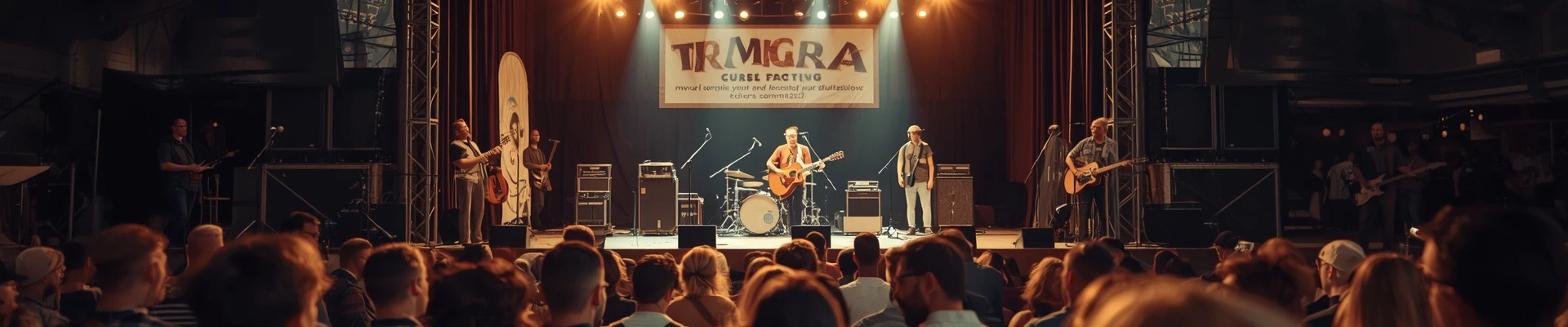
Halifax's venue ecosystem is well-developed. At the top sit the Scotiabank Centre (the city's largest indoor arena, home of the Mooseheads and major concerts), the Rebecca Cohn Auditorium at the Dalhousie Arts Centre (home of Symphony Nova Scotia), the Casino Nova Scotia Hotel & Casino (which programs major touring acts in its showroom), and the Halifax Forum (a 1927 multi-purpose arena used for concerts). The midsize tier includes the Marquee Ballroom (the long-running Halifax rock venue on Gottingen Street), the Halifax Forum's main hall, and the Spatz Theatre at the Neptune. Beneath them is a deep club layer — the Seahorse Tavern (the long-running Halifax rock bar), The Carleton (the beloved listening room on Argyle Street, anchoring the city's acoustic and folk circuit), Gus' Pub (the legendary Main Street dive bar), The Dome complex on Argyle, Henry House, The Lower Deck (the Maritime folk pub in the Historic Properties), Economy Shoe Shop's former programming, The Marquee, Bearly's House of Blues & Ribs (the Main Street blues bar), and a network of bars and venues along Argyle Street, Gottingen Street, and the Spring Garden Road corridor.
Different neighborhoods carry different musical identities. The Halifax waterfront and Historic Properties anchor the Maritime folk and tourist-facing music circuits through the Lower Deck. Argyle Street anchors the bar, club, and pop circuits through the Dome complex. Spring Garden Road anchors a higher-end bar and venue circuit. Gottingen Street anchors the indie rock, punk, and DIY scenes through the Seahorse, Gus' Pub, and the Marquee. North End Halifax has emerged as the city's most active arts and venue corridor. Dartmouth across the harbour (Joel Plaskett's home turf) supports a smaller but serious bar and music scene.
Festivals and signature events
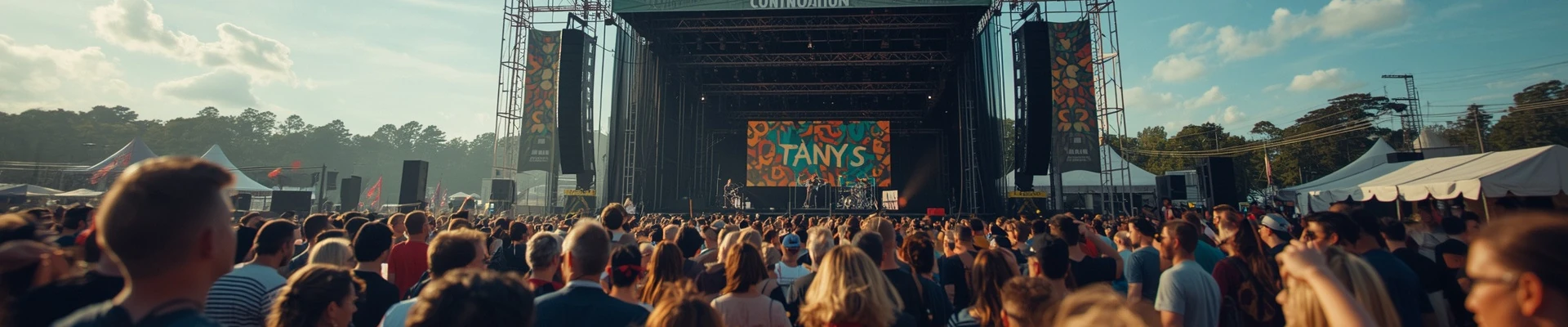
The festival calendar reflects the city's range. Halifax Jazz Festival (now TD Halifax Jazz Festival) each July is one of the most respected jazz festivals in Atlantic Canada. Halifax Pop Explosion (HPX) each October is one of the most respected indie discovery festivals in Canada — a five-day, multi-venue showcase that has launched or spotlighted Sloan, Joel Plaskett Emergency, Wintersleep, Japandroids, and a generation of Canadian indie acts. East Coast Music Awards (ECMAs) rotate through Halifax and other Maritime cities each February, anchoring the region's music industry. Celtic Colours on Cape Breton Island (drawing on the Halifax audience), Stan Rogers Folk Festival in Canso (five hours east, but functionally drawing on the Halifax folk community), Evolve Festival, OBEY Convention (the Halifax experimental and underground music festival), Halifax Pride, Halifax RibFest's music programming, the Symphony Nova Scotia summer Pops series, and the Buskers Festival on the Halifax waterfront add cultural and community programming throughout the year.
What ties it all together is the city's combination of Atlantic isolation, university density, and a deep Celtic-and-Black-Canadian musical heritage that has consistently fed one of Canada's most creative and distinctive indie scenes. Halifax is the city where Sloan and the Thrush Hermit came up at NSCAD and rewrote the playbook for Canadian indie rock, where Joel Plaskett has spent 30 years making albums rooted in Nova Scotia geography, where Stan Rogers and Rita MacNeil gave the Maritime folk tradition its modern voice, where Ashley MacIsaac took Cape Breton fiddling onto alternative radio, where Classified built one of the most successful independent hip-hop careers in Canada from rural Nova Scotia, where Halifax Pop Explosion has been launching Canadian careers since 1993, and where the harbour that witnessed the largest human-made explosion in history before Hiroshima continues to anchor one of the most culturally vital small cities in the country.