


Saskatoon is the largest city in Saskatchewan, with roughly 266,000 people within city limits and more than 300,000 across the metropolitan area. It sits on the banks of the South Saskatchewan River at the geographical heart of the Canadian prairies, roughly halfway between Winnipeg and Calgary. Despite its mid-size standing, Saskatoon has produced one of the most consequential musical legacies per capita of any Canadian city — most famously as the place where Joni Mitchell grew up, learned to play guitar, and formed her artistic sensibility before leaving for Toronto and then California. The city's musical identity is rooted in the prairie landscape itself: vast, open, and capable of producing artists of startling originality precisely because it stands apart from the metropolitan pressures of Toronto, Montreal, or Vancouver.
A brief history
The land along the South Saskatchewan River was home to the Plains Cree, Assiniboine, Nakoda, and Saulteaux peoples long before the 1882 arrival of the Temperance Colonization Society, whose founders named the new settlement after the Cree word for a local berry — "misāskwatōmina" (misaskwatomina), anglicized to Saskatoon. The city grew quickly after the Canadian Pacific Railway arrived; it incorporated as a city in 1906 and boomed during the wheat-rush years before the First World War, acquiring the nickname "Paris of the Prairies" for its relative prosperity and its ambition to build grand institutions on the open plain. The University of Saskatchewan, founded 1907, became and remains the social and cultural spine of the city. The crash of the 1930s Dust Bowl devastated the agricultural economy, and Saskatoon spent decades rebuilding — a slow-growth trajectory that fostered a tight, self-reliant arts community. The postwar period brought successive waves of immigration from Eastern Europe (especially Ukrainian and Polish communities), and the city today is home to significant Métis, First Nations (Cree, Saulteaux, Dakota), Filipino, Chinese, and South Asian communities. The Indigenous population of Saskatoon — one of the fastest-growing Indigenous urban centres in Canada — is central to the city's contemporary cultural life.
Music identity
The most internationally consequential name in Saskatoon's music history is Joni Mitchell. Born Roberta Joan Anderson in Fort Macleod, Alberta, she moved to Saskatoon as a child, grew up on the prairies (she has described the landscape of Saskatchewan as a permanent influence on her sense of open space and colour), contracted polio at age nine and learned to play ukulele and then guitar during her recovery, studied commercial art at the Alberta College of Art (in Calgary) but formed her artistic ambitions in Saskatoon, and played the local folk and coffee-house circuit before leaving for Toronto around 1964. The prairie spaciousness — the long light, the flat horizon, the sense of solitary distance — is woven into the open guitar tunings and expansive chord voicings of her greatest recordings. Saskatoon has never let the connection go: there is a Joni Mitchell Public Art Installation on the Broadway Bridge, and the city claims her proudly as its defining cultural export.
The modern era produced The Sheepdogs, the Saskatoon-born classic-rock-influenced band whose 2011 win of a fan vote to appear on the cover of Rolling Stone — the first unsigned band to do so — made them a national story. Their warm, Muscle Shoals–indebted sound on albums like Learn & Burn (2010) and The Sheepdogs (2012) earned them Juno Awards and a devoted cross-Canada following. The victory was something Saskatoon didn't forget: here was a guitar band from the prairies, making unironic classic rock, winning on the biggest possible stage.
Wide Mouth Mason, the Saskatoon blues-rock trio (Shaun Verreault, Earl Pereira, and Safwan Javed), released a string of acclaimed albums through the 1990s and early 2000s — Wide Mouth Mason (1996), Where I Started (1998), The Nazca Lines (2001) — building one of the most beloved roots-rock catalogs in Canadian music. Their blend of blues, soul, and Saskatchewan grit attracted national attention and sustained a long career that continues to this day.
Streetheart — the Kenny Shields-fronted Saskatoon rock band — rode the 1970s and 1980s Canadian hard-rock circuit to national prominence, with Meanwhile Back in Paris (1977) and Drugstore Dancer (1981) placing them at the top of the regional-to-national rock pipeline. Colin James grew up in Regina but played the Saskatoon circuit extensively in his early years. Jim Cuddy of Blue Rodeo has cited Saskatchewan prairie music as a touchstone. Joni Mitchell's jazz period had a specific echo in the city: The Bassment Jazz Club, Saskatoon's long-running jazz venue, developed an unusually strong jazz tradition for a city of its size, drawing touring artists and sustaining a local jazz scene that feeds into the Saskatoon Jazz Festival each summer.
The contemporary scene includes a rich singer-songwriter and roots layer: Eekwol (Lindsay Knight), the Saskatoon-based Cree hip-hop artist and one of the most important voices in Indigenous hip-hop in Canada, has built a body of work that directly addresses Treaty 6 territory, colonial history, and prairie Indigenous identity. Chief Eagle Swoop, Dani Elia, and a growing wave of Cree and Métis musicians use Saskatoon as a base. Jess Moskaluke, the Saskatchewan country artist (raised in Rocanville, SK), built her major-label career out of the prairie country scene that Saskatoon anchors. Library Voices, the Saskatoon indie-pop band, earned national notice in the early 2010s. The Broadcast, Harrison Kennedy (born in Hamilton but with Saskatchewan connections), and a rotating cast of blues, roots, and folk artists anchor the mid-level touring circuit through the city's clubs.
The Indigenous music scene in Saskatoon is substantial. The city sits on Treaty 6 territory and is home to the Muskeg Lake Cree Nation urban reserve — the first urban reserve in Canada, established in 1988 in the middle of the city — which has been a model for Indigenous economic and cultural self-determination across Canada. Powwow drumming, Cree and Saulteaux language song, contemporary Indigenous hip-hop, folk, and country run through community events, the Gordon Tootoosis Nikaniwin Theatre, and a growing network of Indigenous arts organizations. Eekwol is the most prominent international figure from this scene; behind her is a deep community of artists working in Cree, Nakoda, and Michif.
The Ukrainian-Canadian community — historically the second-largest in Canada per capita — supports a choral, folk, and dance tradition through the Ukrainian Museum of Canada (headquartered in Saskatoon), the Vesna Festival, and a network of Ukrainian churches and halls. Filipino, Chinese, and South Asian communities sustain their own music traditions through temples, community centres, and annual cultural events. The Multicultural Council of Saskatchewan programs are headquartered in Saskatoon and help sustain this multicultural music life.
Venues and neighborhoods
At the top of the venue ladder sits SaskTel Centre (now rebranded as Primus Centre in recent years — the city's major arena), which hosts the Saskatoon Blades (WHL) and books the large-scale touring acts. TCU Place — Saskatoon's civic convention and performing arts centre — is the mid-size anchor for classical, orchestral (the Saskatoon Symphony Orchestra performs here), theatre, and popular programming. Prairieland Park has hosted outdoor summer shows on its event grounds.
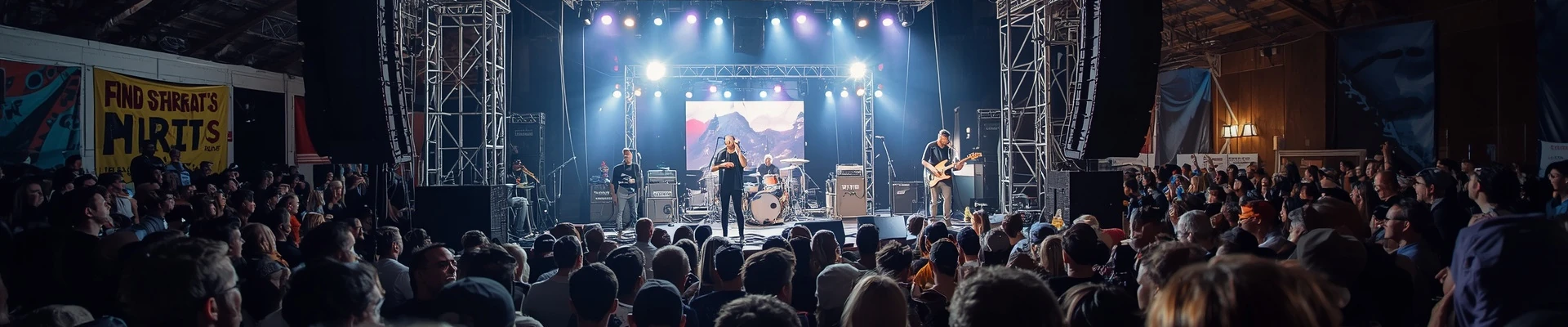
The character club layer is where Saskatoon's musical identity lives most vividly. Amigos Cantina on 20th Street West has been one of the most beloved independent music venues in the prairies for decades — a roots, Americana, and world-music room with a loyal audience and a strong commitment to local and touring acts. The Bassment on 2nd Avenue South is the city's flagship jazz venue, consistently one of the better jazz clubs in Western Canada. Louis' Pub at the University of Saskatchewan has launched dozens of student-era bands and is one of the most storied university music bars in the country. O'Brians Event Centre serves the larger club-show tier. Capitol Music Club, The Yard & Flagon, and a shifting roster of live rooms across the Broadway Avenue and 20th Street West corridors fill in the bar-circuit tier.
Broadway Avenue — the bohemian commercial strip through the Nutana neighbourhood — is the city's most culturally dense corridor: indie record shops, coffee houses with live music, the Broadway Theatre (a non-profit single-screen cinema with arts programming), and the patios and bars that feed into the Broadway Jazz Festival and summer street festival programming. Riversdale — Saskatoon's west-side arts hub — has gentrified steadily over the past decade into a space for studios, galleries, and small performance venues, and is increasingly home to Indigenous arts organizations. 20th Street West in Riversdale carries the city's working-class music-bar tradition. The University of Saskatchewan campus in the northwest part of the city sustains student-band culture, choral programs, and the annual CAMP Music Festival.
Festivals and signature events
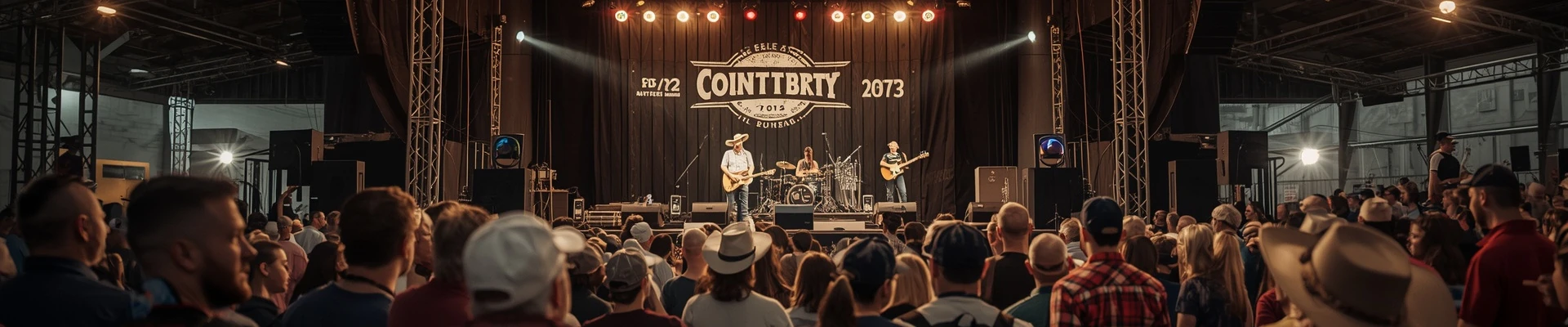
The Saskatoon Jazz Festival (each June) is one of the longest-running jazz festivals in Western Canada, programming local, national, and international artists across indoor and outdoor stages and consistently drawing from Saskatoon's unusually strong jazz tradition. Ness Creek Music and Arts Festival — held each July north of the city — is a four-day camping festival with a roots, folk, and world-music identity that draws an intensely loyal audience from across Saskatchewan and beyond. SaskMuzik, the province-wide music celebration, programs Saskatoon stages prominently each year. The Broadway Jazz Festival brings free outdoor programming to Broadway Avenue. Weczeria Food and Drink Festival programs local bands alongside local chefs. Vegetal Festival, PARADOX electronic music festival, Planet S Music Awards, SaskCountry Stampede, and Indigenous music showcases connected to Muskeg Lake Cree Nation and the Gordon Tootoosis Nikaniwin Theatre round out the annual calendar. The Vesna Ukrainian Festival and the Multicultural Festival program traditional and contemporary world-music acts each summer.
What ties Saskatoon together as a music city is the paradox the prairies always produce: isolation as incubator. A mid-size city on a flat plain with a long winter, a world-class university, a Ukrainian-Métis-Cree cultural layering, and a Broadway Avenue coffee-house circuit produced Joni Mitchell's formative guitar experimentalism. It produced The Sheepdogs' refusal to update beyond the warm AM-radio rock that made the 1970s great. It produced Wide Mouth Mason's blues-soaked prairie soul and Eekwol's Treaty 6 hip-hop. The South Saskatchewan River runs through the centre of it all — patient, wide, reflecting the same open sky that has always told Saskatoon's artists: there is room here to figure out exactly who you are.