
Where the Gulf Meets the Delta
Mobile sits at the northern end of Mobile Bay, where the Mobile and Tensaw rivers empty into the Gulf of Mexico roughly 150 miles east of New Orleans and 270 miles south of Birmingham. With a municipal population around 183,000 and a metro area approaching 430,000, it is Alabama's only saltwater port — a fact that has shaped everything from its economy to its cultural DNA. The city is the oldest continuously inhabited European settlement in Alabama (founded by the French in 1702), and it carries that age in its architecture, its food, and its music. Ante-bellum cotton warehouses along the waterfront now host bars and arts spaces; the ornate Bishop State Community College campus hosts jazz and classical programs; the downtown Bienville Square anchor functions as an informal civic commons where buskers, brass ensembles, and holiday concert series co-exist.
The region's economy rests on the Port of Mobile (one of the largest on the Gulf Coast by tonnage), aerospace manufacturing anchored by Airbus's U.S. final assembly facility, the University of South Alabama and its medical complex, and a tourism economy driven partly by the area's singular Mardi Gras heritage. Unlike New Orleans — which claims the most famous American Mardi Gras — Mobile asserts, with legitimate historiographical support, that it held the first Mardi Gras celebration in the American colonies, predating New Orleans by years. That carnival culture is not merely ceremonial: it is a living infrastructure for music, from the mystic society brass bands that march through downtown in February to the parading brass that surfaces at festivals throughout the spring.
Deeper Roots: The Music Lineage
Mobile's most consequential contribution to American music history is Jimmy Buffett, born here in 1946, though he left for Mississippi and Nashville before becoming the parrot-head institution he is. More central to Mobile's self-image is the city's role in Gulf Coast R&B. Clarence Carter, the blindR&B vocalist whose 1970 hit "Patches" reached number four on the Billboard Hot 100 and won a Grammy, was born in Union Springs but based much of his early career work in the Mobile area. Wilson Pickett recorded at Muscle Shoals Sound Studio further north in Alabama, but the entire Muscle Shoals recording ecosystem drew session players and talent pipelines from the Mobile corridor — the state's Southern port was a feeder for that world-famous recording culture.
Closer to the city proper, Syl Johnson — bluesman, soul singer, and one of the most heavily sampled artists in hip-hop history — has Mobile roots. Abe Lincoln III fronted the Gulf Coast rockabilly movement from here in the 1950s. The tradition of Sacred Harp singing (shape-note vocal harmony) has a particularly strong footprint in the surrounding Baldwin and Clarke Counties, connecting Mobile's sonic environment to one of North America's oldest communal musical forms.
The Alabama Shakes — though formed in Athens, Alabama — have deep stylistic debts to the Gulf Coast R&B and Southern soul tradition that Mobile helped establish and transmit northward. Mobile's own contemporary output has been less nationally prominent than its history suggests it could be, partly because talent migration to Nashville, Atlanta, and New Orleans has been a persistent feature of the regional ecosystem.
Mardi Gras and the Brass Tradition
Mobile's Mardi Gras celebration is the oldest in the United States, and it sustains a brass performance culture that rivals smaller-scale versions of the New Orleans brass band scene. The city's mystic society parade organizations — Infant Mystics, Order of Myths, Comic Cowboys — each maintain musical traditions dating to the nineteenth century. Gulf Coast Marching Arts and the Mobile city school district band programs have produced professional brass players who have fed into regional touring orchestras and session work across the Southeast.
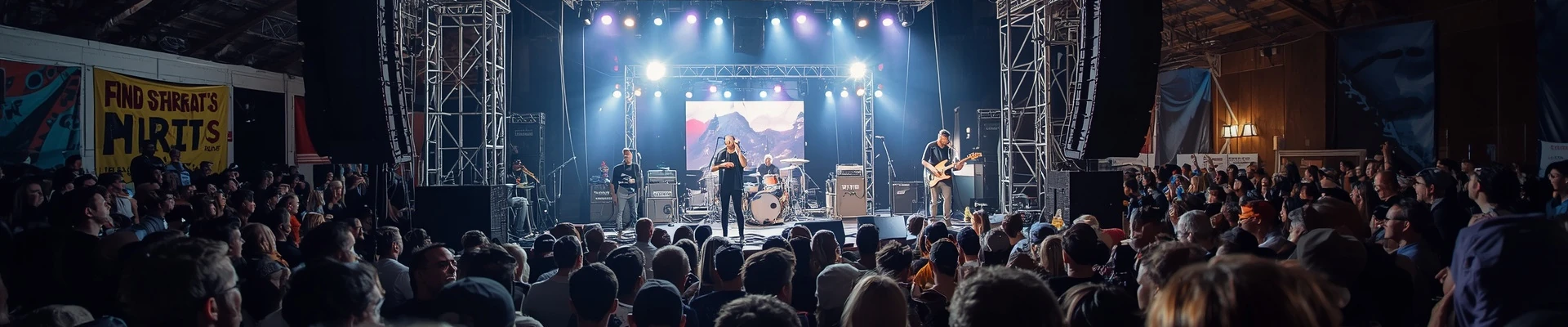
The Dauphin Street entertainment corridor, running through downtown Mobile, is the city's primary live music strip. Bars such as Callaghan's Irish Social Club — a beloved neighborhood dive that books original local acts five nights a week — and Soul Kitchen Music Hall (a 1,000-capacity room that has hosted Lucero, Drive-By Truckers, and touring indie acts) anchor the scene. Vinyl Music Hall in nearby Pensacola, Florida, draws enough Mobile-area acts to function as part of the regional ecosystem.
The Saenger Theatre on Conti Street is Mobile's flagship theatrical and concert venue — a 1,900-seat Spanish Baroque revival house opened in 1929 and restored after hurricane damage in the 2000s. It hosts touring Broadway, classical concerts from the Mobile Symphony Orchestra (founded 1931, one of the oldest in the Deep South), and national touring artists. Civic Center Arena (now the Mobile Civic Center) served as the city's larger arena for decades; the newer South Alabama Mitchell Center on the USA campus handles larger touring shows.
The Drive-By Truckers Connection
No single band has articulated Mobile and the broader Alabama music experience to a national audience more explicitly than Drive-By Truckers, though their formation was in Athens, Georgia, and their emotional center of gravity is Muscle Shoals and the Shoals region of north Alabama. Patterson Hood, the band's co-founder and primary lyricist, grew up in the Shoals and often invokes Mobile tangentially as part of his South Alabama working-class landscape. Their double album Southern Rock Opera (2001) drew specifically on Alabama industrial and cultural geography — including the port economy and military presence that shaped southern Alabama — to narrate a revisionist South.
Mobile itself has produced its own share of Southern rock adjacent acts. Hank Williams Jr. spent formative years in south Alabama, and the country-rock lineage he helped commercialize in the 1970s and 1980s has a footprint in Mobile's bar circuit to this day. The Alabama band (from Fort Payne, northeast Alabama) drew from the same country-rock tradition, and their stadium country sound has deep resonance in Mobile, where country music on the commercial radio dial has always outperformed pop.
Hip-Hop and Contemporary Scenes
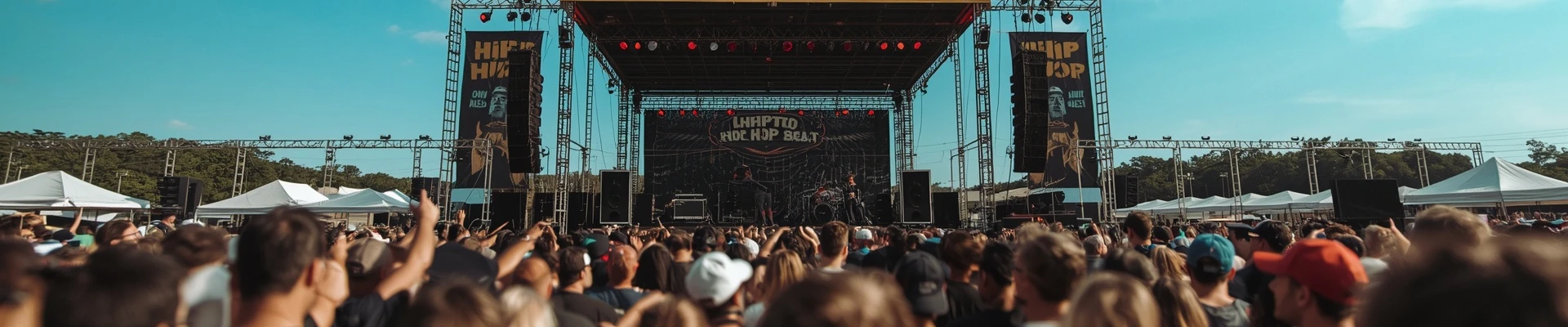
Mobile's hip-hop scene is smaller and less documented than Atlanta's or Birmingham's, but it is real and active. DeJ Loaf — though a Detroit artist — has expressed Gulf Coast affiliations, and the broader Dirty South aesthetic pioneered by OutKast, Three 6 Mafia, and UGK has deep resonance and active local practitioners in Mobile. Big K.R.I.T. (from Meridian, Mississippi) tours through Mobile regularly and is claimed by Gulf Coast fans as part of the regional tradition.
Local rap acts have used home studios and platforms like SoundCloud and Audiomack to build regional followings in the 2010s and 2020s. The Mobile Arts Council and programming at the Space 301 arts complex have hosted hip-hop showcases, poetry slams, and producer meetups that have tried to create infrastructure for emerging artists.
Festivals and Signature Events
Bayfest Music Festival was Mobile's signature multi-day outdoor festival for over two decades — a three-day event on Bienville Square that at its peak (mid-2000s through mid-2010s) drew 200,000 attendees and booked acts ranging from ZZ Top to Bruno Mars to B.B. King. The festival ceased operations in 2015 due to financial difficulties but remains the high-water mark of Mobile's festival infrastructure.
Gulf Coast Jam operates in Panama City Beach, Florida — close enough to the Mobile market to draw heavily from the area — and has featured country acts like Luke Bryan, Kenny Chesney, and Dierks Bentley. Mobile's own smaller events include the Mobile Film Festival, BayFeast Food and Music Festival, and neighborhood events along Dauphin Street organized by the Dauphin Street Entertainment District association.
The Mobile Mardi Gras itself, running from early January through Fat Tuesday (spanning roughly six to eight weeks), is effectively the city's largest annual music festival — with brass band processions, jazz performances, and live music at every parade stop and after-party venue. It is indigenous to Mobile in a way that no imported music festival ever replicates.
Neighborhoods and the Music Map
Downtown Mobile — centered on Dauphin Street, Bienville Square, and the waterfront — is where the majority of live music activity concentrates. The blocks between Royal Street and Lawrence Street have the highest density of bars and music venues.
Midtown Mobile (roughly the area around Spring Hill Avenue and Old Shell Road) has a calmer neighborhood bar scene and hosts occasional acoustic and roots music events. Spring Hill is the upscale residential and college corridor, home to Spring Hill College (Jesuit, founded 1830), whose student body sustains a market for smaller touring indie acts.
Prichard and Chickasaw — working-class majority-Black communities immediately north of Mobile proper — have historically sustained gospel, blues, and soul traditions that rarely receive coverage in white-mainstream local media but form the deep root system of Mobile's African American musical culture.
The Gulf Coast Sound
What ties Mobile's music scene together is geography as much as genre. The Gulf Coast proximity — the humidity, the heat, the Creole food culture imported from New Orleans, the port economy that kept the city connected to Caribbean and Central American rhythmic influences — creates an atmosphere distinctly different from inland Southern cities. Music in Mobile has always been looser, more festival-oriented, more Creole in its mixing of traditions than the Anglo-country mainstream that dominates the Alabama commercial market further north.
The Mobile Bay horizon, the Mardi Gras infrastructure, the Dauphin Street bar strip, and the legacy of Clarence Carter, Gulf Coast R&B, and sixty years of brass tradition converge to produce a city whose musical personality is older, stranger, and more quietly original than its modest national profile suggests. Mobile is where the Deep South meets the Gulf, and the music — at its best — sounds like exactly that.