


Tuscaloosa is the fifth-largest city in Alabama, with roughly 111,000 residents inside the city limits and a metro population of around 270,000 spanning Tuscaloosa, Bibb, Greene, Hale, Pickens, and Sumter counties. It sits in west-central Alabama on the south bank of the Black Warrior River, about 90 kilometres southwest of Birmingham and 100 kilometres east of Meridian, Mississippi. The city takes its name from the Choctaw words taska (warrior) and losa (black) — a reference to the river and to the legendary Choctaw chief Tuskaloosa who met Hernando de Soto in 1540. Tuscaloosa is defined by two things above all: the University of Alabama (founded 1831, with more than 38,000 students and one of the most storied college football programs in America) and its position within the Alabama music corridor that runs from the blues country of the Black Belt through the Muscle Shoals recording ecosystem to the Southern rock clubs of Birmingham. Football dominates the civic calendar and shapes the economic and social pulse of the city from August through January, but beneath that roar is a music town with deep roots, real venues, and a college-town energy that has sustained original scenes in country, rock, hip-hop, and punk for generations.
A brief history
The Choctaw and Creek peoples inhabited this river territory for centuries before European contact. Spanish explorer Hernando de Soto arrived in 1540 and met the Choctaw chief Tuskaloosa near present-day Alabama — a confrontation that led to the Battle of Mabila, one of the deadliest conflicts of the colonial-era Southeast. Anglo-American settlement accelerated after the 1814 Treaty of Fort Jackson dispossessed the Creek Nation, and Tuscaloosa was incorporated in 1819, the year Alabama achieved statehood. From 1826 to 1846 it served as Alabama's state capital, and the University of Alabama was chartered in 1831 on a hilltop above the river — one of the oldest public universities in the South. The Civil War brought a Union Army raid in April 1865 that burned much of the campus and commercial district. Reconstruction, the rise of the cotton economy, and the arrival of the Louisville and Nashville Railroad in the 1870s rebuilt the city. Through the 20th century Tuscaloosa grew on coal mining, manufacturing (notably B.F. Goodrich and later Mercedes-Benz), and above all the University. The 2011 April 27 tornado outbreak devastated large swaths of the city, killing 53 people in Tuscaloosa alone and destroying entire neighborhoods — a wound that still shapes the city's geography and resilience narrative. The arrival of the Mercedes-Benz U.S. International manufacturing plant in 1993 (at Vance, just east of the city) diversified the economy beyond the university, drawing German and international workers who added a new layer to the local culture.
Music identity
Tuscaloosa's most internationally consequential musical connection is its position within the Muscle Shoals corridor — the legendary recording ecosystem anchored 130 kilometres north in the Shoals area but whose musicians, producers, and sound bled south through the Alabama music world. The Muscle Shoals Rhythm Section (the "Swampers" — David Hood, Barry Beckett, Roger Hawkins, Jimmy Johnson) shaped recordings by Aretha Franklin, Wilson Pickett, Percy Sledge, The Rolling Stones, Bob Dylan, and hundreds of others. David Hood, bassist and one of the original Swampers, raised his son Patterson Hood in the Shoals area — and Patterson Hood went on to co-found Drive-By Truckers, the Athens, Georgia-based Southern rock band that has arguably done more than any other act of the past 25 years to articulate the complexities of Southern identity through music. Drive-By Truckers recorded and performed extensively across Alabama, with Tuscaloosa a regular stop; their albums Southern Rock Opera (2001) and Decoration Day (2003) drew directly on the Alabama experience. The band's long relationship with Alabama — the state, its history, its contradictions — runs through their entire catalog and has made them the de facto voice of the educated, self-aware South.
Tuscaloosa's home-grown scene has produced genuine talent. The Dexateens — an alt-country and Southern rock band formed in Tuscaloosa in the late 1990s — built a devoted regional following with albums on Communicating Vessels and a sound rooted in Replacements-era loose country-punk. Guitarist Elliott McPherson and the rotating Dexateens lineup embodied the Tuscaloosa spirit: honky-tonk grit, rock energy, and literary Southern storytelling. The band performed extensively at venues like Egan's Bar and the University of Alabama circuit and is remembered as one of the defining local acts of the 2000s.
The University of Alabama's student body has sustained a continuous college music ecosystem for decades. The Strip — the bar corridor along University Boulevard near the UA campus — has been the incubator for local bands across every rock, indie, punk, and country subgenre since the 1980s. Venues like Egan's Bar (the legendary Tuscaloosa dive bar and music room that hosted original acts, touring indie bands, and late-night jams for over three decades before its 2013 closure), The Locker Room, and later spots including Innisfree Irish Pub, Druid City Brewing, and The Alcove have maintained this tradition. The loss of Egan's was mourned across the regional music world as the passing of an institution.
The city's blues tradition draws from its position in Alabama's Black Belt — the arc of rich dark-soil counties that stretches across central Alabama and that produced some of the deepest American blues and gospel traditions. Tuscaloosa has hosted blues festivals and sustained Black music traditions through its African American community, which makes up roughly 44 percent of the city's population. Gospel choirs at historic Black churches — including First African Baptist Church (one of Alabama's oldest Black congregations) — have anchored the spiritual music tradition. The city's R&B and hip-hop scenes have grown through the University's Black student community and the broader African American neighborhoods of north and east Tuscaloosa.
Yelawolf — the rapper born Michael Wayne Atha in Gadsden, Alabama — spent formative time in Tuscaloosa and the broader Alabama hip-hop world before his national breakthrough on Interscope/Shady Records. His Southern rap style, mixing country instrumentation, rock energy, and street-level storytelling, drew directly on his Alabama roots. While Gadsden is his hometown, Tuscaloosa and the wider Alabama scene are part of his formative geography. The city's hip-hop scene has produced local artists across trap, boom-bap, and Southern rap traditions, with the University providing both audience and occasional talent.
Country and Americana run deep. The broader Alabama country tradition — shaped by Hank Williams (born in Butler County, formed in the small towns of south Alabama, died on the road in 1953, but inescapably a statewide presence), Alabama the band (from Fort Payne, east Alabama), and the honky-tonk circuits that criss-crossed the state through the mid-20th century — flows through Tuscaloosa's bar and festival scene. The Tuscaloosa Amphitheater programs major country touring acts alongside rock and pop, bringing in Blake Shelton, Miranda Lambert, Dierks Bentley, and the full range of Nashville country to the outdoor riverfront venue.
Venues and neighborhoods
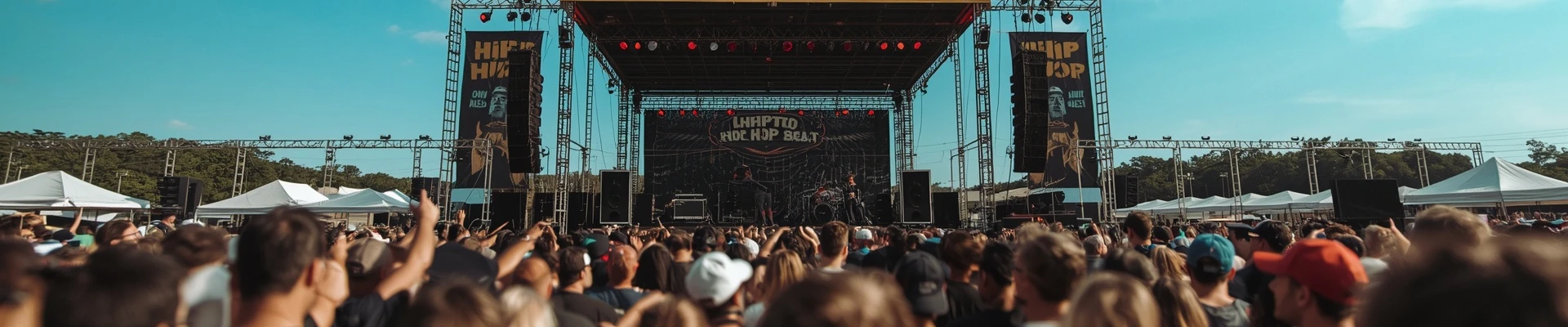
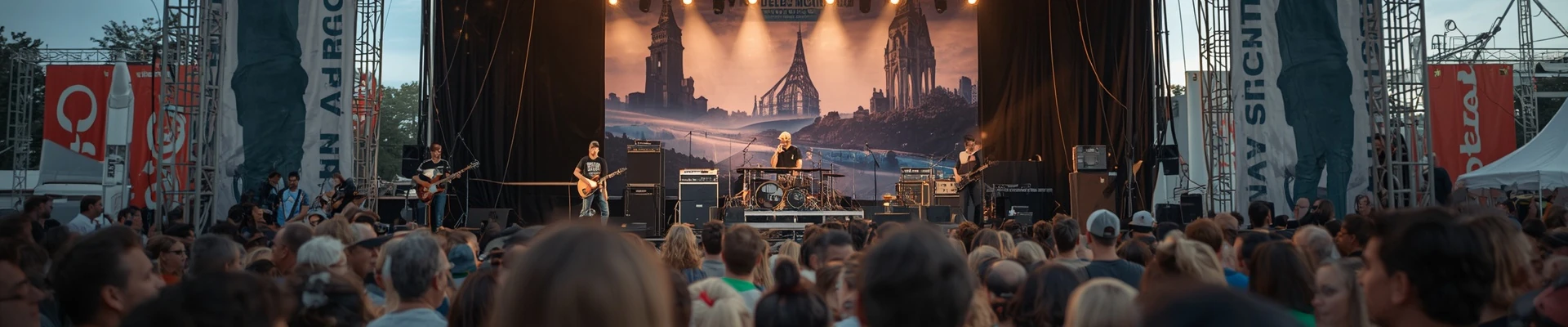
The flagship venue is the Tuscaloosa Amphitheater — a 7,500-capacity outdoor amphitheater on the banks of the Black Warrior River, opened in 2010. The Amphitheater has become the city's primary major-concert venue, drawing mid-size touring acts in country, rock, pop, and hip-hop. For historic character, the Bama Theatre — a 1938 art deco movie palace in downtown Tuscaloosa, restored to host live performances — provides an intimate 1,000-seat alternative. The theatre's Moorish revival interior is one of the most beautiful small venues in Alabama and hosts jazz, classical, film screenings, and touring acts.
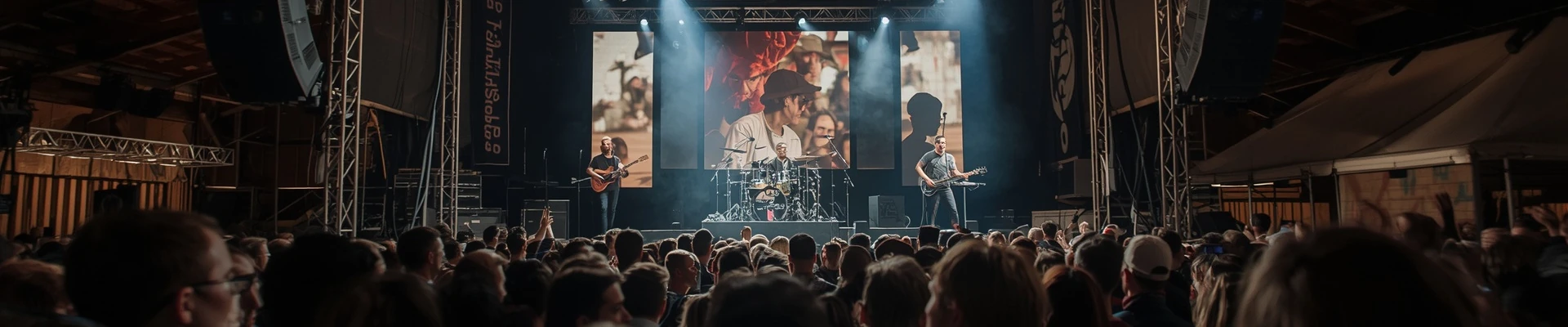
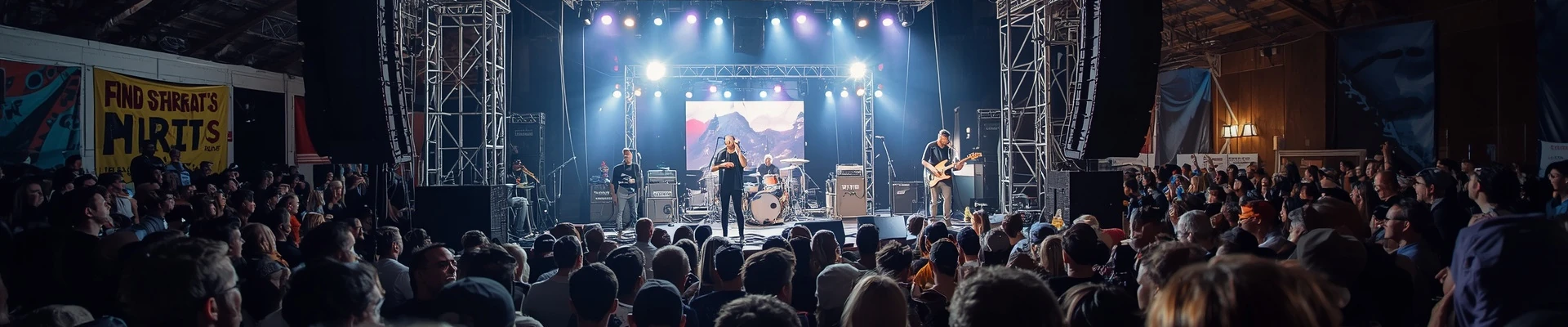
The club and bar layer is dense and university-fueled. Innisfree Irish Pub on the Strip has hosted live music for years. Druid City Brewing programs live music alongside its craft beer operation in the historic downtown district. The Alcove and Mellow Mushroom (the University Boulevard location) host regular live sets. The Bama Lanes entertainment complex, the Rounders Music Lounge, and rotating bars on University Boulevard and 15th Street sustain the college-bar live-music circuit. For larger shows, Coleman Coliseum — the 15,521-capacity arena at the University of Alabama — hosts the occasional major touring act alongside UA athletics.
Neighborhoods anchor distinct scenes. Downtown Tuscaloosa around Greensboro Avenue and 23rd Avenue has undergone significant redevelopment since the 2011 tornado, with new bars, restaurants, and music rooms filling historic buildings and new construction. The Strip along University Boulevard remains the heart of the college music scene. Five Points — the neighborhood east of downtown along 15th Street — anchors a more local, less student-centric bar scene. The Riverwalk district around the Amphitheater has grown as a riverfront entertainment corridor. Northport, across the Black Warrior River, adds a separate but adjacent music culture with its own bars and small venues.
Festivals and signature events
Kentuck Festival of the Arts is Tuscaloosa's signature cultural event — a two-day festival held each October in Northport's Kentuck Park that draws more than 250 juried artists and 7,000–10,000 attendees. Folk art, outsider art, Southern craft traditions, and live music make it one of the most respected folk art festivals in the Southeast. Musical programming features blues, folk, Americana, and roots acts alongside the visual art exhibitions.
Arts 'n' Heartsdowntown is a spring arts festival held in downtown Tuscaloosa featuring local artists, food vendors, and live music across multiple stages. The Druid City Music Festival has programmed local and regional acts across downtown venues. Moundville Native American Festival at the nearby Moundville Archaeological Site — a Mississippian mound complex 25 kilometres south of Tuscaloosa — celebrates Southeastern Indigenous heritage with traditional music, dance, and craft. The University of Alabama's BamaCentral Concert Series and various student-organized shows fill the academic calendar.
Alabama Crimson Tide football generates the city's most intense recurring event culture — home game weekends bring 100,000+ people to Bryant-Denny Stadium (capacity 100,077, one of the largest stadiums in the world) and flood every bar, restaurant, and live-music venue in the city. Gameday is Tuscaloosa's most economically significant recurring event, and the Tailgate culture that surrounds it has its own soundtrack — country, rock, and Alabama fight songs blasting from every corner.
What ties it all together
Tuscaloosa is an Alabama college town with a river, a great old art deco theatre, a football cathedral, and a music scene that has always punched modestly but authentically — rooted in Southern blues and country traditions, energized by the University's rotating cast of 38,000 students, and conscious of its proximity to the Muscle Shoals recording legacy that defines Alabama's greatest musical contribution to the world. The city that gave the world the Kentuck Festival, that sustained Egan's Bar for three decades of original music, that gave Patterson Hood and the Dexateens their Alabama soil, and that sends the river-lit Amphitheater crowd home every summer with country and rock ringing in their ears — Tuscaloosa is the Druid City, and its music runs as deep and dark as the Black Warrior River.