
Where the Freeway Meets the Theme Park
Anaheim sits in the northwest corner of Orange County, about 27 miles southeast of downtown Los Angeles, straddling the Santa Ana River plain at a modest elevation of roughly 49 metres above sea level. It is the most populous city in the county — around 350,000 residents spread across 128 square kilometres of flat, grid-planned streets and suburban subdivisions. To the world at large, Anaheim means Disneyland Resort, opened by Walt Disney in 1955 and still the city's economic anchor. But to anyone who has followed the American rock underground since the Reagan era, Anaheim means something else entirely: the home ground of No Doubt, the incubator of Orange County's ferocious punk scene, and a city whose working-class Latino and immigrant neighbourhoods have sustained musical communities largely invisible to the tourism apparatus that dominates its skyline.
The Orange County Punk Corridor
Anaheim did not invent Orange County punk — that credit belongs collectively to the late 1970s suburbs stretching from Long Beach down through Fullerton and Santa Ana — but it became one of the corridor's essential addresses. The geography mattered: flat, car-dependent, and economically divided between Disneyland-adjacent service jobs and older industrial zones, OC produced a suburban alienation quite different from the art-school nihilism of Hollywood punk. It was louder, faster, and angrier, and Anaheim kids were at the centre of it.
The Adolescents, the Fullerton-based band whose 1981 self-titled debut ("the blue album") is one of the founding documents of California hardcore, drew members from Anaheim and its immediate surroundings. Agent Orange, another Orange County touchstone, played the circuit of VFW halls and converted garages that served as the scene's infrastructure before proper venues existed. The Flipside zine, launched in 1977 and published out of the area for over two decades, documented these shows with obsessive granularity and became a primary record of what was happening.
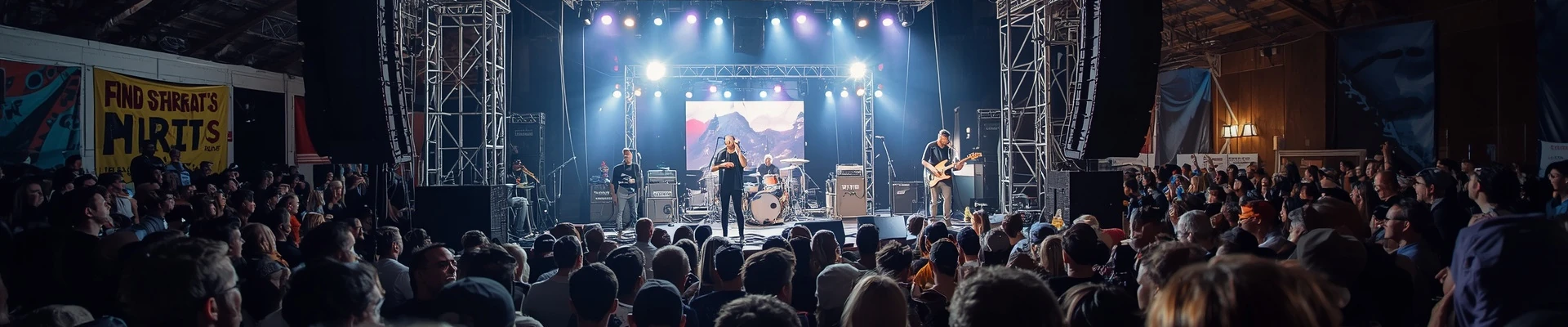
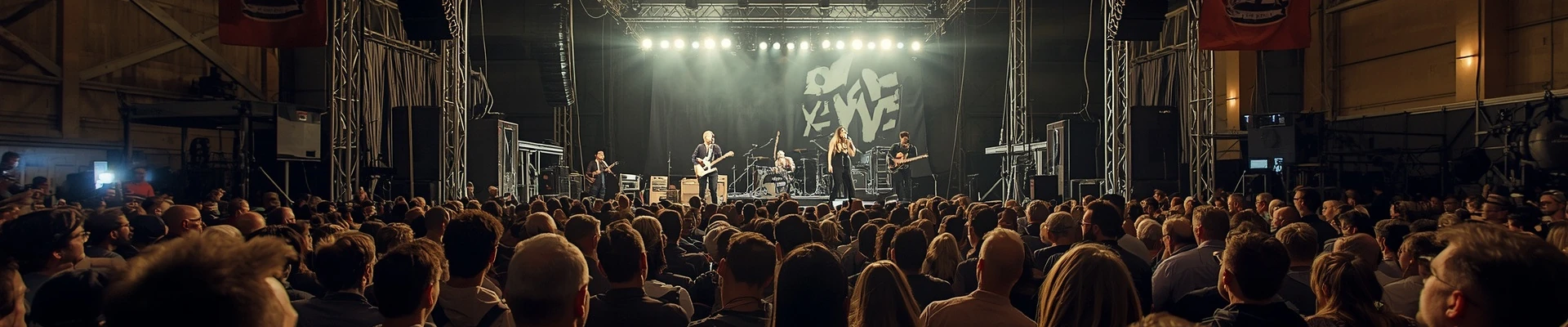
The venue that codified the next generation was Chain Reaction, an all-ages club that operated on West Ball Road from 1991 and ran well into the 2000s. Chain Reaction was deliberately small — a couple of hundred capacity at most — and that was the point. It gave bands like Thrice (who grew up in Glendale and Orange before breaking nationally), The Ataris, Senses Fail, and dozens of regional hardcore acts their first proper stage. The venue had a policy of genuine accessibility: cheap door prices, all-ages admission, no-drink-minimum pressure. For a generation of Orange County teenagers who couldn't legally enter a bar, it was the entire world.
No Doubt: Anaheim's International Export
No band produced in Anaheim has had a more consequential career than No Doubt. Formed in 1986 at the home of bassist Eric Stefani and his younger sister Gwen Stefani, who attended Loara High School in Anaheim, the band assembled in the city's suburban sprawl and spent years grinding the local and regional circuit before their breakthrough. Gwen Stefani's voice — enormous, technically precise, capable of ska-pop brightness and stadium-scale power — became the defining sound of a certain era of 1990s alternative radio, and the songs that launched it were written in Anaheim kitchens and rehearsal rooms.
The band's 1995 album Tragic Kingdom, recorded partly at Track Record Studios in North Hollywood but conceptually rooted in the Anaheim suburban experience (the album title is a pointed reference to Disneyland's marketing language), went on to sell over 16 million copies worldwide. "Don't Speak" spent 16 weeks at number one on the Billboard Hot 100 Airplay chart. Tony Kanal, the band's bassist and a key songwriter, and drummer Adrian Young both came up in the same Anaheim-adjacent milieu. The band's ska-punk-new wave hybrid drew directly from the OC corridor's musical vocabulary — the same venues, the same aesthetic tensions, the same suburban Southern California light.
Gwen Stefani's subsequent solo career, beginning with Love. Angel. Music. Baby. in 2004, extended Anaheim's reach into mainstream pop and eventually into country crossover. But the cultural weight of Tragic Kingdom remains the city's most internationally consequential musical contribution.
Honda Center and the Arena Scale
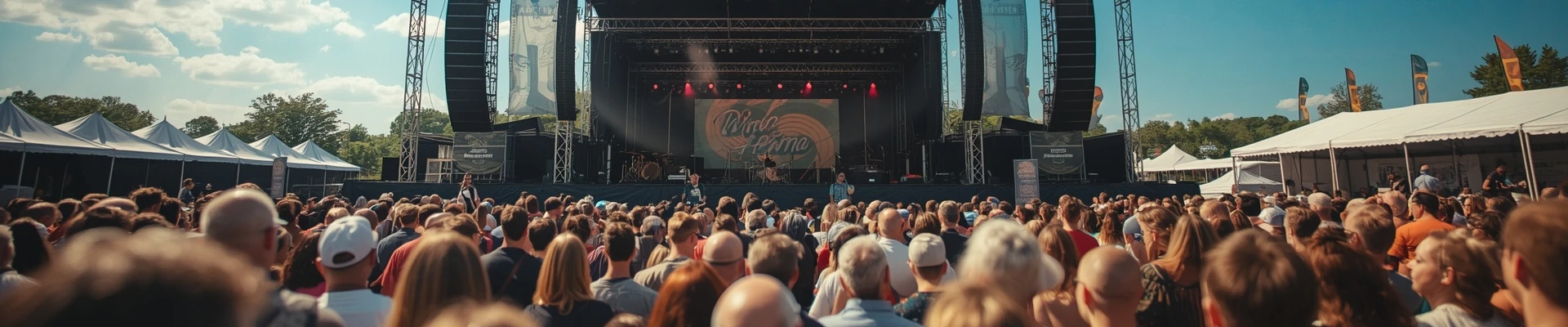
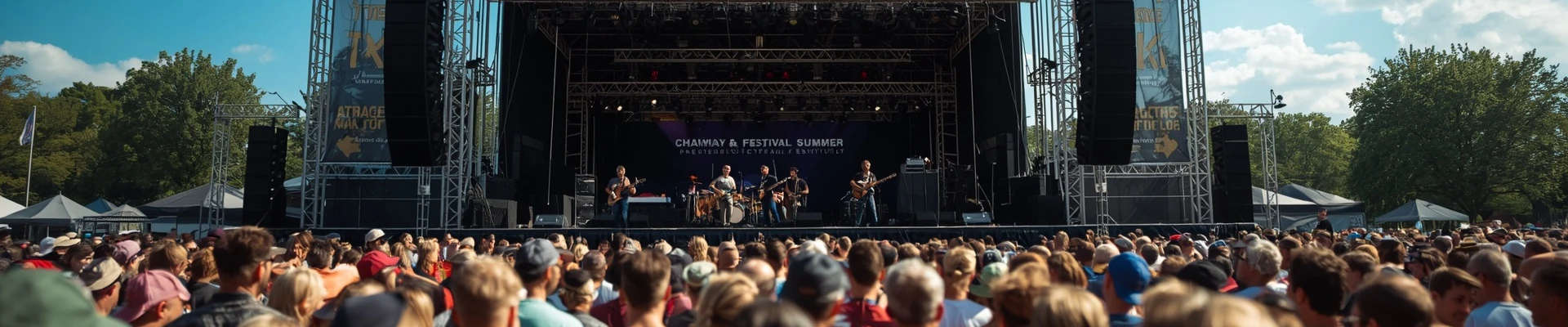
Anaheim's flagship venue, Honda Center — opened in 1993 as the Arrowhead Pond of Anaheim and later renamed — seats approximately 18,000 for concerts and serves as the home arena of the Anaheim Ducks NHL franchise. The arena occupies a position at the intersection of Katella Avenue and the Interstate 5 corridor, an address that has hosted virtually every major touring act of the past three decades: Bruce Springsteen, Metallica, Taylor Swift, Beyoncé, Elton John, and hundreds of others have played the room. For Orange County residents who want arena-scale events without driving to the Staples Center (now Crypto.com Arena) in Los Angeles, Honda Center is the default destination.
The Anaheim Convention Center, immediately adjacent to Disneyland Resort, supplements the arena with a large exhibition floor that accommodates convention-format music events and occasional large-format shows. Together, the two facilities have made Anaheim a reliable stop on major North American tours.
For mid-size shows, The Grove of Anaheim — a seated/standing hall of roughly 1,700 capacity — has been an important room for acts touring between club scale and arena scale since the early 2000s. National acts who once packed Chain Reaction return to the Grove as their careers grow.
The House of Blues Chapter
House of Blues Anaheim, which operated at Downtown Disney from 2001 until its closure in 2019, occupied an unusual position in the city's music ecosystem: a corporate-operated venue inside a corporate-operated entertainment district, yet consistently booked quality mid-size shows that served Orange County audiences who found Hollywood venues inconvenient. Its Foundation Room upstairs hosted industry events and private performances. Its closure — attributed to the Disneyland Resort's broader redevelopment plans for the Downtown Disney footprint — removed a 2,000-capacity room from a market that needed it.
Immigrant Communities and the Broader Sound
Anaheim's demographic reality is majority Latino — roughly 53 percent of the city's population identifies as Hispanic or Latino, the largest proportion in Orange County. This community has sustained a vibrant banda, norteño, cumbia, and regional Mexican scene operating largely through Spanish-language radio, nightclubs along Lincoln Avenue and the surrounding corridors, and a circuit of quinceañera halls and community events invisible to the English-language music press.
There is also a significant Vietnamese and Korean community, concentrated partly in the western portions of the city and in the neighbouring cities of Garden Grove and Westminster. These communities have their own music economies: karaoke venues, traditional performance spaces, and the K-pop and Vietnamese-language pop scenes that have grown substantially as streaming has reduced barriers to niche consumption.
The interaction between Anaheim's Latino majority and its punk-inflected Anglo subcultures produced some genuinely interesting border-zone music: the ska-punk of the 1990s, with its explicit debt to Jamaican and Latin rhythms, was partly a cultural product of Southern California's demographic mixing, even if the genre's canonical bands were predominantly white.
Studios and the Recording Infrastructure
Anaheim itself has never had the density of recording studios that Hollywood or the San Fernando Valley sustained, but the city and its immediate surroundings contributed to a regional recording infrastructure. Musicland Studios and various smaller tracking rooms in the area served the local band economy. The proximity to Los Angeles meant that bands who outgrew local resources could access world-class studios — Sound City in Van Nuys, Capitol Studios in Hollywood, Conway Recording in West Hollywood — without relocating.
For the punk and hardcore scene, the DIY recording aesthetic was a statement as much as a budget constraint. Early 1990s Anaheim-area releases were often recorded in home studios or stripped-down facilities and released on regional independent labels. This approach was a deliberate rejection of the polished L.A. music-industry sound rather than an inability to access it.
Education, Youth Culture, and the Scene's Feeder System
Loara High School, Anaheim High School, and Savanna High School have all contributed musicians to the regional scene over the decades. The band-booster culture of Orange County schools, combined with the relative affordability of rehearsal space in industrial Anaheim compared to coastal communities, made the city a natural incubator for teenagers forming bands. Youth programmes at the Anaheim Ballet and MUZEO Museum and Cultural Center have sustained a parallel strand of formal music and arts education.
What Ties It Together
Anaheim is not a music city in the way that Nashville or Detroit are music cities — built around a single industry, shaped by a coherent sound, structured around music infrastructure. It is something different: a massive, ethnically complex, economically stratified suburb whose music history is best understood as a series of eruptions from below. No Doubt did not emerge because Anaheim had great studios or a music industry; they emerged because working-class Anaheim kids in the 1980s had energy, access to instruments, and a local circuit of all-ages shows that let them develop over nearly a decade before the mainstream paid attention. The Orange County punk scene was not serviced by institutional support; it built its own institutions — Chain Reaction, Flipside zine, a network of VFW halls and converted garages — because the existing ones had no use for it.
That pattern — self-organised, demographically grounded, operating in the shadow of an entertainment monolith that consumes most of the city's international identity — defines Anaheim's music culture. Honda Center books the tours that sell 18,000 tickets. Chain Reaction and its successors book the bands that fill 200. Both coexist in the same city, and the gap between them is where Anaheim's actual musical life happens.