

Berkeley is a city of roughly 121,000 people on the eastern shore of San Francisco Bay, situated in Alameda County, California, directly across the bay from San Francisco and immediately north of Oakland. The Berkeley Hills form a dramatic green backdrop above a flatlands grid of bungalows, bookshops, and cramped music venues, with the campus of the University of California, Berkeley (UC Berkeley) anchoring the center of civic and intellectual life. Founded in 1878 and named after the Irish philosopher George Berkeley, the city has long occupied an outsized place in American political and cultural history — the Free Speech Movement of 1964, the Third World Liberation Front strikes, People's Park confrontations, and decades of progressive governance all originated here, and that political intensity has always filtered directly into the music the city makes and supports.
Berkeley's economy is anchored by UC Berkeley, one of the flagship public research universities in the world, plus a dense cluster of biotech firms, independent retail, and the overflow of San Francisco tech workers pushed eastward by the cost of living. The proximity to Oakland — literally blocks away, divided only by Telegraph Avenue crossing Alcatraz Avenue — means that Berkeley's music scene is functionally continuous with Oakland's deep hip-hop, soul, and avant-garde traditions, even as Berkeley maintains a distinct identity built on punk, folk, and political song.
A brief history
The land Berkeley now occupies was home to the Ohlone people for thousands of years before Spanish missionaries and later American ranchers displaced them through the 18th and 19th centuries. The city incorporated in 1878, and the establishment of UC Berkeley in 1869 ensured that the city would grow as an intellectual enclave rather than a purely industrial one. The early 20th century brought waves of working-class families from Italy, Portugal, Japan, and later Mexico and Central America into Berkeley's flatlands, creating multicultural neighborhoods that persist today. The post-World War II years brought African American families from the South through the Great Migration — many settling in South Berkeley and West Berkeley — and the political upheaval of the 1960s transformed Berkeley from a sleepy college town into a national symbol of student radicalism.
The music Berkeley exported in the decades that followed was inseparable from those politics. The folk revival of the late 1950s and 1960s found a natural home here — Joan Baez launched her career performing in Berkeley coffeehouses before any record deal, and Country Joe McDonald and the Fish used the city as a base for their caustic, psychedelically tinged Vietnam protest anthems. Moe's Books on Telegraph Avenue became a gathering point for musicians, writers, and organizers in ways that blurred the lines between culture and activism that Berkeley has never clearly drawn.
Music identity: punk, records, and the East Bay underground
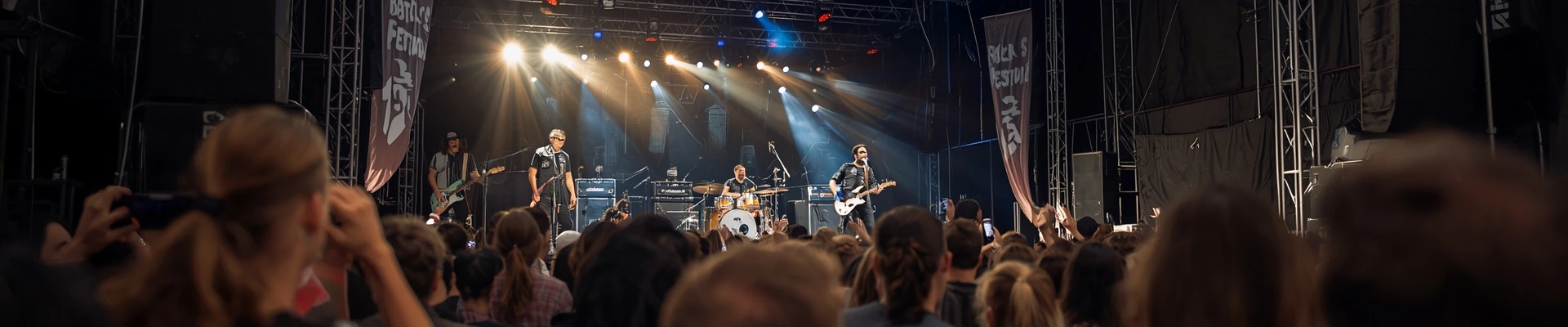
Berkeley's most internationally consequential musical contribution is the 924 Gilman Street Project — a nonprofit, all-ages, volunteer-run punk and hardcore venue that opened in January 1987 in a former warehouse in West Berkeley. Founded on explicitly anti-racist, anti-sexist, anti-homophobic principles, Gilman created a cooperative scene governed by membership voting rather than industry gatekeepers. The venue refused to book bands on major labels, keeping the local scene insulated from mainstream commercial logic while simultaneously incubating some of the most commercially successful punk acts of the 1990s and 2000s.
Green Day — formed by Billie Joe Armstrong and Mike Dirnt in the East Bay town of Rodeo before relocating their social world to Berkeley — became regulars at 924 Gilman in the late 1980s, releasing their early records on Lookout! Records before signing to Reprise. Their 1994 major-label debut Dookie would sell over 20 million copies worldwide, but it was the Gilman scene that taught them their craft. Rancid — fronted by Tim Armstrong and Lars Frederiksen, both East Bay natives — similarly cut their teeth at Gilman before releasing ...And Out Come the Wolves (1995), arguably the most fully realized document of the East Bay punk moment. Operation Ivy, the ska-punk group that immediately preceded Rancid and featured both Armstrongs, recorded their sole studio album Energy (1989) in Berkeley, and the record remains one of the most influential ska-punk documents in the genre's history.
Lookout! Records, founded by Larry Livermore in 1987 and initially based in the East Bay, was the label infrastructure that bound the Gilman scene together. Beyond Green Day and Operation Ivy, Lookout! released records by The Mr. T Experience, Screeching Weasel, Avail, and dozens of other bands that defined the international melodic punk underground of the 1990s. Though the label eventually relocated and experienced commercial difficulties, its Berkeley-era catalog remains a cornerstone of the genre.
The city's other great record legacy is Fantasy Records, founded in Berkeley in 1949 by Max and Sol Weiss. Fantasy built its early catalog on jazz and comedy — Dave Brubeck's landmark Time Out (1959) was a Fantasy release, as were recordings by Gerry Mulligan, Cal Tjader, and the early comedy of Lenny Bruce. In 1969, Saul Zaentz acquired the label and signed Creedence Clearwater Revival, the Fogerty brothers' Ike and Tina Turner-influenced roots-rock band from El Cerrito (just north of Berkeley), who would record all of their major albums — including Bayou Country, Green River, Cosmo's Factory, and Pendulum — for Fantasy between 1968 and 1972. The label's story also includes one of popular music's most notorious legal sagas: John Fogerty's decades-long legal battle with Zaentz over publishing rights and royalties, which defined the legal landscape of musician-label contracts for a generation.
Venues and neighborhoods
924 Gilman Street remains the beating heart of Berkeley's DIY scene despite decades of financial precarity, renovation crises, and changing musical tastes. The room holds roughly 400 people, operates on a donation and membership model, and continues to book punk, hardcore, metal, noise, and experimental shows. For generations of Bay Area teenagers, getting a Gilman membership card was a rite of passage.
The UC Theatre on Telegraph Avenue is Berkeley's most beloved mid-size concert hall — a 1917 movie palace that was converted to a live music venue and has hosted everyone from Bob Dylan to Radiohead to local hip-hop showcases. After years of closure and renovation, it reopened in 2018 fully restored and remains a cornerstone of the city's concert infrastructure.
The Freight & Salvage in downtown Berkeley is one of America's most respected folk, bluegrass, and Americana listening rooms — a seated, alcohol-free venue that has operated continuously since 1968, presenting artists like Ramblin' Jack Elliott, Doc Watson, Loudon Wainwright III, and hundreds of others through five decades. The venue relocated to a purpose-built facility in 2011 and continues to present 200+ shows per year.
Jupiter, a beer garden and restaurant on Shattuck Avenue, hosts regular outdoor and indoor live music with a bias toward local indie, jazz, and world music acts. The Ashby BART station area in South Berkeley has historically been an informal zone for jazz and blues busking, and a cluster of rehearsal studios and practice spaces in West Berkeley's industrial flats sustains the region's working musicians.
Telegraph Avenue — Berkeley's legendary counterculture corridor — has lost many of its record stores and music businesses to rent pressures, but Rasputin Music on Telegraph remains one of the Bay Area's finest used-record destinations, and the stretch between the UC campus and Dwight Way still functions as a gathering corridor for street musicians, vendors, and foot traffic that supports live music discovery.
The neighborhood of Elmwood — genteel, tree-lined, south of campus — has historically housed many of Berkeley's working musicians and academics, while the Flatlands (South and West Berkeley) remain the grittier creative core. North Berkeley near the Gourmet Ghetto on Shattuck has its own café and small venue culture, with Café Strada and neighborhood venues supporting acoustic and jazz performance.
University music and classical traditions
UC Berkeley's Department of Music is one of the most rigorous in the United States — its ethnomusicology program was foundational to the academic study of world music, producing scholars and practitioners whose work reshaped how American universities understand non-Western musical traditions. The campus Zellerbach Hall and Hertz Hall present a full season of classical, contemporary, and world music, with Hertz Hall specifically designed for chamber music and frequently hosting the San Francisco Symphony Chamber Music Society. The university's Center for New Music and Audio Technologies (CNMAT) is a leading research hub in music technology and computer music composition, bridging technical innovation and artistic practice.
The Crowden Music Center in the Elmwood neighborhood offers community music education and chamber music performance, and the annual Berkeley Festival & Exhibition, one of North America's premiere early music gatherings, draws scholars and performers from around the world to perform medieval, Renaissance, and Baroque music in Berkeley's churches and concert halls.
Hip-hop and spoken word
Though Oakland commands the regional hip-hop identity with a fierceness that Berkeley can't match, the city has produced and sustained significant hip-hop voices. Lyrics Born (Tom Shimura), a Japanese American rapper and producer raised in Berkeley, has released records since the mid-1990s on Quannum Projects — a Berkeley-based hip-hop collective he cofounded with DJ Shadow, Gift of Gab (Blackalicious), and others. Quannum's releases, including Lyrics Born's Later That Day (2003) and Blackalicious' Blazing Arrow (2002), represent the cerebral, sample-dense alternative hip-hop aesthetic that UC Berkeley's intellectual environment helped cultivate.
The spoken word and poetry slam tradition is strong at Berkeley, with regular events at the Starry Plough pub on Shattuck Avenue — an Irish pub that doubles as a folk, punk, and world music venue and has been a fixture of progressive Berkeley nightlife since the 1970s.
Festivals and events
The Berkeley World Music Festival has periodically organized free and low-cost outdoor concerts drawing on the Bay Area's extraordinary immigrant music communities — South Asian, West African, Latin American, and Southeast Asian traditions all represented. Kite's Fest, held in César Chávez Park along the waterfront, combines family programming with outdoor acoustic performance. The Berkeley campus's Cal Performances series brings international dance and music artists to campus year-round, with major presentations at Zellerbach Hall.
Noise Pop, the Bay Area indie music festival headquartered in San Francisco but deeply rooted in the East Bay, regularly features Berkeley venues and Berkeley-based acts in its February programming. The festival has been a reliable incubator for the kind of guitar-driven indie rock and art-pop that Berkeley's small-room ecosystem develops.
Immigrant communities and sonic diversity
Berkeley's diversity is extraordinary even by Bay Area standards. South Asian communities — particularly Indian, Pakistani, and Bangladeshi families — are significant in the flatlands and support a robust infrastructure of classical Indian music instruction, Bollywood dance, and South Asian student cultural organizations at UC Berkeley. The South Asian Students Association and related groups present Bhangra competitions, classical Carnatic and Hindustani performances, and fusion concerts throughout the year.
Berkeley's East Asian communities — Chinese, Korean, Japanese, Vietnamese — sustain a parallel set of cultural organizations and performance traditions. The Korean student community at UC Berkeley is among the largest in the UC system and organizes K-pop dance showcases, traditional Korean drumming (samulnori), and Korean jazz ensembles. Berkeley's historically significant Japanese American community — the Tanforan Assembly Center used as a WWII internment processing site was just south in San Bruno — has maintained cultural memory through the Berkeley Japanese American Community Center.
Latin American music is deeply embedded in South Berkeley, where Mexican and Central American communities sustain norteño, cumbia, mariachi, and salsa traditions. The Mission-adjacent character of South Berkeley means that live salsa and cumbia can be found at informal house parties and small bars on a weekend night with a regularity that tourist guides rarely capture.
What ties it all together
Berkeley is a city that takes music personally. The 924 Gilman cooperative model — volunteer-run, all-ages, democratically governed, anti-corporate — isn't just a venue policy; it's a philosophical statement about how musical communities should organize themselves. That ethos saturates the broader Berkeley scene: the Freight & Salvage's commitment to listening-room folk culture, Fantasy Records' jazz catalog, Lookout!'s punk infrastructure, Quannum's cerebral hip-hop, CNMAT's technology-forward composition. What the city produces most consistently is music that comes from a position — politically, aesthetically, communally — rather than music that chases a market. In a Bay Area that increasingly defines itself by the tech economy's disruption logic, Berkeley persists as a place where the cooperative, the handmade, and the principled carry genuine weight, and the music reflects that stubbornness with striking regularity.