
Burbank is a city of approximately 105,000 residents in the San Fernando Valley of Los Angeles County, California — roughly 18 kilometres northwest of downtown Los Angeles and directly adjacent to Hollywood to the south. It is bordered by Glendale to the east, North Hollywood to the west, La Crescenta and La Cañada Flintridge to the north, and Los Feliz and Silver Lake across the Los Angeles city boundary to the south. Despite its modest population, Burbank is one of the most globally recognised cities in California, carrying the official title of the "Media Capital of the World" — a designation earned by the sheer density of studios, networks, post-production houses, and entertainment infrastructure packed within its 44 square kilometres. Warner Bros. Studios, Walt Disney Studios, and the NBC Studios complex sit within the city limits. The Burbank Studios (now shared by Warner Bros. and formerly CBS) has hosted decades of television production. Hollywood Burbank Airport (Bob Hope Airport) provides direct access for touring musicians and industry professionals. The city's economy is almost entirely studio-anchored, and its music scene — session work, scoring stages, recording studios, and the constant churn of musicians relocated to the Los Angeles area for industry work — reflects that completely.
A brief history
The land that became Burbank was Tongva territory before Spanish colonisation. The Rancho Providencia land grant covered the area through the Mexican period. American settlers arrived after California statehood, and the city was formally incorporated in 1911 — named after David Burbank, a Los Angeles dentist and sheep rancher who had owned much of the land in the 1860s. Early Burbank was an agricultural and industrial town; the Lockheed Corporation (later Lockheed Martin) established its aircraft manufacturing plant here in 1928, and during the Second World War Burbank became one of the most important aviation manufacturing centres in the United States — the plant was famously camouflaged with a fake suburban neighbourhood draped over its roof to obscure it from enemy aircraft. Columbia Studios moved to Burbank in the 1930s, followed by Warner Bros. (which had built its studio in nearby North Hollywood and then expanded to Burbank) consolidating operations here. The Walt Disney Company relocated its studios from Silver Lake to Burbank in 1940. NBC established its West Coast production facilities in Burbank in 1952. By the 1960s, the studio-industrial complex had fully replaced Lockheed as the city's primary employer and identity. The famous Burbank Studios — the combined Warner Bros./Paramount facility before the lots were redivided — was the site of The Tonight Show with Johnny Carson (taped at NBC Burbank from 1972 to 1992), The Tonight Show with Jay Leno, Late Night, and dozens of other landmark television productions. The city today is studio-dominated, clean, quiet, and almost aggressively suburban in character — a deliberate contrast to the frenetic energy of neighbouring Los Angeles.
Music identity
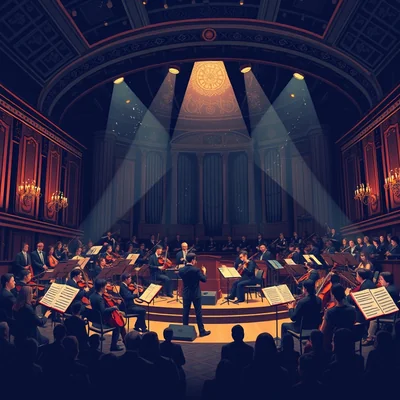
Burbank's most internationally consequential musical contribution is not a genre or a movement but an infrastructure: the scoring stage, the session room, and the studio back lot. The concentration of major film and television production facilities in Burbank has made it the global capital of film and television scoring — the composed, orchestrated, and recorded music for theatrical films, streaming series, animated features, and television production. Warner Bros. Studio's scoring stages have hosted some of the most celebrated film scores in cinematic history. The Eastwood Scoring Stage (formerly Stage M, renamed after Clint Eastwood in 2014) at Warner Bros. Studios is one of the largest and most acoustically sophisticated orchestral recording spaces in the world, with capacity for a 100-piece orchestra. Scoring sessions for tentpole franchises — the Harry Potter series, Batman franchise, the DC Extended Universe, animated features — have taken place in Burbank scoring rooms.
John Williams recorded sections of his most celebrated work at Burbank-area scoring stages. James Newton Howard, Hans Zimmer (through his Remote Control Productions in nearby Santa Monica, with regular Burbank recording), Randy Newman, Michael Giacchino, and dozens of the most prolific film composers have worked in Burbank or used its facilities. The Walt Disney Studios maintains its own scoring stage and has been the home of the Disney animated film musical tradition — the collaborative work of Alan Menken and Howard Ashman (The Little Mermaid, Beauty and the Beast, Aladdin) was developed and recorded in association with Disney Burbank. Alan Menken has been among the most decorated composers working from the Burbank studio complex, with multiple Academy Award wins for scores and songs developed through Disney's Burbank facilities.
Beyond the scoring world, Burbank sustained an active session musician culture from the 1950s through the present. The Wrecking Crew — the legendary collective of Los Angeles session players that recorded the instrumental tracks for the Beach Boys, the Byrds, Simon & Garfunkel, Sonny & Cher, the Mamas & the Papas, Frank Sinatra, and hundreds of other major acts — used studios across the San Fernando Valley and greater Los Angeles, with Burbank facilities in regular rotation. Glen Campbell, a central Wrecking Crew figure, built his solo career through this session ecosystem before becoming a country superstar. The recording studios along Empire Avenue and Victory Boulevard — a corridor of purpose-built recording and post-production facilities — have been in continuous use for commercial recording, television music, advertising music, and pop recording since the 1960s.
Burbank has been the creative and residential home for a number of notable recording artists. Aimee Mann, the indie pop and alternative singer-songwriter, lived and worked in Burbank and recorded album work in the Los Angeles area through her SuperEgo Records career. Jimmy Webb — the songwriter behind "Wichita Lineman," "By the Time I Get to Phoenix," "Galveston," and "MacArthur Park," widely regarded as one of the greatest pop songwriters of the 20th century — was based in the Los Angeles area and deeply embedded in the session-musician ecosystem centred near Burbank. Cheech & Chong (of the comedy-music duo) were associated with the broader Los Angeles entertainment scene centred on the San Fernando Valley. Steve Vai lived in Burbank for extended periods during his career as one of rock's most technically celebrated guitarists. Dick Dale, the "King of the Surf Guitar" and Burbank-area regular, developed elements of his sound through the San Fernando Valley surf and rock scene. The Foo Fighters rehearsed and recorded in and around the Burbank-North Hollywood corridor during peak career periods.
The city's Christian music scene is notable: Compassion International and major evangelical Christian entertainment and recording labels have used Burbank-area facilities for music production, connected to the broader San Fernando Valley evangelical community. Word Records and other Christian music operations have maintained relationships with Burbank recording infrastructure.
Venues and neighborhoods
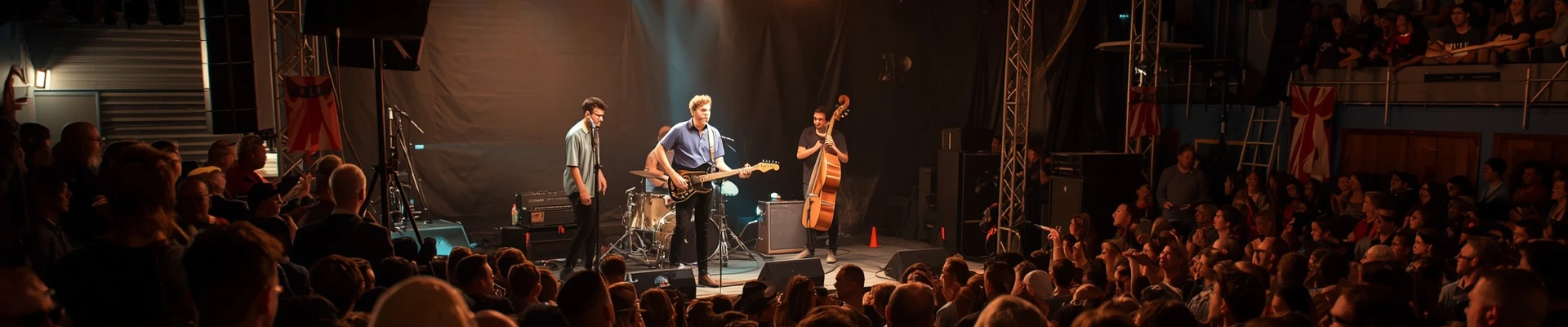
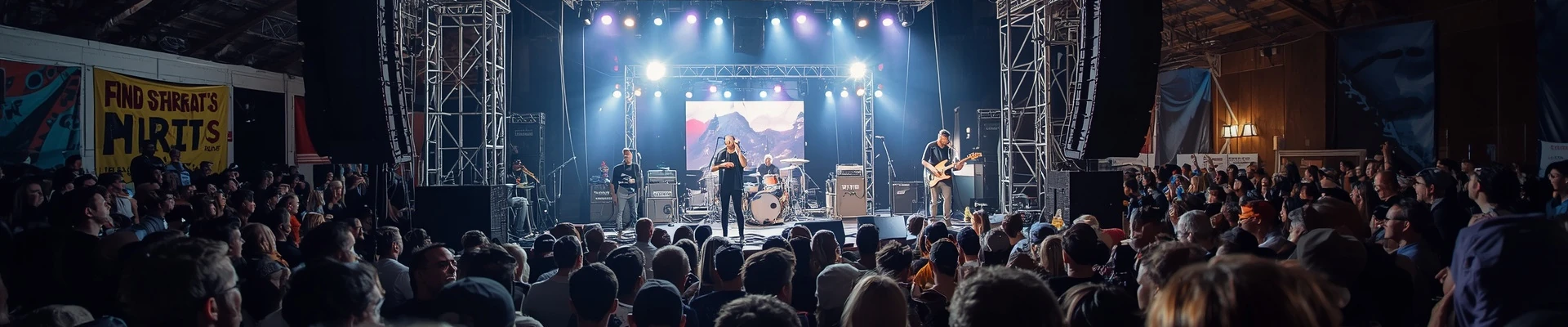
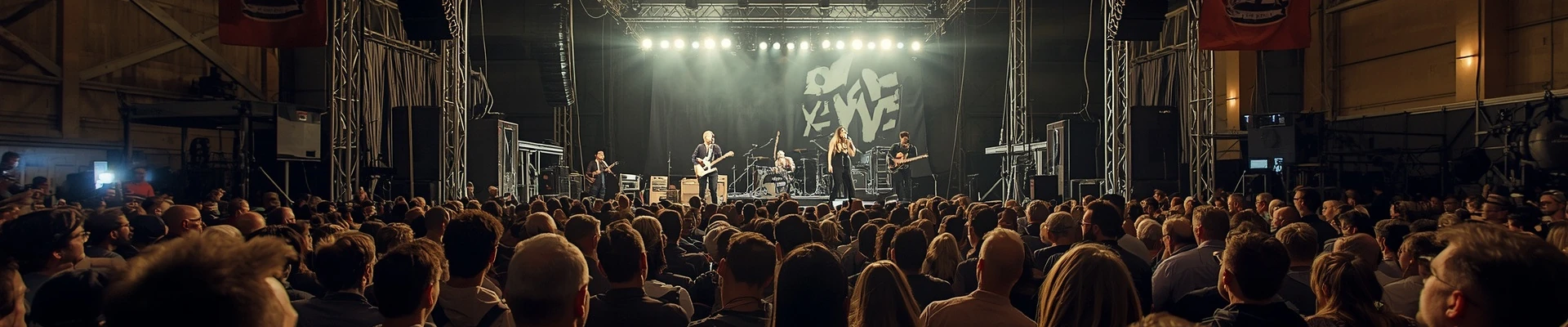
Burbank's venue ecosystem is modest by the standards of Los Angeles County but well-suited to its intimate, studio-community character. The flagship live room is The Canyon Club Burbank (formerly The Palomino Burbank), a mid-size concert venue that programs rock, country, pop, and tribute acts for audiences of several hundred. The Blue Room at the Burbank Marriott has been a small jazz and entertainment venue connected to the hotel industry servicing studio personnel. Flappers Comedy Club & Restaurant anchors the comedy entertainment scene — comedy and music frequently intersect in the Burbank entertainment ecosystem through NBC Tonight Show and late-night television production connections. The Colony Theatre is Burbank's principal legitimate theatre, programming drama, musicals, and occasional concert performances.
The Olive Avenue corridor and San Fernando Boulevard through Downtown Burbank anchor the city's commercial and entertainment district — restaurants, bars with live music, and the pedestrian-friendly strip known as "Downtown Burbank" with its mix of entertainment industry casual dining and entertainment venues. The Burbank Town Center and adjacent Magnolia Park district (along Magnolia Boulevard) is the city's most distinctive neighbourhood — a corridor of vintage and antique shops, retro diners, and local character that functions as Burbank's bohemian alternative to the studio-industrial mainstream. Magnolia Park has hosted pop-up music events, record fairs, and the kind of independent entertainment culture that the broader entertainment industry adjacent community sustains.
The Warner Bros. lot itself contains significant music-adjacent infrastructure — the Eastwood Scoring Stage, the Newman Scoring Stage (named after Alfred Newman, the legendary 20th Century Fox music director), archival sound libraries, and the production facilities for Warner Bros. Music. Walt Disney Studios on Buena Vista Street contains the Fantasound Stage and Disney's archival music production facilities.
Festivals and signature events
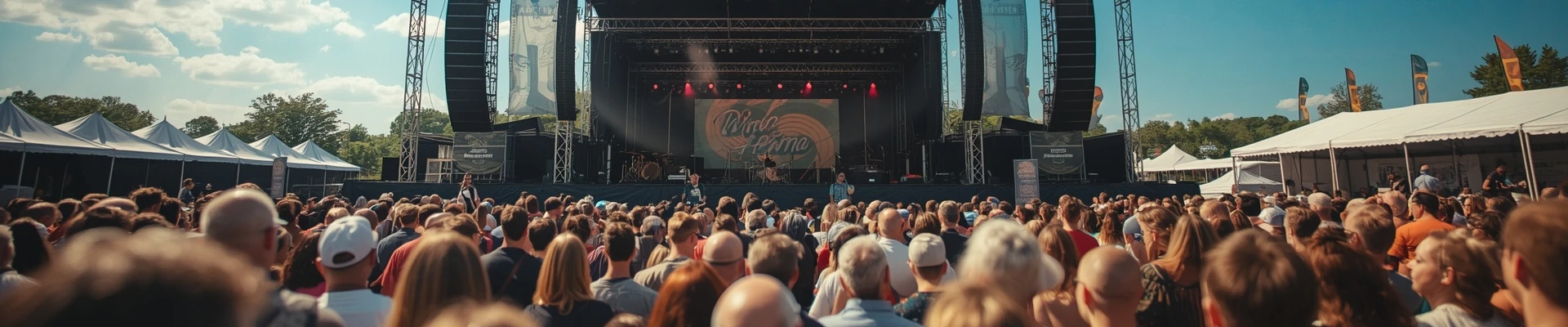
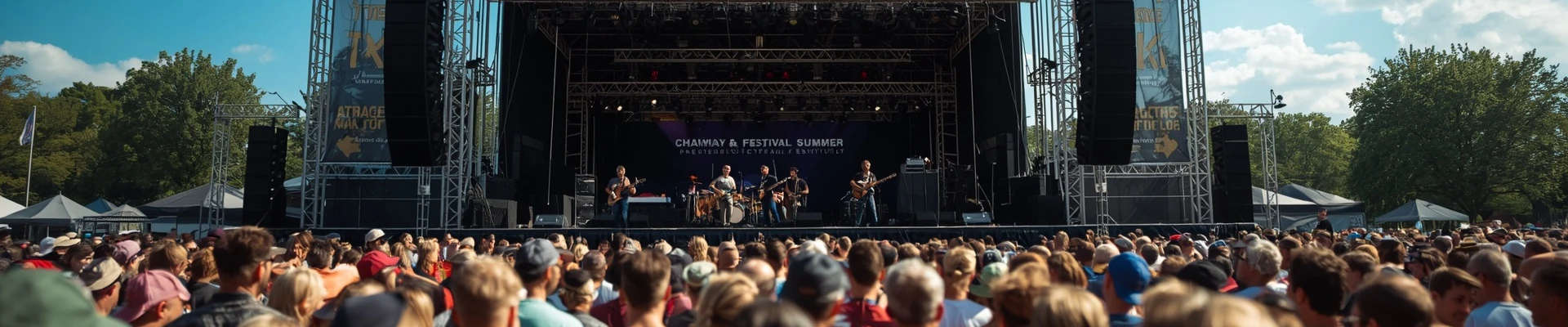
Burbank's festival calendar is quieter than its entertainment industry prominence would suggest — the city's entertainment output flows through the studios, not the streets. The Burbank International Film Festival (annually in September) programmes documentary, narrative, and short film with strong music-documentary programming. Burbank on Parade is the annual civic celebration with street entertainment and live music. The Burbank Arts Festival programmes visual and performing arts, including musical performance, through downtown Burbank each spring. Magnolia Park's intermittent vintage fairs and pop-up events bring record vendors and live music to the neighbourhood's sidewalks. Warner Bros. Studio Tour Hollywood runs continuous live entertainment programming and seasonal events that include musical and theatrical performance on the studio lot. It's a Wrap! and similar industry charity events frequently feature musical entertainment from industry-connected musicians.
The broader Los Angeles festival circuit — Hollywood Bowl, Greek Theatre, The Forum, Crypto.com Arena, SoFi Stadium — is accessible to Burbank residents across the metro, with Hollywood Bowl sitting roughly 20 minutes south and representing the primary outdoor orchestral and concert destination for the Burbank community.
What ties it all together
What distinguishes Burbank from virtually every other city of comparable size in the United States is that its music life runs almost entirely through industry infrastructure rather than clubs, street scenes, or grassroots scenes. A musician living in Burbank is as likely to be a session player booked for a Warner Bros. scoring session, a touring artist passing through Hollywood Burbank Airport between legs of a stadium tour, a film composer working from a home studio in the hills above the city, or a Disney songwriter developing the next animated feature's song cycle, as they are to be performing at a local venue on a Friday night. The Eastwood Scoring Stage and the Fantasound Stage have produced more internationally recognised music — by sheer audience reach through the theatrical and streaming releases they serve — than virtually any club or festival stage in the world. Burbank is where the music that scores the global imagination gets made: the orchestral swells behind superhero films, the songs behind Disney's most beloved animated features, the late-night television music that underscores American popular culture, and the session recordings that have underpinned decades of pop, country, and rock production in the greater Los Angeles area. It is a small city with an outsized, largely invisible role in the sound of contemporary life.