
The Circle City at the Edge of the Inland Empire
Corona occupies a distinctive position in Southern California's sprawling geography — tucked into a natural basin at the base of the Santa Ana Mountains, roughly 48 kilometres east-southeast of downtown Los Angeles and about 24 kilometres east of Anaheim. The city sits at approximately 237 metres elevation, rimmed on three sides by the Cleveland National Forest foothills and on the west by the Riverside–San Bernardino conurbation. Its population of around 164,000 makes it one of the larger cities in Riverside County, and its location at the junction of the Interstate 15 and State Route 91 corridors has turned it into a commuter city of consequence — hundreds of thousands of Angelenos and Orange County workers pass through its freeways daily.
The name "Circle City" is not a metaphor. Corona was laid out in 1886 as a planned agricultural city with a circular street called Grand Boulevard — a full mile in diameter — enclosing the original downtown grid. The circle survives today, now navigated by residents accustomed to its peculiar geometry, and it gives the city an identity visually distinct from the standard Southern California grid. Historically, Corona was a lemon-producing powerhouse; its citrus groves fed markets across the western United States for the first half of the twentieth century, and the Lemon Street corridor and Citrus Belt identity linger in local iconography even as the groves have given way almost entirely to tract housing and commercial development.
The economy is now service-sector and logistics-heavy, anchored by Amazon fulfillment infrastructure, healthcare facilities, and the steady economic engine of being a bedroom community for Los Angeles and Orange County workers priced out of those markets. Median household incomes are relatively high by Inland Empire standards, and the city has invested substantially in parks, recreation facilities, and community programming — infrastructure that has quietly supported youth music culture in ways that sometimes go unnoticed.
The 909 Sound and the Inland Empire Punk Tradition
Corona carries area code 909, the inland designation shared with San Bernardino, Riverside, Ontario, and the sprawling communities that stretch east toward the desert. That area code became a badge of identity for a generation of Inland Empire punk and hardcore bands who found themselves geographically adjacent to the Orange County scene but temperamentally distinct from it — grittier, less polished, shaped by landscapes of warehouse districts, strip malls, and desert-edge industrial zones rather than coastal affluence.
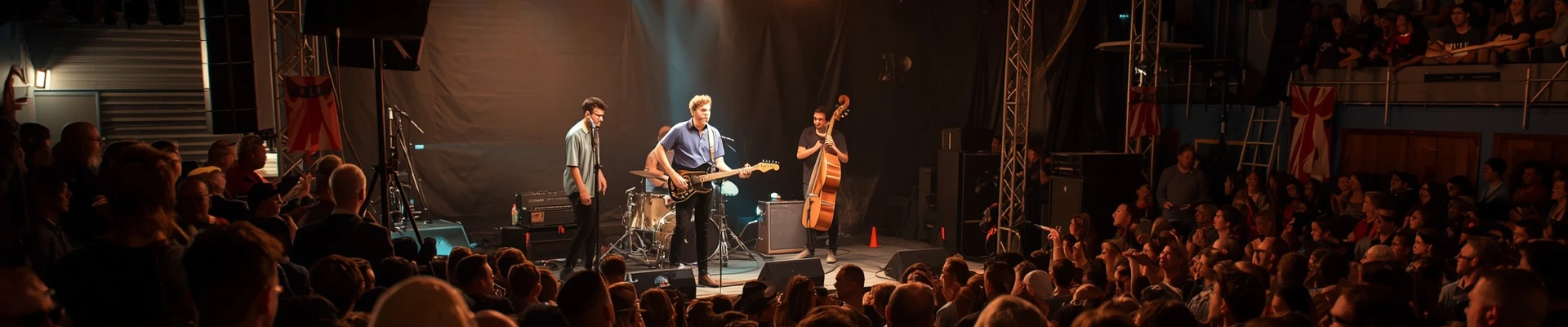
The Inland Empire hardcore scene of the 1990s and early 2000s produced bands that regularly played the same Southern California circuit as OC and LA groups — Chain Reaction in Anaheim, The Showcase Theatre in Corona itself, The Glass House in Pomona — and Corona was a recurring address in that network. The city's youth, like those across the Inland Empire, had few dedicated music venues and were accustomed to house shows, church halls, and the occasional rented VFW space. That scarcity produced a DIY ethic that persisted long after the dedicated venues opened.
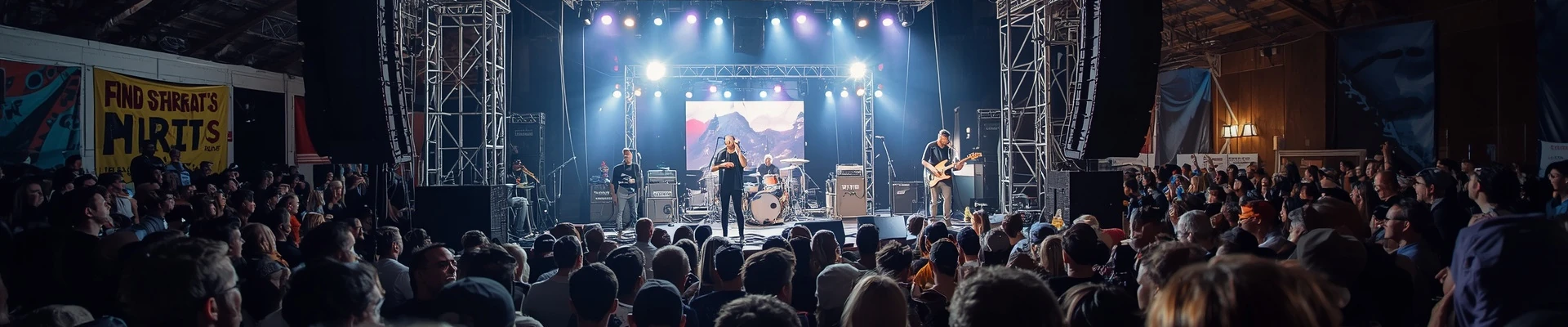
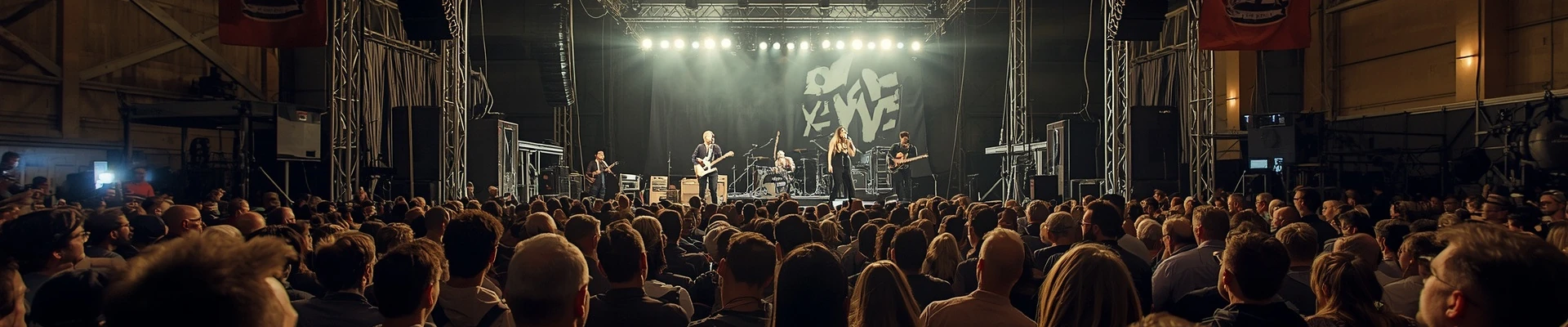
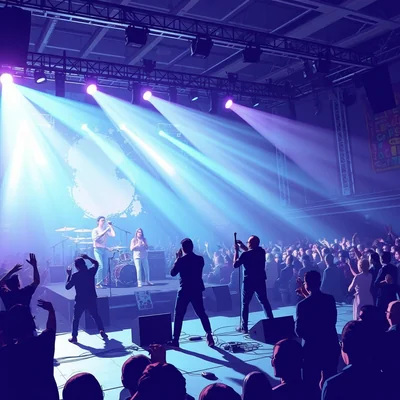
The Showcase Theatre was the city's most consequential music room for the better part of two decades. Located at 3795 Main Street in downtown Corona, the Showcase hosted an eclectic mix of punk, metal, hardcore, and alternative acts from the mid-1990s through the 2010s, functioning as a proving ground for regional bands and a reliable stop for national touring acts too large for house shows but not yet filling the amphitheatres. The room's all-ages format made it accessible to the teenagers who constituted the core of the Inland Empire scene, and its location in downtown Corona gave the city a genuine anchor for live music infrastructure. The venue's closure and the subsequent turnover of its space marked the end of an era for Inland Empire alternative culture.
Latin Music and the Regional Mexican Scene
Corona's demographic composition has shifted substantially over the past generation. The city is now majority-Hispanic — approximately 65 percent of residents identify as Hispanic or Latino — and that demographic shift has not been musically passive. The banda sinaloense, norteño, cumbia, and regional Mexican scenes operate through a network of nightclubs, quinceañera halls, community events, and the steady output of Spanish-language radio. KXFN and the broader regional Mexican radio ecosystem reach Corona's Latino community with regional Mexican content that is genuinely popular rather than niche.
The venues serving this scene are often multipurpose — banquet halls that book regional Mexican touring acts on weekend nights, nightclubs along the 6th Street and Magnolia Avenue corridors that cater to a Latin clientele, and a thriving circuit of private events (weddings, quinceañeras, baptisms) that sustain working bands year-round. The touring infrastructure for regional Mexican music in Southern California is well-developed, and Corona sits comfortably within the circuit that stretches from Los Angeles through the Inland Empire and into San Diego.
The convergence of the punk/hardcore tradition, which was disproportionately shaped by Latino youth even in its Anglo-coded presentations, and the more explicitly Latin regional Mexican scene, creates a city where Chicano identity in music takes multiple forms simultaneously — from the aggressive self-assertion of hardcore to the festive communalism of banda.
Norco and the Inland Empire Metal Corridor
The communities immediately surrounding Corona — Norco to the north, Riverside to the east, Ontario to the northwest — have contributed to a regional metal scene that has touched Corona through shared venues, bands, and rehearsal infrastructure. Minarets, a band from the Inland Empire that drew from post-hardcore and progressive metal traditions, is one example of the kind of regionally significant act that emerges from this geography. The metal and hardcore traditions have deep roots in Riverside County, and Corona bands regularly participated in the regional scene without necessarily generating nationally recognized names.
The city has also produced a modest but genuine hip-hop underground, connected to the broader Inland Empire rap tradition that stretches through San Bernardino and Riverside. That tradition has been documented less systematically than the punk scene but operates through the same channels — social media, regional showcases, the occasional recording session at the distributed network of small home studios that now constitute much of Southern California's recording infrastructure below the commercial tier.
Civic Venues and Community Music Infrastructure
The Fender Museum of Music and the Arts — which operated in Corona for over two decades before relocating and eventually restructuring — was the city's most unusual contribution to music infrastructure. The museum, connected to the Fender Musical Instruments Corporation (whose factory is in nearby Brea and whose headquarters are in Scottsdale, Arizona, though its cultural roots are in the broader Southern California instrument-manufacturing tradition), offered music education programming, exhibits on guitar history, and performance space. Its presence in Corona was a point of local pride and a genuine educational resource for young musicians who might not otherwise encounter formal music instruction.
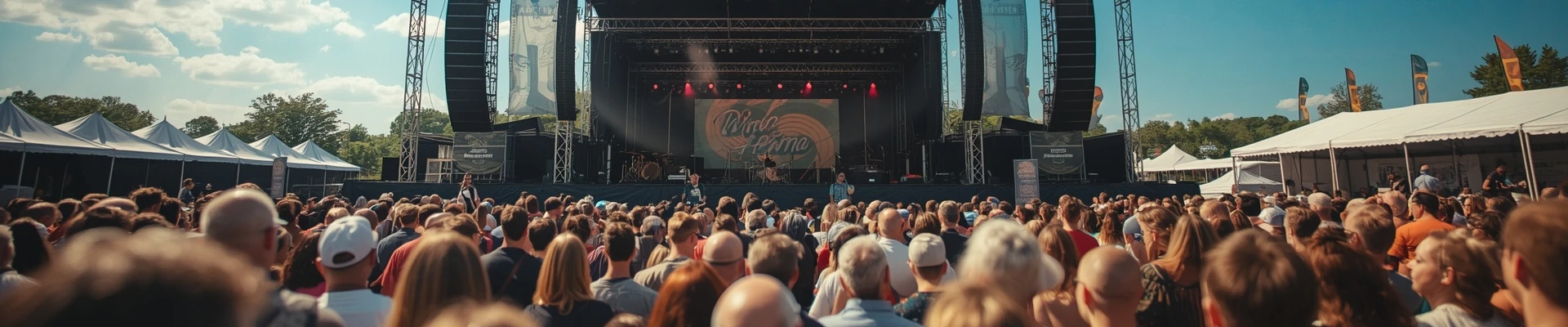
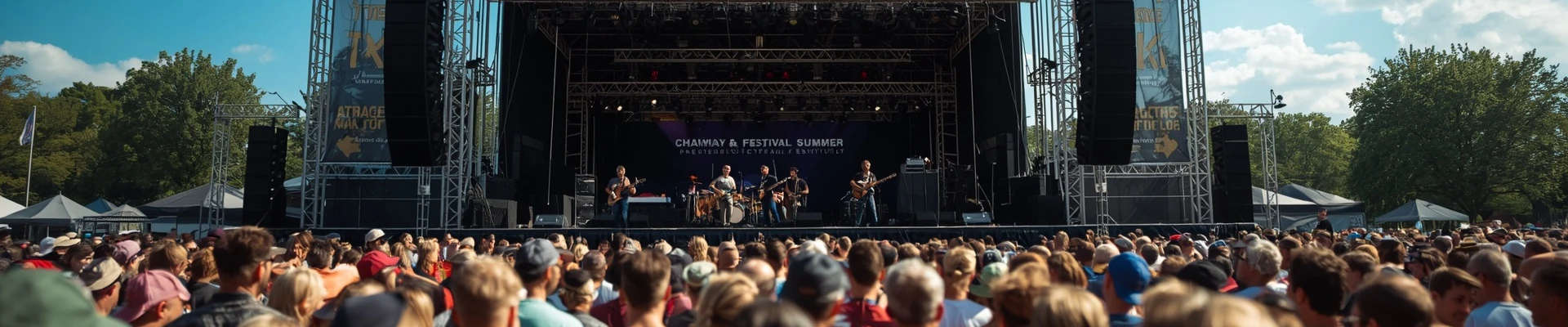
The Corona Public Library system has sustained music programming including recitals and cultural events. Citrus Park and the city's recreational programming have provided informal performance contexts for community ensembles, youth bands, and local acts. The Civic Center complex has hosted larger public events including outdoor concerts on the municipal grounds.
The Corona Heritage Park and Museum documents the city's agricultural past and has become a site for outdoor community events that occasionally include music programming, particularly during the annual Lemon Festival and other civic celebrations.
Schools, Youth Bands, and the Pipeline
Corona High School, Centennial High School, Santiago High School, Norco High School (just north of the city), and the other public schools of the Corona-Norco Unified School District have sustained band programs, choir programs, and the informal music culture of teenagers forming garage bands and playing school talent shows. The district's size — it is one of the larger unified districts in California — means the aggregate output of youth musicians is substantial even if individual school programs vary in quality.
The Corona-Norco Unified school district's performing arts infrastructure has produced musicians who have gone on to professional careers in various genres, though the city lacks the concentrated industry infrastructure that would keep them local. The pattern common across the Inland Empire applies: artists develop in Corona, then migrate to Los Angeles, San Diego, or further afield when professional opportunities require proximity to industry.
Private music instruction has been well-represented in Corona, with guitar schools, drum studios, and piano academies serving a population with the disposable income to invest in lessons. The presence of Guitar Center locations in the nearby commercial corridors ensures that instruments and equipment are accessible without the journey to Los Angeles that an earlier generation would have required.
The Amphitheatre Anchor
Toyota Arena in nearby Ontario — just 16 kilometres northwest of Corona — functions as the Inland Empire's primary mid-to-large venue for concerts in the 10,000-to-12,000-seat range, and Corona residents' proximity to it gives the city effective access to arena-scale touring without hosting the infrastructure itself. For smaller shows, The Fox Theater in Pomona (about 32 kilometres west) has become a regional anchor for concerts in the 1,500-to-2,000-seat range, serving the cluster of Inland Empire and eastern L.A. County cities that lack dedicated mid-size rooms.
The Auto Club Speedway in Fontana, a NASCAR venue with enormous outdoor capacity, has periodically hosted large-scale music events — the site's 92,000-seat oval and accompanying infield have accommodated festivals and concert productions that require outdoor space at a scale that no indoor venue in the region can match.
What Ties It Together
Corona does not have a single defining sound in the way that Detroit has techno or Bakersfield has its namesake country tradition. What it has is the music of a transitional city — between the coast and the desert, between the Orange County punk corridor and the San Bernardino metal and rap underground, between Anglo suburban youth culture and the predominantly Latino community that is now its demographic majority.
The Showcase Theatre anchored one era. The Latin banquet halls anchor another. Youth in Corona today are as likely to be producing beats in bedroom studios as they are to be rehearsing punk songs in a garage, and the city's proximity to Los Angeles means the full range of Southern California's music scenes is reachable within an hour. What it has produced — a generation of musicians shaped by the 909, by the heat, by the freeway commute, by the circular streets of a planned citrus town that became a bedroom community — is a contribution to the Inland Empire's musical identity that is more real than its international profile would suggest.
Grand Boulevard still runs its perfect circle through the original downtown. The lemon groves are mostly gone. The bands that came up at the Showcase are now adults. And a new generation of Corona musicians is figuring out what the Circle City sounds like in the streaming era.