
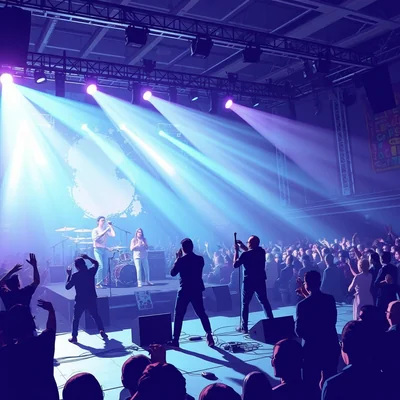
Costa Mesa is an incorporated city in Orange County, California, with roughly 113,000 residents spread across about 16 square miles of flat, inland terrain just two miles from the Pacific Ocean. Positioned between Newport Beach to the south and Santa Ana to the north, Costa Mesa occupies a strategic middle ground in one of the wealthiest and most culturally contradictory counties in the United States — a place where aerospace engineers and surf shops, evangelical megachurches and DIY punk basements, luxury car dealerships and independent art galleries exist in tight proximity. The city was incorporated in 1953, having grown rapidly from a farming community (it was the lima bean capital of Southern California in the early 20th century) into a postwar suburban center shaped by the nearby El Toro Marine Corps Air Station and the long industrial shadow of the Douglas Aircraft Company plant in nearby Santa Monica. Today Costa Mesa is most commonly associated with two of the region's largest cultural institutions — South Coast Plaza, one of the highest-grossing retail complexes in the world, and the Segerstrom Center for the Arts, Orange County's flagship performing arts campus — but beneath that affluent surface lies one of Southern California's most consequential independent music histories.
Geography and Economy
Costa Mesa sits at roughly 30 feet above sea level in the coastal plain of the Los Angeles Basin, flanked by the Santa Ana River to the east and the I-405 (San Diego Freeway) to the north. The city's layout is defined by several major commercial corridors — Harbor Boulevard, Bristol Street, and Newport Boulevard — interspersed with residential grid streets of mid-century ranch houses and apartment complexes. The SoBeCa district (South of 19th, bounded by 19th Street, Newport Boulevard, and the 55 freeway) emerged in the 2000s as Costa Mesa's creative quarter: a repurposed industrial zone of galleries, independent restaurants, and small music venues that has drawn comparisons to comparable urban-creative districts in Silver Lake, Oakland, and Portland. The OC Fair & Event Center (Orange County Fairgrounds) grounds on Fair Drive represents the largest dedicated event space in the county, hosting everything from the annual OC Fair to major outdoor concerts. Costa Mesa's economy is driven by retail (South Coast Plaza generates over $2 billion annually), healthcare (proximity to Hoag Hospital Newport Beach), and the creative economy built around the Segerstrom Center's cluster of resident companies.
A Brief History
The land now occupied by Costa Mesa was inhabited by the Tongva (Gabrieliño) people before Spanish missionaries established Mission San Juan Capistrano twenty miles to the south in 1776. The area was granted as Rancho Santiago de Santa Ana under Mexican rule. American settlement accelerated after the Civil War, when the Southern Pacific railroad reached Santa Ana; by the 1880s, the coastal plain was producing lima beans, celery, and sugar beets. The community known as Harper was renamed Costa Mesa ("coastal tableland" in Spanish) in 1920, and the discovery of oil in 1921 accelerated its growth. The El Toro Marine Corps Air Station, established in 1942 and active through 1999, shaped the demographics and character of Costa Mesa and surrounding communities for half a century — bringing a steady population of young servicemen, families, and an ethos of transient ambition that fed naturally into both suburban sprawl and, later, punk rock. The city incorporated in 1953 and grew through the postwar boom; the opening of South Coast Plaza in 1967 transformed Costa Mesa's commercial identity and drew a regional draw for luxury retail that continues to define its public image.
Music Identity
Costa Mesa's most internationally consequential contribution to popular music is its foundational role in Orange County punk and hardcore — a suburban SoCal strain of punk that was rawer, faster, and more ideologically charged than the preceding Hollywood punk scene, and that produced some of the most influential bands in the genre's history.
Social Distortion formed in Fullerton in 1978 but were embedded in the Costa Mesa/Orange County scene from their earliest days, playing the area's rehearsal spaces and small clubs through the late 1970s and early 1980s before achieving mainstream recognition. The Adolescents formed in Fullerton in 1980 and were the defining voice of the early O.C. hardcore sound — their 1981 self-titled debut (the "Blue Album") on Frontier Records is among the most important documents of American hardcore. Agent Orange formed in Fullerton in 1979 and pioneered the fusion of punk speed with surf guitar that became a hallmark of the Orange County sound. TSOL (True Sounds of Liberty) formed in Long Beach in 1978 but became associated with the broader Orange County circuit, evolving from hardcore to a gothic post-punk style that influenced countless acts. These bands collectively established O.C. as a scene — not just a geographic accident but a coherent aesthetic and social world with its own fanzines (Flipside), record stores, rehearsal spaces, and house shows.
The scene's spiritual center was Fender's Ballroom in Long Beach (just across the county line), but Costa Mesa's contribution was the infrastructure of rehearsal spaces, basement shows, and small clubs along Harbor Boulevard and in the industrial corridors off Placentia Avenue. The Cuckoo's Nest — a club that operated on Newport Boulevard in the late 1970s and early 1980s — was the most important all-ages venue in Orange County punk history, hosting Black Flag, The Germs, X, Fear, and virtually every significant act from that era. It was destroyed in a fire in 1981, but its brief existence established Costa Mesa as a punk capital rather than merely a punk suburb.
Later generations built on that foundation. No Doubt — formed in Anaheim in 1986 — came to prominence through the Orange County circuit, including Costa Mesa stages, before breaking nationally with Tragic Kingdom (1995). The Offspring (Huntington Beach) and Sublime (Long Beach) emerged from the same regional ecosystem. Sugarcult formed in Santa Barbara but became closely associated with the Orange County scene. By the late 1990s and 2000s, the region's pop-punk and ska-punk export was global, with Interscope Records and Epitaph Records (founded in L.A. but shaped by O.C. bands) as the dominant labels.
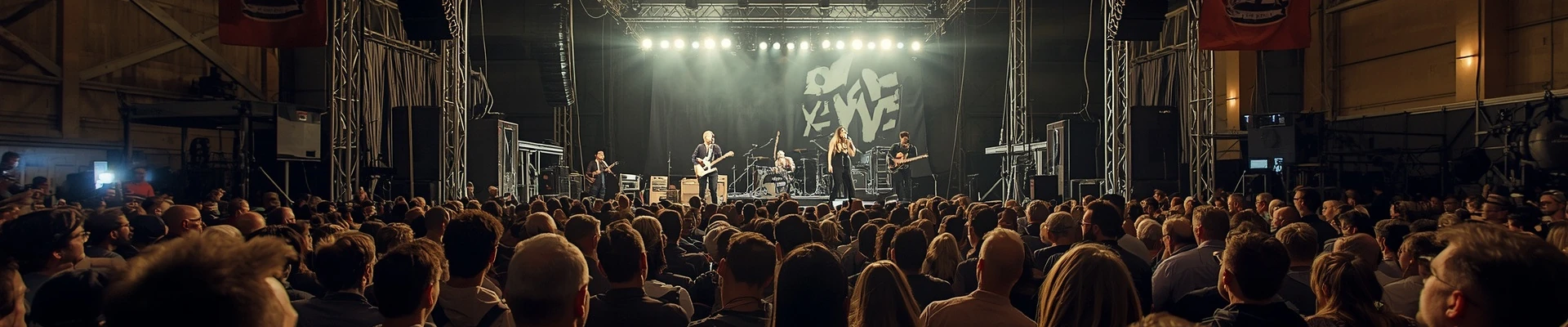
Costa Mesa's music scene in the 21st century is more diffuse — indie rock, electronic, hip-hop, and experimental music all find space in the SoBeCa district and along the city's independent corridors — but the punk genealogy remains the city's deepest musical root system. Local recording studios like The Void Recording have supported independent acts across genres, and the general availability of rehearsal space in Costa Mesa's light-industrial zones continues to make it a practical home for working musicians priced out of Los Angeles.
Venues and Neighborhoods
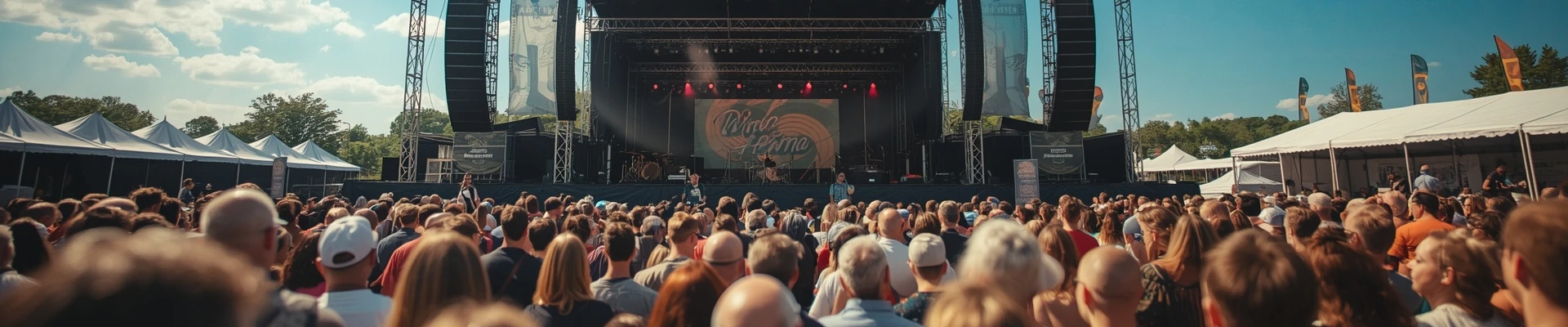
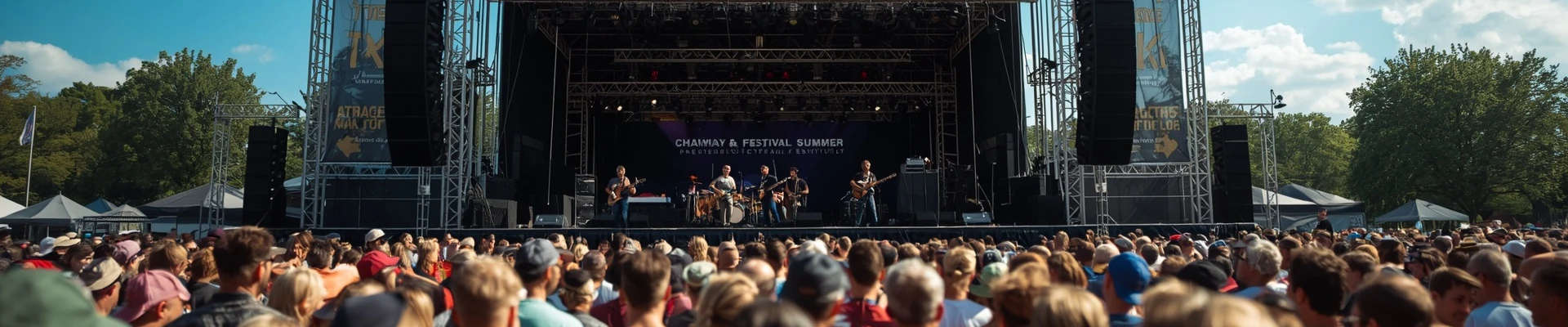
The Pacific Amphitheatre at the OC Fair & Event Center is Costa Mesa's flagship outdoor venue — a 8,500-capacity amphitheatre that has hosted major touring acts including Tom Petty & The Heartbreakers, Radiohead, Dave Matthews Band, Steely Dan, The Killers, and Fleetwood Mac. The summer season aligns with the Orange County Fair (late July through mid-August), and the venue draws heavily from the broader Southern California concert market.
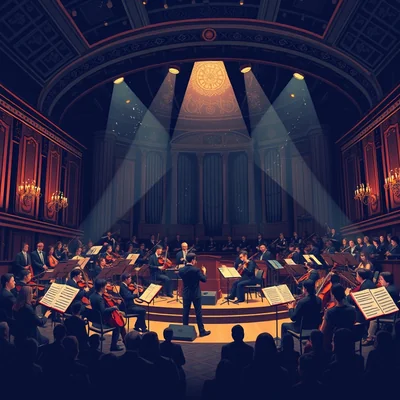
Segerstrom Center for the Arts on Town Center Drive is the region's premier classical and theatrical venue — home to Pacific Symphony, the Philharmonic Society of Orange County, and the Pacific Chorale, and a regular stop for Broadway touring productions, jazz headliners, and world music programming. The center's Renée and Henry Segerstrom Concert Hall (opened 2006) is an acoustically sophisticated 2,000-seat house designed by Cesar Pelli that brought international-caliber classical programming to Orange County permanently.
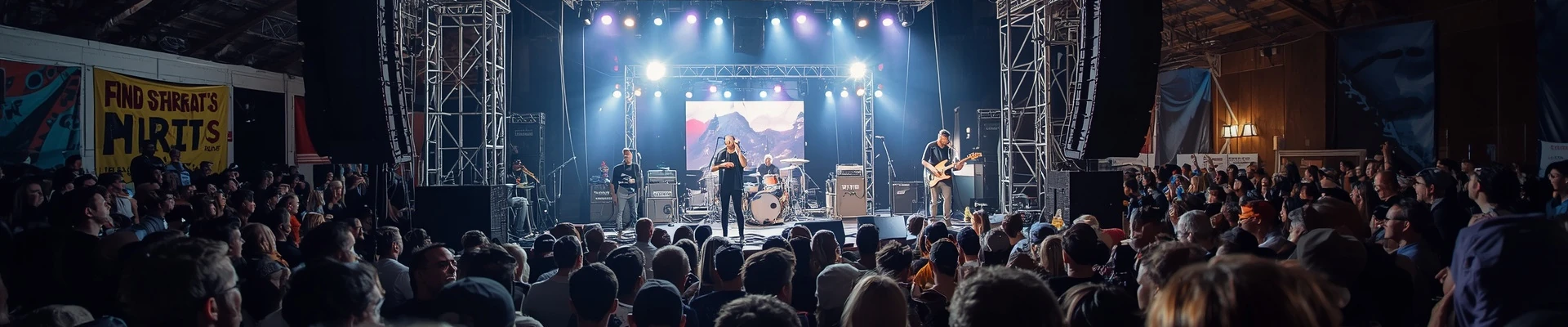
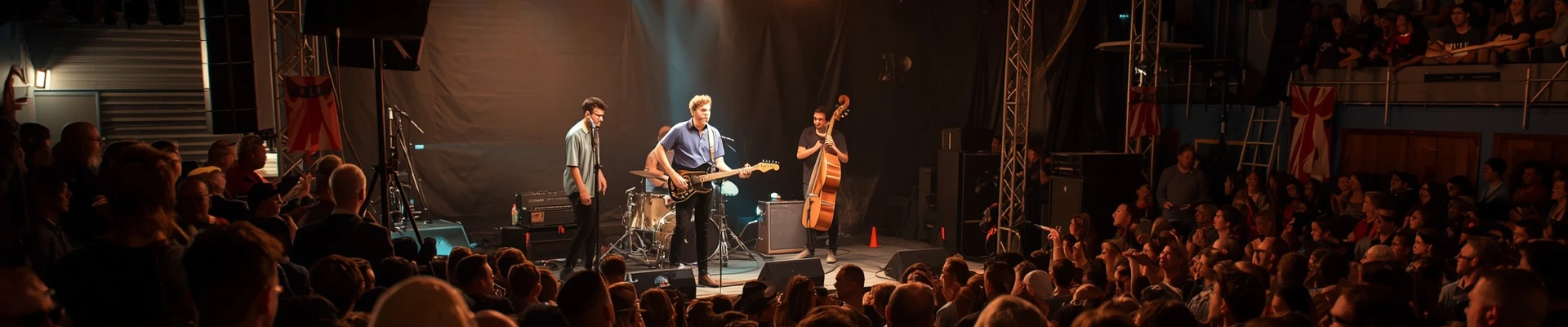
The Wayfarer on Harbor Boulevard is the city's most active independent live music bar — a mid-size club and bar with a no-frills stage that books indie rock, punk, metal, and emerging acts on a near-nightly schedule. It is the closest thing Costa Mesa currently has to a dedicated rock club with consistent local character.
The SoBeCa district anchors Costa Mesa's independent creative scene, with gallery spaces, pop-up performance venues, and the general density of creative businesses that sustains a local arts ecosystem. The LAB Anti-Mall on Bristol Street — a lifestyle retail center with an alternative bent — has hosted outdoor music events and supports the creative-commercial crossover identity of the neighborhood. Triangle Square on Newport Boulevard is a retail and entertainment complex that has cycled through various tenants, including venues that have hosted live music events.
Festivals and Events
The Pacific Symphony's Concerts in the Park series brings free outdoor classical performance to the city in summer. The OC Fair itself is a major annual event (late July to mid-August) with a full concert program at the Pacific Amphitheatre and smaller stages throughout the fairgrounds, historically spanning country, pop, classic rock, and Latin music. Zoomtopia and various Segerstrom Center programming series — including the Curtain Up! celebration and the annual Holiday Sing-Along — extend the city's event calendar across the year. Costa Mesa's proximity to Anaheim means the National Orange Show of San Bernardino and various large-scale regional events draw from overlapping audiences.
Community and Demographics
Costa Mesa's population is roughly 32% Hispanic or Latino, reflecting the significant Mexican-American community concentrated primarily in the Westside neighborhood between Newport Boulevard and the Santa Ana city boundary. The Westside is the oldest and most working-class section of Costa Mesa, with deep roots in California's Mexican-American cultural tradition — mariachi, norteño, and banda music are part of the neighborhood's social fabric. A smaller Vietnamese-American community has settled along Harbor Boulevard, contributing to a modest but established presence of Vietnamese restaurants and businesses. The more affluent eastern and southern portions of the city — closer to Newport Beach — are predominantly white, drawing from the professional and retired populations associated with the O.C.'s coastal communities.
What Ties It All Together
Costa Mesa's defining musical signature is the tension between its manicured civic surface and its raw underground inheritance. The Segerstrom Center and South Coast Plaza project one version of the city — tasteful, prosperous, globally connected through touring orchestras and Broadway productions. The punk basements, rehearsal studios, and Harbor Boulevard clubs project another — a city where teenagers have been strapping on guitars and screaming into borrowed microphones since the late 1970s, producing a stream of bands that shaped American rock music from hardcore to pop-punk to post-punk to ska. Both versions are real. The same geography that made Costa Mesa a comfortable place to raise a family in a tract house also made it exactly the kind of culturally bland, economically stratified environment that reliably generates punk music. That double identity — affluent and angry, polished and raw — remains the city's most honest cultural contribution.