
El Monte, California
El Monte sits at the eastern end of the San Gabriel Valley, roughly 12 miles east of downtown Los Angeles in the broad alluvial flatlands where the San Gabriel River once shifted course before flood-control concrete fixed it in place. The city covers about 9.6 square miles at an elevation of roughly 275 feet, and its population — just over 116,000 — has been predominantly Mexican and Mexican-American for decades, a demographic fact that shaped every dimension of its cultural life, including its music. The name itself comes from the Spanish for "the thicket" or "the forest," a reference to the willow groves that early settlers found along the river. Long before California became a state, El Monte was the western terminus of the Santa Fe Trail, the place where wagon trains from Missouri finally arrived after months on the road — a city born as a destination, a place where journeys ended and new chapters began.
The economy of El Monte developed around light manufacturing, warehousing, and logistics — a blue-collar base that gave the city a working-class character it has never entirely shed. The factories and rail yards drew migrants from the American South and from Mexico across the twentieth century, and those two streams of working people brought their music with them. By the mid-1950s, El Monte had a large enough African-American community to sustain R&B record shops and radio listeners who followed labels like Chess, Specialty, and Imperial, and a Mexican-American community that blended that R&B enthusiasm with the corrido and nortena traditions of the borderlands. The collision of those musical worlds produced something specific to this corridor of the San Gabriel Valley — a style of R&B and doo-wop that scholars and enthusiasts would eventually call the "El Monte sound."
El Monte Legion Stadium
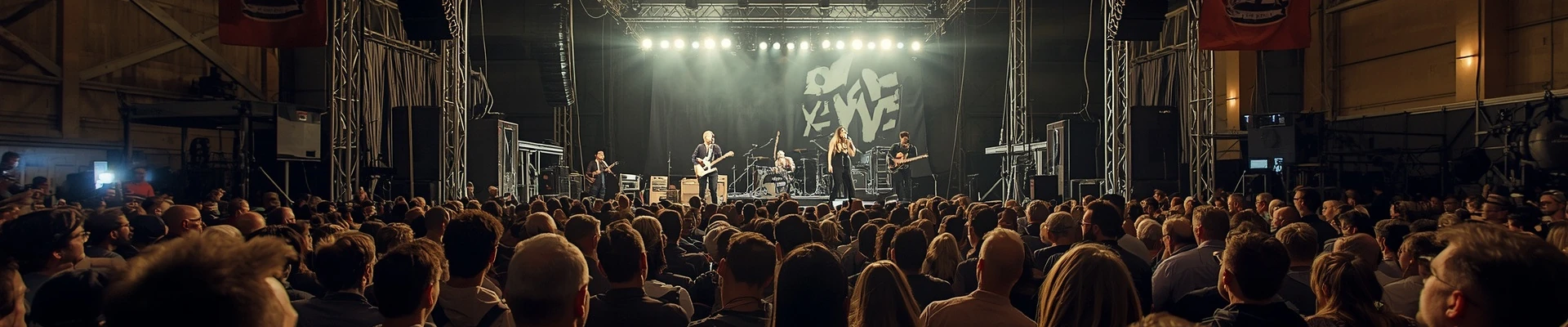
No physical structure in El Monte's history carries more weight than the El Monte Legion Stadium, and few venues anywhere in Southern California played a more consequential role in the early development of rock and roll on the West Coast. Located on Valley Boulevard, the Legion Stadium was an American Legion hall with a ballroom floor large enough to host dances, and from the mid-1950s onward it became the anchor of a weekly Saturday-night concert series that drew teenagers from across Los Angeles County. The promoter most associated with those shows was Johnny Otis, the bandleader, talent scout, and impresario who was already a titan of the West Coast R&B world — the same Johnny Otis who discovered Etta James and co-wrote "Hound Dog" alongside Willie Mae Thornton. Otis understood that the San Gabriel Valley audience was young, multiracial, and hungry for live music, and he booked accordingly.
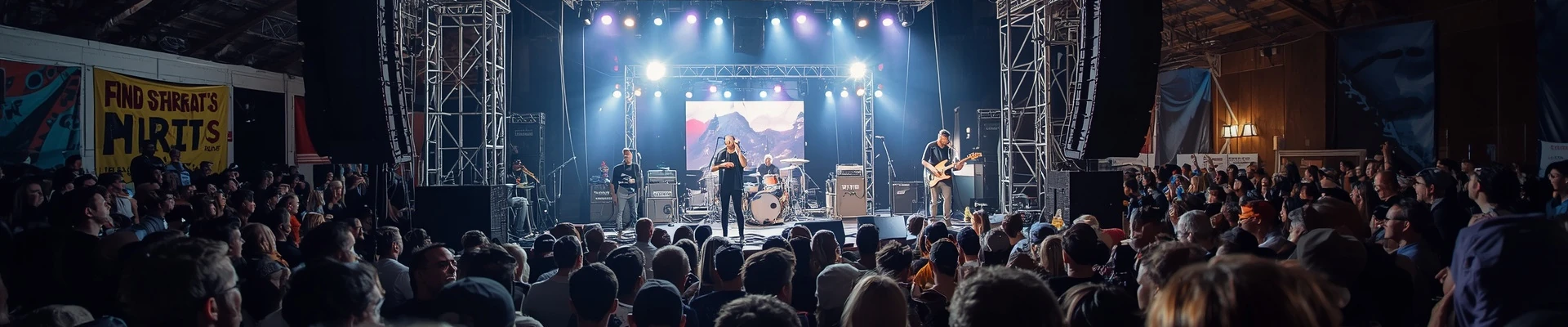
The Saturday-night dances at the Legion Stadium featured performers from the top tier of 1950s R&B and early rock: Etta James, Little Richard, The Penguins, The Coasters, Jesse Belvin, Don Julian and the Meadowlarks, The Champs (the Fresno-rooted band who scored "Tequila"), and dozens of others passed through the hall. The audience was overwhelmingly Mexican-American — young pachucas and pachucos from the San Gabriel and San Fernando Valleys who had adopted R&B as their music, who drove lowriders and wore the fashion of a subculture that mainstream Anglo Los Angeles largely ignored or feared. The Legion Stadium was their space, and the music that happened there was theirs.
The venue's cultural legacy crystallized in 1964 when The Premiers, a Chicano garage-rock band from Garden Grove, recorded "Farmer John" and more crucially the B-side "Doin' the Dog" — but it was their concert-recording anthem "El Monte Legion Stadium" (sometimes listed as a Premiers track) that put the room's name into the Southern California rock and roll vocabulary permanently. Sung over a churning Bo Diddley beat, the song name-checked the venue as the center of a universe where brown teenagers danced until the floor shook. The Midniters, a seven-piece Chicano R&B band who recorded for Whittier Records and became one of the defining acts of the Latino rock scene, played the Legion Stadium regularly throughout the 1960s. Their recordings — "Whittier Drive," "Land of 1000 Dances," and the raw ballad "That's All" — document the energy of that milieu better than any retrospective account.
The Chicano Rock Scene
El Monte's connection to Chicano rock extends well beyond the Legion Stadium's golden era. The entire eastern corridor of Los Angeles County — East LA, Commerce, Pico Rivera, Whittier, and El Monte — functioned as an interconnected scene through the late 1950s and into the 1970s, sharing audiences, musicians, and local radio support from stations like KGFJ and later KRLA. El Monte's own bands fed into and drew from this circuit. Thee Midniters, with their horn-driven attack and bilingual stage presence, became the most celebrated product of that ecosystem, recording for a series of small local labels and embodying a synthesis of soul, R&B, and corrido-influenced sensibility that defined what Chicano rock would mean.
The tradition carried forward. Los Lobos — formed in East Los Angeles in 1973 by David Hidalgo, Louie Pérez, César Rosas, Conrad Lozano, and Steve Berlin — drew directly on the legacy of the Legion Stadium era, incorporating the same San Gabriel Valley R&B muscle into a sound that eventually cracked the mainstream with their 1987 cover of "La Bamba" (from the Ritchie Valens biopic). Though Los Lobos themselves are from East LA proper, their music is inseparable from the broader El Monte–East LA cultural continuum. Similarly, Malo and the various spin-offs from Santana's Bay Area circle had strong ties to Southern California's Chicano audience, and El Monte's fans were part of that extended community.
By the 1980s, El Monte had connections to the emerging lowrider oldies scene — a subgenre of slow, stripped-back doo-wop and early soul that Chicano car culture in Southern California had preserved and celebrated long after those records fell off the mainstream radar. KRLA oldies broadcasts and cassette compilations circulating through cruising culture kept artists like The Penguins, The El Dorados, and Little Caesar and the Romans alive in El Monte living rooms and on the boulevard long past their commercial shelf lives.
Contemporary Music and Venues
El Monte's contemporary music scene exists within the broader Los Angeles County ecosystem rather than as a standalone hub. The city's proximity to the San Gabriel Valley's Vietnamese, Chinese, and Filipino communities has introduced karaoke culture and Southeast Asian pop into the entertainment mix, with lounges and karaoke rooms along Garvey Avenue and Valley Boulevard serving multi-generational immigrant clientele. The Mexican-American population sustains a steady diet of regional Mexican music — banda sinaloense, norteño, cumbia — at venues and restaurants throughout the city, reflecting the cultural gravity of Jalisco and Sinaloa states in the regional imagination.
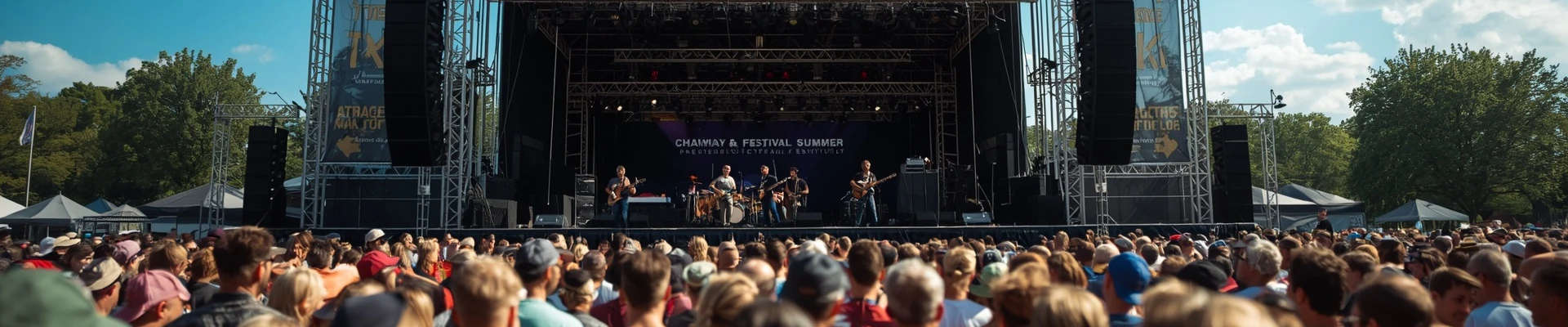
The El Monte Civic Center hosts concerts and community events, and the Ramona High School auditorium has been a site of local performances across genres. The city's parks system — including Lashbrook Park and Peck Road Park — hosts outdoor music events in warmer months, including Latin music festivals and community celebrations that draw from across the San Gabriel Valley. Small bars and restaurants along Peck Road and Valley Boulevard serve as informal live music venues, particularly for regional Mexican styles and Latin jazz.
For larger touring productions, El Monte residents travel to the Kia Forum in Inglewood, the Hollywood Palladium, the Greek Theatre in Los Feliz, or the Shrine Auditorium — all within 30 minutes. The proximity to Los Angeles proper means El Monte musicians have always had access to recording studios, booking agents, and industry infrastructure without those resources needing to exist within the city limits. Sunset Sound in Hollywood, Capitol Studios in Hollywood, and the countless small tracking rooms in the San Fernando Valley have all absorbed El Monte-connected musicians over the decades.
Radio and Recording
El Monte's music was always tied to the radio ecosystem of greater Los Angeles. In the late 1950s, Hunter Hancock and Art Laboe were the DJs who connected San Gabriel Valley teenagers to R&B and early rock, spinning records on KPOP and KALI respectively and building the audience that Johnny Otis's Legion Stadium shows converted into live concert regulars. Art Laboe in particular became synonymous with the oldies-and-dedications format that Chicano listeners embraced, and his syndicated shows kept the El Monte sound alive across Southern California for decades.
Recording activity in El Monte itself was modest — most local artists recorded in larger Hollywood or Burbank facilities — but Whittier Records, based in the nearby Whittier–Pico Rivera corridor, served as a key independent label for the Chicano rock scene and released some of Thee Midniters' most important material. Later, the San Gabriel Valley produced its share of session musicians who worked across the LA studio complex, and East San Gabriel Valley acts ranging from punk bands to hip-hop collectives have recorded at mid-tier facilities in the Valley since the 1990s.
What Ties It All Together
El Monte's defining musical signature is the moment when African-American R&B met Mexican-American lowrider culture on a ballroom floor and produced something that neither community could have created alone. The El Monte Legion Stadium is the physical locus of that collision, and the music that emerged from those Saturday-night dances — the doo-wop of Jesse Belvin, the soul of Etta James, the garage-rock rave-ups of Thee Midniters and The Premiers — became a foundation for what we now recognize as Chicano rock: a tradition of working-class pride, linguistic code-switching, and musical synthesis that runs from the 1950s through Los Lobos and beyond. El Monte didn't produce one superstar genre the way Detroit produced Motown or Nashville produced country; it produced something more diffuse and arguably more durable — a cultural stance, a way of hearing music as a shared inheritance that belongs to everyone who shows up on the dance floor and claims it.