
Fairfield, California
Fairfield anchors Solano County at the geographic midpoint between San Francisco and Sacramento, straddling Interstate 80 roughly forty miles northeast of the Bay Bridge and forty miles southwest of the state capitol. Incorporated in 1903, the city grew steadily around its role as county seat, but the dominant force in twentieth-century Fairfield has been Travis Air Force Base — the largest aerial port of embarkation in the United States and the city's single largest employer. The base brings a constant rotation of military families and personnel, giving Fairfield an unusually transient demographic even by California standards. Its population of roughly 113,000 is majority-minority: Hispanic and Latino residents make up approximately 26 percent, Black or African American residents about 15 percent, and Asian Americans — with Filipino and Pacific Islander communities among the most established — roughly 15 percent. White residents account for around 37 percent. This multiethnic composition, combined with the military-to-civilian pipeline and proximity to the Bay Area's recording infrastructure, defines the character of the local music scene.
Fairfield is sometimes grouped with Vallejo to the south as part of a Solano County musical corridor. While Vallejo commands the greater cultural reputation — it produced Sly Stone, E-40, and Mac Dre — Fairfield has its own music identity rooted in the same Bay Area soil. The cities share an area code (707) and a listener base, and Fairfield artists have long moved between the two cities' studio and venue circuits. Where Vallejo's scene was catalyzed by post-naval-yard economic stress, Fairfield's is shaped by the military town's peculiar social mix: Southern Black families who came with the Air Force and stayed, Latin American communities from agricultural Solano County towns, and successive waves of Bay Area transplants priced out of Oakland and Vallejo.
Music Identity
R&B and Soul Roots
Fairfield's deepest musical thread runs through Black church music and R&B. The city's African American community, concentrated in the Cordelia and Dover areas as well as central Fairfield, built a gospel and soul circuit that fed into the broader Bay Area R&B scene from the 1960s onward. Local churches hosted the kind of talent showcases and youth choir programs that have produced professional musicians across the American South and Southwest, and Fairfield's military-adjacent Black community brought musical traditions from Georgia, Alabama, the Carolinas, and Texas into a Northern California context.
The soul and funk underground that flourished in Vallejo in the 1970s had Fairfield participants. The corridor between the two cities supported a network of soul clubs and roadhouse venues — the kind of all-ages-or-close spaces where regional R&B acts could build a following before pursuing Bay Area booking.
Hip-Hop and the Solano County Pipeline
By the 1990s, Fairfield was part of the broader Bay Area hip-hop ecosystem without being its own distinct scene. Artists moved between Fairfield, Vallejo, and Napa with regularity, recording at Bay Area studios and playing house parties, rec center shows, and the modest club circuit that developed in Solano County. The hyphy movement that Mac Dre and E-40 anchored in Vallejo had Fairfield participants — producers and MCs who contributed to the era's regional sound without becoming nationally recognized names.
Fuel — a Fairfield-based rap collective active in the 2000s — exemplified the city's independent hip-hop model: recording locally, distributing through Bay Area networks, and playing the same circuit as Vallejo and Oakland acts without the profile. The Solano County hip-hop underground has consistently produced technically skilled MCs who operate below national radar, with careers sustained by regional streaming numbers and local show circuits rather than label deals.
Country, Rock, and the Military Audience
Travis Air Force Base creates a distinct demand for country music, classic rock, and Southern-inflected genres that Fairfield's bar and venue circuit serves in ways that Vallejo and Oakland typically do not. The base's enlisted population — heavily drawn from Southern and Midwestern states — sustains a country music bar scene unusual for the Bay Area. Cardroom and bar venues along Texas Street and North Texas Street have historically catered to this audience with cover bands and touring country acts making the Sacramento-to-Bay Area circuit.
This military-country undercurrent is musically significant: it means Fairfield has supported a parallel live music scene, operating almost entirely separately from the hip-hop and R&B pipeline, that has kept country and classic rock venues viable in a region where they would otherwise not exist.
Contemporary Scene
The streaming era has given Fairfield artists direct access to Bay Area audiences. Independent R&B and hip-hop artists release on SoundCloud and Spotify without the Bay Area gatekeeping infrastructure that once required physical proximity to Oakland or San Francisco studios. Fairfield appears in song lyrics and producer credits across the Bay Area trap and melodic rap scenes, functioning less as a named origin point than as a node in the wider NorCal music network. WillThaRapper and several Fairfield-based SoundCloud artists gained regional traction in the late 2010s within the Bay Area's porous bedroom-pop and lo-fi rap ecosystems.
Venues and Neighborhoods
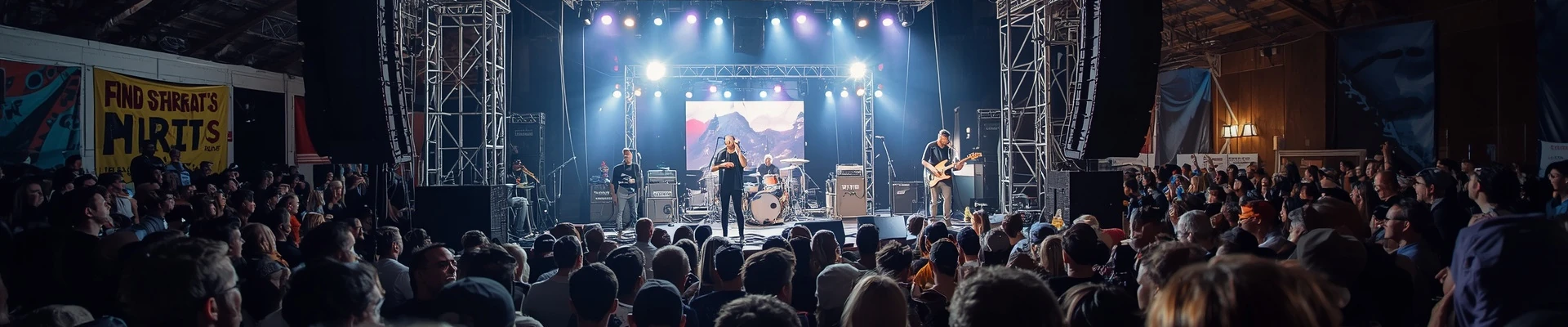
Fairfield's live music infrastructure reflects its mid-sized, car-oriented geography. The city lacks a historic downtown entertainment district comparable to Vallejo's Georgia Street, but several corridors support live music:
- The Cutting Edge — a Fairfield music venue that has hosted local and regional rock and metal acts, representing the city's working-class hard rock contingent
- Scandia Family Fun Center — hosts family-oriented music events and serves as a community gathering space for seasonal concerts
- Fairfield Community Center — municipal venue for larger local showcases, cultural programming, and community music events
- Downtown Fairfield around Texas Street — the city's historic commercial core, with bars supporting live music on weekends
The Solano County Fairgrounds in Vallejo and the Dixon May Fair in neighboring Dixon offer outdoor festival stages within easy driving distance, anchoring a regional fair circuit that rotating local bands rely on for summer income. The Napa Valley Expo to the north provides a higher-profile outdoor venue option for larger regional acts.
Suisun City, immediately adjacent to the east, operates what is effectively a shared venue circuit with Fairfield — the waterfront district there hosts weekend music events and boat-basin concerts that draw from both cities' populations.
Festivals and Events
- Fairfield Tomato Festival — an annual civic celebration in downtown Fairfield featuring live music stages, typically showcasing local rock, country, and R&B acts alongside agricultural exhibits
- Texas Street Block Party — periodic street closures in the downtown corridor for outdoor music events
- Solano County Fair (at Solano County Fairgrounds, Vallejo) — the county-wide fair, easily the largest musical event in the region, featuring concert headliners and local band competitions across the summer
- Suisun City Concerts in the Park — free outdoor concert series at the adjacent waterfront, drawing acts from Fairfield, Vallejo, and Napa
Demographics and Community Context
The Filipino and Pacific Islander community in Fairfield is among the largest and most culturally active in Solano County. Many Filipino families arrived through the Travis Air Force Base pipeline — the U.S. military recruited heavily in the Philippines through the twentieth century, and veterans and their families settled in military towns across California. The Filipino-American music tradition, which blends American pop and R&B sensibility with strong vocal culture (karaoke and live performance are deeply embedded in Filipino community life), has influenced Fairfield's R&B underground in ways that rarely surface as credited contribution but are audible in the scene's sound.
The Hispanic and Latino population, drawn from agricultural communities across Solano County, sustains a regional Mexican music circuit — norteño bands, banda, and cumbia — that operates through a network of quinceañeras, church halls, and a handful of dedicated Latin nightclubs. This scene is structurally separate from the hip-hop ecosystem but is the most consistently active live music sector in Fairfield by number of gigs per year.
The city's transient military population creates an unusual churn in the audience base. Unlike cities where local scenes build across decades with consistent participants, Fairfield's listener base rotates every two to three years as Air Force assignments shift. This makes it harder to accumulate the kind of committed local audience that sustains indie scenes in more stable cities, and pushes Fairfield musicians toward the Bay Area circuit where audiences are larger and less transient.
What Ties It All Together
Fairfield's musical identity is that of the corridor city — a place whose music flows out more than it stays in. Artists trained in Fairfield's church choirs, rec center rap ciphers, and bar band circuits tend to graduate toward Vallejo, Oakland, or Sacramento rather than build lasting local institutions. The city's strength is less a distinctive sound than a reliable supply: of trained vocalists, of working musicians who know the Solano County circuit, of producers who understand the Bay Area market. The military town's Southern soul roots, the Filipino community's vocal culture, the Latin circuit's live-music discipline, and the Bay Area hip-hop education available through proximity to Vallejo combine to make Fairfield a consistent contributor to a larger regional music ecosystem — a city that makes musicians more than it makes movements.