
Steel, Sprawl, and Sound
Fontana sits at the foot of the San Gabriel Mountains in the western Inland Empire, roughly 50 miles east of downtown Los Angeles via Interstate 10. Founded in 1913 as a farming colony and incorporated in 1952, the city spent its mid-century decades defined by one colossal industrial fact: the Kaiser Steel Mill, which at its peak in the 1960s employed over ten thousand workers and made Fontana the largest steel-producing city on the West Coast. The mill drew Black, Mexican American, and working-class white families from across the country, creating a dense, polyglot, blue-collar community in the shadow of the San Bernardino foothills.
Kaiser Steel closed in 1983, throwing thousands out of work and leaving a 1,400-acre brownfield where the mill had stood. The social fallout was severe — gang activity spiked, the population destabilized, and the Inland Empire's reputation as the hard end of the Southern California sprawl calcified. What emerged from that wreckage, however, was one of the most fertile working-class music scenes in California's history. The same economic pressure that produced frustration produced art, and Fontana's kids reached for guitars, turntables, and spray cans.
Today the former steel site is occupied by warehouses — a different kind of heavy industry. Fontana is one of the nation's busiest inland logistics nodes, with millions of square feet of distribution centers lining the I-10 and I-15 corridors. The population has swelled to over 212,000, the majority Latino, and the city continues to attract working families priced out of coastal Los Angeles. The sonic identity of the place — loud, fast, unpretentious, built from muscle memory and necessity — has never fully left.
Punk and Metal Roots: The Inland Empire Underground
Fontana's deepest musical claim to national significance runs through the early California hardcore punk movement. The city and its immediate surroundings gave rise to a constellation of musicians who would define the sound of West Coast hardcore. Henry Rollins fronted Black Flag beginning in 1981, and while the band formed in Hermosa Beach, the Inland Empire corridor including Fontana provided a significant share of their audience, infrastructure, and eventually personnel during the years they were reshaping American punk. The Inland Empire hardcore scene — centered on basement shows, house parties, and brief runs at rented halls — operated largely without dedicated venues, which gave it an urgency that polished club culture couldn't manufacture.
Suicidal Tendencies, founded in Venice but reaching enormous popularity across the IE, found devoted audiences in Fontana whose thrashcore attitude resonated directly with working-class Inland Empire youth. The crossover between punk and metal ran deep here: bands like Stormtroopers of Death (S.O.D.) and the thrash network connecting the Bay Area to Southern California ran through scenes that the Inland Empire fed.
Within Fontana specifically, the heavy metal tradition took firm hold in the 1980s and 1990s. Dr. Know — guitarists whose influence on punk-metal crossover ran from Black Flag's early years forward — was among the players who shaped the sound of the region. The city's practice spaces, rented rooms, and informal venues hosted bands moving between punk, thrash, and death metal. The Southern California death metal boom of the early 1990s, anchored by labels like Roadrunner Records and Metal Blade Records (the latter based in Burbank), pulled energy from across the IE, and Fontana practitioners were part of that gravitational field.
Hip-Hop, R&B, and the IE Sound
Alongside the punk and metal underground, Fontana developed a significant hip-hop culture rooted in its demographics and its proximity to both Los Angeles and the San Bernardino–Riverside corridor. The Inland Empire variant of West Coast rap drew from the G-Funk tradition pioneered in Compton and Long Beach but evolved its own flavor — slower tempos in some cases, heavier bass, references to the suburban-industrial geography of the 10 and 15 freeways.
Glasses Malone (born in Fontana) became one of the most prominent Inland Empire artists to cross over into mainstream West Coast hip-hop, appearing on releases connected to Cash Money Records and working with producers across the genre. His presence in the 2000s national rap conversation helped put the IE on the map as more than a secondary market.
The broader IE hip-hop scene centered on cities including Fontana, Rialto, San Bernardino, and Riverside produced a steady output through the early 2000s. Regional labels and collectives distributed mixtapes and independent CDs through a distribution network of record stores — Wherehouse Music locations, independent shops in malls, and swap meets — that operated parallel to the major-label ecosystem. Local producers and MCs built careers on that infrastructure before streaming platforms rationalized it away.
R&B has run alongside hip-hop throughout Fontana's musical history. The city's African American community, rooted in the Kaiser Steel migration, sustained church music traditions, gospel choirs, and soul performance that fed later generations of singers and producers. Several artists with Fontana roots have moved through the Los Angeles R&B production ecosystem without receiving credit proportional to their contribution — the invisible-labor pattern endemic to working-class Black communities adjacent to the entertainment industry.
Venues and the Live Scene
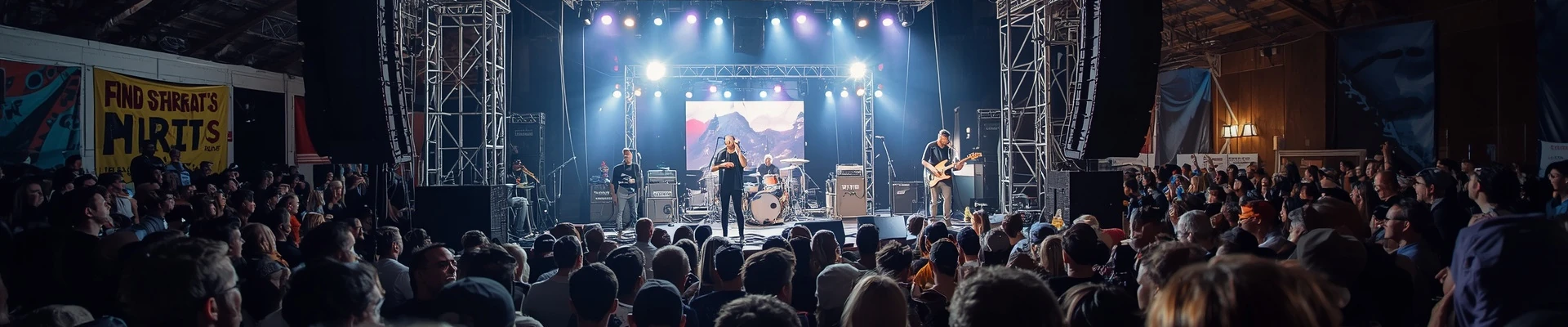
Fontana has never been a city of landmark concert venues in the traditional sense — its music history is predominantly a basement, garage, and rented-hall story. The city's most prominent large-capacity entertainment facility is the Auto Club Speedway (now called California Speedway under NASCAR rebranding), which is primarily a motorsports venue but has hosted major outdoor concerts as support events to racing weekends. This is an exceptional circumstance rather than the city's primary live music infrastructure.
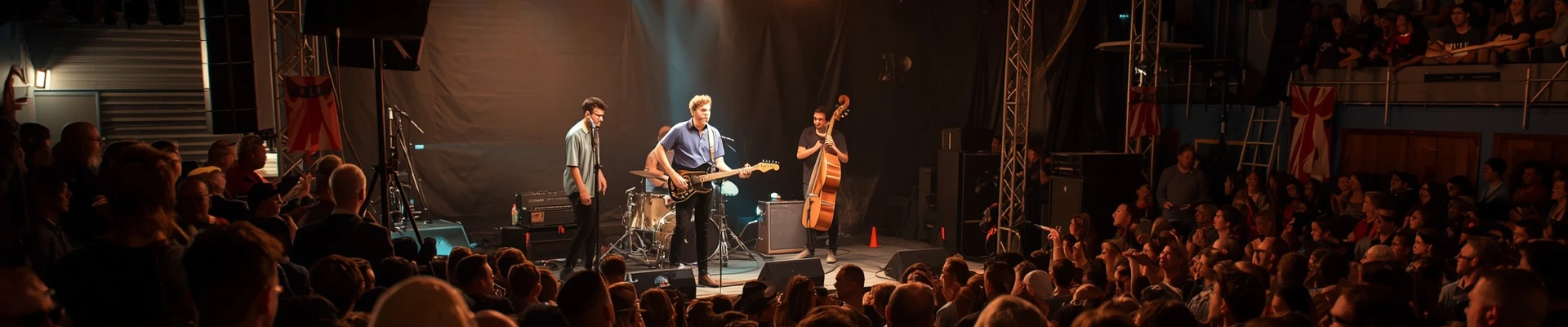
Day-to-day live music in Fontana moves through a rotation of bars with stages, restaurant venues, and banquet halls used for Latin music nights, corridos performances, norteño bands, and regional Mexican acts that draw from Fontana's large Mexican American community. These spaces — many operating without dedicated venue identities — represent the real working concert infrastructure of the city.
The regional Mexican music scene in Fontana is substantial and consistent. Norteño bands, banda sinaloense groups, and corrido artists perform regularly, drawing large audiences from across the western IE. These shows function both as entertainment and as community gathering rituals, and they support a local economy of promoters, sound engineers, and equipment suppliers who operate almost entirely outside the Anglo indie-music press.
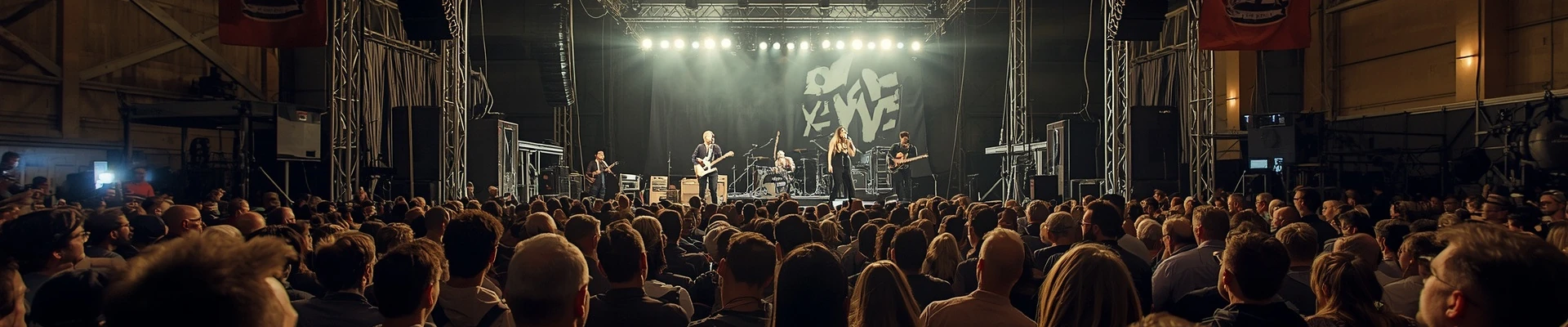
For larger indie and rock shows, Fontana residents have historically driven west to The Glass House in Pomona — a 700-capacity all-ages venue that has been central to the Inland Empire's relationship with national touring acts since the mid-1990s. The Fox Theater Pomona and venues in Riverside and San Bernardino extend the regional circuit. Ontario's Toyota Arena (formerly Citizens Business Bank Arena) serves the major-label arena tier for the entire Inland Empire.
Festivals and Community Events
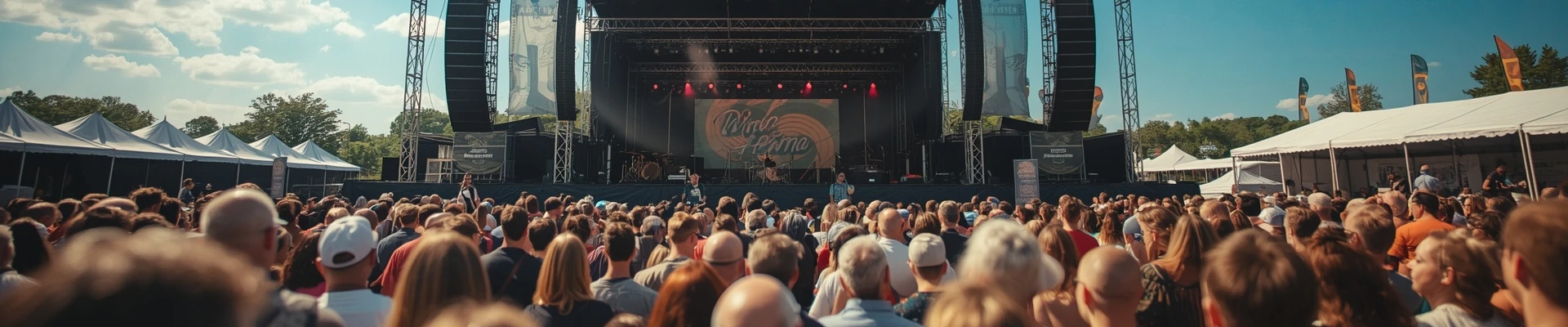
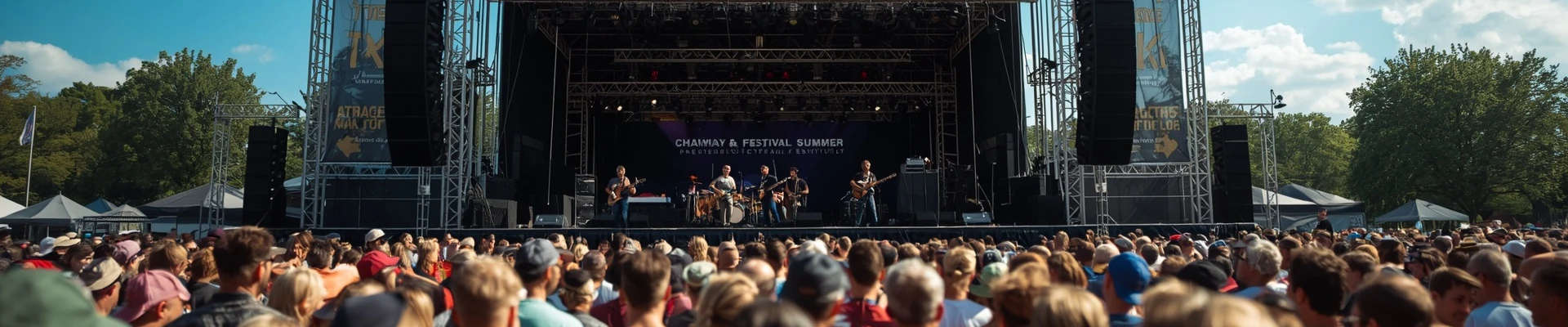
Fontana's festival scene reflects its demographics. National Night Out events, Dia de los Muertos celebrations in Jessie Turner Community Center and surrounding parks, and the city's Summer Concert Series at various parks bring free or low-cost live music to a community where disposable income for entertainment is constrained. These events prioritize Latin pop, oldies, R&B, and regional Mexican acts, reflecting the actual musical preferences of the majority population.
Route 66 Rendezvous — held in nearby San Bernardino but drawing from across the IE including Fontana — is an annual classic car and rockabilly event that has historically included live music programming aligned with the hot rod and vintage rock aesthetic. Fontana's position on the historic Route 66 corridor gives it a nominal connection to that mid-century American mythology, though the working-class industrial city has always had more in common with Steinbeck's Okies than with chrome and nostalgia.
The Inland Valley Daily Bulletin and local community radio — including KVCR 91.9 FM (public radio from San Bernardino Community College) — provide the most consistent coverage of Fontana's musical activity at the community level, filling gaps that mainstream Los Angeles entertainment media rarely bothers to cover.
Neighborhoods and Geography
Fontana covers approximately 42 square miles in the San Bernardino Valley, bordered by Rialto to the east, Rancho Cucamonga to the west, San Bernardino to the northeast, and the unincorporated foothills to the north. The city's internal geography divides loosely between North Fontana — newer master-planned developments, retail corridors along the 210 freeway, and the Kaiser Commerce Center on the old mill site — and South Fontana, the older residential neighborhoods closer to the 10 freeway that retain the city's working-class character most legibly.
The Southridge and Sierra Lakes areas toward the northern edge have seen significant development since the 2000s, drawing families from Los Angeles County seeking larger homes at lower price points. The older flatlands around Sierra Avenue and Foothill Boulevard (old Route 66) concentrate the city's historically Black and Latino neighborhoods, the churches, swap meets, and social infrastructure that have sustained community life across generations.
Fontana shares the broader Inland Empire's defining spatial condition: enormous distances between destinations, car dependency so total that pedestrian or cycling transit is practically nonexistent for most residents, and an urban fabric that prioritizes logistics and residential scale over any kind of walkable cultural district. There is no Fontana equivalent of Pomona's arts scene or Riverside's historic downtown — the city's culture is distributed, domestic, and mobile.
What Ties It Together
Fontana is a city whose musical identity was forged in the same conditions that produced its economic history: pressure, labor, displacement, and resilience. The punk and metal scenes it fed were working-class in composition and anti-institutional in attitude — logical products of a steelworker town that watched its anchor industry collapse. The hip-hop and regional Mexican scenes that followed were equally grounded in community survival, building infrastructure and audience from the inside out rather than waiting for external recognition. What the city lacks in showcase venues and music-industry infrastructure, it has compensated for in generations of artists who carry the IE's hard-edged sensibility into whatever genre they occupy — a sound defined less by geography than by the particular quality of attention you develop when you grow up where no one is watching.