
Fremont sits at the southeastern edge of the San Francisco Bay, straddling the boundary between the East Bay flatlands and the Diablo Range foothills, occupying roughly 224 square kilometres of what was once the domain of the Ohlone people and later five separate township communities — Niles, Centerville, Irvington, Mission San José, and Warm Springs — that merged in 1956 to form California's then-largest incorporated city by area. With a population of approximately 232,000, Fremont is the fourth-largest city in the Bay Area, and it sits in a peculiar geographic middle — not quite South Bay, not quite East Bay, not quite Silicon Valley, but drawing cultural and economic energy from all three zones. The Union Pacific rail corridor, the NUMMI auto plant (now the Tesla Fremont Factory), and a massive semiconductor-adjacent manufacturing economy shaped the city's 20th-century identity. Its 21st-century identity is shaped above all by demographic transformation: Fremont has become one of the most ethnically diverse mid-size cities in the United States, with South Asian communities (predominantly from India, Pakistan, and Afghanistan) forming the largest single ethnic bloc, alongside substantial Chinese, Taiwanese, Korean, Filipino, and Vietnamese populations. That demographic mix produces a musical culture far more layered than Fremont's quiet suburban surface suggests.
History and geography
The land Fremont occupies was Ohlone territory for thousands of years before the arrival of Spanish missionaries in the late 18th century. Mission San José, established in 1797 as the fourteenth Franciscan mission in Alta California, sat in what is now the Mission San José neighborhood — the mission ruins and later rebuilt chapel remain a local landmark. American settlement came after 1848, first as farmland along the bay's southeastern edge, then as orchard and grain country served by the transcontinental railroad's push south. The Niles Canyon Railway — a preserved heritage railway that still runs steam-powered excursion trains through the scenic gorge — follows the original route of the Western Pacific Railroad through the Alameda Creek watershed.
The Niles district has a separate cultural footnote: in the early 1910s, Essanay Studios operated a West Coast film production facility there, and Charlie Chaplin shot several of his Tramp films in Niles in 1914 and 1915, including The Tramp itself. The Niles Essanay Silent Film Museum preserves this history and hosts screenings and events. While not a music story, the Niles creative heritage is part of the layered identity of a city built from five distinct towns with distinct personalities.
Post-WWII industrialization brought the NUMMI (New United Motor Manufacturing) plant — a joint venture between General Motors and Toyota — which operated from 1984 until 2010 and anchored the city's blue-collar manufacturing economy. The Tesla Fremont Factory, which occupies the former NUMMI site, has since become one of the most iconic manufacturing facilities in the technology world, though its cultural footprint runs more toward Silicon Valley mythology than music.
Music identity
Fremont's music identity is shaped primarily by two forces: its extraordinary demographic diversity — particularly its South Asian and Afghan communities — and its position as an East Bay city at the edge of one of the most musically productive metropolitan areas in the world.
The South Asian music scene is the most visible and community-sustaining musical culture in Fremont. The city's large Indian-American population has made Fremont a hub for Bollywood and bhangra performance, classical Indian music instruction and performance, and fusion acts that blend South Asian musical traditions with Bay Area hip-hop, R&B, and pop. INDIA'S KITCHEN and a cluster of South Asian cultural organizations along Fremont Boulevard and the Irvington district anchor this scene. Annual Diwali festivals, Navratri celebrations with live garba and dandiya, and classical concerts presented through South Asian community organizations draw large audiences. The Fremont Civic Center and Centennial Arts Center host Carnatic and Hindustani classical concerts regularly. Several professional-level Bollywood and bhangra groups based in Fremont tour nationally.
The Afghan-American community — one of the largest concentrations of Afghan-Americans in the United States, centred in Fremont's Little Kabul corridor along Fremont Boulevard near the Washington district — sustains a robust traditional Afghan music scene. Rubab players, vocalists performing in Dari and Pashto, and live music at Afghan restaurants and event halls represent a musical tradition with deep roots in the classical Afghan forms of ghazal and musiqi-e-klasik as well as the more popular forms. Annual Afghan Nowruz (New Year) celebrations draw large crowds and feature traditional and contemporary Afghan music. Several Afghan musicians based in the Bay Area — including Fremont — have recorded and distributed traditional Afghan music for diaspora audiences globally.
The East Asian communities (Chinese, Taiwanese, Korean) have built parallel cultural infrastructure: Mandopop and K-pop cover scenes anchored by Fremont's youth culture, karaoke entertainment complexes, and Chinese-language cultural performances at the Centennial Arts Center and in church and community hall circuits. The Taiwanese community has a particularly active musical presence through the Taiwanese Cultural Association and annual events.
Fremont's proximity to Oakland — roughly 30 kilometres to the north — has always meant that Fremont musicians gravitated toward Oakland and Berkeley for career development, and that Oakland's hip-hop, funk, and indie rock scenes have fed back into Fremont's own musical culture. The East Bay punk and hardcore scenes of the late 1980s and 1990s — driven by bands like Green Day (Billie Joe Armstrong was raised in Rodeo, but the East Bay scene centred on Berkeley's 924 Gilman Street drew from the entire Bay) and Operation Ivy — had Fremont participants. A smaller but continuous DIY punk and indie scene has operated in Fremont through house shows, basement venues, and club bookings through the 1990s and 2000s.
The Mission District area's community arts programs, the Irvington district's youth music education programs, and the city's public school music programs have built pipelines that have sent musicians into Bay Area conservatories, jazz programs, and professional touring bands. Fremont's own clubs and mid-size venues are modest in scale compared to neighbouring Oakland or San José, but a steady live music circuit — in bars, hotel lounges, community centres, and the South Asian and Afghan cultural event halls — keeps a significant number of local musicians employed.
Venues and neighborhoods
Fremont's venue ecosystem is shaped by its suburban character and its emphasis on community-serving cultural spaces rather than legacy rock clubs. At the top of the formal performing arts tier sits the Smith Center for the Performing Arts (within the Fremont Unified School District's performing arts infrastructure), community theatre productions at the Olive Hyde Art Gallery and Centennial Arts Center, and periodically larger ticketed events at the Fremont Marriott Silicon Valley and hotel complexes that host touring tribute bands and cultural events.
The club tier is spread across the city rather than concentrated in a single district. The Irvington district along Fremont Boulevard concentrates South Asian-facing clubs, banquet halls, and live-music restaurants. The Washington district — Fremont's informal Little Kabul — concentrates Afghan entertainment venues. Mission San José and the Warm Springs area near the Tesla Factory have their own neighbourhood bar and restaurant circuits.
Notable live-music venues (at various points in the city's recent history) include The Yodeler (country and rock bar), Flint's BBQ-area entertainment corridors, and a persistent layer of restaurant-bars running through the Fremont Boulevard and Mowry Avenue commercial strips. Fremont's proximity to the larger venues in San José (SAP Center, City National Civic, San José Civic), Oakland (Oakland Arena, Fox Theater, Paramount Theatre), and San Francisco means that most mid-size and arena touring acts bypass Fremont entirely for the larger nearby markets — Fremont residents are well within the orbit of some of the best mid-size venue infrastructure in the country.
The Niles Historic District hosts its own modest cultural circuit, including the Broncho Billy's pizza restaurant and screening room and a collection of small shops and cafes that periodically feature live music. The Niles Canyon Railway runs moonlight train rides with live music events.
Festivals and signature events
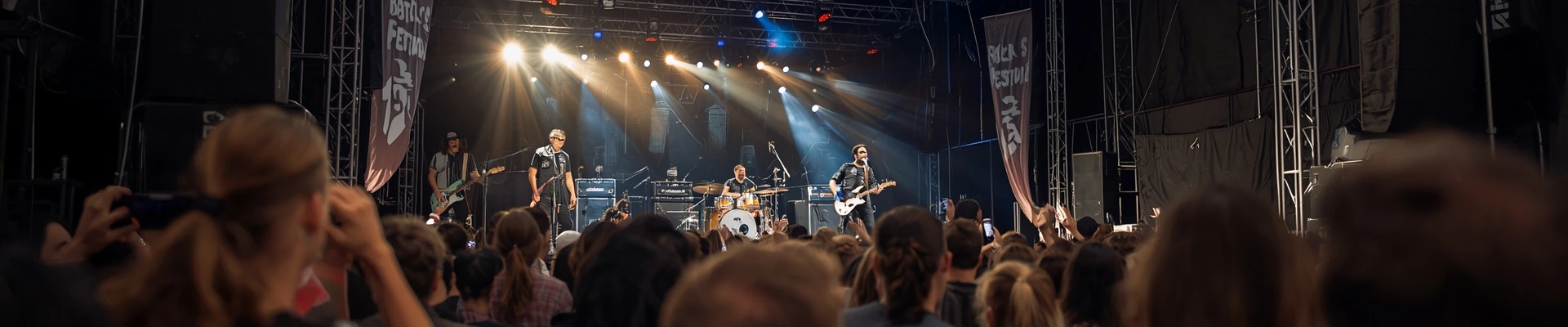
Fremont's festival calendar is dense with community-facing events. The Fremont Festival of the Arts — traditionally held on Fremont Boulevard in the Irvington district — is one of the larger Bay Area street arts and music festivals, drawing craft vendors, food stalls, and local and regional musical acts. The India Independence Day Parade and Festival is one of the largest such events in the Bay Area, centred in Fremont's South Asian community hub. Diwali at City Hall draws thousands annually with Bollywood and bhangra performances. The Afghan Nowruz Festival in March brings together Afghan-American communities from across the Bay Area.
Niles Days — a community festival in the historic Niles district — celebrates the neighbourhood's silent film heritage with screenings, vintage entertainment, and live music. The Mission San José Founders Day and various Ohlone cultural events mark the deeper pre-colonial and mission histories. The Fremont Celebration of the Arts, the Warm Springs District community events as that neighbourhood develops around the new BART Warm Springs/South Fremont station (opened 2017), and the annual Tesla-area community events reflect the city's ongoing growth and development.
What ties it all together
Fremont's musical character is ultimately a story about diaspora culture meeting suburban geography. In a city assembled from five distinct towns, with no single downtown or cultural anchor, music has proliferated in the community halls, temple basements, event banquet rooms, and neighbourhood restaurant strips where each of Fremont's many immigrant communities maintains its sonic ties to distant homelands. The South Asian bhangra instructor teaching students in an Irvington studio, the Afghan rubab player performing at a Nowruz celebration in a banquet hall off Fremont Boulevard, the East Bay punk kid biking north to 924 Gilman Street, the Bollywood vocalist recording a cover for a YouTube diaspora audience — these are all Fremont's music story. It is a city that has never produced a globally famous sound of its own, but that sustains a dozen separate musical worlds in parallel, feeding the rich creative ecosystem of the broader Bay Area while quietly building its own cultural infrastructure one community celebration at a time.