
Fullerton occupies roughly 56 square kilometres of the Santa Ana River watershed in northern Orange County, California, sitting at the base of the Puente Hills where the coastal plain meets the inland valleys. With approximately 141,000 residents, it is Orange County's fifth-largest city and one of its most densely packed, its grid of early-20th-century bungalows and craftsman houses pressing right up against the Cal State Fullerton campus on the north side and the rail-served downtown on the south. Los Angeles is 25 miles to the northwest; Anaheim — home of the Angels, the Ducks, and Disneyland — is 5 miles to the south. Harbor Boulevard runs the spine of the city from the 91 freeway to the 5, and the blocks around it in the downtown core are where Fullerton's music life concentrates. The city is economically diverse: aerospace and defence contractors (Raytheon, Boeing Anaheim operations nearby), education, and health care all drive employment, and the Cal State Fullerton student population — around 40,000 — provides a constant cultural engine for the downtown scene.
A brief history
The land was part of the ancestral territory of the Tongva (Gabrieleño) people, who inhabited the coastal plain and interior valleys for millennia before Spanish contact. The Mission San Gabriel Arcángel, founded in 1771, claimed the region under the colonial mission system, and the subsequent Rancho San Juan Cajon de Santa Ana land grant covered much of what is now northern Orange County. American settlement arrived after California statehood, and Fullerton was formally incorporated in 1904 — named after George Fullerton, a partner in the Atchison, Topeka and Santa Fe Railway, which ran a branch line through the townsite and shaped the street grid around its depot. The early economy was agricultural: Valencia oranges, walnuts, and avocados dominated, and the region's packing houses and citrus growers drew workers from Mexico (particularly Jalisco and Zacatecas), the Philippines, and Japan. By mid-century the agricultural economy had given way to suburban residential development and manufacturing; the Brea-Olinda oil field to the northeast had already signalled the region's industrial potential, and aerospace manufacturing arrived with the postwar defence build-out. Cal State Fullerton was founded in 1957 (as Orange County State College), and its growth through the 1960s and 1970s transformed Fullerton into a genuine college town within the otherwise suburb-dominated county.
Music identity: the Leo Fender legacy
No discussion of Fullerton's music identity can begin anywhere other than Leo Fender. Born in a farmhouse near Anaheim in 1909 and raised in Fullerton, Clarence Leonidas Fender was a self-taught electronics repairman who opened a radio repair shop on South Spadra Road (now Harbor Boulevard) in 1938. Out of that shop grew Fender Radio Service, which evolved into Fender Electric Instrument Manufacturing Company — and from that came the instruments that remade popular music globally. The Fender Telecaster (1950) was the world's first commercially successful solid-body electric guitar. The Fender Stratocaster (1954) became the instrument of Buddy Holly, Jimi Hendrix, Eric Clapton, and Stevie Ray Vaughan. The Fender Precision Bass (1951) invented the electric bass guitar as a functional replacement for the upright double bass, making the modern rhythm section possible. The Fender Bassman amplifier defined the sound of electric blues. All of this was designed, built, and shipped from Fullerton — from the original Pomona Avenue factory and later the larger Raymond Avenue plant — through the 1950s and into the early 1960s. When Fender sold the company to CBS in 1965, the Fullerton factories continued operating until 1984, when CBS shut them down and production moved to Corona, California and Ensenada, Mexico. The original factory site on Pomona Avenue has been demolished, but the legacy is permanent: the Fender Museum of Music & the Arts operated in Corona for years carrying the regional memory, and the instruments designed in that Fullerton shop still sell in the tens of millions worldwide. Leo Fender himself returned to the county after selling Fender, founding Music Man (later acquired by Ernie Ball) and then G&L Musical Instruments — still operating in Fullerton today on Fender Avenue, a street renamed in his honour.
The punk and alternative scene
Fullerton's second major contribution to music history is its role in the Southern California punk, ska, and hardcore ecosystem. The city sits at the intersection of several geographic influences: close enough to Los Angeles to absorb the original Hollywood punk energy of the late 1970s (the Germs, X, Black Flag in nearby Hermosa Beach), and deeply embedded in Orange County's own hardcore scene (Social Distortion from Fullerton-adjacent Garden Grove, Agent Orange from nearby Placentia, The Adolescents from Fullerton and Anaheim). The Adolescents — whose 1981 self-titled debut on Frontier Records is one of the canonical documents of West Coast hardcore punk — were substantially a Fullerton band: Tony Cadena (Reflex) and several founding members grew up in the city. The OC hardcore scene of the early 1980s, rooted partly in Fullerton, helped define the melodic-yet-aggressive template that would later evolve into pop-punk.
The venue that most shaped Fullerton's alternative identity was Koo's Art Café — a small, beloved, genuinely all-ages DIY space on East 4th Street that operated through much of the 1990s and early 2000s. Koo's hosted early shows by bands who later broke nationally (including early No Doubt appearances), sustained the ska-revival and third-wave ska scenes that dominated OC in the mid-1990s, and provided the infrastructure for a generation of punk and indie acts. The Ska Wars compilations and the broader Epitaph Records / Fat Wreck Chords ecosystem were centred in the LA-OC corridor that Fullerton anchored on the county's north edge. Reel Big Fish — the ska-punk band whose 1996 album Turn the Radio Off (Mojo Records) brought ska-punk to MTV — emerged from the broader Orange County scene that Fullerton's DIY infrastructure helped sustain.
Contemporary scene and downtown venues
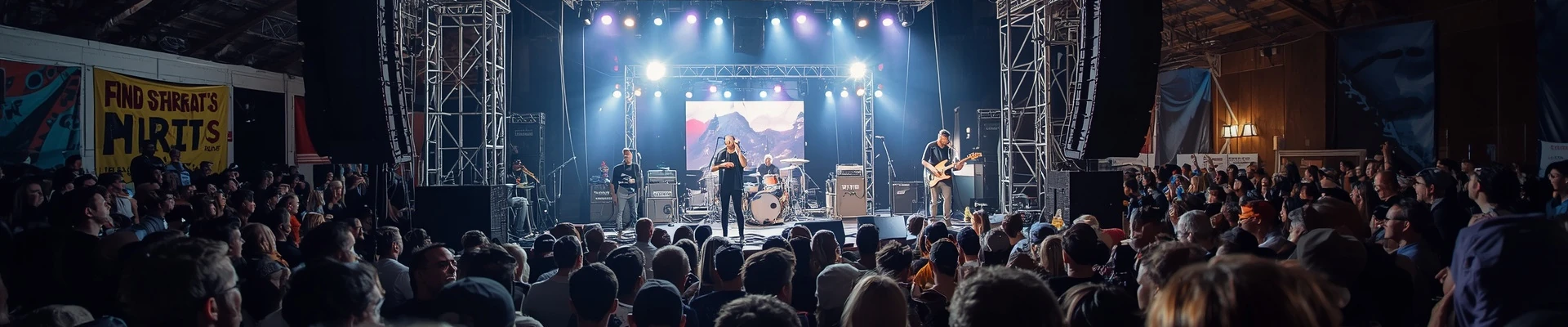
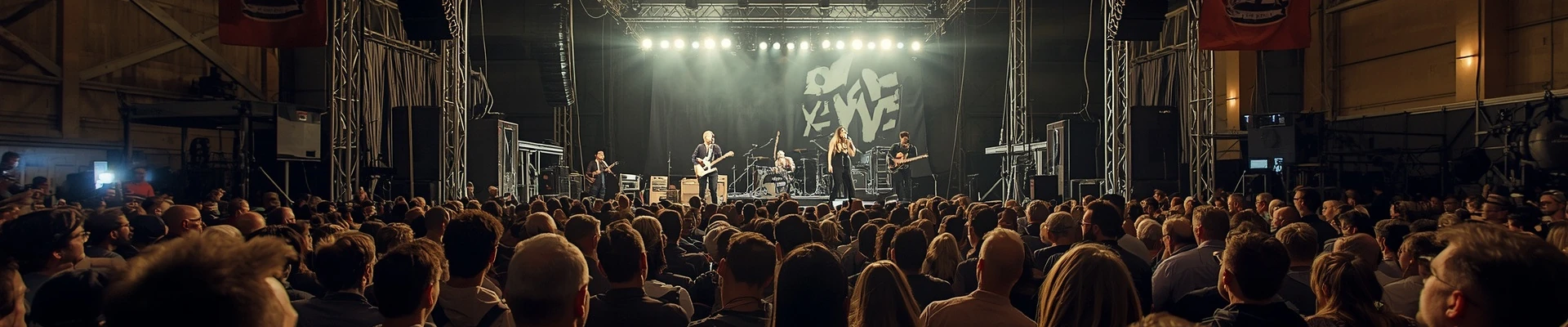
Fullerton's contemporary music scene lives primarily in the downtown cluster around Wilshire Avenue, Commonwealth Avenue, and Harbor Boulevard. The city's downtown has escaped the full-scale suburban mall-ification that hollowed out many OC city centres, retaining enough pedestrian density and independent business to sustain a genuine bar-and-live-music strip. The Slidebar Rock-N-Roll Kitchen on East Wilshire Avenue is the flagship: a dedicated rock venue with a capacity around 400, strong national-touring bookings across rock, metal, and punk subgenres, and a long track record of hosting mid-tier touring acts. The Continental Room, Summit House (on the nearby hills above the city), and various sports bars and cocktail lounges round out the landscape. The Fox Theatre Fullerton — a 1925 Spanish Colonial Revival movie palace on Wilshire — has been partially restored and hosts occasional concerts and special events.
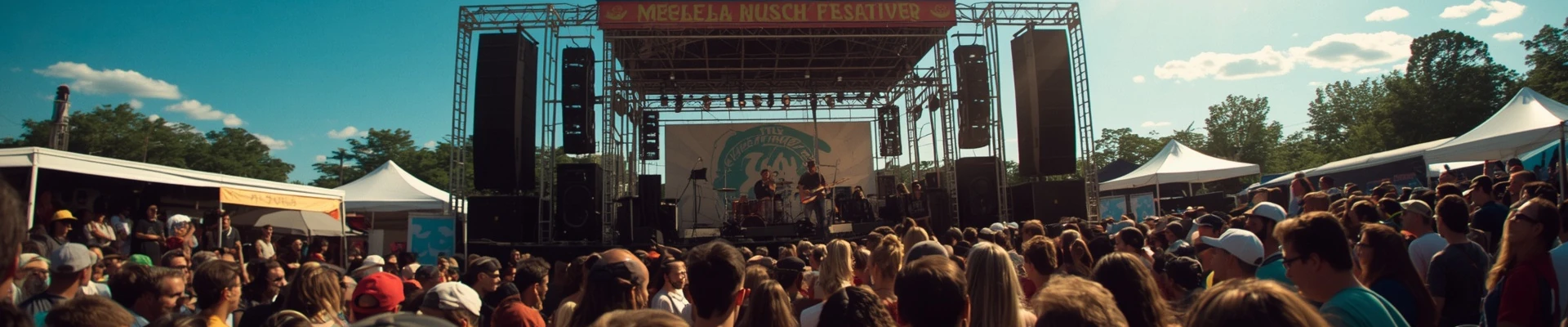
Cal State Fullerton's Clayes Performing Arts Center is the institutional anchor for classical, jazz, and world music in the city, presenting a full season of student and faculty ensembles alongside visiting artists. The Muckenthaler Cultural Center — a 1924 Italian Renaissance estate that serves as a community arts centre — hosts outdoor concerts in its garden grounds during the summer months. The city's parks (particularly Hillcrest Park overlooking the downtown and Laguna Lake Park to the west) have hosted outdoor festival programming.
Demographics and immigrant music communities
Fullerton's demographic composition reflects Orange County's broader history. The city's Latino community — approximately 35–40% of the population, predominantly Mexican-American with roots in communities that predate the suburban build-out — has sustained norteño, banda, cumbia, and regional Mexican music scenes largely invisible to the Anglo mainstream but vibrant in the city's south side and in venues along Orangethorpe Avenue. The city's growing Korean-American and Vietnamese-American populations (the latter concentrated in nearby Garden Grove and Westminster but well-represented in Fullerton) contribute to a broader Asian-American cultural layer that includes K-pop cover and tribute acts, Vietnamese pop venues, and the social infrastructure around the Little Saigon corridor a few miles south.
Cal State Fullerton draws students from across California's Latino and Asian-American communities, and its music department — which includes programs in jazz studies, composition, and music education — has produced working musicians who populate the Los Angeles session scene, the OC wedding and event circuit, and the regional touring landscape.
Guitar culture and the Fender continuum
One dimension of Fullerton's music identity that has no parallel in any other mid-size American city is its position as the spiritual capital of the electric guitar. G&L Musical Instruments — the company Leo Fender founded in 1980 with George Fullerton (a long-time Fender employee, no relation to the city's namesake) — continues to build guitars and basses in Fullerton, producing instruments that many collectors and players regard as the most direct continuation of Fender's original design philosophy. The presence of G&L means that Fullerton is one of the only cities in the world where the inventor's design lineage — from the 1950 Broadcaster/Telecaster through the Stratocaster and Precision Bass — remains physically present in the form of a still-operational manufacturing facility. Guitar enthusiasts and music historians make pilgrimages to Fullerton specifically to see the G&L factory, and the city has leaned into this identity with historic markers and civic recognition of the Fender legacy.
The Fender Avenue street sign — renamed from its previous name in Leo's honour after his death in 1991 — sits near the G&L factory and functions as an informal shrine for visiting musicians. The intersection of guitar manufacturing history and live-music infrastructure gives Fullerton a layered music identity: it is both a city where great instruments were invented and a city where those instruments are played nightly in downtown bars and clubs.
What ties it all together
Fullerton's signature is the collision of craft and noise — the precision engineering of the Fender factory and the explosive energy of the hardcore DIY basement show, existing within blocks of each other. The city that produced the Telecaster also produced the Adolescents; the place where Leo Fender built electric instruments in a radio repair shop is the same place where all-ages punk crowds crammed into Koo's Art Café two generations later. That tension — between the meticulous luthier and the three-chord punk band, between the classical program at Cal State Fullerton and the ska-punk kids in the parking lot — is the sound of Fullerton. Downtown Fullerton on a weekend night, with live music bleeding out of four or five venues onto Harbor Boulevard, is the functional result of that history: a college town built on an electric guitar factory, still loud, still plugged in.