
Hayward sits at the geographic and cultural midpoint of the San Francisco Bay Area's East Bay — 25 miles south of Oakland, 30 miles north of San Jose, and perched between the San Francisco Bay shoreline and the steep ridgeline of the East Bay Hills. With 158,000 residents, it is the third-largest city in Alameda County and one of the most ethnically diverse cities in California, a working-class city that has spent decades in the shadow of Oakland's cultural fame and San Jose's economic mass without quite receiving its due. Hayward's economy runs on healthcare (Kaiser Permanente and St. Rose Hospital are major employers), logistics, and a scattering of light industry; California State University, East Bay (Cal State East Bay) — located on the hills above the city in the Hayward Hills — is the largest educational institution and a significant driver of the city's cultural mix. The Hayward Fault — one of the most hazardous seismic faults in North America, running directly beneath the urban grid — gives the city a geological drama that matches its social complexity.
A brief history
The land Hayward occupies was home to the Ohlone people — specifically the Bay Miwok and related groups — for thousands of years before Spanish colonization established Mission San José to the south and the rancho system divided the East Bay landscape. The town of Hayward (originally "Haywood") grew from a William Hayward hotel and trading post in the 1850s during the Gold Rush era, serving travelers moving between the San Francisco Bay and the diggings in the Sierra Nevada foothills. Agricultural development — hay, wheat, orchards, and later nurseries — shaped the landscape through the late 19th and early 20th centuries, and the arrival of the Southern Pacific Railroad accelerated the city's commercial development.
Post-World War II suburbanization brought the population surge that defined modern Hayward: defense industry workers, returning veterans, and successive waves of migration from Texas, Oklahoma, Mexico, Central America, the Philippines, and Southeast Asia. The opening of the San Mateo-Hayward Bridge (1929, rebuilt 1967) connected Hayward to the Peninsula and made it a commuter city for the Bay Area's expanding economy. The industrial boom of the 1950s and 1960s brought factories and canneries; the decline of that sector through the 1970s and 1980s left the same economic dislocations that shaped Oakland's music scene, and Hayward's working-class character became the soil in which a distinct East Bay sound grew.
Music identity
Hayward's most internationally recognized musical export is Keyshia Cole — the R&B singer whose debut album The Way It Is (2005) reached platinum certification and whose raw, gospel-inflected vocal style and frank lyrical autobiography made her one of the defining voices of 2000s urban R&B. Cole grew up in Hayward's Elmhurst area after being raised in a difficult family situation that informed the emotional directness of her music; her story — from Hayward to a major label deal and Grammy nominations — is one of the clearest through-lines in the city's musical identity. Albums including Just Like You (2007) and A Different Me (2008) extended her commercial run, and her uncompromising persona cemented her place in the Bay Area's R&B tradition.
The Bay Area's street rap ecosystem runs through Hayward as naturally as it does through Oakland, Richmond, or Vallejo. Hayward rappers have fed the hyphy movement, the screwed-and-chopped Bay variant, and the darker, more aggressive sound that followed; the Messy Marv lineage (the San Francisco-based rapper with deep East Bay connections) and a long chain of mixtape-era figures have called Hayward home or claimed it as creative territory. The city's South Hayward neighborhood — dense, predominantly Latino, with tight-knit community networks — has produced a parallel current of corrido, norteño, and regional Mexican music alongside the more widely documented hip-hop scene. East Hayward and the areas near Cal State East Bay have sustained their own networks of house parties, recording sessions, and informal venues.
Hayward's connection to Zendaya — the actress, singer, and cultural phenomenon who grew up in the city and attended Fruitvale Elementary before her family moved to Oakland — is the city's most globally visible cultural export, even if her music career has remained secondary to her acting. Her Hayward formation, however, reflects something real about the city: it is a place where working-class families from multiple backgrounds produce people of unusual creative range.
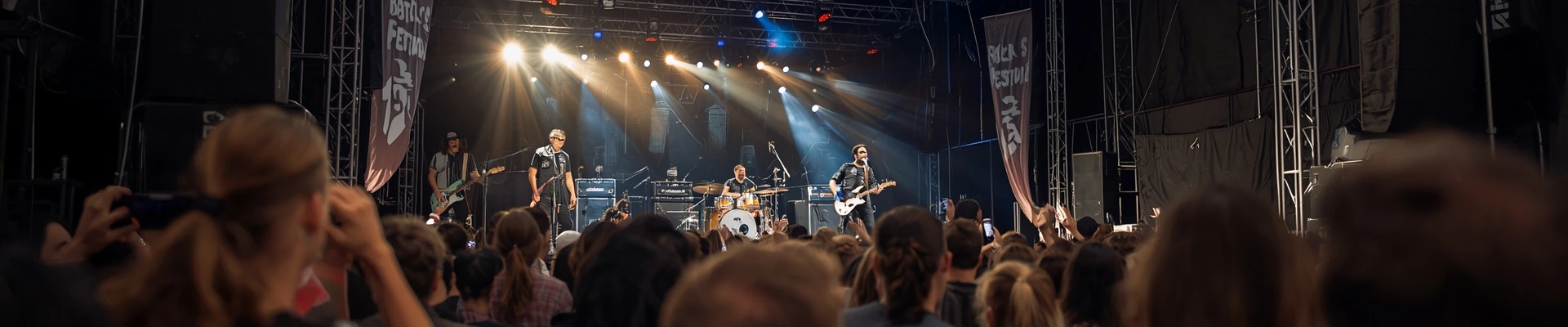
The East Bay punk and alternative scene of the 1980s and 1990s treated Hayward as part of its extended geography. The 924 Gilman Street collective in Berkeley — the all-ages, nonprofit punk venue that incubated Green Day, Operation Ivy, Rancid, AFI, and dozens of others — drew from a circuit that stretched from Oakland through Hayward and south to Fremont and Milpitas. Hayward had its own house shows, garage rehearsal spaces, and a population of young people who moved fluidly between the Gilman scene and the more metal-inflected rooms that operated in South Bay. Vicious Rumors — the Hayward-formed heavy metal band — built a following through the 1980s with albums including Soldiers of the Night (1985) and Digital Dictator (1988), placing Hayward squarely in the Bay Area's heavy metal tradition alongside bands from San Jose, San Francisco, and the greater East Bay.
The Filipino-American community in Hayward — one of the largest in the East Bay — has sustained a continuous music culture that moves between OPM (Original Pilipino Music), R&B, hip-hop, gospel, and pop, often performing at community centers, churches, and cultural festivals rather than commercial venues. Cal State East Bay has been an important node for Filipino-American student organizations that program music and spoken word. The city's Vietnamese, Cambodian, and Korean communities contribute their own performance traditions, often operating in community hall and restaurant contexts that rarely appear in mainstream music coverage but sustain a rich parallel ecology.
Jazz and blues have a secondary but genuine presence. The East Bay's jazz circuit — centered on Oakland's venues but extending through the suburban ring — pulls Hayward musicians and audiences into its orbit, and the city's older African-American community maintains blues and gospel traditions rooted in the Great Migration families who arrived in the 1940s and 1950s. South Bay Baptist Church and similar congregations have been incubators for gospel singers who have fed into regional R&B and soul.
Venues and neighborhoods
Hayward's venue landscape is modest relative to Oakland or Berkeley, functioning more as a node in the wider East Bay circuit than as a self-contained scene. Club Fox in nearby Redwood City is the closest major mid-size venue, while Hayward's own rooms tend toward bar-size. The Bistro — the Hayward brewpub and venue on B Street in downtown Hayward — programs live music spanning blues, rock, and local acts, and has been a consistent anchor for the downtown bar scene. Depot Bar & Grill runs a regular live music program. The Hayward Area Recreation and Park District (HARD) — a well-resourced parks authority that operates the Hayward Plunge and numerous community facilities — programs outdoor concerts and community events at venues including the Hayward Memorial Park and Kennedy Community Park.
Downtown Hayward, centered on B Street and Mission Boulevard, is the primary commercial and entertainment corridor. The area has seen reinvestment in the 2010s and 2020s, with new restaurants and bars bringing additional nightlife programming. South Hayward — the area south of Winton Avenue, centered on Tennyson Road — is the city's most densely Latino neighborhood, with a commercial strip anchored by taquerías, panaderías, and community organizations that program music in their own contexts. Cal State East Bay in the hills programs arts events through its University Center and student organizations.
The Hayward shoreline — the flat bayland fringe along the bay edge — is used for outdoor events and the annual Hayward Shoreline Interpretive Center programs, though large-scale concert infrastructure is limited there. The nearby Eden Township area (unincorporated) and San Lorenzo add to the broader community catchment that treats Hayward as a commercial and cultural center.
Festivals and signature events
Hayward's festival calendar reflects its community-oriented character. Art & Wind Festival at Hayward (held at Kennedy Community Park) draws significant crowds with music stages, kite-flying, and arts vendors. The Hayward Weekends summer concert series programs free outdoor music at downtown and park venues. Cinco de Mayo celebrations on Mission Boulevard and in South Hayward bring norteño, mariachi, and regional Mexican performances to public spaces. The Lunar New Year celebration in the city's Asian-Pacific communities programs traditional and contemporary Asian music. St. Patrick's Day events in the Irish-American community on B Street sustain the bar-music circuit. Cal State East Bay's Arts & Lectures series programs touring musicians and performers at the University Theater. The Hayward Area Historical Society programs events that sometimes incorporate period music. HARD Summer — the massive EDM festival — takes its name from the Hayward Area Recreation and Park District acronym, a piece of nomenclature that links the city's parks bureaucracy unexpectedly to the electronic music world (the festival itself no longer takes place in Hayward, but the name endures).
What ties it all together
Hayward's musical identity is defined by adjacency and authenticity. Sitting between Oakland's gravitational cultural pull and the South Bay's tech economy, Hayward has never had the luxury of being the center of a scene — it has always been part of an extended geography that it shares with Richmond, Fremont, and a dozen other East Bay cities. What this produces is a music culture that is deeply community-rooted, economically self-sustaining, and less concerned with industry recognition than with genuine function. Keyshia Cole's career arc — raw talent, difficult origins, direct emotional communication, commercial success built on authenticity — is not incidental to Hayward; it is representative of the city. The Filipino-American community's OPM scene, the South Hayward corrido circuit, the Vicious Rumors metal pedigree, and the house-show connections to the Gilman punk world are all pieces of the same picture: a city that makes music because music is what you make when the economic options are limited and the community bonds are strong. Hayward doesn't need to be Oakland to matter — it has always been, quietly and specifically, itself.