
Inglewood, California
Inglewood sits roughly eight miles southwest of downtown Los Angeles, wedged between the 405 freeway to the west and the 110 freeway corridor to the east, with Los Angeles International Airport (LAX) a short drive to the north. The city covers approximately 11 square miles and holds around 111,000 residents — a dense, predominantly Black and Latino community that has been economically and culturally significant to Southern California for over a century. Inglewood is an independent incorporated city within Los Angeles County, not part of the City of Los Angeles, a distinction that gives it its own municipal government, police department, and a degree of institutional self-determination that its residents have fiercely protected through repeated annexation attempts over the decades.
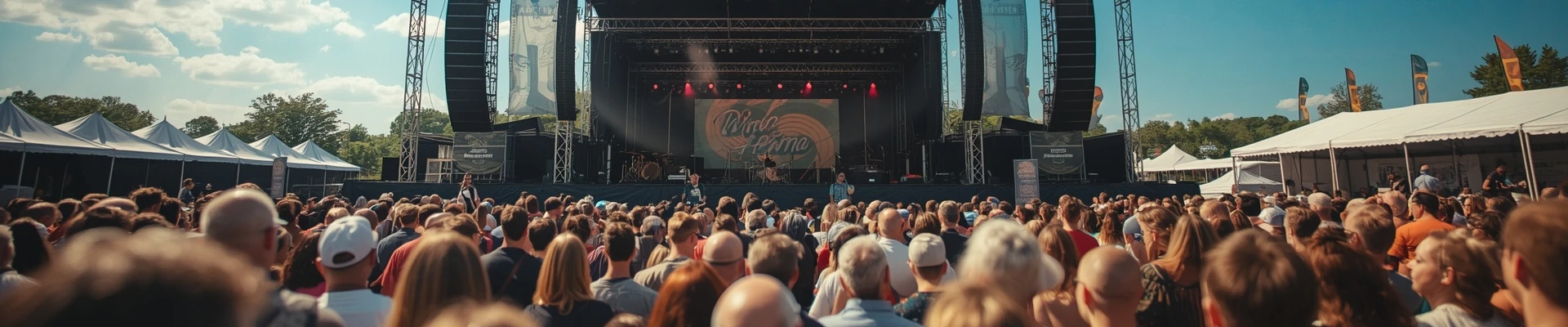
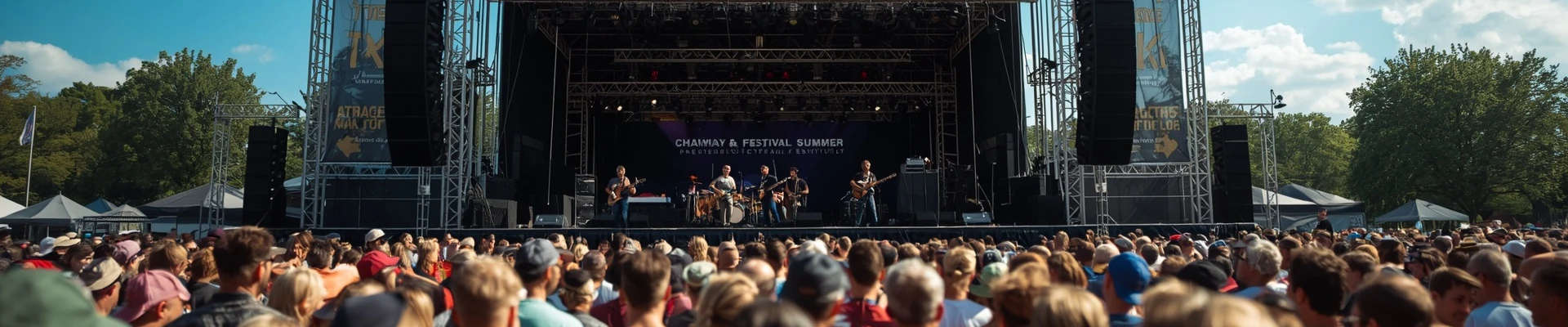
The economic and physical landscape shifted dramatically in the 2010s with the arrival of the Los Angeles Rams and Los Angeles Chargers and the construction of SoFi Stadium, which opened in 2020 and immediately became one of the largest and most technologically sophisticated venues in the world. The stadium sits alongside the Kia Forum (formerly known as The Forum, the Great Western Forum, and by several other names through its history), forming one of the most concentrated entertainment districts in the United States. That combination — a 70,000-seat NFL and mega-concert stadium beside a 17,500-seat arena with one of the most storied histories in American rock — has made Inglewood a global destination for live music in a way that few non-downtown cities can match.
History and demographic identity
Inglewood was incorporated in 1908 and developed through the early twentieth century as a working-class suburb, initially populated largely by white families drawn by affordable housing near the aircraft manufacturing plants of the South Bay. The Great Migration brought tens of thousands of Black Southerners to Los Angeles between the 1940s and 1970s, and Inglewood — like Compton and the Watts area to the south — became a destination. By the 1980s and 1990s, Inglewood was majority Black, and a distinct local culture had taken root that would reverberate through American music for decades.
In the 1990s and 2000s a large Latino population, primarily of Mexican and Central American descent, established deep roots in the city's western neighborhoods. Today Inglewood is roughly 45% Latino and 40% Black, with smaller communities of Pacific Islanders — particularly Samoans and Tongans — concentrated in specific neighborhoods. The Samoan and Tongan communities have contributed to Inglewood's church music culture, to its high school football programs (themselves tied to community identity), and to a gospel and congregational music scene that operates largely outside commercial channels but is genuinely significant within the city.
The Forum and the stadium era
No building has defined Inglewood's relationship with popular music as completely as The Forum. Originally built in 1967 as a home for the Los Angeles Lakers and the Los Angeles Kings, the circular, column-free arena on Manchester Boulevard became one of the premier concert venues in the world through the 1970s and 1980s. Led Zeppelin filmed The Song Remains the Same at performances there in 1973. The Rolling Stones played it on multiple world tours. The Eagles, Fleetwood Mac, Prince, Michael Jackson, Madonna, and virtually every major artist of the arena-rock and pop era played The Forum, often for multiple nights.
The Forum fell into a long dormancy after the Staples Center opened in downtown Los Angeles in 1999 and the Lakers and Kings relocated. The building was repurposed for church services and other uses before Madison Square Garden Company purchased it in 2012 and undertook a major renovation, reopening it in 2014 as a dedicated music venue under the name the Kia Forum (the naming rights sponsor has changed several times). The renovation preserved the building's legendary acoustics and circular layout while modernizing the infrastructure, and the relaunched Forum quickly re-established itself as one of the most sought-after arena stages in the country. Adele played a celebrated 24-night residency at the Forum in 2022. Drake, Taylor Swift, Harry Styles, Beyoncé, Kendrick Lamar, and dozens of other major artists have used it as a preferred Los Angeles venue precisely because of its sightlines, its acoustics, and its history.
SoFi Stadium, which opened in 2020 on the adjacent Hollywood Park site, operates on a different scale entirely — it hosted Super Bowl LVI in February 2022, the College Football Playoff National Championship, and has become a destination for the world's largest touring productions. The Weekend, Bad Bunny, Taylor Swift's Eras Tour, and Beyoncé's Renaissance World Tour all played SoFi, bringing hundreds of thousands of concertgoers into Inglewood over the span of a few years. The economic and cultural gravity created by these two venues has reshaped the city's commercial core and driven a wave of development along Century Boulevard and Manchester Avenue that is still accelerating.
West Coast hip-hop and Dr. Dre's Inglewood
Inglewood's most consequential contribution to American music is its role in the formation of West Coast hip-hop. Andre Romelle Young — known universally as Dr. Dre — grew up in Inglewood, attending Vanguard Junior High and Fremont High School before dropping out to pursue music. Dre's early career with World Class Wreckin' Cru in the mid-1980s was rooted in the electro-funk and club scenes of the Los Angeles basin, but it was his formation of N.W.A with Eazy-E, Ice Cube, MC Ren, and DJ Yella — all from Compton and its immediate surroundings — that changed American music. The production style Dre developed through N.W.A and then on his landmark solo album The Chronic (1992, Death Row Records) — slow, bass-heavy, G-funk synthesizers over drum machine grooves — defined a sound that dominated hip-hop through the 1990s and influenced every subsequent decade of West Coast rap.
Dre's Death Row Records partnership with Suge Knight was headquartered in Inglewood-adjacent areas of the South Bay, and the cultural world it represented — low riders, the 213/310 area codes, Inglewood's neighborhoods — was inseparable from the music's identity. The success of Death Row artists Tupac Shakur and Snoop Dogg, along with Dre himself, brought global attention to an Inglewood-Compton-South Los Angeles cultural corridor that had previously existed largely outside mainstream media.
Schoolboy Q — born Quincy Matthew Hanley — grew up in Inglewood and has made the city central to his artistic identity across albums including Setbacks (2011), Habits & Contradictions (2012), Oxymoron (2014), and Blank Face LP (2016). His music maps Inglewood's streets and social dynamics with a specificity that functions almost as documentary — Hyde Park (a neighborhood in southeastern Inglewood), the Manchester corridor, the gangs and the economics of the city are rendered in granular detail. Schoolboy Q is a member of Top Dawg Entertainment (TDE), the Compton-based label that also signed Kendrick Lamar, SZA, Isaiah Rashad, and Ab-Soul, making the South Los Angeles corridor arguably the most productive label geography in contemporary hip-hop.
YG (Keenon Daequan Ray Jackson) was born in Compton but grew up in Inglewood and claims the city emphatically in his music. His debut album My Krazy Life (2014) on Def Jam Records, produced largely by DJ Mustard, established YG as one of the signature voices of the contemporary West Coast. DJ Mustard (Dijon Isaiah McFarlane) is himself an Inglewood native whose minimalist, hi-hat-driven trap-influenced production style — developed in Inglewood and the South Bay club circuit — became one of the dominant sounds in mainstream hip-hop and R&B through the 2010s. His production credits span YG, 2 Chainz, Nicki Minaj, Rihanna, and dozens of others, and his aesthetic fingerprints are audible across half a decade of chart music.
R&B, gospel, and the church scene
Inglewood's Black church community has sustained a deep gospel and contemporary Christian music tradition through congregations concentrated along La Brea Avenue, Crenshaw Boulevard, and the city's central residential neighborhoods. Several megachurches and historically significant Black Baptist and Pentecostal congregations have produced choir directors, musicians, and vocalists who move fluidly between gospel performance and secular R&B.
The city's R&B connections extend to the broader South Los Angeles corridor. The Motown Records move to Los Angeles in 1972 reoriented significant music industry infrastructure toward the area, and while Motown's own legacy is rooted in Detroit, many of the session musicians, producers, and artists who populated the post-Motown Los Angeles R&B world were based in communities like Inglewood. The Whispers — the soul vocal group founded in 1963 — emerged from the Watts-Compton-Inglewood corridor and sustained a recording career of extraordinary longevity, charting consistently from the late 1960s through the 1980s with hits including "And the Beat Goes On" (1980).
Live music beyond the arenas
Outside the Forum and SoFi Stadium, Inglewood's live music infrastructure is modest but present. The Proud Bird — a restaurant and event space near LAX with a significant aviation history theme — has hosted live music events through its various incarnations. Several clubs and bars along Manchester Avenue and Century Boulevard serve the entertainment district. The Hollywood Park Casino (now being redeveloped in connection with the stadium complex) has historically featured live entertainment. The city's nightlife has always been tied to the larger Los Angeles market rather than operating as a self-contained scene, but the entertainment district around SoFi and the Forum has generated new bar and restaurant activity that is beginning to create a denser live music micro-ecosystem.
What ties it all together
Inglewood's musical identity is fundamentally about proximity and density — a small, intensely populated city that produced or shaped some of American music's most consequential figures (Dr. Dre, Schoolboy Q, YG, DJ Mustard) while simultaneously hosting some of its most iconic performance spaces (The Forum, SoFi Stadium). The city represents a specific version of South Los Angeles Black culture — West Coast, low-rider, G-funk, contemporary trap — that has been one of American popular music's most globally influential exports since the early 1990s. The arena and stadium infrastructure layered on top of that heritage makes Inglewood a city where music history and music's present exist in unusually close contact, the legacy of Dr. Dre's teenage years in Hyde Park running right up against Beyoncé performing 80,000 feet away at SoFi.