


Irvine is a master-planned city in Orange County, Southern California, home to roughly 307,000 residents and one of the fastest-growing large cities in the United States over the past four decades. Situated between the Santa Ana Mountains to the east and the Pacific coastline to the west — roughly 40 miles southeast of Los Angeles and 10 miles inland from the coast — Irvine was developed from scratch beginning in the late 1960s on land owned by the Irvine Company, which had controlled the former Spanish land grant Rancho San Joaquin since the 19th century. Incorporated in 1971, Irvine is one of the largest planned communities in American history, built around interlocking residential villages, commercial corridors, and the campus of the University of California, Irvine (UCI). The city is consistently ranked among the safest and most livable in the United States, and its economy is anchored by technology, biomedical research, financial services, and the university. With a population that is approximately 45% Asian American — drawing substantially from Korean, Chinese, Vietnamese, and Indian communities — Irvine is one of the most demographically distinctive major cities in California.
A brief history
The land that became Irvine was part of the Tongva and Acjachemen ancestral territories before Spanish colonization in the 18th century. The land grant Rancho San Joaquin was eventually purchased by James Irvine I in 1876, and the Irvine family operated a vast sheep ranch and agricultural estate across the coastal plain for nearly a century. In 1959, the Irvine Company donated 1,000 acres to the University of California for a new campus — a donation that fundamentally shaped the city's character — and UC Irvine opened in 1965. The city incorporated in 1971 around the university and a network of planned residential villages designed by the firm William Pereira and Associates with a distinctive low-density, car-oriented layout centered on wide boulevards, cul-de-sacs, and abundant green space. Through the 1980s and 1990s Irvine grew rapidly as Orange County's technology and financial services sectors expanded, and the city's demographics shifted decisively toward Asian American communities through immigration from Korea, China, Vietnam, and India.
Music identity
Irvine's music identity is shaped by the tension between its planned, suburban character and the creative energy produced by its university and its large, culturally rich immigrant communities. The city's most internationally consequential contribution to rock is Thrice — the post-hardcore and punk band formed in 1998 by students from Irvine and South Orange County, including vocalist and guitarist Dustin Kensrue and guitarist Teppei Teranishi. Thrice's early albums on Sub City Records and then Island Records — particularly The Illusion of Safety (2002), The Artist in the Ambulance (2003), and the ambitious four-EP set Alchemy Index (2007–2008) — established the band as one of the defining acts of the 2000s post-hardcore movement. Their sound, rooted in the Orange County punk and hardcore scene but reaching toward art-rock and progressive complexity, influenced a generation of musicians across the genre. Thrice remains based in the Irvine/South OC corridor and continues to record and tour.
Irvine sits at the southern edge of the Orange County punk and hardcore tradition — one of the most consequential regional scenes in American rock. While bands like The Adolescents (Fullerton), Agent Orange (Placentia), No Doubt (Anaheim), Social Distortion (Fullerton), and The Offspring (Garden Grove) emerged from the broader OC corridor, the Irvine scene contributed to the same cultural substrate: the suburban Southern California youth culture, the beach and skate communities, the all-ages shows at community centers and church halls, and the DIY touring circuit up and down the California coast.
UC Irvine's music program is one of the most respected in the UC system. UCI's Department of Music offers undergraduate and graduate programs in performance, composition, and musicology, and its concert series programs contemporary classical, experimental, and world music consistently throughout the academic year. The Electronic Music Lab at UCI has been active since the 1970s and has produced composers working in ambient, experimental, and computer music. The Claire Trevor School of the Arts — named for the Academy Award-winning actress who donated funds for its creation — houses music alongside dance, drama, and art, and programs performances that connect the university to the regional cultural community.
Irvine's largest demographic bloc — its Korean American community centered in the Northwood and Woodbridge villages and along Culver Drive — sustains an active music scene that intersects with the broader Korean American cultural infrastructure across Orange County and Los Angeles. K-pop, Korean classical, traditional Korean music, Korean American Christian contemporary music, and a growing Korean indie scene connect Irvine's Korean residents to the global Korean musical world. Han Mi Music and similar music education centers dotted across the city's strip malls serve thousands of Korean American students in classical piano, violin, and voice. The Vietnamese community — concentrated in the vicinity of Little Saigon in nearby Westminster and Garden Grove, with a substantial residential population in Irvine — sustains traditional Vietnamese music, Vietnamese-language popular music (nhạc vàng and contemporary V-pop), and a Vietnamese American Christian worship music scene. The Chinese community programs traditional Chinese music through cultural centers and the Chinese American Association of Orange County, while a substantial and rapidly growing Indian population sustains Bollywood music, Carnatic and Hindustani classical, and bhangra events through the Irvine Indian Community networks and temple celebrations.
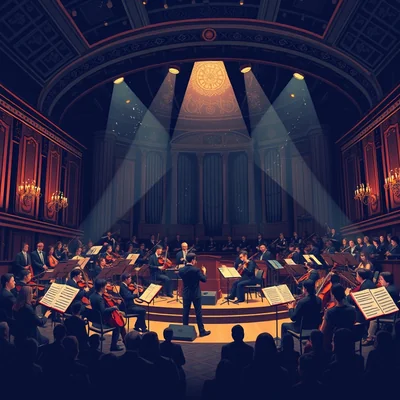
The city's classical scene is served by its proximity to the Segerstrom Center for the Arts in nearby Costa Mesa — the region's premier performing arts complex, home of the Pacific Symphony and host of the Philharmonic Society of Orange County — and UCI's own concert series. The Irvine Barclay Theatre, a 756-seat venue on the UC Irvine campus that opened in 1990, programs chamber music, jazz, world music, and contemporary classical from its position as the primary performing arts venue on campus.
Venues and neighborhoods
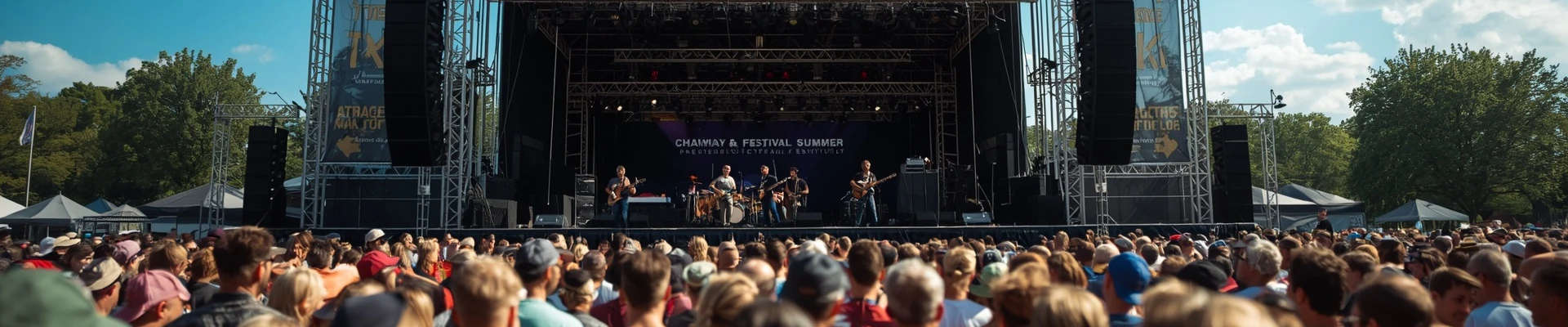
Irvine's flagship venue is the FivePoint Amphitheatre (formerly Irvine Meadows Amphitheatre and Verizon Wireless Amphitheatre), a 12,000-capacity outdoor amphitheatre that has been one of Southern California's primary summer concert destinations since opening in 1981. Originally built by Nederlander Concerts, the venue sits against the hills of the Irvine Regional Park corridor and has hosted virtually every major touring rock, pop, and country act of the past four decades — from The Rolling Stones and U2 to Grateful Dead residencies, Ozzfest, and contemporary pop tours. The shed format — permanent covered seating plus a large lawn — is ideal for Southern California summer outdoor concerts, and the venue draws regional audiences from across greater Los Angeles and San Diego.
Below FivePoint, the Irvine live music ecosystem is relatively thin by the standards of a city this size — a consequence of its planned, residential character and the near-absence of a traditional nightlife district. The Irvine Barclay Theatre (756-capacity, UCI campus) and The Hangar at the OC Great Park (a flexible event space at the former El Toro Marine Corps Air Station, now being redeveloped as an expansive public park) represent the major indoor options. The Oak Creek Golf Club and various hotel ballrooms program live music for private events. The absence of a concentrated entertainment district means that Irvine residents primarily access live music through the amphitheatre for major acts, UCI venues for classical and world music, and the denser club ecosystems in nearby Santa Ana, Costa Mesa, and Anaheim.
Different neighborhoods carry distinct musical characters. The UCI campus area anchors the classical, experimental, and college-music scene. Woodbridge and Northwood — the established residential villages with large Korean American populations — anchor the Korean music education and K-pop community. The Irvine Spectrum Center (the major retail and entertainment complex near the 5/405 freeway interchange) programs live music events in its outdoor plazas during the spring and summer. The Great Park development site on the former El Toro base has hosted large outdoor music events and is being built out with cultural venues as part of a long-term master plan.
Festivals and signature events
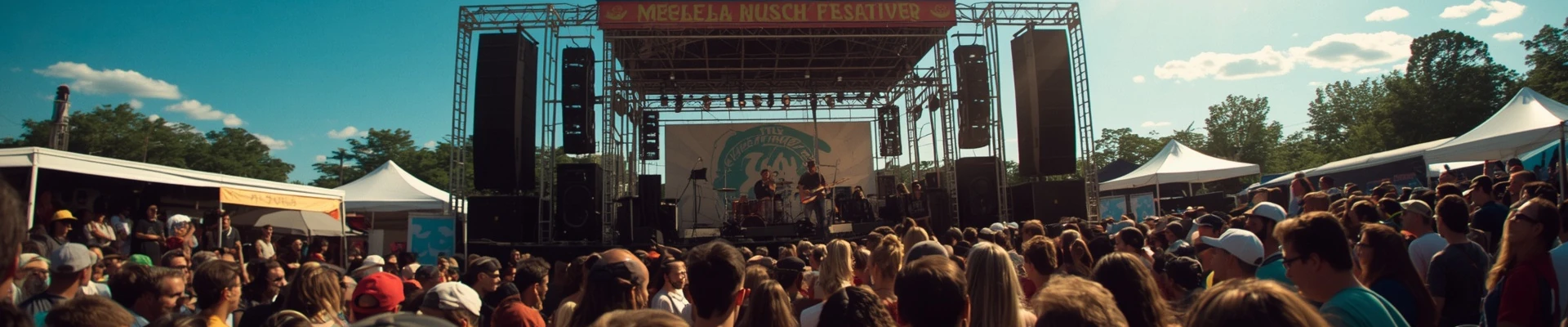
The festival landscape reflects Irvine's civic character: well-organized, family-friendly, and anchored by community events rather than counterculture. The Irvine Global Village Festival (celebrating the city's cultural diversity through international music, food, and arts programming) is the signature annual civic event. The UCI Campus Events season programs concerts, comedy, and film throughout the academic year for the university community. Asian Festival programming through Korean American, Chinese American, and Vietnamese American community organizations runs through the spring and fall. The Irvine Multicultural Fest and Irvine Spectrum outdoor concerts bring programming to the shopping center corridors. UCI's annual Wayzgoose Arts Festival and associated music programming connect the arts school community to the public. The OC Marathon weekend concerts, Irvine Celtic Music Festival, and the OC Fair in nearby Costa Mesa (which programs major country, rock, and pop acts at its Pacific Amphitheatre and Action Sports Arena each summer) round out the calendar.
The Irvine Meadows / FivePoint summer season remains the most significant music programming draw — a rolling schedule of 30–40 major touring acts from May through October that makes the amphitheatre one of the best-attended outdoor venues in Southern California year after year.
What ties Irvine together musically is the productive friction between its planned, orderly suburban identity and the creative currents that emerge from its university and its immigrant communities. Thrice built a post-hardcore legacy out of the same Orange County suburban landscape that produced the beach punk and ska scenes to the north. UCI's music and arts programs produce composers, performers, and scholars who circulate through the broader Southern California creative world. The Korean, Chinese, Vietnamese, and Indian communities sustain musical traditions and education systems that quietly produce some of the most rigorously trained young classical musicians in the region. And the FivePoint Amphitheatre — sitting in the hills above the freeway interchanges — serves as the ceremonial music stage for greater Orange County, the place where Southern Californians have gathered to see the biggest tours since 1981. Irvine may be the most carefully planned city in California, but its music scene has grown in the gaps between the plans.