
Moreno Valley sits in the San Jacinto Valley of Riverside County, California, roughly 60 miles east of Los Angeles and 20 miles east of downtown Riverside, at an elevation of about 1,600 feet above sea level in the high desert fringe of Southern California's Inland Empire. With a population of approximately 204,000, it is the second-largest city in Riverside County and one of the largest cities in Southern California that most people outside the region have never heard of by name. That semi-invisibility is deceptive — Moreno Valley is a significant, fast-moving city with a demographic composition and a musical culture that are entirely its own.
Geography and framing
The city sits in a wide, flat valley flanked by the San Bernardino Mountains to the north and the Box Springs Mountains and Badlands foothills to the south. The March Air Reserve Base occupies the city's northwestern edge — a military presence that shaped the city's growth patterns and workforce for decades. The surrounding terrain is dry chaparral and scrub oak transitioning into the warmer desert vegetation of the high Mojave fringe, giving Moreno Valley a landscape that feels distinctly Inland Empire: wide streets, big-box retail corridors, warehouse distribution centers, and residential tracts stretching to the foot of the mountains.
Economically, Moreno Valley developed primarily as a bedroom community for workers commuting to Los Angeles, Riverside, and the broader Inland Empire employment base. The 60 Freeway and 215 Freeway are the major arteries. Through the 2000s and 2010s, the city became a major logistics and e-commerce hub — enormous warehouse and distribution centers for companies including Amazon, Target, and World Logistics Center (one of the largest warehouse complexes in the United States) transformed the employment landscape and drew large numbers of workers settling nearby. The city's rapid growth — it incorporated only in 1984 — reflects this economic function: Moreno Valley grew from roughly 49,000 people at incorporation to over 200,000 in four decades.
A brief history
The San Jacinto Valley was inhabited by the Cahuilla and Luiseño peoples before Spanish contact. Mission-era land grants and 19th-century ranching established the early Euro-American presence in the valley. The name "Moreno" comes from Francisco Moreno, a ranchero who held land in the area. By the early 20th century, the valley was known for poultry farming and fruit cultivation, particularly citrus and grapes. March Field (later March Air Reserve Base) was established in 1918 and became a major military installation through World War II and the Cold War, providing both economic anchoring and a transient military population that shaped the valley's demographics.
The city itself incorporated in 1984 when several unincorporated communities — Sunnymead, Edgemont, Alessandro Heights, and surrounding tracts — were consolidated. Growth accelerated dramatically through the late 1980s and 1990s as Los Angeles and Orange County housing prices drove middle-class and working-class families into the Inland Empire. The city's demographics shifted rapidly: Moreno Valley became majority-minority by the early 2000s, with large African American, Latino, and growing Pacific Islander communities — including one of the larger Samoan and Tongan communities in inland Southern California — defining the city's social and cultural character.
Music identity
Moreno Valley's music identity is rooted in hip-hop, R&B, gospel, and the harder-edged West Coast rap tradition that radiates outward from Los Angeles. The city's Black and Latino communities, many of them with direct cultural roots in South Los Angeles neighborhoods, brought with them the musical sensibilities of those communities and adapted them to Inland Empire conditions — a sonic landscape where Los Angeles is close enough to be aspirational but far enough that local scenes develop their own contours.
The most prominent musical figure associated with Moreno Valley is YG (Keenon Daequan Ray Jackson), the Compton-raised rapper who spent formative years in the Inland Empire and whose West Coast gangsta rap revival — anchored by his 2014 debut album My Krazy Life, produced largely by DJ Mustard — became one of the defining sounds of 2010s Los Angeles hip-hop. YG's connection to the Inland Empire is not incidental; the corridor between Compton, Watts, and cities like Moreno Valley, Perris, and Hemet represents a genuine social geography where families relocated from South Los Angeles neighborhoods and brought South Central culture with them. The music that emerged from this migration zone carries the DNA of both.
Trizzy Turnt and a constellation of local Moreno Valley and Riverside County rappers have built audiences on YouTube, SoundCloud, and independent labels, working in trap, drill, and melodic rap styles that draw on both Los Angeles and national trends. The city has produced a steady stream of artists who circulate through the broader Inland Empire hip-hop circuit — connecting with Riverside, San Bernardino, and Fontana scenes — rather than achieving singular breakout status, which accurately reflects how regional rap ecosystems actually function.
The city's gospel and praise music tradition is substantial. The large and historically rooted Black church community in Moreno Valley — including congregations that relocated from Los Angeles with their membership — sustains an active gospel choir culture, with churches hosting regional gospel concerts, competitions, and recording sessions. This tradition is not widely documented outside the community but represents a genuine and continuous musical life.
R&B and neo-soul have a consistent presence in local open mics and small venue circuits. The Inland Empire more broadly — stretching from San Bernardino through Riverside and down to Moreno Valley — has produced a quiet but real pipeline of R&B vocalists who train in church, compete in regional showcases, and occasionally break through to wider recognition.
The Samoan and Tongan communities in Moreno Valley contribute a distinct musical strand through Polynesian hip-hop, reggae, and contemporary Christian music in Polynesian-language contexts. This scene connects to the broader Pacific Islander communities in the Inland Empire, Compton, and Carson, and has produced artists who circulate through Pacific Islander community networks across Southern California and Hawaii.
Rock and punk have a smaller but genuine footprint. The valley's white working-class and Latino youth populations have sustained DIY punk, metal, and alternative scenes through community centers, garages, and occasional local venue bookings. The Inland Empire punk tradition — rooted in the Pomona, Riverside, and San Bernardino scenes — extends into Moreno Valley without Moreno Valley being its center.
Venues and neighborhoods
Moreno Valley does not have a single concentrated nightlife or music district comparable to Riverside's University Avenue corridor or the clubs of downtown San Bernardino. The city's layout — wide residential tracts organized around commercial arterials — disperses its live music activity across churches, community centers, small bars, and event halls rather than concentrating it in a walkable district.
Moreno Valley Mall hosts occasional live music events and is the city's largest commercial anchor. The city's community event spaces — including the Conference and Recreation Center and parks such as Towngate Memorial Park — serve as venues for festivals, outdoor concerts, and civic events. Churches throughout the city double as concert venues for gospel events, community fundraisers, and faith-based music programming.
The Sunnymead Ranch Community Association and neighborhood associations in areas like Alessandro Heights have historically organized community music events. The city's proximity to Riverside means that many Moreno Valley residents and musicians participate in Riverside's more developed live music infrastructure — The Back Abbey, The Salted Pig, Brick & Mortar, and Metro Gallery — treating the two cities as a single musical market.
March Field Air Museum occasionally hosts outdoor events and concerts on its grounds, taking advantage of the open space adjacent to the former airfield.
Festivals and events
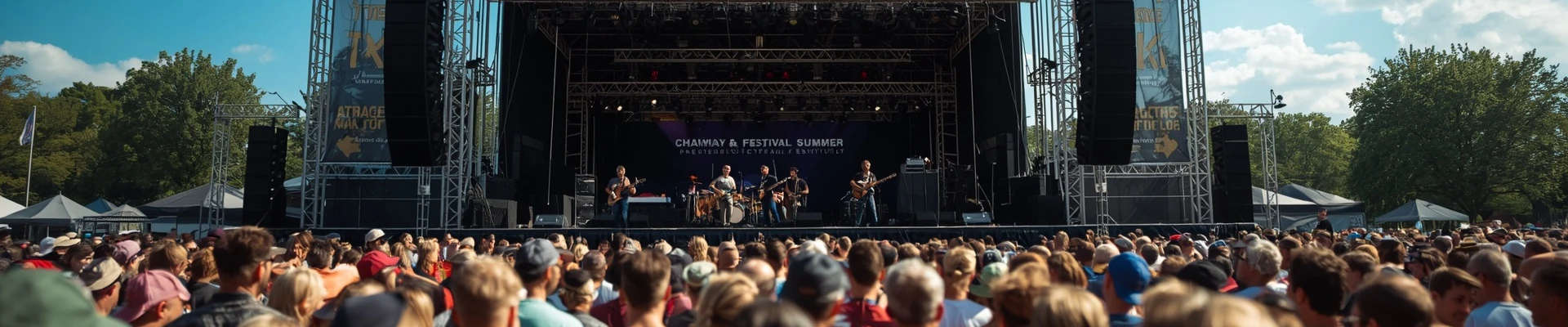
The Moreno Valley Jazz & Blues Festival has been a recurring fixture in the city's outdoor event calendar, bringing regional jazz and blues acts to Towngate Park and drawing audiences from across the Inland Empire. The festival reflects both the city's ambitions for cultural programming and the genuine musical appetite of its diverse population.
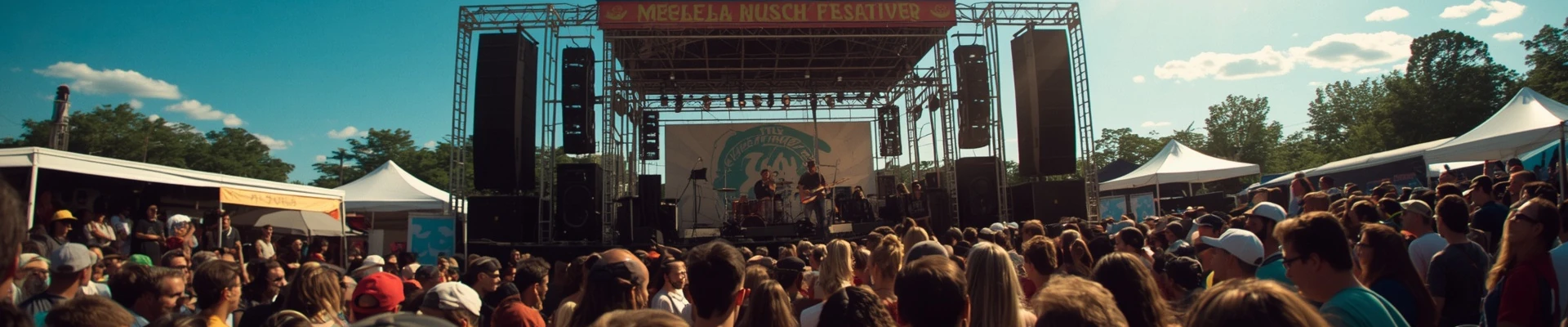
Fiesta Days and other city-sponsored civic celebrations incorporate live music — regional bands, local DJs, mariachi ensembles, and gospel choirs — into outdoor festival formats that serve the city's multicultural population.
The Inland Empire Gospel Fest and similar regional gospel events regularly draw Moreno Valley churches and choirs as participants and sometimes rotate their venues into the city. The gospel festival circuit is one of the most active and well-attended live music traditions in the broader Inland Empire.
Demographics and cultural communities
Moreno Valley's demographics — roughly 60% Hispanic or Latino, 18% Black or African American, 10% Asian and Pacific Islander, and approximately 14% white — make it one of the most diverse large cities in California. These demographics are not merely statistics; they describe the social conditions from which the city's music emerges.
The Latino community spans several generations and multiple national origins, with Mexican-American families dominant but significant Central American communities present. Norteño, banda, cumbia, and regional Mexican music are the soundtrack of community events, quinceañeras, and family gatherings across the city, sustained by a network of Spanish-language radio stations that serve the entire Inland Empire. Corridos tumbados and regional Mexican trap — popularized nationally by artists like Natanael Cano and Peso Pluma — have enthusiastic audiences and local practitioners in Moreno Valley's younger Latino demographic.
The Black community, with roots in South Los Angeles, Compton, and the broader African American Great Migration history of Southern California, carries the musical traditions of those communities — gospel, hip-hop, R&B, soul — into Moreno Valley's churches, schools, and neighborhood networks. The Samoan and Tongan communities, concentrated particularly in the city's central and eastern neighborhoods, bring Pacific Islander musical traditions that are increasingly intersecting with hip-hop and contemporary Christian music in hybrid forms.
What ties it all together
Moreno Valley is not a city that announces itself through a singular iconic sound or a history of chart-topping exports. It is something arguably more consequential in the geography of American music: a place where the demographic forces that drive culture — migration, affordability, community formation — have created the conditions for grassroots musical life that mostly circulates within the Inland Empire rather than projecting outward. The hip-hop that comes out of Moreno Valley sounds like it comes from close to Los Angeles because the community that makes it came from close to Los Angeles — bringing South Central's cadences, aesthetics, and ambitions into a valley where the cost of living is lower and the freeway home is the 60. Gospel choirs rehearse in buildings that look like warehouses from the outside. Mariachi bands set up in parking lots. Pacific Islander youth make Polynesian hip-hop on laptops in bedrooms in the same zip codes where Tongan elders sing hymns in three-part harmony. The city's music is the music of its people, and its people are one of the most genuinely diverse communities in the American West — building something real in the shadow of the San Bernardino Mountains.