
Oakland is the eighth-largest city in California and the seat of Alameda County, with roughly 419,000 residents inside the city limits and more than 2.8 million across the broader San Francisco Bay Area that it anchors on the East Bay. Sitting directly across the San Francisco Bay from San Francisco — connected by the Bay Bridge and the BART rapid transit system — at the foot of the Oakland Hills and the Diablo Range, it is in many ways the Bay Area's most consequential music city: harder, blacker, louder, and more working-class than its more famous neighbour across the water, and responsible for a disproportionate share of the musical innovations that the world attributes broadly to "San Francisco" or "the Bay Area." Oakland is roughly 24% Black (a decline from more than 40% in the 1980s), 28% Hispanic, and 17% Asian, with one of the largest Yemeni, Ethiopian, Vietnamese, and Cambodian communities in the Bay Area.
A brief history
The land along the East Bay shoreline was Huchiun Ohlone territory before Spanish missionaries arrived in the late 18th century. Oakland was incorporated in 1852 and grew rapidly as the western terminus of the First Transcontinental Railroad (completed at Promontory Summit, Utah in 1869, with the California terminus at Oakland's waterfront). The city developed as the Bay Area's industrial and working-class counterpart to commercial San Francisco — shipyards, canneries, food processing, and a deep port economy built the modern city. World War II brought enormous industrial expansion and the largest Black migration to the Bay Area: tens of thousands of Black Southerners came to work in the Kaiser shipyards and stayed, building the community that transformed Oakland into the East Bay Black cultural capital. The 1966 founding of the Black Panther Party at Oakland's Merritt College, the 1989 Loma Prieta earthquake (which devastated parts of the city), the 1990s crack epidemic, and the early 2000s hyphy movement have all shaped recent civic memory. The 2010s tech boom — with Silicon Valley workers priced out of San Francisco commuting to Oakland — triggered significant gentrification and displacement of Black and low-income residents that continues into the present.
Music identity
Oakland's most foundational musical tradition is its deep Black music lineage. The wartime migration built a robust R&B and jazz circuit along 7th Street in West Oakland — once one of the great Black entertainment districts in the American West, where touring acts from Nat King Cole to B.B. King played the Slim Jenkins Supper Club and the Lincoln Theatre. Bob Crosby and the Bobcats, Jimmy McCracklin, and a deep Oakland blues tradition ran through the 7th Street corridor. Etta James is Oakland-born (though raised partly in Los Angeles). Sly Stone came up through the East Bay before forming Sly and the Family Stone in San Francisco. Tower of Power, the Oakland-born horn-driven soul and funk band formed in 1968 by Emilio Castillo and Stephen "Doc" Kupka, has been one of the most consistently acclaimed East Bay acts for more than 50 years — their signature "East Bay Grease" sound is the defining Oakland soul idiom, and their influence on funk production has been enormous. The Pointer Sisters, raised in West Oakland in a Pentecostal minister's household, built one of the most commercially successful pop catalogues of the 1970s and 1980s. En Vogue, formed in Oakland in 1989, became one of the best-selling R&B groups of the early 1990s.
Oakland's hip-hop lineage is equally foundational. MC Hammer (Stanley Kirk Burrell), raised in Oakland and a batboy for the Oakland A's, became the first hip-hop artist to achieve diamond certification with Please Hammer Don't Hurt 'Em (1990). Too Short (Todd Anthony Shaw), raised in Oakland, built one of the most prolific and enduring West Coast hip-hop careers from the city's streets — recording dozens of albums and mixtapes over 40 years and influencing the entire Bay Area rap tradition. Digital Underground (Shock G and Humpty Hump), Oakland-based, launched Tupac Shakur's career through their touring crew in the early 1990s. Tupac Shakur, raised in Baltimore and Marin City but profoundly shaped by Oakland — the city he identified with most deeply — remains one of the most important figures in hip-hop history. E-40 (Earl Stevens), while Vallejo-based, is functionally part of the Oakland-East Bay hip-hop circle. The hyphy movement of the early-to-mid 2000s — built around Mac Dre (Vallejo-based but Oakland-rooted), Keak da Sneak, E-40, the Federation, Mistah F.A.B., and a generation of Bay Area rap artists — produced one of the most distinctive regional hip-hop sounds in the United States. Kamaiyah, G-Eazy (Oakland-raised), Sage the Gemini, Lil B (Berkeley-raised), Larry June (San Francisco/Oakland), P-Lo, and a current generation of Oakland and Bay Area hip-hop artists continue the lineage.
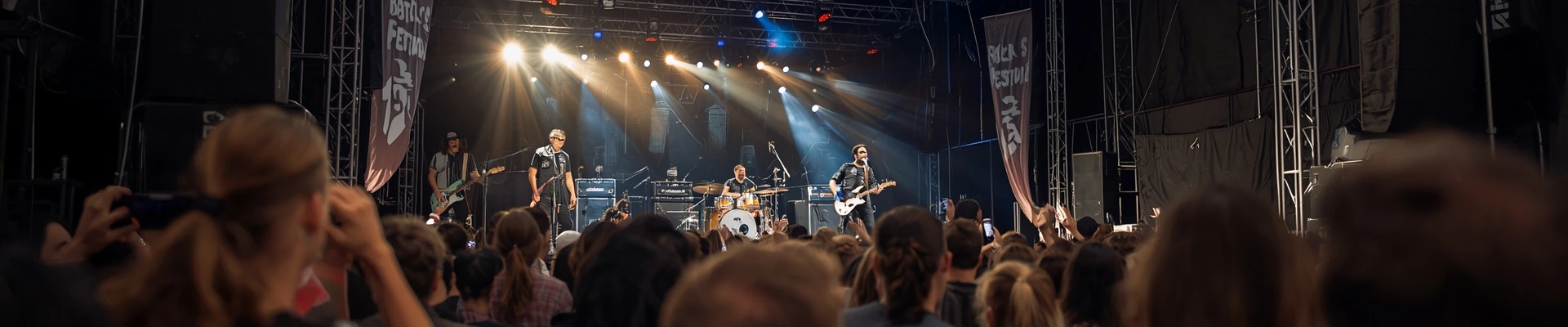
Oakland's punk and alternative rock legacy is equally consequential. Green Day — Billie Joe Armstrong, Mike Dirnt, and Tré Cool — formed in Rodeo and Berkeley and played the East Bay all-ages circuit through the late 1980s and early 1990s, building their early catalogue and fanbase through Oakland's 924 Gilman Street project (technically Berkeley, but functionally the East Bay DIY punk scene's centre). Dookie (1994), produced in the East Bay and rocketing Green Day to global stardom, brought national attention to the East Bay punk scene. Metallica relocated from Los Angeles to El Cerrito (just north of Berkeley) in 1983, and the East Bay suburbs became their operational home for the rest of their career; Master of Puppets (1986) and ...And Justice for All (1988) were written and rehearsed in the East Bay. Primus (Larry LaLonde is from Oakland), Operation Ivy (Berkeley-based, the foundational ska-punk band), Rancid (formed in Albany, just north of Berkeley, by former Operation Ivy members), The Coup (the Oakland leftist hip-hop and funk group led by Boots Riley), and a deep East Bay punk, metal, and DIY tradition anchor the Oakland rock identity. Blackbird (not the Beatles song — the Oakland recording studio) has been a major indie and alternative production facility for decades.
Oakland also has a deep Latin and immigrant music scene. The city's large Mexican-American community — concentrated in the Fruitvale district along International Boulevard — has built a continuous norteño, banda, mariachi, and Latin urban ecosystem. The Fruitvale corridor is one of the most important Latin music and cultural districts in the Bay Area. Vietnamese, Cambodian, Ethiopian, Eritrean, Yemeni, and broader immigrant communities fuel diverse music scenes through community halls, churches, and clubs across East Oakland and the San Antonio and Temescal districts.
Venues and neighborhoods
Oakland's venue ecosystem is well-developed. At the top sit the Oakland Arena (the city's largest indoor arena, home of the Warriors until 2019 and now a primary concert venue), the Oracle Arena's transition programming, Shoreline Amphitheatre in nearby Mountain View (functionally part of the Oakland concert market), the Greek Theatre in Berkeley (UC Berkeley's outdoor amphitheater), the Fox Theater Oakland (a 2,800-capacity 1928 movie palace magnificently restored in 2009), the Paramount Theatre (a 3,000-seat 1931 Art Deco palace, home of the Oakland Symphony), and the Kaiser Civic Auditorium. The midsize tier includes The Observatory Oakland (part of the multi-city Southern California chain), 1-2-3-4 Go! Records's in-store programming, and the New Parish. Beneath them is a deep club layer — Stork Club, The Uptown (the long-running East Bay rock and alternative venue), Eli's Mile High Club (the long-running Oakland blues bar), Dogtown Bar, The New Parkway, First Friday Oakland's outdoor programming, The Merchant (the Oakland bluegrass and roots bar), SoundWave Oakland, Starline Social Club (the renovated 1920s bar in the Temescal district), Actual Café's programming, Plank at Jack London Square, and a network of bars, warehouses, and DIY rooms across the Temescal, Uptown, Grand Lake, Jack London Square, and Fruitvale corridors. The Fruitvale anchors the Latin music scene. 924 Gilman Street in Berkeley remains the most important DIY punk venue in Bay Area history.
Different neighborhoods carry different musical identities. West Oakland retains the historic 7th Street Black music tradition through Eli's and a slow-recovering historic district. Uptown Oakland anchors the arts, indie rock, and higher-end venue circuit through the Fox Theater and the Paramount. Temescal anchors the contemporary indie and folk scenes. Fruitvale anchors the Latin and immigrant music scenes. East Oakland and Deep East Oakland anchor the city's hip-hop and Black music communities. Jack London Square anchors a higher-end entertainment and blues circuit. Grand Lake and Rockridge support smaller bar and singer-songwriter venues.
Festivals and signature events
The festival calendar reflects the city's range. Noise Pop in San Francisco draws heavily on Oakland audiences. Hiero Day — the annual East Bay hip-hop celebration organized by Hieroglyphics (the Oakland hip-hop collective of Del tha Funkee Homosapien, Casual, Souls of Mischief, and others) — is one of the most beloved free hip-hop events in the Bay Area. Make Music Oakland, Oakland Art Murmur's First Friday's music programming (which has turned the Uptown arts district into a monthly open-air music and arts event), Fruitvale Día de los Muertos (one of the largest Día de los Muertos celebrations in the United States, drawing more than 40,000 people to the Fruitvale BART station area), Cinco de Mayo in Fruitvale, Oakland Pride, Juneteenth in Oakland, the African American Museum and Library at Oakland's programming, and the Paramount's year-round classical, jazz, and touring series round out the calendar. BottleRock in Napa and Outside Lands in San Francisco draw on the Oakland audience.
What ties it all together is Oakland's combination of deep Black working-class heritage, East Bay grit, and a continuous history of musical innovation that has consistently been undervalued relative to its San Francisco neighbour across the water. Oakland is the city where Tower of Power built East Bay Grease, where MC Hammer sold a diamond-certified album out of the Oaktown streets, where Too Short spent 40 years recording music for and about the city, where Tupac identified deeply despite being from elsewhere, where the hyphy movement made dumb-looking and going stupid a philosophy, where Green Day and Metallica built their early careers on the East Bay suburban circuit, where the Fox Theater and Paramount stand as two of the most beautiful concert halls in California, and where the Fruitvale BART station hosts 40,000 people for Día de los Muertos each November.