
Oceanside is San Diego County's third-largest city and one of the defining communities of California's North County coast — a stretch of Pacific shoreline running from Del Mar through Carlsbad, Oceanside, and up to the base of Camp Pendleton, the sprawling Marine Corps installation that sits directly on Oceanside's northern boundary. With roughly 175,000 residents spread across a coastal plain between the Pacific and the inland foothills of the Santa Margarita Mountains, Oceanside occupies a singular position in Southern California: it is simultaneously a resort town, a military city, a predominantly working-class and Latino community, and one of the most historically significant surfing destinations on the California coast. The city's economy is shaped by the constant rotation of Marines and their families through Camp Pendleton, a robust tourism industry anchored by the harbor and the pier, light manufacturing and logistics, and a growing arts and hospitality sector centered on the revitalized downtown. Oceanside sits approximately 40 kilometres north of San Diego, 80 kilometres south of Los Angeles, and less than 20 kilometres from the Mexican border crossing at San Ysidro (via Interstate 5 and Highway 76), a geography that has made it a cultural crossroads between the military-industrial Southern California of the Cold War era and the Mexican and Mexican-American traditions that define life in the region's working-class neighborhoods.
A brief history
The land around what is now Oceanside was Luiseño (Payómkawichum) territory for thousands of years before Spanish colonizers established Mission San Luis Rey de Francia in 1798 approximately eight kilometres inland — the eighteenth and largest of the California missions, known as the "King of Missions," which remains one of the most visited historical sites in San Diego County and a living parish church. American settlement accelerated after California statehood (1850), and Oceanside was formally incorporated in 1888 as one of the early resort and agricultural towns along the newly built Southern California Railroad. The 20th century transformed the city: the establishment of Camp Joseph H. Pendleton in 1942 — named for the Marine general — turned Oceanside into a military town virtually overnight, with the base eventually occupying 250 square miles of coastal land to the north and injecting tens of thousands of Marine families into the local housing and commercial economy. The post-war decades brought suburban expansion, a large Mexican and Mexican-American population tied to agriculture, construction, and service industries, and the emergence of Oceanside as a hub of California surf culture as boards and wetsuit technology democratized wave-riding up and down the coast. Urban renewal, the redevelopment of the Oceanside Harbor in the 1960s and 1970s (complete with a lighthouse replica and boat slips for fishing and pleasure craft), and successive rounds of downtown reinvestment — including the 21st-century arrival of boutique hotels, craft breweries, and the arts district along Mission Avenue — have repositioned Oceanside from a city often associated with military sprawl into a destination in its own right.
Music identity
Oceanside's music scene is rooted in Southern California's most generative underground — the punk, ska, hardcore, and surf-rock circuit that ran through San Diego County from the early 1980s onward, sustained by a combination of military-family transience (which brought musical influences from across the United States through Camp Pendleton's constant rotations), a large young population, the surf and skate cultures that defined North County's youth identity, and a network of all-ages clubs, VFW halls, and backyard shows that gave bands a place to play outside the commercial venue system. Oceanside was less a scene-generator than a scene-sustainer — the city whose shows kept the circuit alive between the more celebrated clubs of San Diego proper (the Casbah, the Spirit Club) and the mid-tier North County venues in Vista, Escondido, and Carlsbad.
The dominant genre that the North County circuit produced and sustained was the ska-punk and skate-punk hybrid that crested commercially in the mid-1990s. While bands like Blink-182 (formed in Poway and San Diego, with heavy North County circuit ties) and Unwritten Law (from Escondido, the next city inland from Oceanside) achieved national profiles, Oceanside fed and supported those scenes through local bills, shared audiences, and the surf-skate cultural substrate that the whole region shared. Sprung Monkey, the San Diego–area ska-punk band whose track "Get 'Em Out" became nationally known through Wayne's World 2, was part of the same North County circuit. The harder end of the spectrum — Southern California hardcore in the tradition of Black Flag and Descendents — ran equally deep in Oceanside, whose working-class and military demographics produced a thick layer of bands playing fast, blunt, politically agitated music through the 1990s and 2000s.
The city's Latino musical tradition operates largely parallel to the punk circuit and is no less vital. Oceanside's Mexican-American community — which accounts for roughly 30% of the city's population and is concentrated in the Eastside neighborhood — has sustained a continuous norteño, banda, cumbia, and Regional Mexican scene through bars and clubs on Hill Street and the surrounding Eastside corridors, quinceañera venues, and family-focused community events. The intersection of Military music (country, classic rock, Southern rock — the genres of the enlisted Marine demographic) with the Latino scene and the surf-punk underground is what makes Oceanside culturally specific: it is not the polished beach city of La Jolla or Coronado, nor the purely working-class inland city of El Cajon or Santee, but a mixture of all three in a coastal setting that keeps every scene slightly off-balance and unpredictable.
Gospel and Christian music play a significant role, fed by the evangelical Protestant churches that serve both the military community and the broader North County population. The Calvary Chapel movement, which originated in Costa Mesa and spread aggressively through Southern California military and suburban communities, maintains strong roots in Oceanside-area congregations and has shaped the Christian rock circuit through which many local musicians rotate.
More recently, the revitalized downtown has produced a small but genuine indie rock, folk, and Americana scene tied to the boutique hotel and craft beverage economy that has transformed Mission Avenue and the harbor-adjacent streets since the 2010s. Singer-songwriters, acoustic acts, and small-venue indie bands have found a foothold in the new hospitality infrastructure in a way that was harder in the pre-redevelopment city.
Venues and neighborhoods
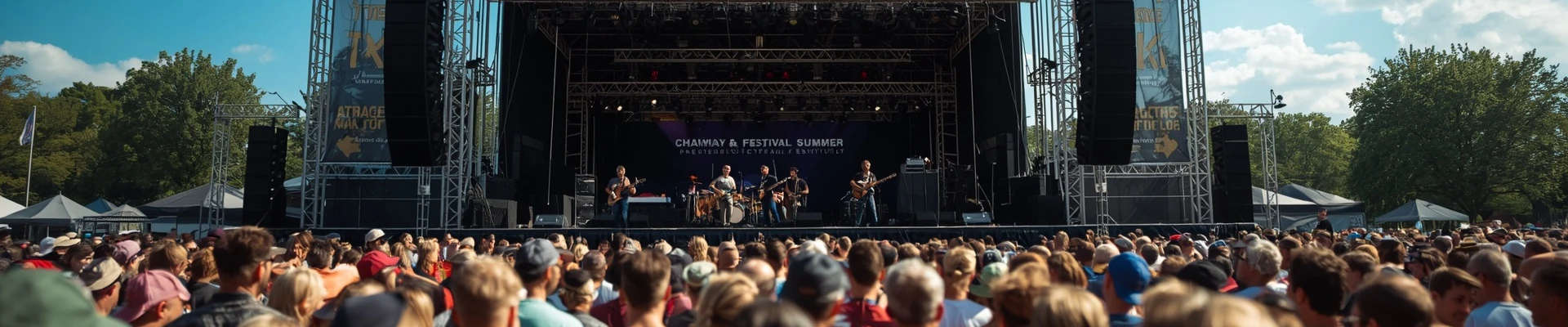
Oceanside's venue infrastructure is modest relative to the city's size — much of the entertainment dollar has historically leaked to San Diego (40 km south) and Los Angeles (130 km north) — but the existing venues are genuine and locally important. The Sunshine Brooks Theater (at the intersection of Pier View Way and the heart of downtown) is the city's anchor performing arts venue, a restored 1920s-era theater used for theatrical productions, concerts, and community events. The Oceanside Pier, at 560 metres the longest wooden pier on the West Coast, is not a music venue per se but the organizing landmark of the city's self-image, visible from every downtown venue and the backdrop for outdoor concert events. The Junior Seau Pier Amphitheater, adjacent to the pier, hosts outdoor concerts and community events in a setting that captures the city's coastal identity as directly as any venue in San Diego County.
The downtown arts and entertainment corridor along Mission Avenue and Coast Highway has expanded significantly since 2015, with bars and small music venues — including The Sunset Rooftop Lounge (atop the Springhill Suites near the harbor) and a rotating cast of music-forward craft breweries — filling the space between the historic theater stock and the newer hospitality developments. The Oceanside Harbor area, with its working waterfront, fishing charter offices, seafood restaurants, and weekend farmers market, supports a parallel tourism-facing entertainment economy of weekend bands and outdoor performance.
The Eastside neighborhood, inland from the 5 freeway, anchors the Latino music scene through its bars, community centers, and annual celebrations. Fire Mountain, a residential neighborhood on the western edge of the city, has historically been an incubator of the local surf and punk scenes. The College Boulevard corridor and the areas around MiraCosta College (the North County community college with a music program) sustain a student-oriented music scene at a sub-commercial level.
Festivals and signature events
The festival calendar reflects the city's demographics and geography. Wavecrest Wooden Boat Festival (fall, at the harbor) is the city's most distinctive recurring cultural event — not a music festival but a community anchor that includes live music throughout. Rod Run to the Sun (classic car show, Mission Avenue) has a live music component. Oceanside International Film Festival includes music programming. Día de los Muertos Oceanside (late October / early November, at Heritage Park) is one of the more culturally substantial observances of the holiday in North County, with mariachi, folk, and indigenous dance performances. Sunset Market (Thursday evenings at Mission Avenue, spring through fall) has become a de facto weekly live music series. The North County Craft Beer Festival at the harbor and various brewery-sponsored music events have become part of the year-round calendar. Oceanside Pride (late spring) includes a music program on the beach.
Beyond the local calendar, Oceanside residents participate heavily in the broader North County and San Diego festival circuit — KAABOO Del Mar (when it ran), the San Diego Street Scene (before its end), CRSSD Festival in San Diego, and the Casbah Anniversary events — as both attendees and performing artists, with the I-5 corridor making movement between Oceanside and San Diego straightforward enough that the whole county effectively operates as a single music market.
What ties it all together
Oceanside is a city in motion — defined by the constant flow of Marines arriving and departing Camp Pendleton, the seasonal rhythms of tourism and surf competition, the cultural anchor of its Latino Eastside, and the more recent influx of creative-class workers priced out of San Diego proper. Its music scene is not one of great international exports but of extraordinary cultural density at the local level: a three-way collision of military-base music culture, Mexican-American regional music, and California surf-punk underground that produces a sound and a live-music culture unlike anything the polished beach cities to the south can replicate. The longest wooden pier on the West Coast, jutting into the Pacific at the foot of a downtown still half-military and half-boutique, is an accurate metaphor for the city: one foot in the traditions that built it, the other reaching toward open water.