




Ontario is San Bernardino County's largest city and one of the Inland Empire's dominant urban centres — a 171,000-person city that sits at the convergence of Interstates 10 and 15, roughly 56 kilometres east of downtown Los Angeles and 32 kilometres west of San Bernardino. Sitting at an elevation of approximately 296 metres on the floor of the Cucamonga Valley, Ontario is bounded by the San Gabriel Mountains to the north, the Pomona Valley to the west, and the flat logistics expanse of the eastern Inland Empire spreading out to the south and east. It is the headquarters of Ontario International Airport (ONT) — the Inland Empire's primary commercial airport — and a cornerstone of the vast Inland Empire logistics corridor, one of the largest distribution hub clusters on the Pacific Coast.
A brief history
Ontario was founded in 1882 by the Canadian-born entrepreneur brothers George and William Chaffey on land leased from the Luiseño-adjacent Tongva and Serrano peoples, and named after George Chaffey's home province of Ontario, Canada. The Chaffeys designed the city on a precise grid — wide boulevards, citrus groves, an irrigation system drawing from the San Antonio Creek — and marketed it as the "Model Colony": a planned agricultural utopia that would demonstrate what rational land development could produce in Southern California. The plan worked. By the 1890s, Ontario's citrus groves were shipping Washington navel oranges across the continent, and the city's wide Euclid Avenue — a grand double-boulevard lined with pepper trees — became one of the most photographed streets in California, appearing in national magazines as evidence that Southern California was a place of cultured refinement as well as agricultural abundance.
The citrus economy sustained Ontario through the early 20th century, drawing Mexican, Filipino, Chinese, and Japanese agricultural labour communities into the city and its surrounding farmlands. The Euclid Avenue corridor remained the civic spine. The postwar period brought industrial and residential growth, and the opening of Ontario International Airport in the 1950s (its predecessor a wartime airfield) signalled the shift from agricultural to transportation-and-logistics economy. The Ontario Motor Speedway — a 2.5-mile oval and road course complex opened in 1970 on former citrus land — briefly made Ontario an international motorsport destination, hosting the California 500 and attracting Formula One and IndyCar races before its demolition in 1980 to make way for the Ontario Centre commercial development. The racetrack's decade-long arc is emblematic of Ontario's postwar ambitions: ambitious civic infrastructure followed by rapid commercial redevelopment.
By the 1990s and 2000s, Ontario had become the warehousing and distribution backbone of Southern California's consumer economy — a role accelerated by the expansion of ONT and the buildout of the Inland Empire's massive industrial park and logistics corridor. The city's demographics shifted significantly over the late 20th century: today Ontario is majority Hispanic (roughly 73 percent), with a Mexican-American community that anchors the cultural life of the city.
Music identity
Ontario's most consequential contribution to the broader Southern California music ecosystem is its position as a hub city in the 909 underground circuit — the dense network of DIY venues, promoters, and touring routes that runs through the San Bernardino and Riverside counties and feeds into Los Angeles. The 909 area code, shared across much of the Inland Empire, became a badge of geographic identity for the region's punk, metal, hardcore, and hip-hop communities — a shorthand for the working-class, inland-California culture that produced scenes distinct from the beach cities and the Los Angeles proper establishment.
Ontario sits just east of Pomona on the I-10, and the two cities share a live-music corridor anchored in the regional consciousness by The Glass House in Pomona — the 400-capacity club at 200 West 2nd Street that has served since 1996 as the premier mid-sized rock, punk, metal, and alternative venue for the entire Pomona Valley and eastern San Gabriel Valley. Bands like Thrice, Avenged Sevenfold, AFI, and dozens of Inland Empire underground acts broke out through the Glass House / Ontario / Pomona circuit before reaching Los Angeles proper; the corridor functions as a farm system and touring bypass for bands unwilling or unable to play Los Angeles venues.
Ontario's hardcore and metal scenes have produced a steady stream of regionally significant acts. Death Valley High — the industrial-goth-rock band formed by Robbie Thorne and Sadie Saturday — originated in the Ontario/IE orbit and built an international touring profile on the strength of their cinematic dark-rock sound, reaching audiences in Europe and Japan well before they received significant US press attention. The city's proximity to the Pomona Valley DIY circuit and to the Cal Poly Pomona campus audience created a consistent pipeline of young bands coming up through backyard shows, small venues, and the regional all-ages circuit.
The Mexican-American music ecosystem in Ontario runs deep and spans multiple generations of tradition. The city's majority-Hispanic population sustains a continuous norteño, banda, cumbia, and regional Mexican music culture through quinceañeras, community festivals along Euclid Avenue, and the clubs and restaurants of the downtown Ontario corridor. The newer corridos tumbados and regional Mexican urban sounds — exemplified nationally by Natanael Cano, Junior H, and the broader Sierreno movement — have found enthusiastic audiences in Ontario's younger Mexican-American community. The Ontario Multicultural Festival and the Día de los Muertos celebrations at Graber Olive House are among the most visible public events where these traditions are on display.
Gospel and R&B traditions run through Ontario's Black American community, historically centred in the western neighbourhoods near the Euclid Corridor and in the churches of the older residential districts. The city's Black population has decreased as a share of the total over the late 20th century, but the gospel choir culture and R&B performance tradition rooted in those communities contributed to the area's musical fabric.
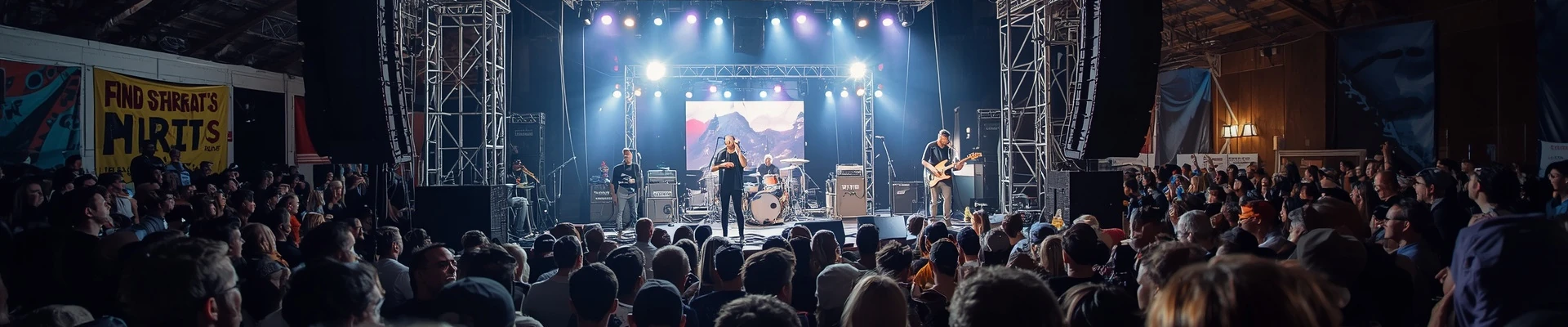
The Citizens Business Bank Arena — the 11,000-capacity multipurpose venue opened in 2008 at the Ontario Convention Center complex — serves as the Inland Empire's primary large-venue concert facility and the home of the Ontario Reign (AHL hockey). National touring acts — everything from pop superstars to country headliners to Latin urban acts — that play the Inland Empire market do so at the Citizens Business Bank Arena, bringing a consistent stream of major productions to Ontario that would otherwise bypass the region for the Los Angeles Forum or Staples Center circuit.
Cal Poly Pomona — just five kilometres west in Pomona — provides the university-age audience and campus-venue circuit that supports live music in Ontario. Its Bronco Student Centre and outdoor event spaces have hosted touring acts and campus concerts that feed directly into the Ontario/Pomona live-music ecosystem.
Venues and neighborhoods
Ontario's primary large venue is Citizens Business Bank Arena (11,000 capacity) at the Ontario Convention Center complex near the airport, hosting major touring acts and arena-scale productions. The Ontario Convention Center itself provides event and conference space for trade shows and mid-size productions.
The downtown Ontario corridor along Euclid Avenue and the historic grid of the Model Colony holds the city's bar and small-venue live-music ecosystem. The Copper Pub and the cluster of bars and restaurants along Euclid Avenue between 4th and 6th Streets serve the local band and DJ circuit. The Ontario Museum of History and Art (in Citizen Service Center) and the Ontario Mills entertainment complex (adjacent to the Inland Center) serve as gathering points for the broader population.
The Glass House in adjacent Pomona (technically 3 km west of Ontario's city limits) functions as Ontario's de facto mid-capacity rock venue — the overlap between the two cities' audiences is so complete that the two scenes are operationally inseparable. The AMC Ontario Mills 30 and the broader Ontario Mills mall entertainment cluster have hosted one-off events and concerts in parking-lot and outdoor-stage formats.
Downtown Ontario, the historic Euclid Corridor, and the Mountain Avenue commercial spine hold the Mexican-American cultural life of the city, from restaurants and tiendas to the annual Fiestas Patrias celebrations. The east Ontario industrial and logistics zones give the city its economic backbone but minimal musical infrastructure.
Festivals and signature events
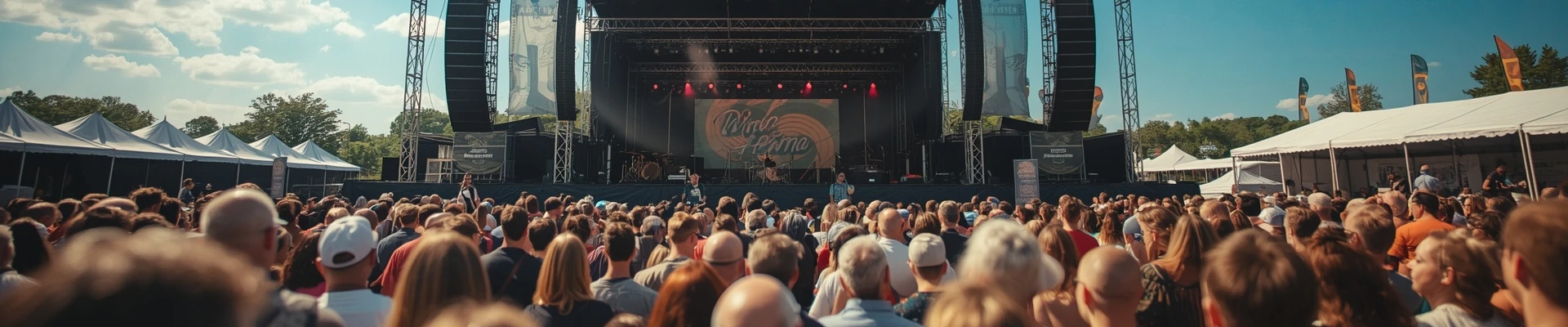
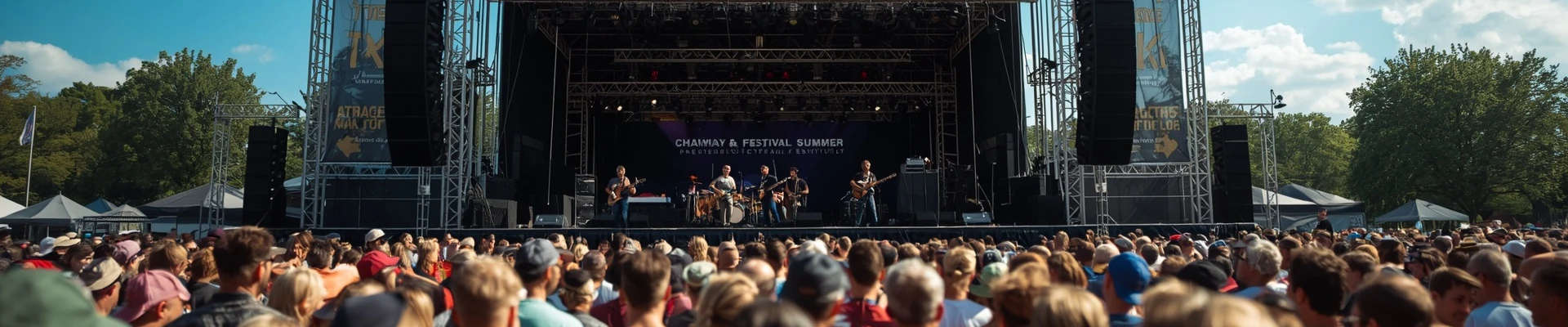
The Ontario International Film Festival has grown into a modest but consistent cultural calendar anchor. The Día de los Muertos celebration at Graber Olive House — one of the oldest continuously operating olive ranches in California (founded 1894), located on Euclid Avenue — is one of the most distinctive community events in the Inland Empire, combining the historic agricultural setting with Mexican-American cultural tradition. The Ontario Multicultural Festival and the Fiesta Ontario summer concert series program local and regional acts in outdoor venues along the downtown corridor. The New Year's Eve celebration on Euclid Avenue is one of the largest annual civic events.
The Inland Empire's broader festival geography — the National Orange Show Events Center in San Bernardino (12 km east), the Auto Club Speedway events in Fontana (8 km west), and the residual Ontario Motor Speedway legacy in the regional identity — gives Ontario a position within a festival and events ecosystem larger than its own programming could sustain.
What defines Ontario as a music city is the productive friction between its logistics economy and its cultural ambition. The city has spent most of its post-citrus history being used as infrastructure — a distribution hub, an airport complex, a freeway interchange — and its music scenes have grown up in the interstices: in the DIY venues along the Pomona/Ontario corridor, in the quinceañera halls and norteño clubs of the downtown Mexican-American community, in the backyard shows of the 909 hardcore underground, and on the arena floor of the Citizens Business Bank Arena where the biggest touring acts bypass Los Angeles to reach the Inland Empire. The Model Colony branding may be a century old, but Ontario's musical identity is built on the same principle: make something real with what you have, on the land where you stand.