
The Circle City
Orange sits at the geographic heart of Orange County, California — roughly 7 miles east of Anaheim, 30 miles southeast of downtown Los Angeles — on a flat inland plain ringed by the Chino Hills to the north and the Santa Ana Mountains to the east. The city covers about 87 square kilometres and holds just over 140,000 residents, making it a mid-size player in a county of massive suburban sprawl. Elevation hovers around 61 metres above sea level: gently upslope from the coast, low enough that the marine layer still reaches inland on summer mornings.
What makes Orange physically distinctive within Orange County is Old Towne Orange — a National Register Historic District centred on The Plaza, a traffic circle dating to the city's 1886 founding that remains the original town hub. Unlike virtually every other Southern California suburb, downtown Orange was not razed for a mall or a freeway. Its Victorian and Craftsman commercial blocks survived, which drew antique dealers in the 1970s and eventually created the bohemian, independent-business density that has supported music venues, record shops, and arts spaces into the present century. Chapman University, founded in 1861 and relocated to Orange in 1954, anchors the academic and cultural life adjacent to Old Towne and contributes a steady infusion of young musicians and artists to the local scene.
Deep Roots in the Orange County Underground
Orange's music history cannot be told separately from the broader Orange County punk and hardcore corridor that developed from the late 1970s onward. The county's geography — flat, car-dependent, economically diverse beneath the affluent surface — generated a particular suburban alienation that fuelled one of the most consequential scenes in American underground music. Orange contributed directly to that ferment.
Jack Grisham, the founding vocalist of T.S.O.L. (True Sounds of Liberty), grew up in and around the Orange County corridor and embodied the confrontational theatricality that distinguished early OC hardcore from its San Francisco and Los Angeles counterparts. T.S.O.L.'s 1982 album Beneath the Shadows pivoted from straight hardcore toward a darker, gothic-inflected rock that anticipated the deathrock underground. The band's willingness to cross genre lines at the height of hardcore's stylistic rigidity was, in part, a product of the aesthetic freedom available to bands operating slightly outside the Los Angeles spotlight.
The Vandals, formed in Huntington Beach in 1980 and deeply embedded in the OC circuit, played Orange-area venues throughout the decade as they evolved from hardcore to the sardonic pop-punk for which they became known. Their 1998 album Hitler Bad, Vandals Good and the steady output on their own Kung Fu Records label established a template for Southern California pop-punk commercialism that anticipated and ran parallel to the late-1990s mainstream breakthrough of the genre.
Orange's own Koo Koo Kangaroo emerged in a later era as a nationally touring act with a genuinely unusual niche — high-energy, deliberately absurdist children's pop built around participatory choreography — but the band's origins in the Chapman University milieu illustrate how the city's academic community feeds into its performing arts ecosystem at every level.
Chapman University and the Academic Music Infrastructure
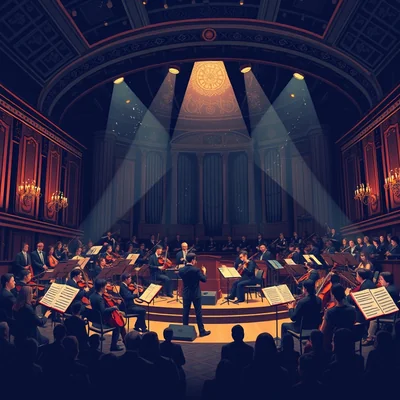
Chapman University's Hall-Musco Conservatory of Music is one of the more significant music-education institutions in Southern California outside the Los Angeles core. The conservatory's Musco Center for the Arts — opened in 2017 and seating 1,044 — represents the largest investment in performing arts infrastructure Orange has seen. The hall hosts the Pacific Symphony's educational programmes, chamber music series, visiting artists, and student productions, bringing a classical and contemporary concert presence to a city not typically associated with that ecosystem.
Chapman's Film Studies programme — one of the oldest and most respected in the US — has produced a generation of film composers and music supervisors, the people who license and score the films that shape how music reaches mass audiences. The university's integration of music, film, and media production means that Orange has quietly trained a significant number of people who work in the commercial music infrastructure rather than performing in it.
The Orange County School of the Arts (OCSA), while technically located in the adjacent city of Santa Ana, draws students from Orange and its surroundings through a county-wide admissions process. OCSA's vocal, instrumental, and musical theatre programs have produced performers who have continued into professional careers — notably Dove Cameron, a pop vocalist and actress who attended OCSA before a Disney Channel career that eventually led to a Grammy win for her 2022 single "Boyfriend."
Old Towne Orange: The Venue and Scene Geography
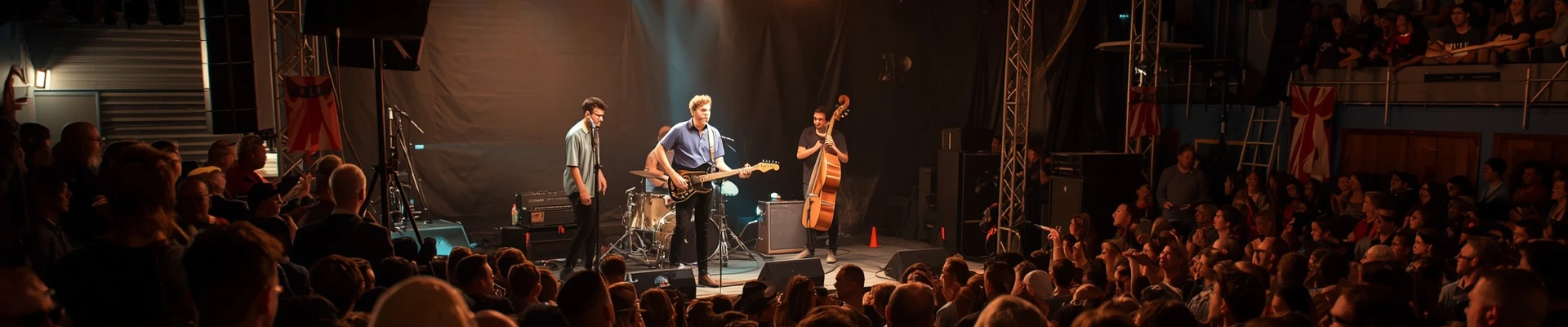
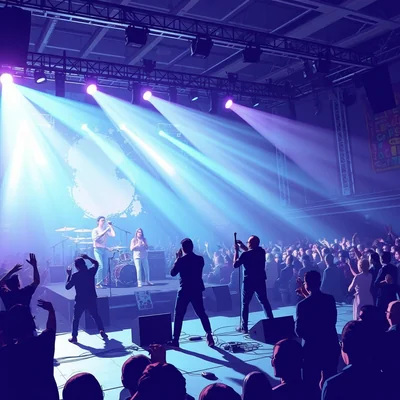
The physical character of Old Towne Orange has sustained a consistent live music environment across several decades. The walkable streetscape, older building stock, and independent-business culture made it hospitable to the kinds of venues that depend on character over capacity.
The Backdoor was one of Orange County's essential early punk venues — a bar in the vicinity of Old Towne that hosted local hardcore and punk acts through the early 1980s before the scene outgrew it. The venue's significance in the county's underground history is disproportionate to its modest size.
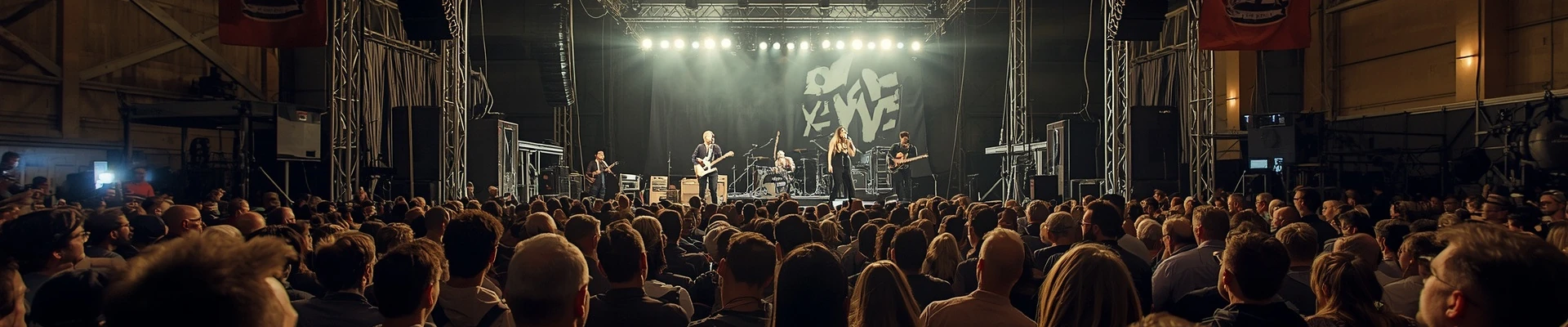
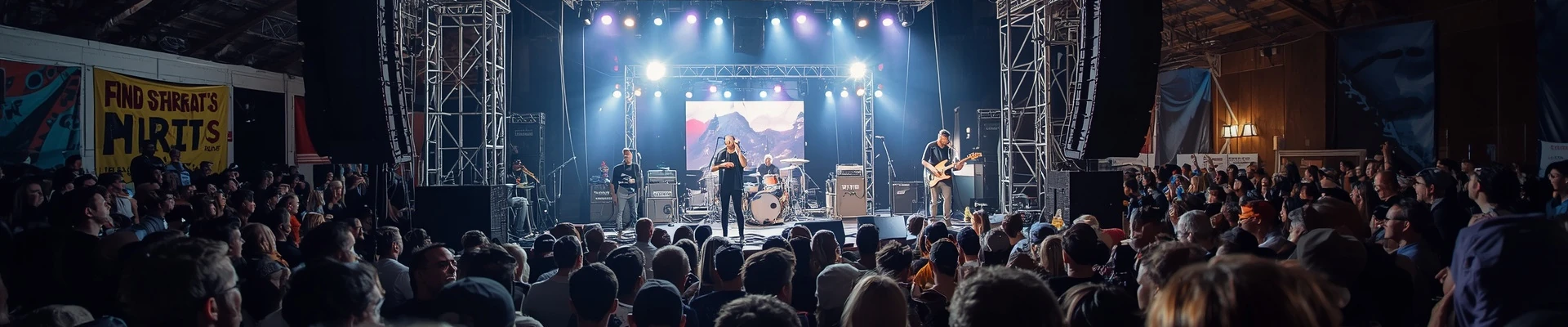
Heroes Bar and Grill became a reliable mid-level rock and punk venue in Orange for several decades, hosting touring and regional acts on a circuit that connected it to Anaheim's Chain Reaction, Santa Ana's Constellation Room, and the Fullerton venues that collectively constituted Orange County's live music network.
The Lemon Tree and various bar venues along the Chapman Avenue and Glassell Street corridors have rotated through iterations — the specific names change across decades, as they do in every smaller music city — but the infrastructure has proved persistent. Old Towne's commercial survival has meant that the physical spaces remain available for music in a way they would not in a fully redeveloped downtown.
For record shopping and the physical-music economy, Ragin' Records and periodic record fairs in the Old Towne antique district have served the crate-digger community. The antique district itself — the densest concentration of used-goods dealers in Southern California — has historically attracted the same demographic that shops for vinyl: people interested in the physical residue of the past.
The 714 Scene: Connections and Context
Orange's area code, 714, has become a geographic signifier for Orange County music culture in the same way that 216 evokes Cleveland or 312 evokes Chicago. The county's punk and alternative scene circulated through venues in Orange, Anaheim, Santa Ana, Fullerton, Huntington Beach, and Costa Mesa, creating a circuit where the specific city mattered less than the countywide community.
Within that circuit, Orange's particular contribution was partly topographic. The Old Towne district provided a downtown gathering space that most OC cities lacked — a place where bands could play at a bar, walk to a record shop, eat at a diner, and repeat. This infrastructure made Orange a natural social node even when its venues were not the largest.
No Doubt, the most internationally successful act produced by the OC punk corridor, did not come from Orange itself — they were an Anaheim band, rooted in the Loara High School milieu — but their career arc is inseparable from the countywide scene that Orange helped sustain. The same VFW halls, all-ages shows, and regional circuits that incubated No Doubt passed through Orange regularly.
Thrice — formed in Laguna Hills in 1998 and one of the most critically respected post-hardcore acts of the 2000s — came up on the same county circuit and built a following through exactly the kind of all-ages venues that Orange and its neighbours hosted. Their albums The Artist in the Ambulance (2003) and Vheissu (2005) remain touchstones of the genre, recorded partly at Southern California studios within the county's orbit.
Festivals and Recurring Events
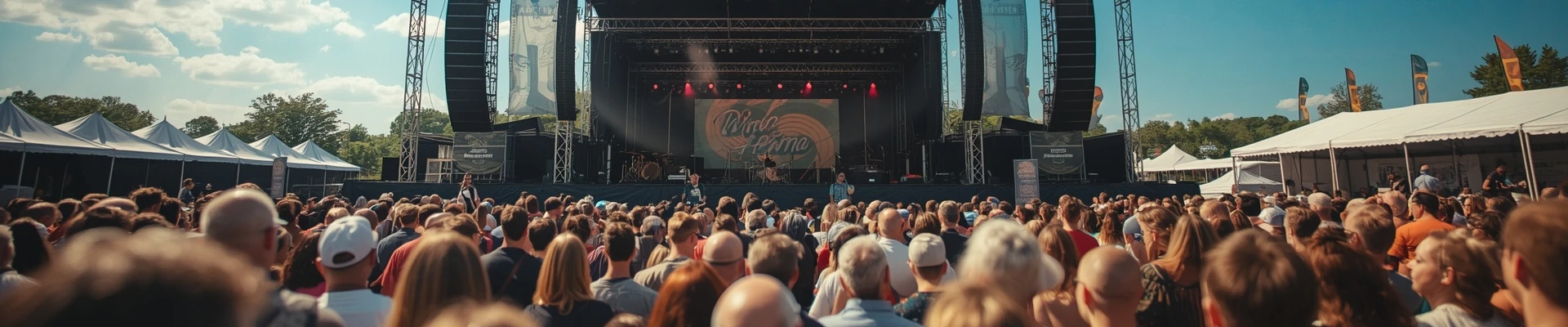
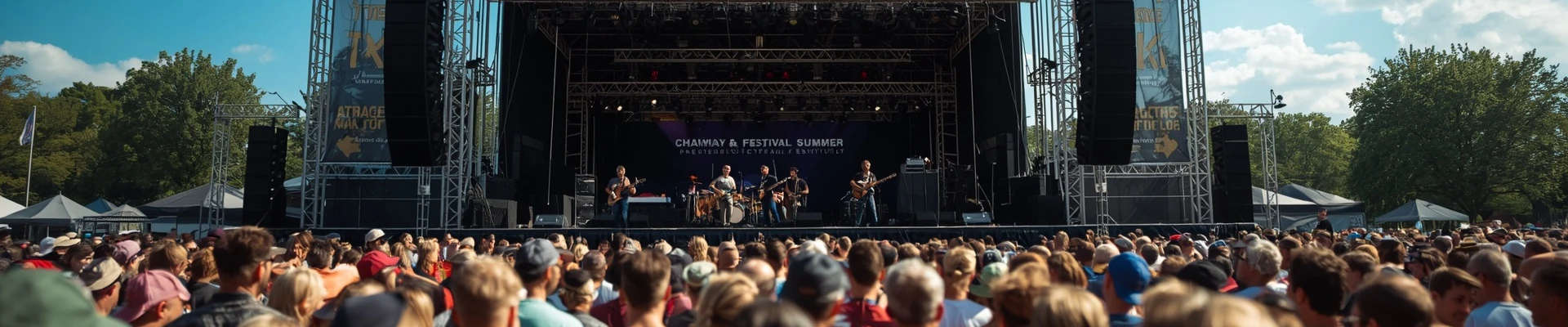
Orange does not host a defining annual festival on the scale of Coachella or HARD events, but the city's events calendar has consistently included music. Old Towne Orange's Plein Air Festival pairs visual art with live music programming in the historic district. The Orange International Street Fair, held annually over Labor Day weekend, is one of Southern California's longest-running street festivals — dating to 1973 — and incorporates live music across multiple stages as a central element of its programming. The Street Fair draws upward of 200,000 visitors over three days and features an eclectic mix of styles from rock and blues to regional Latin acts, reflecting the county's demographic complexity.
Chapman University runs its own concert series and festival programming through the Musco Center, including the annual Fall and Spring Artist Series that brings nationally known performers to the 1,044-seat hall. These events serve the academic community but are open to the public and represent a consistent pipeline of quality performances for a mid-size inland city.
Demographics and the Broader Sound
Orange's population is approximately 40 percent Latino, with a significant working-class Mexican and Central American community concentrated east of the 57 Freeway. This community sustains the regional Mexican, banda, norteño, and cumbia circuits that operate largely through Spanish-language radio, nightclubs, and family events independent of the English-language music press.
There is also a meaningful Vietnamese community in Orange, connected to the broader Little Saigon area centred in nearby Westminster and Garden Grove — the largest Vietnamese-American enclave in the United States. Vietnamese pop, bolero covers, and the performance culture of the overseas Vietnamese diaspora flow through this corridor with their own infrastructure of restaurants-as-venues, community halls, and streaming audiences.
Chapman University contributes an international student population with musical tastes ranging from classical to global pop, providing a cosmopolitan counterweight to the predominantly suburban rock and punk orientation of Orange's Anglo underground.
What Ties It Together
Orange, California is a city whose music scene is inseparable from its physical peculiarity within the Southern California landscape: the survival of a Victorian-era walkable downtown in a county built almost entirely around freeways and cul-de-sacs. Old Towne Orange created the kind of density — a record shop near a bar near a university near a circle of antique dealers — that music subcultures need to sustain themselves between scenes. When the OC punk corridor was at its peak intensity, Orange provided a downtown where its participants could gather. When that generation aged out, the Chapman University milieu provided the next wave.
The result is a city that has never had one defining sound — not a "Orange sound" the way there is a Bakersfield Sound or a Tampa death metal scene — but rather a consistent hospitality to underground music of many kinds, sustained by physical infrastructure and academic anchoring that most suburban cities at this population scale cannot match. The 714 runs through it: that shared area code, that shared flat geography, that shared experience of making something in the shadow of Los Angeles without being absorbed by it.