


Oxnard is the largest city in Ventura County, situated on the Southern California coast roughly 60 miles northwest of downtown Los Angeles and 30 miles southeast of Santa Barbara. With approximately 207,000 residents, it is a majority-Latino city — one of the most demographically distinct large cities in California — built on an agricultural economy that made it the strawberry capital of the world and a harbor economy anchored by the adjacent city of Port Hueneme and the Channel Islands Harbor. Oxnard sits on the Oxnard Plain, a wide coastal flatland between the Santa Monica Mountains to the southeast and the Topatopa Mountains to the north, watered by the Santa Clara River and the Calleguas Creek system. The Pacific gives the city one of Southern California's most temperate climates: cool marine layer mornings, mild dry summers, and rarely a frost. It is a city that Los Angeles-area media largely ignores, yet it has produced, absorbed, and sustained musical communities that reflect the full depth of Mexican-American cultural life in California.
A brief history
The Oxnard Plain was the ancestral territory of the Chumash people, who maintained villages along the coast and inland waterways of Ventura County for thousands of years. Spanish missionaries and ranchers displaced the Chumash beginning in the late 18th century; the Mission San Buenaventura (founded 1782 in present-day Ventura) sits just miles from Oxnard's northern edge. The land grant era produced vast cattle ranches across the plain. In 1897 the Oxnard brothers — a Louisiana sugar refining family — opened the American Beet Sugar Company factory on the plain, and the town of Oxnard was incorporated the following year to serve the sugar operation. Thousands of Japanese and Mexican workers arrived to tend the beets, establishing the multiethnic labor patterns that defined the region's agricultural economy for the 20th century.
The Oxnard economy shifted from sugar beets to vegetables — primarily lima beans — and later to strawberries, which transformed the Oxnard Plain into the most productive strawberry-growing region in the world by the mid-20th century. Mexican bracero workers, and later settled Mexican-American families, constituted the core agricultural workforce. The Colonia neighborhood — Oxnard's oldest Latino barrio, established in the early 20th century at the edge of the sugar factory district — became the geographic and cultural heart of the city's Mexican-American community. The community grew through every decade, and by the 1990s Oxnard was a majority-Latino city with deep roots in Mexican regional music, Catholic parish life, and agricultural union organizing.
The naval presence has been a parallel shaping force. Naval Base Ventura County (formed from the merger of Point Mugu Naval Air Station and the Naval Construction Battalion Center at Port Hueneme) brought a large military population, defense industry employment, and the infrastructure of a Cold War naval aviation hub. The naval bases diversified the city's demographics with Filipino, African American, and Anglo military families, and created a working-class multiethnic character distinct from the more affluent Ventura County communities to its north.
Music identity
Oxnard's music identity is rooted in the Mexican regional tradition — specifically the banda sinaloense, cumbia, and norteño styles that form the sonic backbone of Mexican-American cultural life across California's Central and Southern valleys. The city's quinceañeras, weddings, and community celebrations anchor a circuit of live conjunto, banda, and cumbia bands operating through the social halls, parks, and venues of the Colonia and surrounding neighborhoods. Radio Lazer and the constellation of Spanish-language radio stations audible across the Ventura County coast have broadcast this tradition to successive generations. Oxnard is not a place where Mexican regional music is an exotic import — it is the default community soundtrack, as organic and rooted as country music in rural Tennessee.
The city's most internationally recognized musical export is a striking outlier from that world: Sublime, the Long Beach ska-punk band, spent formative years in the Oxnard area before their rise, and the city's proximity to the South Bay punk scene meant constant cross-pollination. But the musical figure most closely associated with Oxnard is Milo Aukerman, the frontman of The Descendents, whose family was based in Oxnard during the band's formative early-1980s years. The Descendents — alongside Black Flag, the Circle Jerks, and the Germs — defined the first wave of Southern California hardcore punk, and their 1982 debut LP Milo Goes to College is among the foundational texts of American hardcore. The band's blend of melodic sensibility with aggressive delivery became the blueprint for melodic hardcore and pop-punk for the next four decades. ALL, the band Aukerman's bandmates formed during his academic years, also maintained ties to the Oxnard area. The city's connection to early California punk and hardcore is more than passing.
Oxnard produced Thurston Moore, the guitarist and co-founder of Sonic Youth, who was born in Coral Gables but spent part of his youth in Oxnard before the family relocated. More directly, Oxnard is the birthplace of Danny Brown, the Detroit rapper whose idiosyncratic style and career developed after leaving California, and of Noel Quintana, a session bassist who circulated through the Los Angeles Latin jazz world. The city's connection to the Los Angeles hip-hop underground runs through proximity — Oxnard has consistently fed talent into the broader LA scene, including through the Ventura County underground rap circuit that operated through house parties, community centers, and small venues through the 1990s and 2000s.
The ska and reggae scenes of Southern California's late 1980s and 1990s found fertile ground in Oxnard's multiethnic working-class demographics. The Ventura County ska circuit — connecting Oxnard, Ventura, and Thousand Oaks through house shows, club dates, and beach events — was a real scene with its own community of bands and fans before the mainstream ska revival swept the genre into national visibility around 1996. The beach punk and skate punk traditions of the Oxnard coastline — anchored at Hollywood Beach and Oxnard Beach Park — created a particular strain of sun-bleached California punk that drew from the agricultural flatlands and the Pacific in equal measure.
The blues and R&B tradition runs through the African American military families who settled near the naval bases, creating a community that attended Black churches, supported blues and soul performers, and connected to the broader Southern California African American music scene. The city's Performing Arts Center and the Carnegie Art Museum have hosted jazz and classical programming alongside the visual arts.
Venues and neighborhoods
Oxnard's venue infrastructure is modest relative to its population, reflecting the city's working-class character and its position between two larger markets. The Oxnard Performing Arts Center — a 1,574-seat theatre operated by the City of Oxnard — is the flagship venue for larger touring shows, Broadway-style productions, and major community events. The Oxnard Civic Auditorium programs mid-size events. Channel Islands Harbor has hosted outdoor festival performances and summer concert series. The Plaza Park bandshell anchors outdoor summer concert programming in the historic Downtown core.
The bar and club circuit is concentrated along Oxnard Boulevard, Fifth Street, and The Collection at RiverPark — the major retail and entertainment district on the city's north side. The Oxnard Beach corridor hosts beachfront venues that program cover bands, DJs, and regional touring acts through the summer season. The Channel Islands Harbor restaurant and bar district supports live music through its waterfront dining corridor.
The Colonia neighborhood — the oldest and most historically significant Latino barrio, south of Downtown near the former sugar factory site — is the cultural anchor of Oxnard's Mexican-American community, with its own social halls, parish events, and community gatherings that support live banda, cumbia, and norteño performance. La Colonia Community Park hosts outdoor concerts and festivals. The Historic Downtown along A Street and Meta Street has seen arts-focused development that has brought gallery spaces and small music venues into formerly vacant commercial buildings.
Festivals and signature events
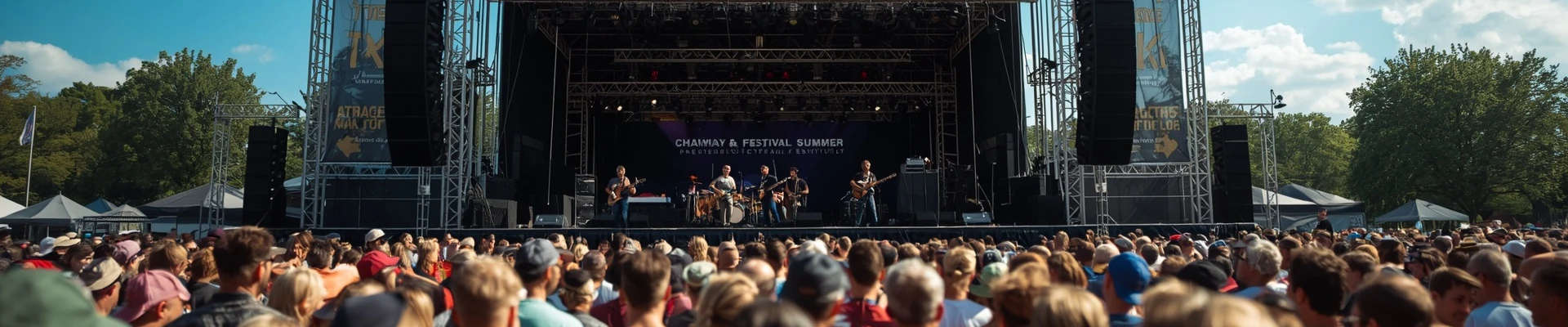
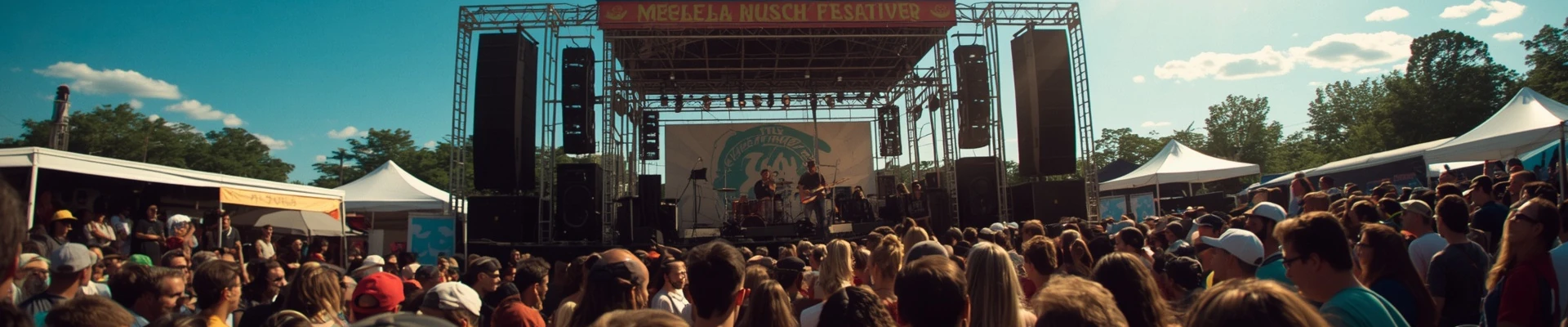
The Strawberry Festival — one of the most attended community festivals in Ventura County, drawing 50,000 or more visitors annually in its pre-pandemic iteration — incorporates live music across multiple stages alongside the agricultural celebration. The festival's music booking has historically favored regional acts, cover bands, and Spanish-language performers. The Channel Islands Harbor Parade of Lights incorporates live performances. The Oxnard Salsa Festival — a Latin food and music event at the harbor — programs salsa, cumbia, and Latin pop performers. Blues at the Beach (the summer blues series at Oxnard Beach Park) is one of the city's most consistent live music programs, programming regional and touring blues and R&B acts through summer weekends. The International Tamale Festival draws music programming into the Downtown celebration. Fifth Street festivals and the broader Oxnard Arts District calendar program local and regional acts through the year.
The city's connection to the broader Ventura County festival ecosystem — including events in neighboring Ventura and Camarillo — means that Oxnard musicians circulate through a regional festival circuit that extends from the Santa Barbara county line to the LA border.
What ties it all together
Oxnard's musical identity is inseparable from its demographics and its geography. This is a city where banda sinaloense played from a flatbed truck at a strawberry field quinceañera is not a cultural curiosity but a lived reality; where the same zip code that produced early California hardcore punk also sustained decades of Mexican regional music performance; where naval base diversity created pockets of blues, R&B, Filipino pop, and multiethnic fusion that don't show up in any city's official music narrative. Oxnard doesn't have a Ryman Auditorium or a Third Man Records — it has a Performing Arts Center, a harbor concert series, and the Colonia's social halls, and those institutions have sustained a musical community of genuine depth and specificity. The Descendents encoded something essential about this particular strand of Southern California working-class experience — the agricultural flatlands, the marine layer, the distance from the Los Angeles cultural machinery — and that sensibility runs through Oxnard's musical life whether the genre is hardcore punk or banda or beach ska. It is a city that has always made music for itself first, and let the world catch up.