
Palmdale sits at the southern end of California's Antelope Valley, a wide, flat Mojave basin bounded by the San Gabriel Mountains to the south and the Tehachapi Mountains to the north. At roughly 2,657 feet above sea level and about 60 miles north of downtown Los Angeles via the Antelope Valley Freeway (SR-14), Palmdale occupies one of the most militarily consequential stretches of desert in American history — a landscape where stealth aircraft were born and the United States' most classified flying machines were assembled in secure hangars beneath the Mojave sun. With approximately 158,000 residents, it shares the "AV" identity with its twin city Lancaster to the north; the two together form the fastest-growing urban corridor in greater LA County, connected by the Sierra Highway and a shared high-desert solidarity that sets the Antelope Valley apart from the coastal basin that nominally governs it.
The economy is anchored by aerospace and defence. Air Force Plant 42 — a federally owned, contractor-operated manufacturing complex on the eastern edge of the city — is one of the most significant military production facilities in the United States. The Lockheed Skunk Works flight test and final assembly operations are based at Plant 42; the SR-71 Blackbird, the U-2 spy plane, the F-117 Nighthawk, and the F-22 Raptor all had critical work done here. Northrop Grumman's B-2 Spirit was assembled at Plant 42. Boeing's Phantom Works maintains facilities here alongside the nearby Edwards Air Force Base to the north. This density of classified aerospace work gives the city a specific character: technical expertise, federal dependency, and a quiet civic pride in the knowledge that the most advanced military aircraft in history were built here.
Beyond aerospace, Palmdale's economy has absorbed large waves of migration from the Los Angeles basin — working-class families priced out of the San Fernando Valley, South LA, and the Inland Empire. Today the population is roughly 52 percent Latino (with large Mexican-origin and Central American communities), about 17 percent Black, and 22 percent white, with growing Filipino and Vietnamese communities in newer residential tracts. The Antelope Valley Mall and the commercial strips along 47th Street East and Palmdale Boulevard serve as the commercial heart of a city that, like most of the American high desert, developed around car-dependent suburban infrastructure.
A brief history
The Antelope Valley's indigenous inhabitants were the Kitanemuk people, who lived in the basin and the surrounding mountains for thousands of years before Spanish contact. The arrival of the Southern Pacific Railroad in the 1870s opened the valley to Anglo-American homesteading, and a small settlement called Harold — later renamed Palmdale, after the Joshua trees that early settlers mistook for palms — grew around a railroad stop. For most of the late 19th and early 20th centuries, Palmdale was a modest agricultural community raising alfalfa and grain in the high desert.
The transformation came with World War II. The Army Air Forces established Muroc Army Air Field (later Edwards Air Force Base) on the dry lake beds to the east, and the aerospace industry reached south into the Antelope Valley. Air Force Plant 42 was built in the 1950s adjacent to the Palmdale Airport (now LA/Palmdale Regional Airport), and the Skunk Works facility expanded steadily through the Cold War. The city incorporated in 1962, and the population grew through the 1960s and 1970s as defence workers and their families settled the valley.
The late 20th century brought economic turbulence — the post-1990 defence drawdowns hit Antelope Valley communities hard. Recovery came through renewed defence spending after 9/11 and through the inward migration that repopulated the valley through the 2000s and 2010s with families seeking affordable housing within reach of Los Angeles. The Metrolink Antelope Valley Line, connecting Palmdale to downtown LA in roughly 90 minutes, has made the city a de facto bedroom community for LA workers willing to trade proximity for space.
Music identity
Palmdale's music identity is inseparable from the broader Antelope Valley scene — both cities draw from the same regional pools of talent, share the same fairgrounds and festival grounds, and produce music in the same high-desert DIY tradition. But Palmdale has its own distinct emphases, shaped by its demographic composition and its slightly more southern, more suburban character.
Regional Mexican music is the most commercially active scene in the city. The large and well-established Mexican-American community — including long-settled families from before the aerospace era and more recent immigrants from Jalisco, Sinaloa, Oaxaca, and Central America — sustains a year-round circuit of quinceañeras, bailes, and concert events featuring banda sinaloense, norteño, cumbia, and corrido acts. Event halls along the 47th Street East commercial corridor and in the residential tracts of East Palmdale programme this music continuously. Touring acts from the regional Mexican circuit — Banda MS, Banda El Recodo, Los Bukis-era revival shows, and contemporary corridos artists — reliably fill the Antelope Valley Fairgrounds (shared with Lancaster to the north) when they come through. The local promoter circuit sustaining this scene is among the most active and economically robust music infrastructure in the valley.
Hip-hop in Palmdale grew substantially through the 1990s and 2000s as the demographics of the city shifted. The same South LA diaspora that shaped Lancaster's rap scene — communities with cultural and familial ties to Compton, Inglewood, South Central, and the broader 213/310 area code geography — settled in large numbers in Palmdale's western and southern tracts. The resulting music sits squarely in the West Coast gangster rap tradition: lyrically driven, low-rider-adjacent, deeply Californian. Local and regional artists have circulated on SoundCloud, YouTube, and the streaming economy, building followings within the AV and occasionally beyond. The distance from Los Angeles's recording infrastructure — the studios on Cahuenga Boulevard, the industry's A&R operations in Hollywood and Culver City — has been a persistent structural obstacle, though digital distribution has partially compensated. The AV's hip-hop producers and artists increasingly self-release, building audiences through social media, local shows, and the informal economy of the valley's music culture.
Rock and metal maintain a substantial presence, driven by the large white and Latino working-class communities with ties to the aerospace industry and the military. Palmdale High School, Knight High School, Quartz Hill High School (which straddles the Lancaster–Palmdale border) and the AV's other public schools have historically been hotbeds of garage-band and metal activity — the Mojave desert, with its wide spaces and tolerant neighbours, is ideal for loud, rehearsal-intensive music. The DIY ethic runs deep in the valley's rock and metal communities: bands here learn early to handle their own bookings, recordings, and promotion, because the infrastructure is thin and the distance to the industry's hubs is real. The valley's metal community connects to the broader Southern California metal circuit — Pomona, San Bernardino, the House of Blues Anaheim — for larger shows.
Gospel and Christian music form an important strand of Palmdale's musical life, sustained by the city's large and active Black church community. Congregations along the 10th Street West and Palmdale Boulevard corridors programme praise bands, choirs, and visiting gospel acts. The Pentecostal and Baptist church communities — many of them founded by families who moved from South LA — support a lively tradition of contemporary gospel that draws on the harmonic and rhythmic language of R&B and soul.
Country music carries diminishing but real cultural weight in the older, Anglo-settled parts of the city and the communities east of the freeway toward Lake Los Angeles and Pearblossom. The valley's country tradition — rooted in the agricultural ranching communities of the early 20th century and in the honky-tonk sensibility of the Bakersfield Sound's inland orbit — persists in the bars and roadhouses of the high desert's older districts, though it has faded significantly as the demographics of the city have shifted.
Venues and neighborhoods
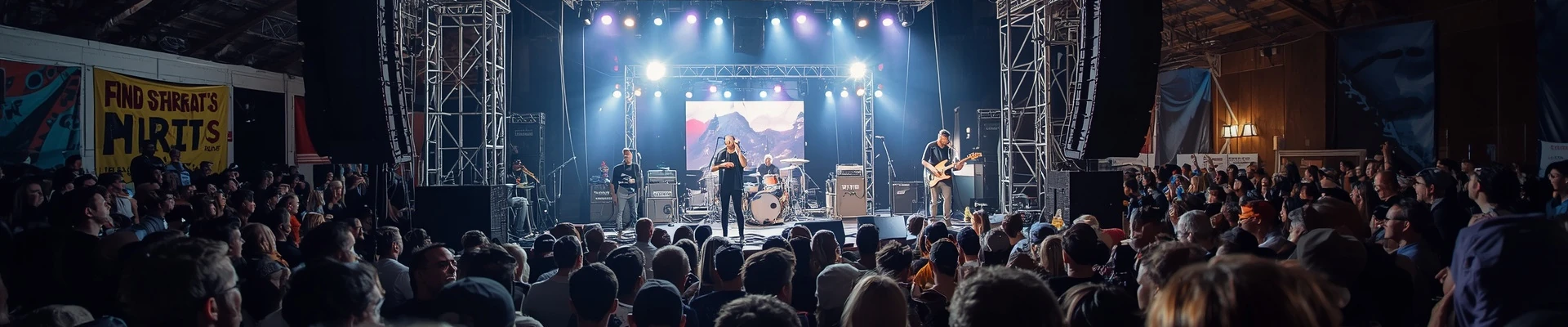
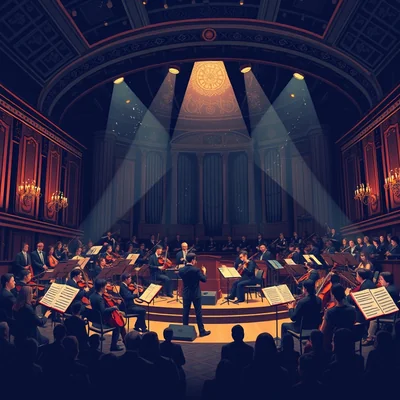
The Palmdale Playhouse — a purpose-built community performing arts centre on 38th Street East — is the city's primary dedicated indoor venue for theatre, music, and cultural programming. It hosts community theatre productions, dance performances, local orchestra and ensemble concerts, and occasional touring acts in the 400-seat range. The LA/Palmdale Regional Airport facilities and adjacent civic spaces have hosted outdoor events and air shows that incorporate live music programming alongside the aeronautic spectacle that is the airport's main draw.
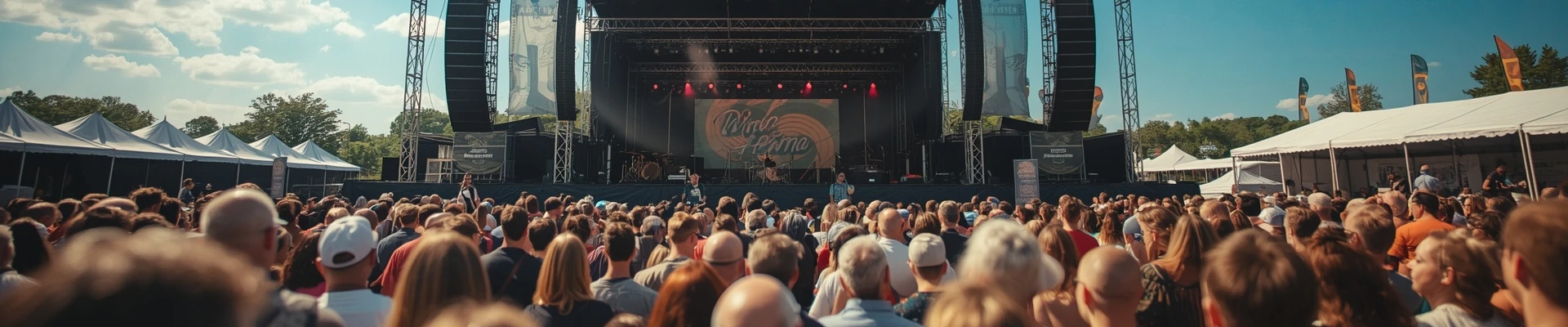
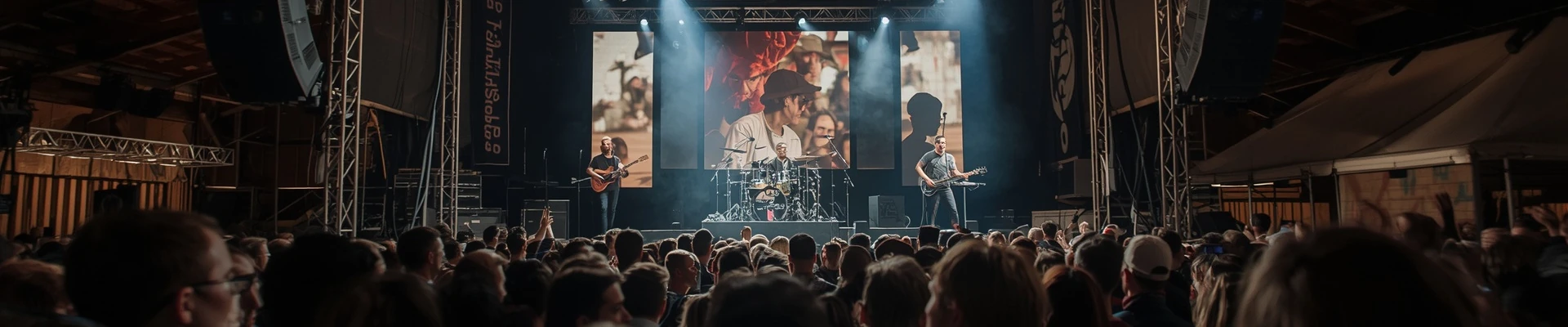
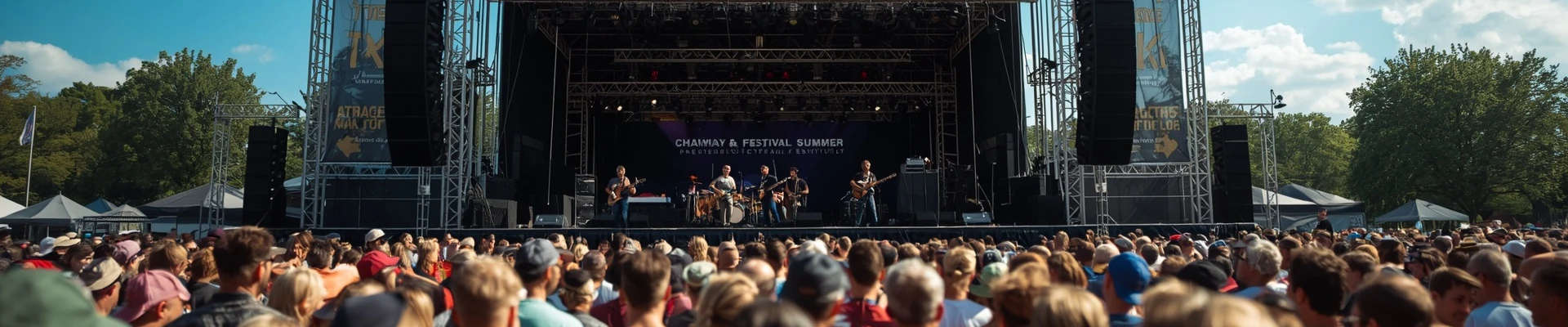
The Antelope Valley Fairgrounds (technically in Lancaster but serving the entire valley) hosts the Antelope Valley Fair each August — the primary large-format outdoor music event in the region — alongside a calendar of concerts, rodeos, and community events. The fairgrounds' concert stage has hosted country, regional Mexican, pop, and rock touring acts across its long history.
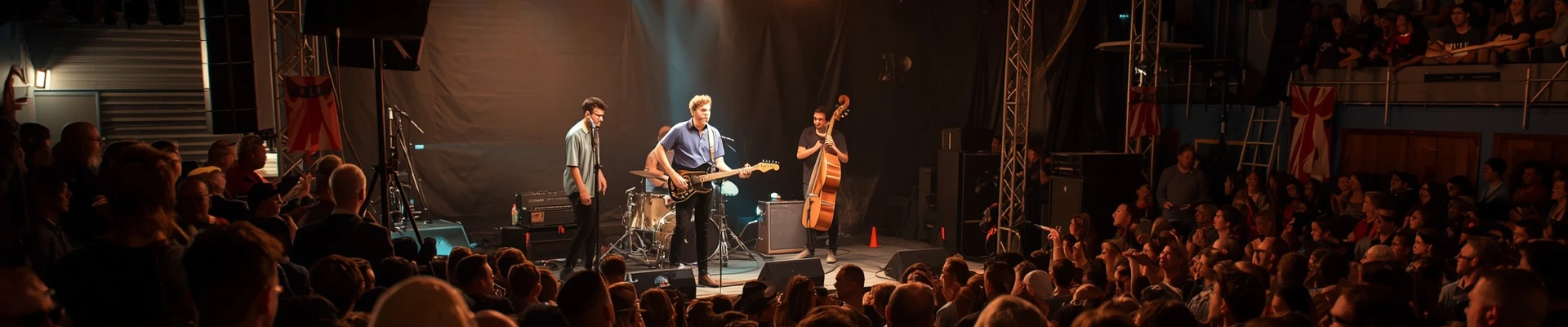
Bar and restaurant venues scattered across Palmdale's commercial districts programme live music in the bar-band and acoustic tradition: establishments along the Palmdale Boulevard corridor, near the Antelope Valley Mall, and in the older commercial strips along the Sierra Highway have hosted local bands, tribute acts, and occasional regional touring artists. The city's taproom culture — small craft brewing operations that have opened through the 2010s and 2020s — has added low-key acoustic and local performance venues to the mix.
West Palmdale, anchored by the residential communities along 47th Street West and the older tracts near the city's original downtown core, is the city's most established neighbourhood and the heart of the older Anglo community. East Palmdale — the vast suburban tracts east of the Antelope Valley Freeway — is predominantly Latino and growing rapidly, home to the quinceañera halls and norteño venues that serve the city's largest demographic community. Downtown Palmdale, centred on Palmdale City Hall and the Courson Park area, has seen periodic revitalization efforts; the outdoor amphitheatre and park spaces programme community events and music through the warmer months.
Festivals and signature events
The Antelope Valley Fair (late August, Antelope Valley Fairgrounds) is the region's premier annual gathering — an agricultural fair with a multi-stage music programme spanning country, rock, regional Mexican, and pop. It draws from both Lancaster and Palmdale and is one of the most attended fairs in Southern California outside the county and state fair systems.
The California Poppy Festival (April, Lancaster) draws attendees from across the valley, including Palmdale, when the Antelope Valley California Poppy Reserve blooms — the festival's music programming spans folk, country, regional acts, and family entertainment alongside the floral spectacle.
AV Pride events, which have grown significantly through the 2010s and 2020s, include music programming as part of their broader community celebration. Cinco de Mayo events in Palmdale's parks and commercial areas programme regional Mexican bands, DJs, and community performances. Juneteenth celebrations in the city's park system have expanded, with music, community gathering, and cultural programming increasingly central to the event.
The LA Airshow (held at the Palmdale Regional Airport in some years) incorporates live entertainment alongside the aeronautic displays — a uniquely Palmdale intersection of the city's two defining identities: aerospace heritage and community entertainment.
What ties it all together
Palmdale is a city shaped by two kinds of distance: the physical distance from Los Angeles, which has defined its character as a working-class refuge and aerospace frontier; and the cultural distance from the entertainment industry, which has made its music scene almost entirely self-sustaining by necessity. The result is a city where banda and norteño fill event halls every weekend for audiences who never cross the mountains to the coast, where hip-hop artists build regional careers without label support or industry contacts, where metal bands rehearse in garages surrounded by Joshua trees and book their own shows on weekend circuits from the Inland Empire to the Central Valley. What holds it together is the same thing that holds the Antelope Valley together generally: the awareness that you are somewhere distinct from Los Angeles — higher, drier, windier, more self-reliant — and that the music made here reflects that distance not as a limitation but as the source of its particular sound.