
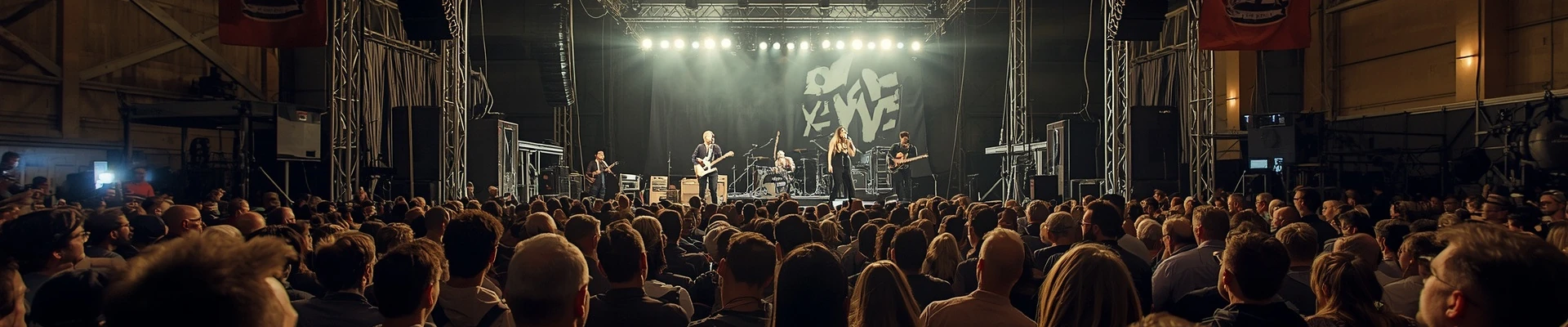
Pasadena occupies a privileged pocket of the San Gabriel Valley, pressed against the southern slope of the San Gabriel Mountains roughly 16 kilometres northeast of downtown Los Angeles. At an elevation of about 236 metres, it catches slightly cooler air than the basin below, a fact that the city's founders in the 1870s explicitly marketed to Midwestern invalids seeking relief from harsh winters. That positioning — adjacent to the metropolis but physically distinct from it, elevated enough to feel apart — has shaped Pasadena's cultural character ever since. It has always thought of itself as a city, not a suburb, and its music scene reflects that self-conception: serious, historically grounded, and occasionally surprising in its range.
Geography and framing
The city covers roughly 59 square kilometres on the western edge of the San Gabriel Valley, with the Arroyo Seco — a seasonal river corridor and linear parkway — forming its western boundary. The Rose Bowl stadium sits in the Arroyo Seco's broad floodplain, tucked into a natural amphitheatre of hills just north of the Colorado Street Bridge. To the north, the San Gabriel Mountains rise abruptly, visible from nearly every street and serving as a constant visual orientation. Pasadena's flatlands are dense with Craftsman bungalows, Spanish Colonial Revival mansions, and the mid-century modernist buildings that house Caltech and the Jet Propulsion Laboratory — institutions that have made the city a global centre for science and engineering and given its cultural life an intellectualist, somewhat eccentric edge.
Colorado Boulevard divides the city east–west and anchors Old Town Pasadena, a restored 1890s commercial district that functions as the city's social hub. South Pasadena and San Marino border it to the south; Arcadia and Monrovia extend eastward. The 210 Freeway bisects the city, and the Gold Line Metro connects it to downtown Los Angeles in about 35 minutes — close enough to draw on the full LA music ecosystem, far enough that Pasadena has retained a distinct local scene rather than becoming simply an appendage of Hollywood.
History and civic identity
Pasadena was founded in 1874 by the Indiana Colony, a group of Midwesterners seeking a warmer climate, and incorporated as a city in 1886 during the great Southern California land boom. It became one of California's wealthiest cities by the early twentieth century, attracting industrialists, academics, and artists who built the grand Victorian and Craftsman houses that still line its boulevards. Caltech (California Institute of Technology) opened in 1891 and embedded scientific culture into the city's identity so deeply that Nobel laureates and rocket engineers are a routine presence at the local coffee shops. The Tournament of Roses Parade began in 1890 and the Rose Bowl game in 1902, anchoring Pasadena's national brand around civic celebration, floral pageantry, and college football — an unlikely combination that has made it one of the most recognizable municipal identities in America.
That civic identity has both enriched and constrained the music scene. Pasadena is a city that takes culture seriously — its Pasadena Symphony has operated continuously since 1928, its civic auditorium has hosted the Grammys, and its public arts funding is generous by Southern California standards. But it is also a city of homeowners and institutional prestige, which has made the kind of gritty DIY infrastructure that sustains underground music scenes harder to establish and maintain.
Music identity
Pasadena's most internationally consequential contribution to popular music is a band that is simultaneously one of rock's most celebrated and most debated: Van Halen. Eddie Van Halen and his brother Alex grew up in Pasadena, formed the band there in 1972, and spent years playing backyard parties and small clubs in the Pasadena–Arcadia corridor before breaking through nationally in 1978. Eddie's two-handed tapping technique and his modified "Frankenstein" guitar — built in a Pasadena workroom — changed what rock guitar meant. The band's self-titled debut remains one of the best-selling rock albums in history, and the shadow of Van Halen's early Pasadena years is large enough that it has functioned as a kind of civic myth: that even in this orderly, prosperous, rose-parade city, something raw and transformative could emerge from a backyard.
The city also has an underappreciated jazz history. Eldridge Howard and the mid-century Pasadena jazz circuit connected to the broader Central Avenue scene in Los Angeles, and the Pasadena Civic Auditorium has hosted major jazz recordings and broadcasts since the 1940s. David Lee Roth, Van Halen's original vocalist, grew up in Pasadena as well, and his theatrical flamboyance reads partly as a product of a city that genuinely loves pageantry. The rapper Kendrick Lamar spent formative years in nearby Compton but has credited the broader SGV (San Gabriel Valley) corridor — including Pasadena connections — as part of his geography of influence.
The indie rock and alternative scene has had notable Pasadena chapters. The Wrecks, a Pasadena-formed garage-pop band, developed a national following in the 2010s. Ozma, the lo-fi emo-pop band, formed at Blair High School in Pasadena in the late 1990s and became a touchstone for the city's early internet-era music underground. Haiku D'Etat — a Los Angeles supergroup including Aceyalone, Mikah 9, and Abstract Rude — drew heavily on the extended SGV hip-hop scene that includes Pasadena voices.
Jackie Robinson, whose family moved to Pasadena when he was a child, was a foundational figure in American sports rather than music — but his presence in Pasadena's history illustrates the city's complex relationship with race. Despite its wealth and civic pride, Pasadena maintained segregated facilities well into the 1950s, and the Black community centred in Northwest Pasadena has sustained its own cultural institutions, churches, and musical traditions largely separate from the city's official cultural narrative.
Venues and neighborhoods
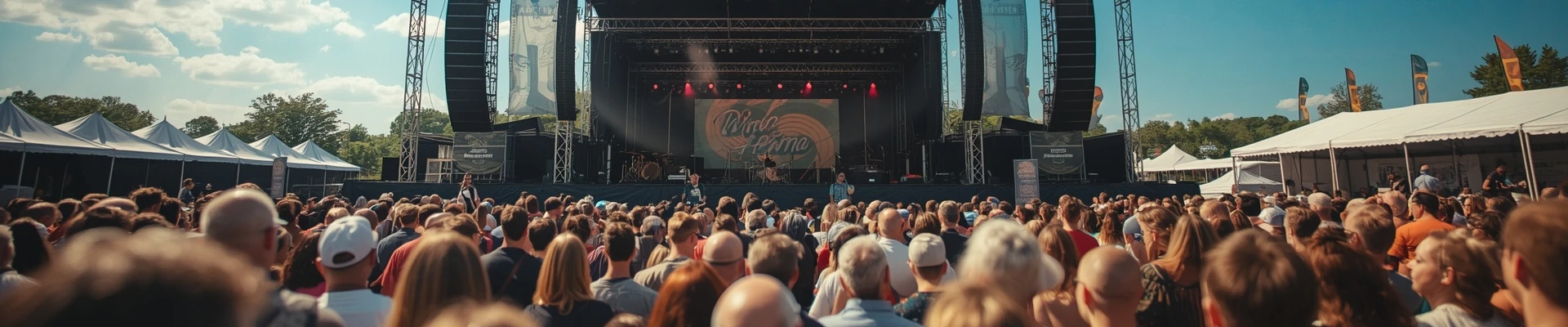
The Rose Bowl (capacity 92,542) is not primarily a music venue but has hosted major concerts — U2's Zoo TV tour, the Rolling Stones, Taylor Swift's Eras Tour — that rank among the largest events in Southern California history. Its location in the Arroyo Seco depression gives it unusual acoustic properties for an open-air stadium.
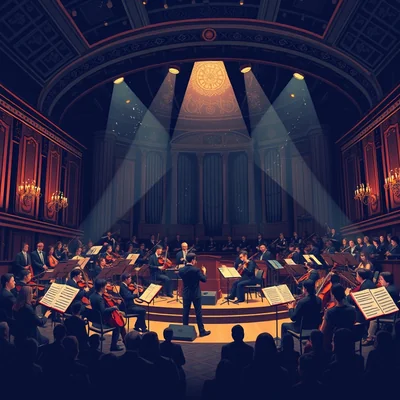
The Pasadena Civic Auditorium (capacity 3,038) is the city's flagship mid-size performing arts hall, built in 1931 in Spanish Renaissance Revival style. It hosted the Grammy Awards for several years in the 1970s and 1980s and continues to serve as a venue for symphony, touring acts, and large community events. The Ambassador Auditorium, a stunning 1970s concert hall built by the Worldwide Church of God, was for decades one of the finest acoustically engineered rooms in the western United States; after a complex legal and ecclesiastical history it has been gradually restored and reopened to programming.
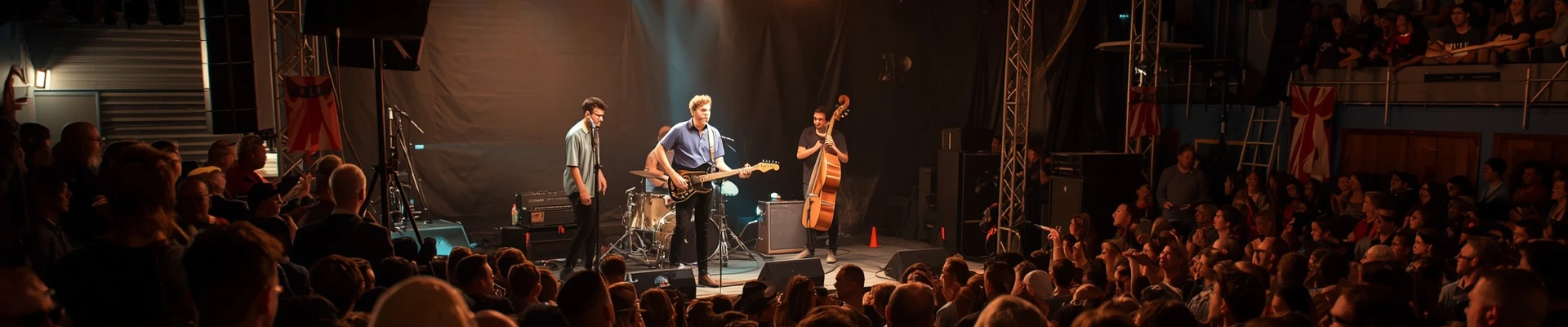
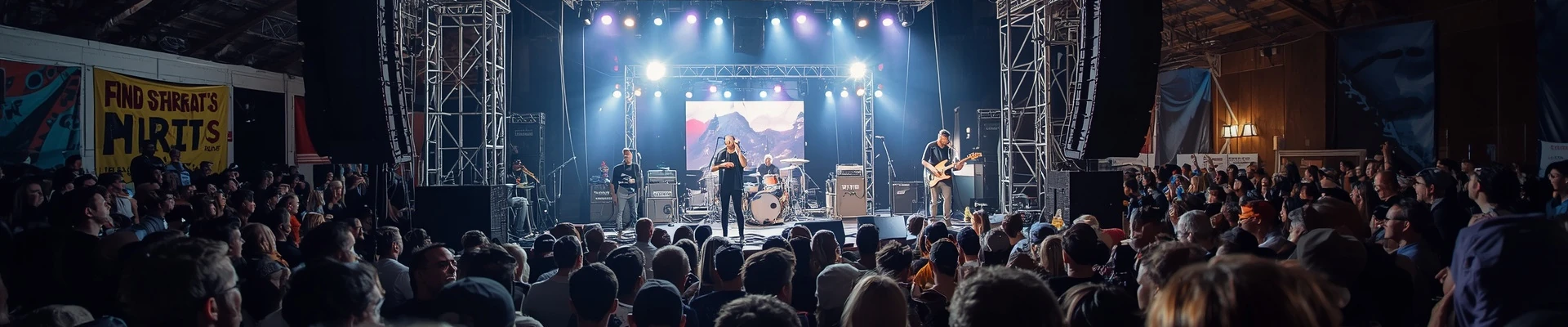
Old Town Pasadena — the Colorado Boulevard corridor between Arroyo Parkway and Marengo Avenue — anchors the city's live music nightlife. The Ice House (1960–present), a comedy and music club on Mentor Avenue just off Colorado, is one of the oldest surviving such rooms in the country and has hosted an extraordinary list of comedians and musicians over six decades. Congregation Ale House and various restaurant-venues along Raymond Avenue and Arroyo Parkway have provided smaller stages for local and touring indie acts.
The Gamble House neighbourhood and the residential corridors of Bungalow Heaven (a registered historic landmark neighbourhood of over 800 Craftsman homes) have hosted the kind of house-show scene common to college-adjacent cities — small, intimate, and largely invisible to official cultural documentation.
Festivals and signature events
The Tournament of Roses Parade (January 1) is not a music festival but it is a massive annual mobilisation of marching bands from across the United States and internationally. Over 20 bands typically march the five-mile Colorado Boulevard route before an audience of approximately 700,000 in person and tens of millions on television — making it one of the largest annual showcases of marching band performance in the world.
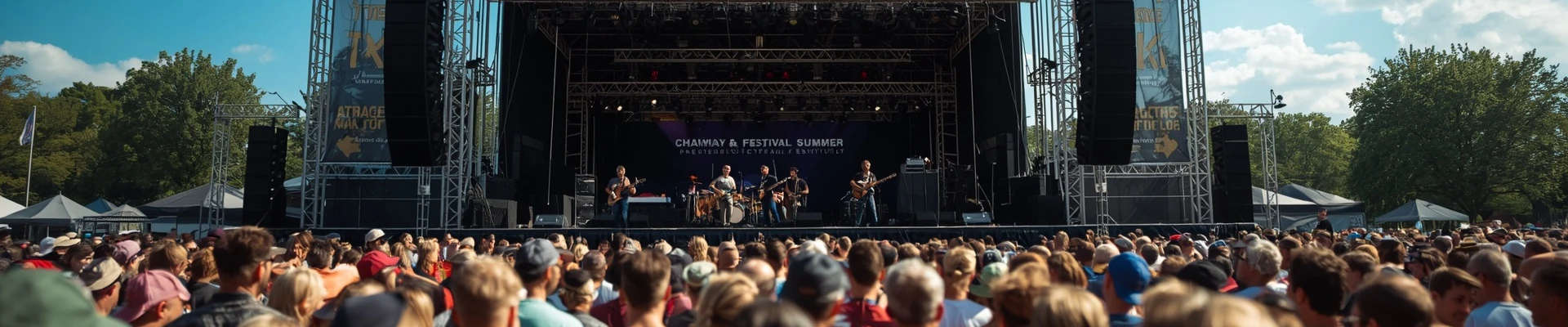
The Pasadena Jazz Festival (annual, various venues) draws on the city's historic jazz connections and the broader LA jazz community, featuring both emerging local artists and established touring names. The Levitt Pavilion Pasadena, an outdoor amphitheatre in Memorial Park, hosts a summer concert series of free outdoor performances spanning jazz, world music, cumbia, indie folk, and classical — one of the more genuinely accessible music programs in the region, running from late spring through September.
Doo Dah Parade, Pasadena's irreverent satirical answer to the Rose Parade, has occasionally featured marching bands and musical acts in its tradition of absurdist civic performance.
Demographics and immigrant music scenes
Pasadena's population of roughly 142,000 is notably diverse for a city of its wealth and prestige. The Armenian community — among the largest per-capita Armenian populations in the United States, concentrated in nearby Glendale but with significant presence in Pasadena and the western SGV — has sustained a rich music culture of duduk players, folk ensembles, and contemporary Armenian-American artists. The Mexican and Central American communities anchored in Northwest Pasadena and along the Lincoln Avenue corridor have sustained norteño, cumbia, and banda scenes in restaurants and community halls largely separate from the city's concert-hall ecosystem.
The presence of Caltech and the strong international academic community means that Pasadena regularly hosts performers in world music, Indian classical, and East Asian musical traditions through the university's concert series and cultural student organizations.
What ties it all together
Pasadena is a city that contains multitudes with unusual composure. Van Halen's backyard-party origins coexist with a 1931 civic auditorium and a marching-band parade watched by 700 million people. Indie rock high schoolers at Blair and John Muir have grown into nationally signed acts while the Armenian duduk tradition is preserved in living rooms a few blocks from the Rose Bowl. The city's affluence and institutional pride have not killed its music scene so much as shaped it toward quality over rawness — Pasadena tends to produce artists and institutions that are meticulous, historically conscious, and occasionally extraordinary. The San Gabriel Mountains are visible from the stage of the Civic Auditorium, and somehow that framing — nature pressing in on civic ceremony — captures something essential about how the city makes music: deliberately, with awareness of grandeur, and with a streak of the genuinely unexpected running underneath.