
The Gateway to the Inland Empire
Pomona occupies a transitional zone that has always defined its character: geographically, it sits at the eastern edge of Los Angeles County where the San Gabriel Valley flattens into the sprawling Inland Empire, nestled between the foothills of the Pomona Valley with the San Gabriel Mountains rising to the north. At roughly 153,000 residents spread across 23 square miles, Pomona is a mid-size city with major-city ambitions — and a music scene that consistently punches well above its weight.
Economically, Pomona is a working-class city shaped by its history as a rail junction, an agricultural center in the citrus-boom era, and then a manufacturing hub. Today it hosts the Western University of Health Sciences and the Claremont Colleges consortium sits directly on its eastern border, pumping a constant stream of students and experimental musicians into the city's ecosystem. The Los Angeles County Fairplex — home to the largest county fair in the United States — sits on 487 acres in Pomona and has served as a concert venue for generations, from early rock and roll acts to arena-scale touring shows.
A Room That Built a Scene: The Glass House
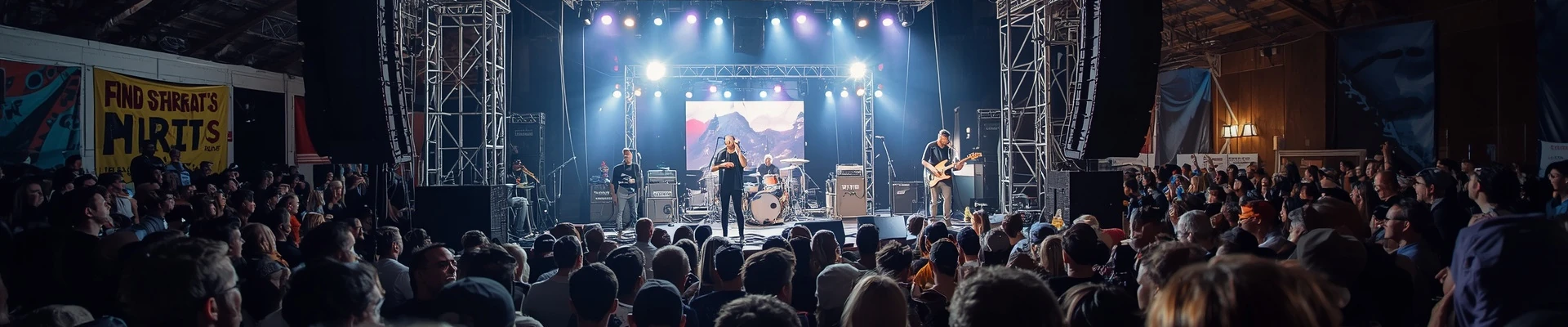
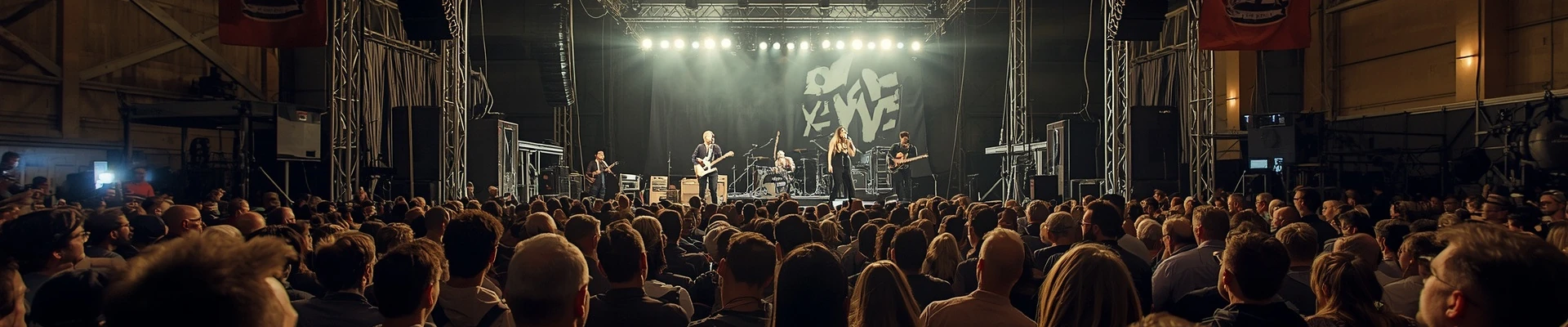
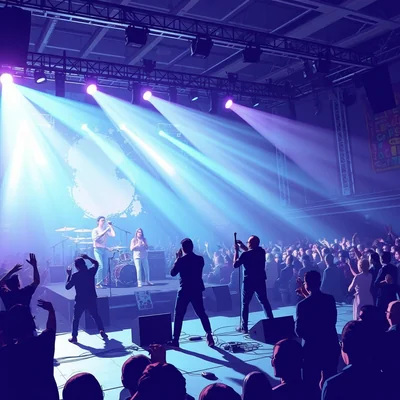
If Pomona has a single defining musical institution, it is The Glass House, a 475-capacity club at 200 West Second Street that opened in 1999 and became the gravitational center of the regional alternative rock and metal underground. The Glass House achieved something rare: a mid-size, all-ages room in a city that wasn't Los Angeles that nonetheless attracted national touring acts alongside local openers, creating a pipeline through which countless Inland Empire and SGV bands graduated from local showcases to regional prominence.
The room's booking philosophy leaned toward post-hardcore, metalcore, emo, and alternative metal at a time when those genres were defining a generation's taste — the early 2000s saw the Glass House becoming a ritual stop for bands like Thursday, Thrice, The Used, Alkaline Trio, and dozens of other acts that defined the post-hardcore moment. The legendary local bill — where a Pomona or Chino band might open for a touring name — became a rite of passage for hundreds of 909-area-code acts.
The 909 and the Inland Punk-Metal Corridor
Pomona sits squarely in the 909 area code corridor, a regional identity that carries its own musical mythology. The 909 designation — covering the Inland Empire's San Bernardino County and eastern Los Angeles County — became shorthand for a particular working-class, suburban-sprawl aesthetic that filtered into the music made there: harder, heavier, more aggressive than the coastal California image suggested.
Alien Ant Farm, formed in neighboring Riverside in 1995, was the most commercially successful act to emerge from the Pomona-adjacent scene, achieving platinum status with their 2001 breakthrough Anthology and its omnipresent Michael Jackson cover. The band spent formative years playing the same circuit of SGV and Inland Empire clubs that defined the regional underground.
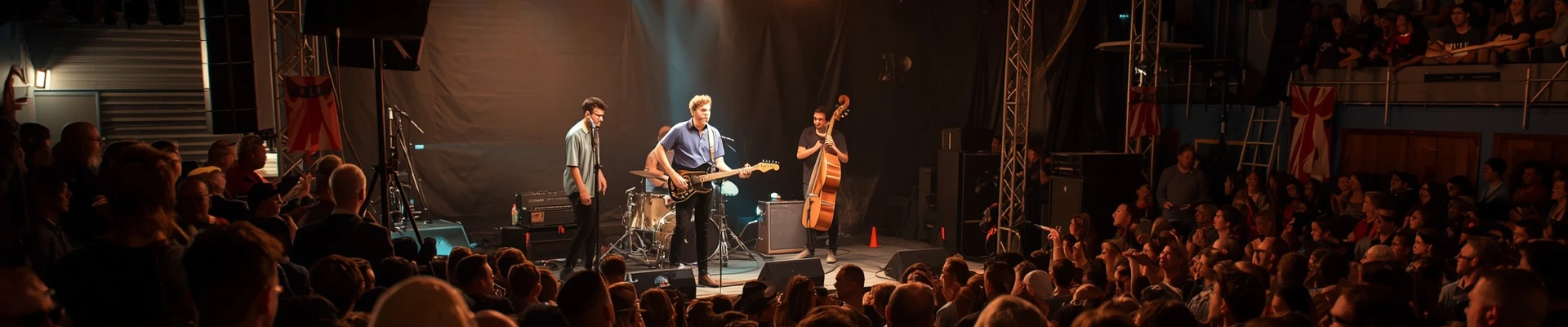
The punk-to-metal pipeline in Pomona had deep roots. In the 1980s, the city was part of the Southern California hardcore circuit, with shows at VFW halls and fire-code-ignoring basements that connected Pomona to the broader LA hardcore scene anchored by SST Records in nearby Hermosa Beach. Local acts fed into that infrastructure and returned with national connections.
Nekromantix, the Danish psychobilly band, eventually relocated to the Los Angeles area with Pomona as a base of operations. The psychobilly and horror-punk communities — connected to labels like Hellcat Records and the Warped Tour infrastructure — found Pomona hospitable, with its dive-bar ecosystem and its tolerance for outsider aesthetics.
Hip-Hop and the SGV Underground
While rock defined Pomona's national profile, hip-hop has been the city's most authentic street-level expression for decades. Pomona sits at the intersection of several Southern California hip-hop traditions: the Chicano rap current flowing out of East Los Angeles, the West Coast gangsta rap lineage extending from Compton and Long Beach through the Inland Empire, and a newer generation of artists building on the trap and melodic rap innovations of the 2010s.
King Lil G, born in Pomona, became one of the most consistent voices in Chicano rap, releasing dozens of projects on independent labels while building a dedicated fanbase across the Southwest. His output — gritty, emotionally direct, grounded in the specific realities of Pomona street life — exemplifies the independent hustle that defines the SGV hip-hop world: no major label support, no coastal tastemaker co-signs, just prolific output and direct-to-audience distribution.
The SGV has also produced a constellation of lesser-known but regionally significant emcees and producers who populate the streaming-era independent scene, many of them working out of home studios in Pomona, Ontario, and the surrounding cities. The Sad Boy aesthetic — melancholic, lowrider-adjacent, drawing on bolero and corrido traditions alongside West Coast rap — has Pomona practitioners who have developed substantial YouTube and social media followings without formal industry infrastructure.
The Fairplex and the Arena Circuit
The Los Angeles County Fairplex has hosted some of the most significant concerts in regional music history. In August 1965, The Beatles played two consecutive shows at Dodger Stadium, but they also famously played the Cow Palace in San Francisco and the Cow Palace in San Francisco — and while the Fairplex's own Beatles history is more modest, its vast footprint has hosted arena-scale festival events across genres: KROQ's Weenie Roast satellite shows, Warped Tour multiple times, and one-off spectacular events that drew tens of thousands.
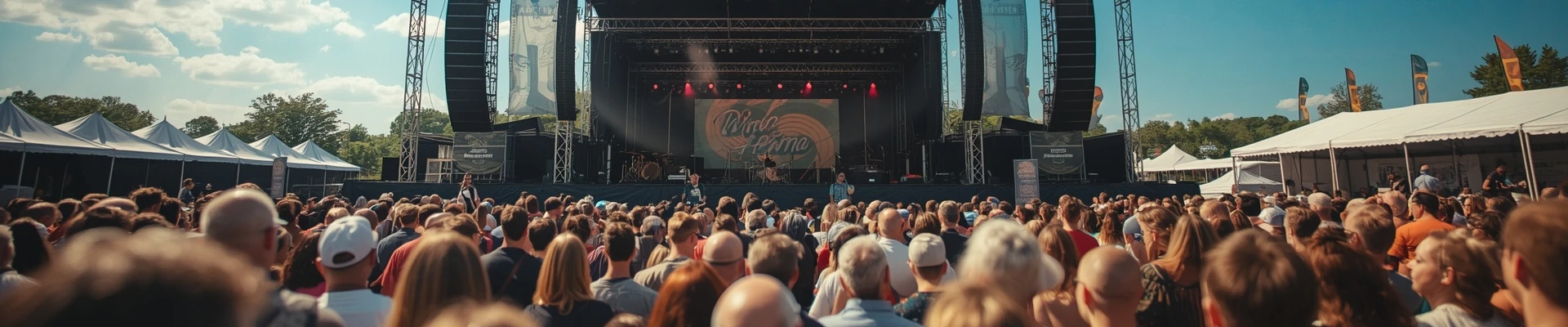
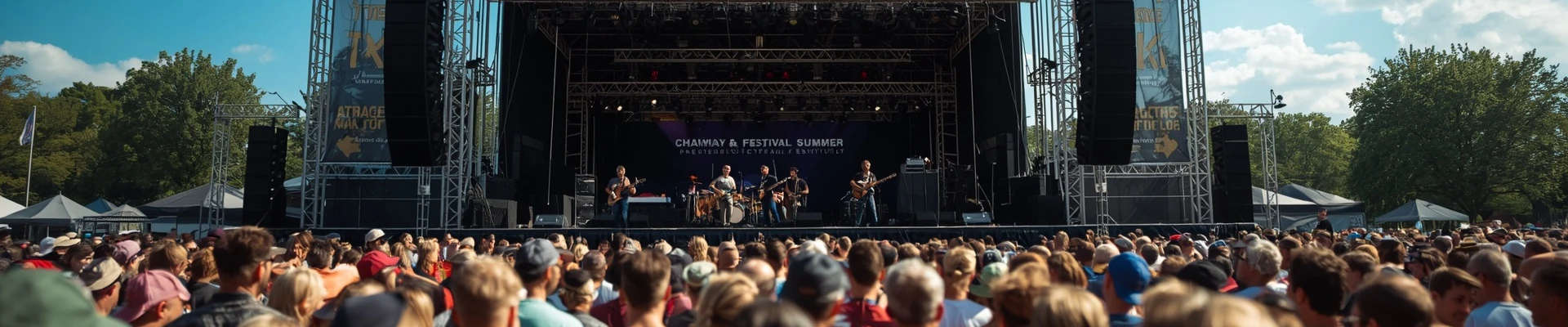
The adjacent Pomona Fairplex RV Lots have hosted massive EDM festival events — the proximity to two Interstate freeways (I-10 and I-210) and the sheer acreage made the Fairplex a natural site for destination festival events that needed both parking and stage infrastructure. Beyond Wonderland, produced by Insomniac Events, used the Fairplex campus for significant multi-stage EDM showcases, connecting Pomona to the Southern California festival circuit in ways that complement its rock and hip-hop identity.
Neighborhoods and Gathering Points
Downtown Pomona has undergone decades of redevelopment pressure and periodic cultural revival. The Arts Colony district along Garey Avenue attracted galleries, creative businesses, and event spaces that intersected with the local music community during the 2000s and 2010s. The Fox Theater Pomona — a 1931 vintage movie palace restored and reopened as a concert venue — brought a second mid-capacity room to the downtown core, complementing the Glass House with a more ornate setting that suited touring acts in the 1,500-capacity range.
The Village at Indian Hill corridor and the western residential neighborhoods around Garey Avenue have historically concentrated the city's Latino cultural life, and the norteño, banda, and regional Mexican music performed at quinceañeras, community events, and Spanish-language clubs represents a parallel but equally rich strand of Pomona's musical identity that rarely surfaces in mainstream coverage but constitutes the actual soundtrack of daily life for a large share of residents.
Genre Intersections and the Regional Sound
What makes Pomona interesting as a music city is precisely the collision of these streams: the Glass House rock underground, the 909 metal corridor, the SGV hip-hop world, the norteño and cumbia traditions, the Claremont-student experimental scene, and the EDM festival infrastructure all exist in genuine proximity, occasionally colliding in unexpected ways.
Local producers and beatmakers have created hybrids that draw on all of these influences — Chicano punk, metallic hip-hop, cumbia-inflected electronic music. The Pomona Underground as a concept has never had a single marketing moment or a record label to crystallize it, but the density of venues, rehearsal spaces, and recording studios in the city and its immediate neighbors has sustained a genuine DIY ecosystem for four decades.
The Claremont Colleges bring a different energy: classical training, experimental composition, jazz performance programs, and the kind of genre-crossing projects that happen when technically trained musicians live adjacent to a working-class city with a street-level scene. That friction produces interesting music.
What Ties It Together
Pomona's musical identity is built on productive tension — between the working-class grit of the 909 and the academic resources of the Claremont cluster, between the all-ages hardcore ethos of the Glass House and the arena-scale ambitions of the Fairplex, between the Chicano hip-hop underground and the Anglo rock tradition, between DIY independence and commercial aspiration. The city has never been a "music city" in the Nashville or Seattle sense, with a branded sound and industry infrastructure to match. Instead it is something more common and in some ways more honest: a city where music is made out of necessity, performed in whatever rooms will have it, and distributed through whatever networks are available. That is the 909 way, and Pomona is its eastern Los Angeles County capital.