
Rialto is a city of roughly 103,000 residents in San Bernardino County, nestled in the heart of the Inland Empire of Southern California. It sits on a flat stretch of the San Bernardino Valley at approximately 363 metres (1,190 feet) elevation, with the San Bernardino Mountains rising dramatically to the north and the vast spread of the Inland basin extending south and west. The city is bordered by San Bernardino to the east, Fontana to the west, Colton to the south, and the foothills to the north. Downtown Los Angeles lies roughly 80 kilometres (50 miles) to the west, and the city functions as part of the vast Greater Los Angeles metropolitan area — one of the largest in the United States, with more than 18 million residents.
Rialto's population is approximately 72% Hispanic or Latino, making it one of the most heavily Latino cities of its size in California. This demographic reality is not incidental — it is the defining fact of the city's cultural and musical identity. Black residents make up roughly 14% of the population, with smaller Asian and white communities. Economically, Rialto has historically been a working-class and blue-collar city, built around distribution warehouses, trucking corridors, and light industry in the logistics-heavy Inland Empire economy. Rialto Municipal Airport (now decommissioned as a commercial facility) once served the area; today the massive Amazon and logistics-sector warehouse complexes that dot the IE freeway corridors define the city's economic landscape.
A brief history
The land that became Rialto was originally part of the territory of the Serrano people and the broader network of Shoshonean and Uto-Aztecan groups who inhabited the San Bernardino Valley for thousands of years. Spanish missionaries and soldiers arrived in the late 18th century, and Mexican rancho land grants divided the valley during the Mexican period. Following the Mexican-American War (1846–48) and California statehood in 1850, the region was gradually colonised by Anglo-American settlers.
Rialto was incorporated in 1911, primarily as an agricultural community growing citrus — oranges and lemons thrived in the valley's combination of sunshine, mountain runoff water, and fertile soils. The Santa Fe Railway corridor running through the valley connected Rialto to the broader California and national economy. The decisive transformation came with Route 66, the legendary transcontinental highway completed in the 1920s and routed through the Inland Empire along what became Foothill Boulevard. Route 66 brought traffic, commerce, roadside motels, diners, and the full mythology of American automobile culture through Rialto's downtown — the city's segment of the Mother Road is still lined with mid-century architecture, the iconic Wigwam Motel (one of the surviving wigwam-style motor courts on the Route 66 corridor, located just inside the city limits on Foothill Blvd), and the remnants of a once-thriving roadside economy.
The postwar decades brought suburbanisation and demographic transformation. Latino families from Texas, New Mexico, and Mexico itself followed agricultural and industrial labour west through the 20th century, and by the 1970s and 1980s Rialto had become a majority-Latino community. African American families who migrated from the South during and after World War II established communities in the western San Bernardino Valley, including Rialto. These demographic shifts produced the city's distinctive cultural mix.
Music identity
Rialto's musical identity is inseparable from its position within the broader Inland Empire music ecosystem — one of the most underappreciated music-producing regions in California. The IE has historically been written off as a sprawling logistics suburb of Los Angeles, but it has generated genuine, durable scenes in Chicano soul, oldies, regional Mexican, hip-hop, punk, and metal that reflect the working-class Latino, Black, and white communities who live there.
The most internationally consequential strand of Rialto's musical culture is Chicano soul and the lowrider oldies tradition. Through the 1960s and 1970s, the Latino communities of the Inland Empire — Rialto, San Bernardino, Colton, Fontana — developed a deep attachment to doo-wop, soul, R&B, and oldies that had originally come out of the Los Angeles Eastside Chicano scene. Oldies cruises along Foothill Boulevard (Route 66) became a defining weekend ritual — lowriders moving slowly down the boulevard, sound systems pumping the same soul classics that the Chicano community had claimed as its own: The Platters, The Penguins, Little Anthony and the Imperials, Earth, Wind and Fire, and the full range of Chicano soul from artists like Thee Midniters, Cannibal and the Headhunters, and The Blendells. This lowrider-and-oldies culture was never neatly captured by mainstream music industry attention, but it constituted a genuine, living musical tradition that the communities of the IE — including Rialto — sustained and passed between generations.
The city's regional Mexican scene reflects its majority-Latino demographics directly. Banda, norteño, cumbia, and ranchera are the sounds of Rialto's Mexican-origin community, sustained through quinceañeras, weddings, paletería gatherings, and the rotating circuit of Mexican touring acts that move through the IE's club and ballroom network. San Bernardino County's proximity to both Los Angeles and the Mexican border region has kept the IE connected to the latest developments in Mexican regional music — the rise of banda sinaloense, the regionomex radio dial, and more recently corridos tumbados and música mexicana in the streaming era — and Rialto's large, dense Mexican-American community has been part of that circuit.
Hip-hop in the Inland Empire has produced nationally recognised artists, and Rialto has been part of that ecosystem. The broader IE rap scene — centred on San Bernardino, Fontana, Moreno Valley, and Riverside — has produced a gritty, West Coast gangsta and street rap tradition distinct from both Compton and the Bay Area. Rialto-area artists have contributed to the regional mixtape and independent release ecosystem, largely outside major-label recognition, consistent with the IE's pattern of producing music that circulates widely in the region before gaining wider notice. The IE hip-hop underground connects to the broader Southern California scene through the Los Angeles market without being fully absorbed by it — a productive tension that has kept the region's hip-hop honest and local.
Rock and punk have a presence in the IE, particularly through the skateboarding and DIY scenes that have long connected white and Latino youth across the region. The IE produced a cluster of punk, hardcore, and metal acts through the 1980s and 1990s — many of them passing through the San Bernardino-area venue circuit rather than achieving long-term national profiles. Death metal scenes based further inland around Moreno Valley and Riverside have been part of the broader Southern California metal underground, and the IE's blue-collar culture has always sustained heavy music.
The city has produced individual artists and creatives who went on to broader careers. Route 66's cultural mythology has attracted musicians and filmmakers to the Rialto-San Bernardino corridor — the Mother Road associations and mid-century roadside Americana have been referenced in American music from Nat King Cole's "Route 66" through the rock era and beyond, and Rialto's Foothill Boulevard segment has been part of that larger cultural narrative.
Venues and neighborhoods
Rialto's venue ecosystem is modest, consistent with its size and largely residential character. The historic Rialto Theatre on Foothill Boulevard anchors the city's entertainment identity — a mid-century movie palace that has been used for performances and events, part of the Route 66 architectural heritage. The broader venue circuit runs through San Bernardino immediately to the east, where the San Manuel Amphitheater (formerly the Glen Helen Amphitheater, now the Glen Helen Amphitheater — a major outdoor shed with a capacity of around 65,000) is one of the largest outdoor concert venues in the United States and has hosted massive touring festivals and acts. The National Orange Show Events Center in San Bernardino hosts mid-size events and exhibitions with music programming.
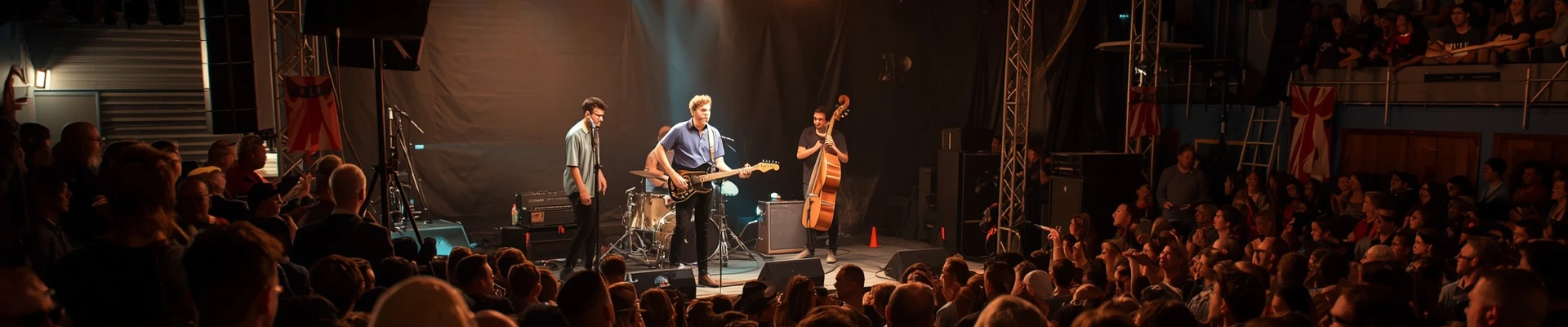
Within Rialto itself, the venue landscape consists primarily of bars and restaurants along Foothill Boulevard and the city's commercial corridors, community centres hosting quinceañeras and cultural events, and churches — particularly the large evangelical and Catholic congregations that anchor the Latino community — hosting gospel and spiritual music. The city's proximity to San Bernardino and Fontana means residents access the broader IE venue circuit regularly.
Foothill Boulevard — the Route 66 corridor — is the defining geographic axis of Rialto's commercial and cultural life. The mid-century motels, diners, and storefronts along Foothill are the physical record of the city's Route 66 history. Rialto Avenue and the areas around City Hall anchor civic life. The Rialto Unified School District has served as an important pipeline for music education in the community, and the district's marching bands and music programs have been a genuine civic institution.
Festivals and signature events
Rialto's festival calendar is community-scaled and culturally grounded. Cinco de Mayo and Mexican Independence Day celebrations draw the city's majority-Latino population into public celebration, typically with live regional Mexican music, food, and folk dancing in the city's parks and community centres. Rialto Days (the city's annual civic festival) has featured local entertainment and cultural programming.
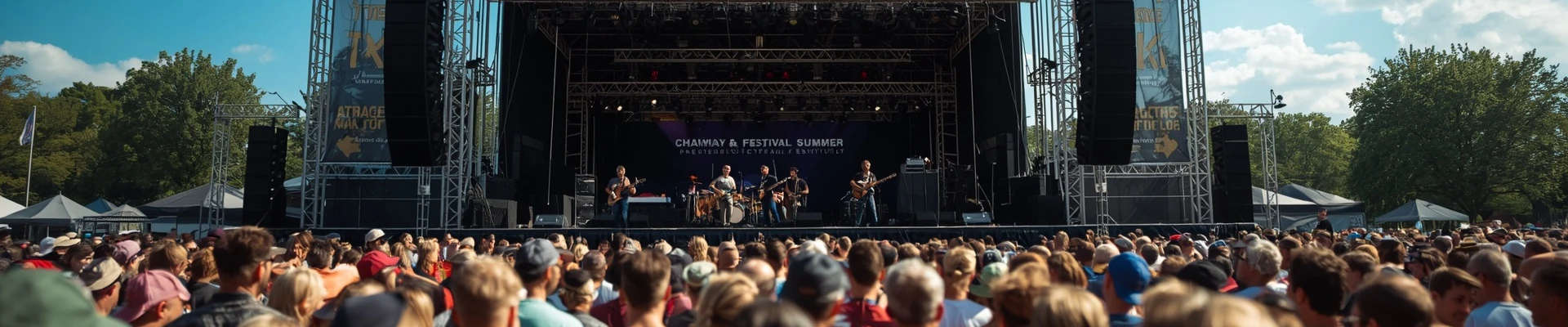
The Route 66 Rendezvous — one of the largest Route 66 celebration events in California, historically based in San Bernardino but drawing participants from across the corridor including Rialto — is a major regional event that brings classic cars, rockabilly, and Americana culture to the Foothill Boulevard corridor. The Wigwam Motel on Foothill serves as a photo stop and cultural touchstone for Route 66 tourists and enthusiasts year-round. The IE's broader festival circuit — including events at the Glen Helen Amphitheater, the San Bernardino County fairgrounds, and the various promoter-driven outdoor festivals that use the region's open land and year-round Southern California weather — is accessible to Rialto residents throughout the year.
Christmas and holiday events along Foothill Boulevard and at the city's parks continue the civic calendar, and the lowrider cruise tradition — while less institutionalised today than in its peak decades — persists as an informal community ritual that ties Rialto's present to its Route 66 and Chicano soul past.
What ties Rialto together musically is the deep connection between its majority-Latino working-class community and the living traditions of Chicano soul, oldies, and regional Mexican music — sounds that have been passed down through generations along the Route 66 corridor of the Inland Empire, sustained in kitchens, churches, quinceañera halls, and lowrider sound systems. Rialto is not a city that produces major-label hits; it is a city where music is woven into the fabric of everyday life in the way that working-class immigrant communities have always used music — as celebration, mourning, memory, and identity. The Foothill Boulevard strip, the Wigwam Motel, the sound of a banda blasting from a driveway on a Saturday afternoon — these are the sounds and sights that define Rialto's musical personality, as honest and unpretentious as the city itself.