
Riverside is the seat of Riverside County and the historical and cultural capital of California's Inland Empire — the sprawling inland basin east of the Los Angeles basin bounded by the San Gabriel Mountains to the north, the San Bernardino Mountains to the northeast, and the high desert beyond. With roughly 317,000 residents inside the city limits and more than 4.5 million across the broader Inland Empire metropolitan area (combining Riverside and San Bernardino counties), Riverside anchors a region that is California's fourth-largest urban agglomeration. Sitting at approximately 264 metres above sea level on the west bank of the Santa Ana River, the city looks east toward Mount San Jacinto and west toward the distant smog line of greater Los Angeles. It is 80 kilometres from downtown Los Angeles by freeway and, culturally, a distinct world from it — shaped by agriculture, the military, a massive public university, and the particular Blue-collar and immigrant California that exists in the space between the coast and the desert.
A brief history
Riverside was founded in 1870 on Luiseño and Cahuilla ancestral land and grew rapidly as a centre of the Southern California citrus industry. The California navel orange was introduced to the United States here: Eliza and Luther Tibbetts received two navel orange cuttings from Brazil in 1873, planted them in Riverside, and their descendants — the Parent Navel Orange Trees, still standing on Magnolia Avenue — launched an industry that would eventually cover hundreds of thousands of acres across Southern California. By the 1890s Riverside had the highest per-capita income of any city in the United States, powered by citrus wealth; the Mission Inn Hotel and Spa, a sprawling Mission Revival landmark built from 1902 onward, stands as the most legible monument to that gilded-age prosperity. The citrus economy sustained large Chinese, Japanese, Mexican, and South Asian (primarily Punjabi Sikh) agricultural labour communities in Riverside County from the late 19th century onward.
The postwar period remade the city. The establishment of March Air Reserve Base (March Air Force Base until 1996) in adjacent Moreno Valley brought a large military population to the county. University of California, Riverside opened in 1954 as a citrus research station and grew into a full public research university, eventually becoming one of the most diverse research universities in the United States — a designation it has held for years, with a student body that is majority-minority and includes some of the highest proportions of first-generation college students in the UC system. The freeway buildout of the 1960s and 1970s connected Riverside to Los Angeles and transformed the Inland Empire into a bedroom and warehouse district for the coastal economy — a role it has expanded into the 21st century, with the Inland Empire now holding one of the largest logistics and distribution sectors in the country.
Music identity
Riverside's most historically significant contribution to American popular music is Ike Turner, who spent the final chapter of his life in the city and died there in December 2007. Turner — co-author of what many consider the first rock and roll recording ("Rocket 88," 1951), founder of the Ike & Tina Turner Revue, and one of the most complex and consequential figures in the history of American music — had deep Inland Empire roots in his later years, and Riverside claimed him with characteristic ambivalence about the full weight of his legacy. His presence in the city underscores Riverside's position as a place where the broader arc of Black American popular music — from the Delta to R&B to rock and roll — has real, personal connections.
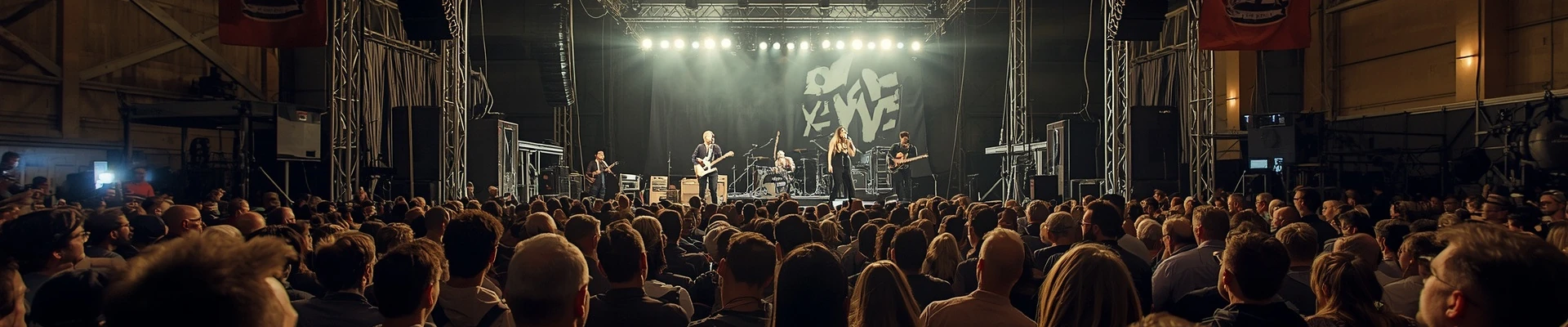
The city's most internationally visible rock and punk lineage runs through Ignite, the Riverside hardcore punk band formed in 1993 by guitarist Brendan Ziegenfuss and initially fronted by Scott Kevill (later by Zoli Teglas). Ignite's combination of melodic hardcore with politically engaged, working-class lyrics — heard on A Place Called Home (1994), Ignite (1999), Our Darkest Days (2006), and A War Against You (2016) — made them one of the most respected bands in the international hardcore and punk scene, with a particularly devoted following in Germany and across Europe. Their positioning — Riverside-raised, California punk-rooted, globally touring — is a model for how Inland Empire bands have consistently built international audiences without the machine of Los Angeles behind them.
The Inland Empire hip-hop scene is one of the most underappreciated in California. Riverside sits at the centre of an IE rap ecosystem that has produced legitimate national-level artists. Pac Div — the trio of Mibbs, Like, and BeYoung — emerged from Altadena and the broader IE orbit and built a significant underground following through projects like Grown Kid Syndrome (2011) and GMB (2012) before signing to RCA; their lazy-afternoon West Coast bounce and introspective bar-work captured something real about inland California. Glasses Malone (Harold Thomas), though associated with Long Beach, ran significant IE circuits. The city's broader hip-hop ecosystem — house parties in the Casa Blanca neighbourhood, low-rider cruises on Magnolia Avenue, cyphers at UC Riverside — fed a grassroots rap culture that has consistently punched into the California mainstream without much industry infrastructure behind it.
Charles Wright, the soul and funk singer and leader of Charles Wright & the Watts 103rd Street Rhythm Band, is one of Riverside's most significant but least-claimed contributions to American music. Wright grew up in the Inland Empire region, and his band's 1971 single "Express Yourself" — later sampled by N.W.A on the Straight Outta Compton album and by dozens of hip-hop producers thereafter — is one of the most-sampled records in hip-hop history. The thread connecting a Riverside-adjacent funk artist to the N.W.A sample to the entire arc of West Coast hip-hop production is a real musical lineage, and one that Riverside owns more than it usually acknowledges.
The Mexican-American music ecosystem in Riverside is deep and largely invisible to outside observers. The Casa Blanca neighbourhood — a historic barrio in west Riverside established in the early 20th century by Mexican railroad and agricultural workers — has sustained a continuous Mexican-American musical culture through generations: mariachi, norteño, banda, cumbia, corridos, and more recently corridos tumbados and Latin urban sounds. The Mexican-American community makes up roughly half of Riverside's population, and its musical traditions run through quinceañeras and community festivals, through the clubs of downtown Riverside, and through the regional circuits of the Inland Empire. The Riverside Tamale Festival and the Festival de la Familia are among the anchor community events where these traditions are publicly visible.
UC Riverside's music programme and its campus venue ecosystem have produced a steady stream of indie rock, experimental, and alternative artists. The campus HUB and The Barn have historically served as first-stage venues for Inland Empire and Los Angeles–area touring acts. The university's cultural programming — including visiting artists, campus radio, and a robust concert committee — has given Riverside a cosmopolitan live-music infrastructure that outpunches its size in the national indie touring circuit.
Venues and neighborhoods
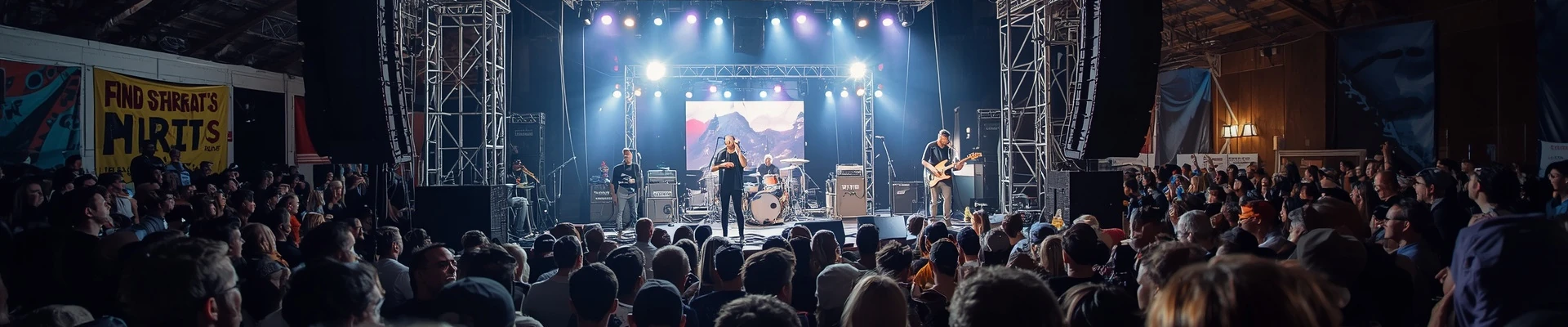
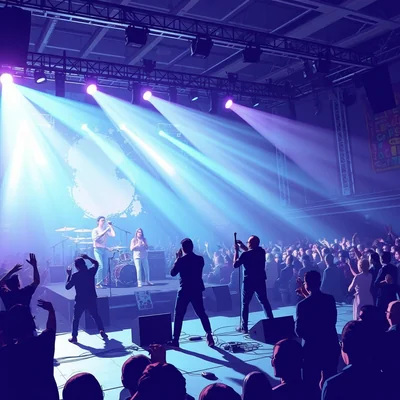
Riverside's flagship performing arts venue is the Fox Performing Arts Center (the 1929 Fox Theater building, converted from cinema use and now a 1,642-seat concert and performing arts venue at the centre of downtown), which hosts major touring acts, local productions, and the Riverside Philharmonic. The Riverside Convention Center serves as the largest event space for festivals and major productions. UC Riverside's campus venues — including the HUB and outdoor commons areas — serve the student and indie-touring circuit.
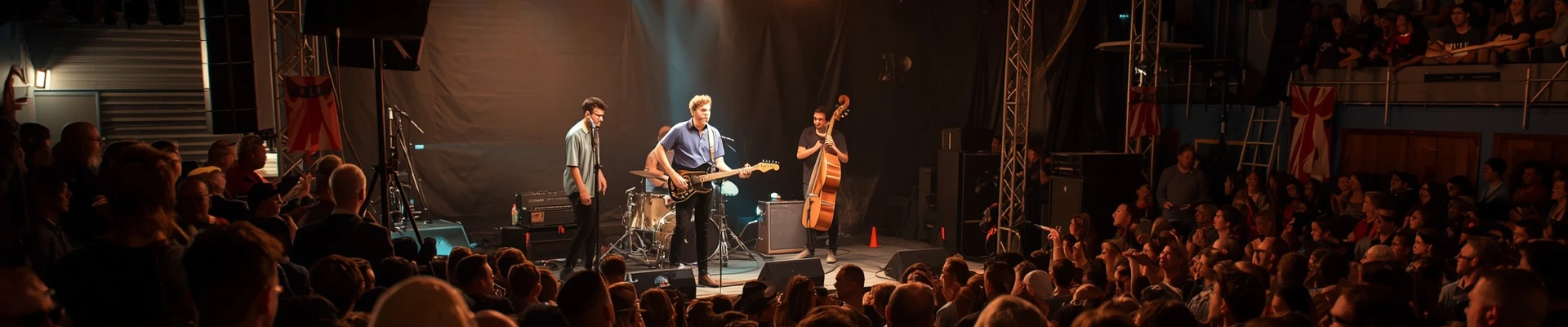
The downtown corridor along Main Street and Mission Inn Avenue holds the city's densest cluster of bars and small live-music venues. Back to the Grind, the downtown Riverside coffee shop and music venue that operated as a central hub for the indie, punk, and DIY scenes from the 1990s through the 2010s, was one of the most beloved small venues in the Inland Empire — the kind of space where Riverside kids saw their first real shows and where touring acts played on the way up. The Barn on University Avenue and the network of bars along University Avenue connecting downtown to the UCR campus extend the live-music corridor eastward. The Riverside Municipal Auditorium (the Fox's predecessor as the city's main civic hall) hosted the formal end of that older civic music tradition.
Casa Blanca in west Riverside anchors the Mexican-American cultural geography; the University District around UCR anchors the student and indie scene; downtown holds the large-venue and bar-circuit ecosystem. The Canyon Crest and Sycamore Canyon areas in the east carry a quieter suburban music culture.
Festivals and signature events
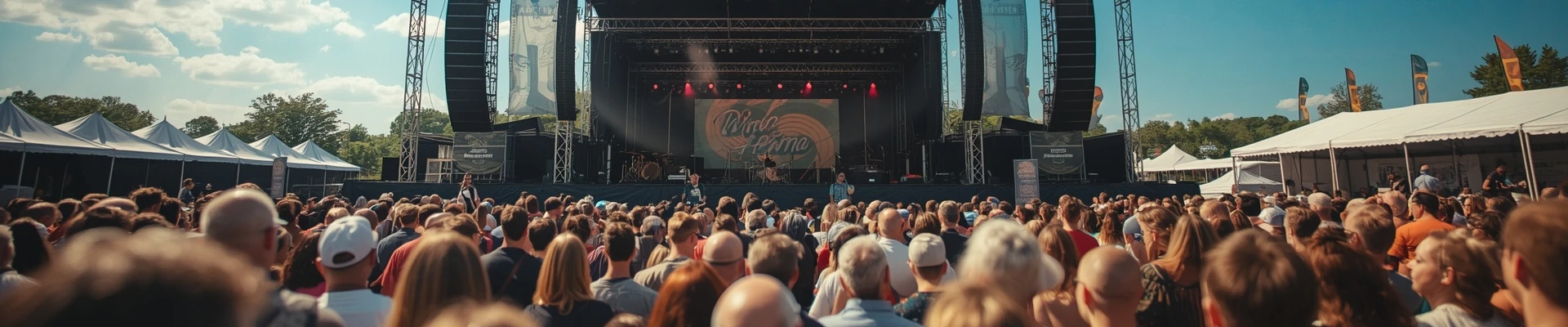
The Festival of Lights at the Mission Inn Hotel — an annual November–January outdoor illumination event that draws more than a million visitors — includes live music programming in the Mission Inn plaza and along the surrounding downtown streets. The Riverside Arts Walk (monthly, downtown) programs local bands and solo artists in bars, galleries, and outdoor spaces. The Riverside Tamale Festival and the Festival de la Familia anchor the Mexican-American community calendar. UC Riverside's Spring Splash and Homecoming events program major and mid-level touring acts on campus. The KUCR radio station (89.1 FM, the UC Riverside student and community station, licensed since 1969) has long been one of the Inland Empire's most adventurous music voices, programming jazz, classical, international, and alternative music to the region.
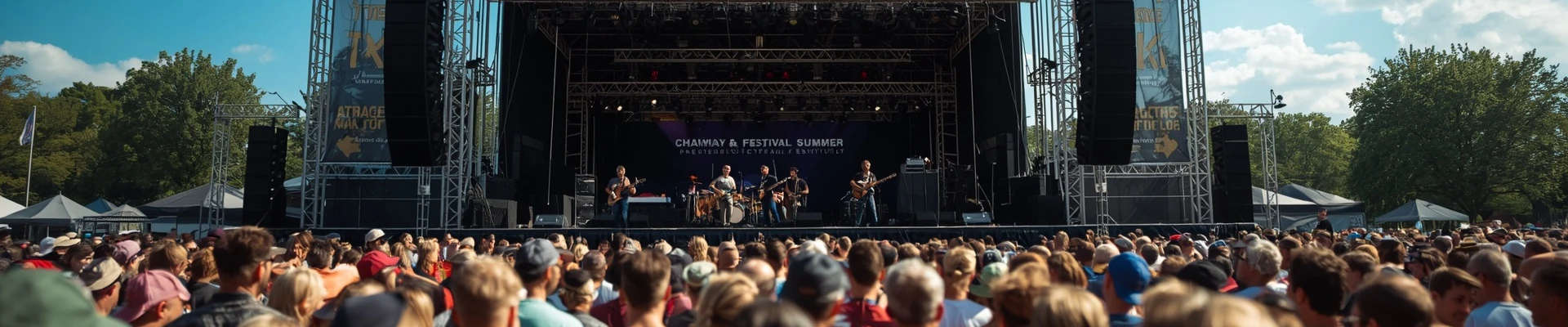
The broader Inland Empire festival circuit — Coachella in Indio (within Riverside County, 180 kilometres to the east), the Desert Trip festival (Indio), the National Date Festival in Indio — connects Riverside to some of the most significant music events in California and the world. Coachella, the largest music festival in North America by revenue, takes place entirely within Riverside County, and thousands of Riverside-area residents work in its production, logistics, and hospitality infrastructure.
What ties Riverside together as a music city is the persistent tension between its proximity to Los Angeles and its determination to be something different from it. The city is close enough to LA that its artists can access major-label infrastructure, major-venue bookings, and media exposure — but far enough, and different enough economically, that its scenes have consistently developed their own logic. The Casa Blanca barrio's Mexican-American music traditions, the Ignite-anchored hardcore punk lineage, the IE hip-hop underground, the UCR campus circuit, the Ike Turner connection, the Charles Wright funk lineage that fed the N.W.A sample canon — each of these is a thread in a musical city that is more than the sum of its Coachella County proximity. Riverside is the Inland Empire's capital, and its music is the sound of inland California.