
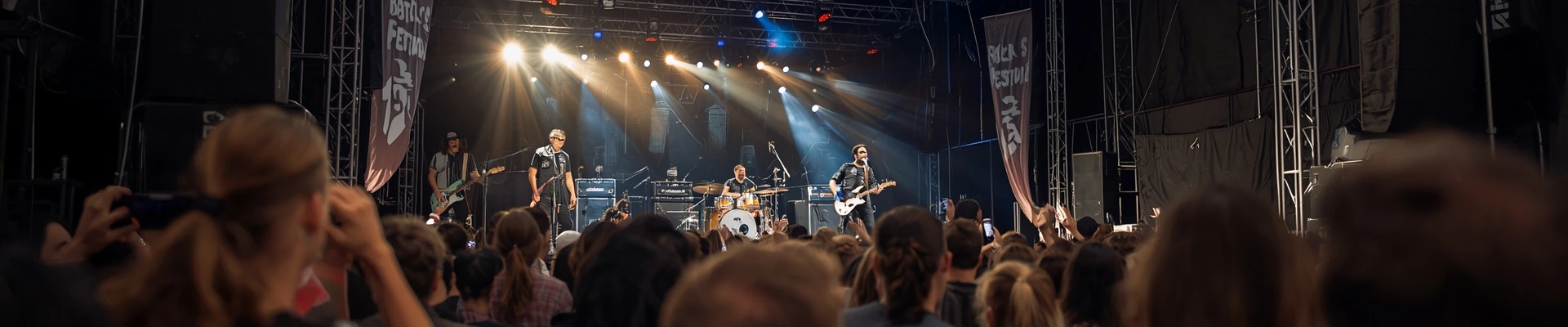
Sacramento is the capital of California and the 35th-largest city in the United States, with roughly 525,000 residents inside the city limits and more than 2.4 million across the surrounding metropolitan area. Sitting at the confluence of the Sacramento and American rivers in the northern Central Valley, ringed by the Sierra Nevada foothills to the east and the Sacramento–San Joaquin Delta to the southwest, it is the seat of California state government and the commercial hub of the northern Central Valley. Sacramento's musical identity is more varied than its state-capital reputation suggests: a deep punk and ska lineage that ran through clubs like the Old Ironsides and the Cattle Club; an outsized alternative and heavy music heritage through the Deftones (who formed here), Tesla, and Cake; a deeply embedded Southeast Asian music ecosystem from one of the largest Hmong and Vietnamese populations in California; a long Mexican-American tradition in the Oak Park and South Sacramento corridors; and a growing modern hip-hop and R&B scene anchored by a generation of producers and artists.
A brief history
The land at the confluence of the Sacramento and American rivers was Nisenan (Southern Maidu) and Plains Miwok territory before John Sutter established Sutter's Fort in 1839. The January 1848 discovery of gold at Sutter's Mill in nearby Coloma — about 60 km upstream on the American River — triggered the California Gold Rush and turned Sacramento into the primary gateway city for hundreds of thousands of miners. The city was incorporated in 1850, the year California became a state, and made the state capital in 1854. The 1869 completion of the First Transcontinental Railroad (whose western terminus was Sacramento, where Central Pacific Railroad co-founders Leland Stanford, Charles Crocker, Mark Hopkins, and Collis Huntington were all based) made the city a major shipping and distribution hub. Through the 20th century Sacramento grew steadily as a government, agricultural processing, and military city — anchored by McClellan Air Force Base, Mather Air Force Base, Aerojet, and the vast state government bureaucracy. The 1990s tech boom, the 2000s construction of the Golden 1 Center, and a steady stream of Bay Area-priced-out residents and businesses have transformed Sacramento into one of California's fastest-growing metro areas. Successive waves of migration — the Gold Rush–era Chinese (Sacramento's Chinatown is one of the oldest in California), Japanese (the Japanese-American community in the Pocket and Florin areas is one of the oldest in the state), Black Southerners during the Great Migration, Vietnamese and Hmong refugees after the Vietnam War, and large Mexican, Central American, Filipino, and East African communities since the 1980s — have built a city that is roughly 30% Hispanic, 15% Asian, and 12% Black.
Music identity
Sacramento's most internationally famous musical exports are the Deftones — though the band is also claimed by Fresno (where founding members Chino Moreno, Abe Cunningham, and Chi Cheng grew up), the band formed in Sacramento in 1988, signed to Maverick/Warner in the early 1990s, and built much of its early career through the Sacramento club circuit. Tesla, formed in Sacramento in 1982 (originally as City Kidd), became one of the most commercially successful hard-rock and arena-metal bands of the late 1980s through Mechanical Resonance (1986) and The Great Radio Controversy (1989). Cake, formed in Sacramento in 1991 by John McCrea, built one of the most distinctive indie-pop catalogues of the 1990s through Fashion Nugget (1996) — featuring "The Distance" and a deadpan-horn-driven sound entirely unlike anything else on alternative radio. The Expendables, the Sacramento ska-reggae-punk band, has built a devoted California following since the late 1990s. Blacklisted, Haste the Day's Sacramento connections, Far (the Sacramento post-hardcore band whose members went on to form Deftones — wait, Far members Jonah Matranga and Shaun Lopez preceded the Deftones overlap), and a deep current generation of punk, metal, and indie acts continue the lineage.
Sacramento has also produced a serious country and Americana tradition. Buck Owens, born in Sherman, Texas but raised in Mesa, Arizona and based in nearby Bakersfield, was part of the broader Central Valley country circuit that ran through Sacramento constantly; the Bakersfield Sound is functionally a Sacramento-adjacent genre. Merle Haggard, while Bakersfield-based, was a constant Sacramento presence. Joe Nichols, Bucky Covington, and a deep regional country circuit fill venues across the city. The Sacramento area — including nearby communities like Elk Grove, Folsom, and Roseville — supports a thriving country music scene through clubs, rodeos, and fairs.
Sacramento's hip-hop scene has deep roots. Brotha Lynch Hung (Kevin Mann), the Sacramento rapper who built one of the most disturbing and critically discussed horrorcore catalogues of the 1990s through Season of da Siccness (1995), is the city's most internationally known hip-hop figure. The Jacka (Dominic Newton), the Sacramento-based rapper who helped define the Bay Area rap sound with multiple mixtapes and albums before his 2015 murder, was deeply tied to Sacramento's Black music community. Mozzy (Timothy Patterson), the Sacramento rapper who broke nationally in the 2010s with his raw street narratives, has become the most commercially successful rapper in the city's history and one of the defining voices of modern West Coast hip-hop. G-Val, Capolow, SOB x RBE's Sacramento connections, Nef the Pharaoh's Sacramento ties, Lil Slugg, and a current generation of Sacramento trap and drill artists fill the city's clubs. The Sacramento hip-hop aesthetic — sometimes called the Sacramento sound or Sac rap — blends Bay Area hyphy energy with a harder, more stripped-down trap production style.
Sacramento's immigrant music ecosystems are extraordinary. The city has one of the largest Hmong populations in the United States (alongside Fresno and Minneapolis), and the traditional qeej, kwv txhiaj (improvised singing), and Hmong pop scenes run continuously through community halls and the Sacramento Hmong New Year celebrations. The Vietnamese community — concentrated in the Little Saigon corridors along Stockton Boulevard — sustains a thriving Vietnamese pop and karaoke scene. Mexican and Central American music — mariachi, norteño, banda, corridos tumbados — runs through South Sacramento, Oak Park, and the Florin Road corridor. Filipino-American R&B and pop, East African music (primarily Ethiopian, Eritrean, and Somali through the large Oak Park and Del Paso Heights communities), and a growing South Asian scene round out the ecosystem.
Sacramento's jazz and R&B traditions run through the city's historically Black communities in Oak Park and Del Paso Heights. The Sacramento Jazz Festival (now the Sacramento Music Festival, held each Memorial Day weekend) is one of the oldest and largest traditional jazz and Dixieland festivals in the world. Lowell Fulson, the Oklahoma-born blues guitarist who lived and recorded in Sacramento for decades, built a major blues catalogue from the city. Billy Price's Sacramento connections, and a deep Black church gospel tradition through churches across the Oak Park and Meadowview corridors anchor the city's Black music heritage. R&B continues through Sacramento-area artists and the city's thriving urban radio market.
Venues and neighborhoods
Sacramento's venue ecosystem is well-developed. At the top sit Golden 1 Center (the state-of-the-art arena opened in 2016, home of the Kings and the city's largest indoor concerts), Sutter Health Park (the minor-league baseball stadium that hosts occasional outdoor concerts), the Memorial Auditorium (a 1927 Beaux-Arts venue), the Community Center Theater, and the Crest Theatre (a 1912 movie palace in the midtown corridor). The midsize tier includes the Ace of Spades (the most important mid-size rock venue in Sacramento, opened in 2011), Goldfield Trading Post, and the Harlow's Restaurant and Nightclub in midtown. Beneath them is a deep club layer — Old Ironsides (the long-running midtown rock and punk bar, in operation since 1934 and a foundational venue in Sacramento punk history), The Boardwalk (the legendary Orangevale rock venue, where the Deftones and Tesla came up), Luna's Cafe (the jazz and acoustic venue), The Press Club, Marilyn's on K, the Torch Club (the city's blues anchor), Distillery, the Holland Project in nearby Reno (drawing on the Sacramento audience), and a network of bars and DIY rooms across midtown, Oak Park, and the R Street Corridor. Latin music has homes at clubs across South Sacramento and the Florin Road corridor. The John L. Sullivan Club on Broadway anchors the blues circuit.
Different neighborhoods carry different musical identities. Midtown anchors the indie rock, arts, and LGBTQ+ scenes through Old Ironsides, the Crest, and a dense bar and venue strip along K Street and J Street. Oak Park anchors the city's historic Black music tradition and the hip-hop and R&B scenes. South Sacramento and the Florin Road corridor anchor the Mexican-American and Vietnamese-American music scenes. Del Paso Heights and North Sacramento support the city's largest East African and Hmong communities. The R Street Corridor and the Grid (midtown Sacramento) support the arts and electronic music scenes. Roseville, Folsom, and Elk Grove in the surrounding region support the country and suburban rock circuits.
Festivals and signature events
The festival calendar reflects the city's range. Sacramento Music Festival at Memorial Auditorium and surrounding midtown venues each Memorial Day weekend is one of the world's oldest and largest traditional jazz festivals. Aftershock Festival at Discovery Park each October is one of the largest rock and metal festivals on the West Coast. Sol Collective's programming, Sacramento Beer Week, Gold Rush Days at Old Sacramento, California State Fair at Cal Expo each July (programming major country, pop, and rock acts at the grandstand), Farm Aid (held at Golden 1 Center in 2018), SacTown Jazz Festival, Sacramento Asian Pacific Culture Week, Hmong New Year (in both Sacramento and nearby Stockton), Cinco de Mayo in Oak Park and South Sacramento, Día de los Muertos along J Street, Sacramento Pride, Armenian Festival, Greek Festival, Italian Picnic & Parade, and Old Sacramento's year-round living-history music programming round out the calendar.
What ties it all together is the city's combination of state-capital stability, Gold Rush gateway history, agricultural-Valley scale, and an extraordinary demographic diversity that has made Sacramento one of the most polyglot cities in California. It is the city where the Deftones, Tesla, and Cake came up in the club circuit, where Brotha Lynch Hung built horrorcore, where Mozzy became the defining voice of modern West Coast street rap, where Lowell Fulson built a blues catalogue, where the Sacramento Music Festival has been gathering jazz fans each Memorial Day since 1974, where the Hmong community sustains one of the largest traditional music ecosystems outside Southeast Asia, and where the Sacramento and American rivers continue to mark a city that has been a gateway since the day gold was found upstream.