
San Bernardino is the county seat of San Bernardino County — the largest county by area in the contiguous United States — and the historical commercial and governmental hub of California's Inland Empire. With roughly 216,000 residents inside the city limits, San Bernardino is the third-largest city in the Inland Empire after Riverside and Fontana (by trajectory), and the 17th-largest in California. It sits at approximately 337 metres above sea level on the floor of the San Bernardino Valley, bounded by the San Bernardino Mountains and the San Gabriel Mountains to the north and the high desert beyond, with the Santa Ana River channelled through the valley floor. The city is 97 kilometres east of downtown Los Angeles by freeway — close enough to be drawn into the LA orbit, far enough to have developed its own culture, economy, and musical identity. Downtown San Bernardino sits at the western foot of the Cajon Pass, the historic gateway through the mountains that carries both Interstate 15 and the BNSF Railway toward Las Vegas and the American interior, making it one of the most significant freight and transportation chokepoints in the American Southwest.
San Bernardino is economically one of the most challenged large cities in California. The city filed for Chapter 9 bankruptcy protection in 2012 — at the time one of the largest municipal bankruptcies in American history — following decades of deindustrialisation, the loss of Norton Air Force Base (closed in 1994), and the structural collapse of a tax base that had historically depended on manufacturing and military employment. By 2015 the city had approved a plan to exit bankruptcy, but the economic scars remain visible. The city's poverty rate consistently runs above 30 percent; median household income is among the lowest of any California city of its size. San Bernardino's population is roughly 63 percent Hispanic (predominantly Mexican-American, with growing Central American communities), 14 percent Black, and 15 percent non-Hispanic white. It is a city defined by working-class and immigrant California in ways that the coastal cities and even the more affluent Inland Empire suburbs rarely are.
A brief history
The Serrano and Cahuilla peoples inhabited the San Bernardino Valley for thousands of years before Spanish missionaries from the San Gabriel Mission established a rancho here in the 1810s. The modern city was founded in 1854 by a party of Mormon settlers sent by Brigham Young to establish a southern California outpost, though the colony was recalled to Utah in 1857 during the Utah War. The city was reincorporated in 1869 and grew through the late 19th century as a railroad junction: the Southern Pacific and the Atchison, Topeka and Santa Fe both ran through San Bernardino, making it the region's first significant transportation hub.
The 20th century brought the automobile age and with it Route 66 — the historic highway that ran from Chicago to Santa Monica passed through San Bernardino, and the city was a major stop on the road. San Bernardino's most famous Route 66 landmark is the original McDonald's site on E Street: brothers Richard and Maurice McDonald opened their first hamburger stand here in 1940, developed the Speedee Service System (the precursor to fast food as we know it), and sold the operation to Ray Kroc in 1954. The original building was demolished, but a replica and museum mark the site today. The Route 66 corridor through San Bernardino — running along Foothill Boulevard through adjacent cities — sustained a culture of roadside commerce, drive-ins, and car culture that has never fully left the city's DNA.
Norton Air Force Base, established in 1942, was a defining presence for four decades: at its peak it employed more than 10,000 military and civilian personnel and anchored San Bernardino's middle-class economy. Its 1994 closure under the Base Realignment and Closure Act was a body blow from which the city has never fully recovered. The site now operates as San Bernardino International Airport, a commercial cargo and limited passenger hub, but the economic multiplier of the base is gone. The loss of Norton, combined with the departure of manufacturing employers through the 1980s and 1990s, accelerated the poverty and disinvestment that led to the 2012 bankruptcy.
Music identity
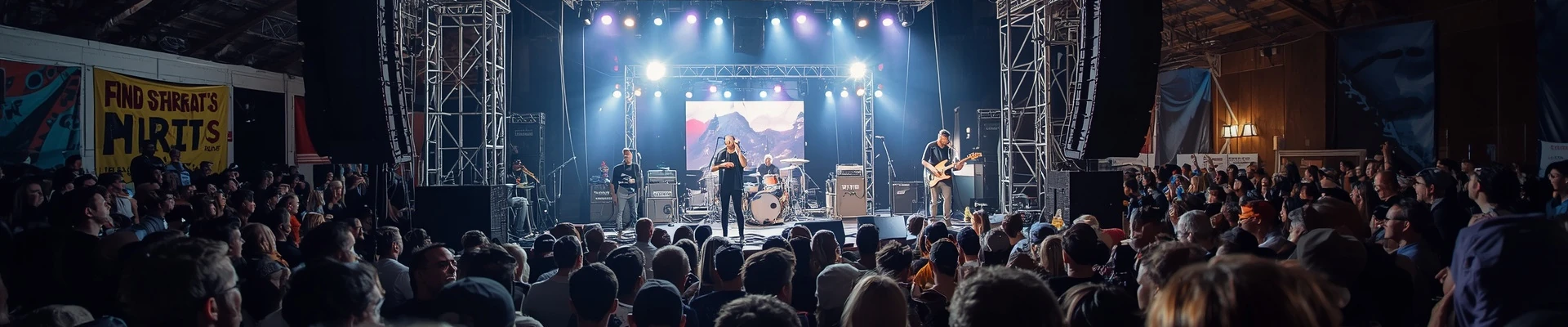
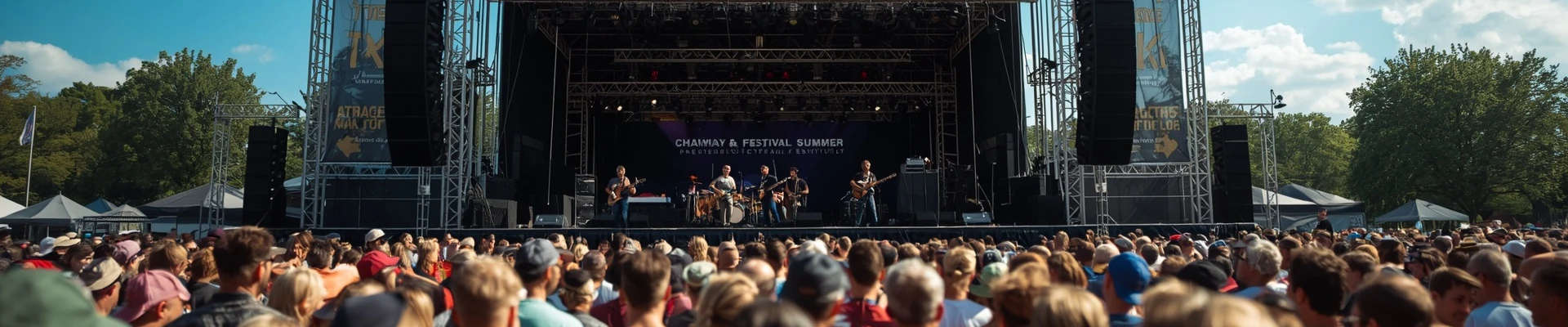
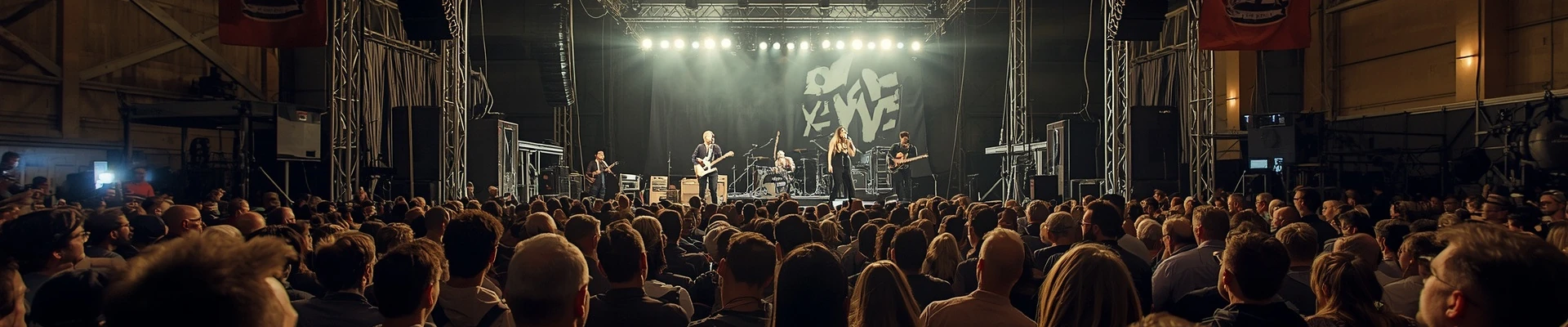
San Bernardino's most globally consequential music contribution is the Glen Helen Amphitheatre — the massive outdoor venue in Devore, on the northwestern edge of San Bernardino County near the city, that served as the primary home of Ozzfest from 1997 through the 2000s and has hosted some of the largest music events in California history. Known by various names over its life — Hyundai Pavilion, Blockbuster Pavilion, San Manuel Amphitheater — the venue holds up to 65,000 people in its combined seating and lawn configuration, making it one of the largest outdoor amphitheatres in the United States. Ozzfest — the heavy metal travelling festival co-founded by Sharon and Ozzy Osbourne — drew annual audiences of 40,000 to 65,000 to Glen Helen through the early 2000s, with lineups that included Black Sabbath, Slayer, Pantera, System of a Down, Disturbed, Marilyn Manson, Rob Zombie, Korn, Linkin Park, Mudvayne, and dozens of others who defined the heavy metal landscape of the era. The annual Ozzfest at Glen Helen was, for many Inland Empire teenagers in the late 1990s and early 2000s, their first large-scale live music experience — and it stamped the region's relationship with heavy metal indelibly.
Before Glen Helen, San Bernardino's most storied venue was the Swing Auditorium — the 6,000-capacity arena that stood at the National Orange Show fairgrounds from 1949 until its demolition in 1974. The Swing Auditorium was one of Southern California's most important mid-20th-century concert venues: The Beatles played it in 1965 on their final American tour; The Rolling Stones performed there in 1964 and 1966; The Beach Boys, James Brown, Ray Charles, Tina Turner (then still with Ike), and virtually every major touring act of the 1950s, 1960s, and early 1970s came through the building. The hall's passing marked the end of San Bernardino's era as a destination on the national touring circuit at that scale.
The National Orange Show Events Center — the midsize arena complex at the historic fairgrounds — has continued as a regional venue for concerts, motorsports, and events, hosting acts that draw five to fifteen thousand. The Fox Theater San Bernardino in downtown (a 1929 atmospheric theater renovated and reopened as a concert venue) anchors the city's mid-scale rock and alternative programming, with a capacity of about 2,000. Downtown's Perris Hill Park hosts outdoor summer concerts for the city's community programming.
San Bernardino's heavy metal identity is not incidental. The Inland Empire was, through the 1980s and 1990s, one of the most fertile breeding grounds for Southern California heavy metal outside of the San Fernando Valley. The combination of working-class demographics, hot summer nights, a car culture that extended to the parking lots of fast-food strips and big-box centres, and a geographic isolation from the cultural gatekeepers of Los Angeles created conditions in which metal — loud, powerful, and requiring nothing but a rehearsal space and an amp — could take deep root. Bands from the IE, San Bernardino, Fontana, and the surrounding communities fed the clubs of the Sunset Strip and then the arenas. The annual Ozzfest pilgrimage to Glen Helen reinforced and celebrated that identity for a generation.
The Chicano music culture of San Bernardino is as historically deep as any in California. The city's Mexican-American community — present since the 19th century and dramatically expanded through 20th-century immigration — has sustained a continuous tradition of mariachi, banda, norteño, cumbia, and ranchera through generations of family celebrations and community festivals along E Street, Baseline Street, and the barrio corridors of west and south San Bernardino. The lowrider culture — cruising on E Street on weekend evenings, car shows at Perris Hill Park — is inseparable from the oldies and doo-wop and soul soundtrack of the Mexican-American car-culture tradition.
Corridos tumbados and contemporary regional Mexican music have massive audiences here; Eslabon Armado (from Lancaster but with enormous Inland Empire circulation), Banda MS, and the broader corrido boom of the 2020s are all staples of the city's landscape. The annual Mexican Independence Day celebrations in September draw outdoor concert programming of major regional Mexican acts.
The Black music tradition in San Bernardino — rooted in the historic communities along the Highland Avenue and Waterman Avenue corridors — runs through gospel, R&B, soul, and hip-hop. The city's Black population, though smaller than Riverside's, has sustained church-rooted gospel and a steady club circuit. Hip-hop in San Bernardino has the rough, unpolished energy that characterises IE rap more broadly — less glamorous than the Compton or Long Beach aesthetic, closer to the Stockton or Bakersfield model in its working-class directness. Local artists have circulated through the regional circuit without achieving the national breakout that would have put SB on the hip-hop map, but the underground scene is real and persistent.
Venues and neighborhoods
The Glen Helen Amphitheatre (officially San Manuel Gateway Park as of its 2021 tribal-naming deal with the San Manuel Band of Mission Indians) remains the city's dominant live-music infrastructure — a massive outdoor venue in the hills northwest of town that continues to host major concerts, festivals, and the annual Glen Helen Block Party. The Fox Theater San Bernardino downtown serves the 1,500-to-2,000-capacity rock, alternative, and R&B market. The National Orange Show Events Center covers the 5,000-to-15,000 arena range for regional touring. The city's small-venue ecosystem — bars, clubs, and DIY spaces — is thinner than Riverside's, reflecting the more acute economic constraints on disposable income and commercial real estate in the city.
Downtown San Bernardino — anchored by Court Street, E Street, and the historic civic centre — holds the highest concentration of entertainment infrastructure, including the Fox Theater, Sturges Center for the Fine Arts, and the cluster of bars and restaurants that have survived the downtown's long economic travail. The Inland Empire arts district extends west along E Street and 5th Street into areas undergoing very slow gentrification. Westside San Bernardino — historically the most concentrated African-American neighbourhood — has its own set of community-facing venues and church-based music institutions. The Highland corridor along the city's northeastern edge carries a quieter suburban character.
Cal State San Bernardino (CSUSB), with more than 19,000 students, provides campus-based programming through its events centre and student-activity venues, and feeds both the local indie scene and the regional touring circuit. The university's Santos Manuel Student Union and outdoor amphitheatre host student-programming concerts that bring mid-level touring acts to the city.
Festivals and signature events
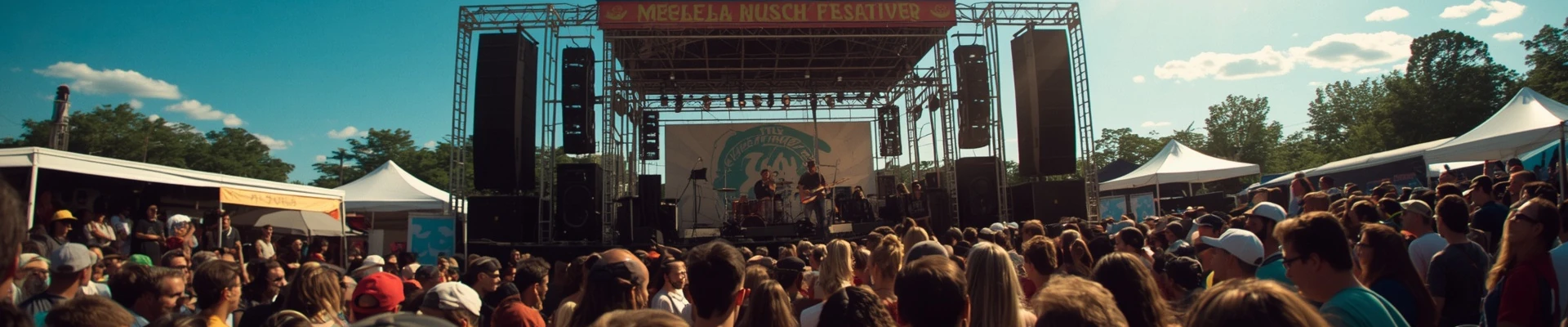
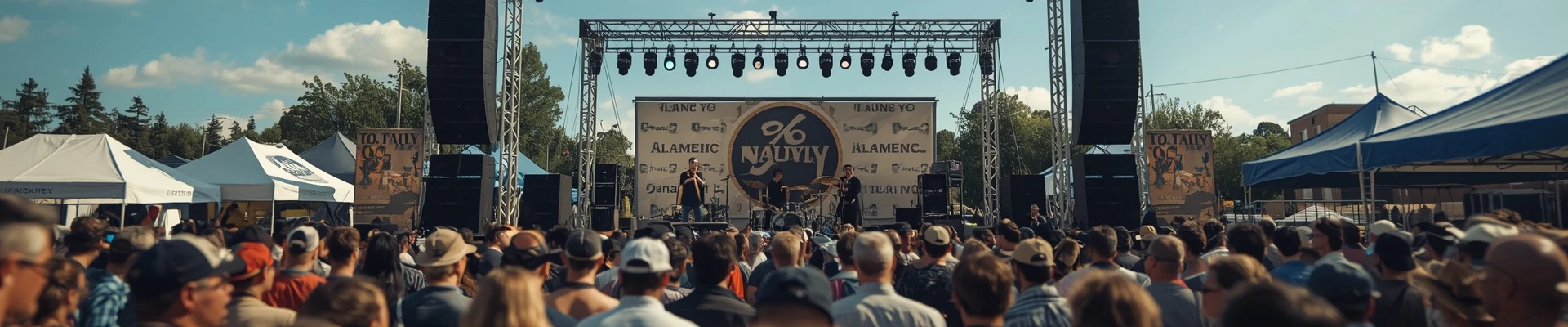
The National Orange Show — the county fair held annually in late May at the Orange Show Events Center — is San Bernardino's longest-running public festival, with a history stretching back to 1889. The fair includes significant live-music programming as part of its grandstand entertainment lineup. The San Bernardino International Film Festival and the Route 66 culture corridor of events (stretching through adjacent cities) add to the city's event calendar. The Day of the Dead celebrations in November draw outdoor music programming reflecting the city's Mexican-American majority. Glen Helen Block Party is the venue's annual community music festival, typically drawing 10,000 to 20,000 people.
What ties San Bernardino together musically is the paradox of scale and invisibility. The city hosts one of the largest outdoor music venues in America, yet San Bernardino itself rarely appears in conversations about California music cities. The Swing Auditorium's golden era — when the Beatles and Stones came through — has largely been forgotten outside local memory. The Chicano music culture that has sustained the city's majority community for a century operates almost entirely below the radar of mainstream music journalism. The heavy metal tradition that runs through every Ozzfest summer at Glen Helen is felt by hundreds of thousands of Inland Empire kids but credited to the genre's Sunset Strip origins rather than its IE suburban heartland. San Bernardino is a music city that has always hosted more music than it gets credit for — a working-class inland California city whose sonic life has been shaped by lowriders on E Street, Ozzfest crowds at Glen Helen, and the mariachi at a thousand quinceañeras, even as the cultural world looked the other way.