
San Jose is the third-largest city in California and the tenth-largest in the United States, with roughly 997,000 residents inside the city limits and more than 2 million across the surrounding South Bay region of the San Francisco Bay Area. Sitting at the southern end of San Francisco Bay, ringed by the Santa Cruz Mountains to the west and the Diablo Range to the east, it is the population and economic anchor of Silicon Valley — home to the headquarters of Cisco, Adobe, eBay, PayPal, and Western Digital, and within commuting distance of Apple in Cupertino, Google in Mountain View, Meta in Menlo Park, and Nvidia in Santa Clara. San Jose's musical identity is shaped less by the tech industry than by what surrounds it: one of the largest Mexican-American communities in California, the largest Vietnamese-American population outside Vietnam, a deep Filipino-American community, a long Italian-American heritage in Willow Glen and the East Side, and a working-class East Side and South Side that have produced a distinctive thrash metal, punk, and Latin music scene over the last 50 years.
A brief history
The Santa Clara Valley was Tamien Ohlone territory for thousands of years before Spanish missionaries established the Mission Santa Clara de Asís in 1777 and the civil settlement of El Pueblo de San José de Guadalupe the same year — the first civilian town in Spanish California. The territory passed from Spain to Mexico in 1821 and to the United States in 1848. San Jose served as California's first state capital from 1849 to 1851 before the seat moved north. Through the 19th and early 20th centuries the Santa Clara Valley was the "Valley of Heart's Delight" — one of the largest fruit-orchard and cannery regions in the world, with apricot, prune, and cherry orchards stretching across what is now suburban sprawl. World War II's federal investment in nearby NASA Ames and Stanford-area defense research, the postwar founding of Hewlett-Packard, Fairchild Semiconductor, and Intel, and the explosive 1980s and 1990s growth of personal computing and the internet transformed the valley from an agricultural region into the global capital of the technology industry. Successive waves of migration — Mexican farm workers and their descendants throughout the 20th century, large Filipino and Italian populations through the postwar decades, an enormous wave of Vietnamese refugees after 1975 (giving San Jose the largest Vietnamese population of any city outside Vietnam), and large Indian, Chinese, Korean, and Latin American tech-era arrivals since the 1990s — have built a city that is roughly 31% Hispanic, 38% Asian, and majority-minority by a wide margin.
Music identity
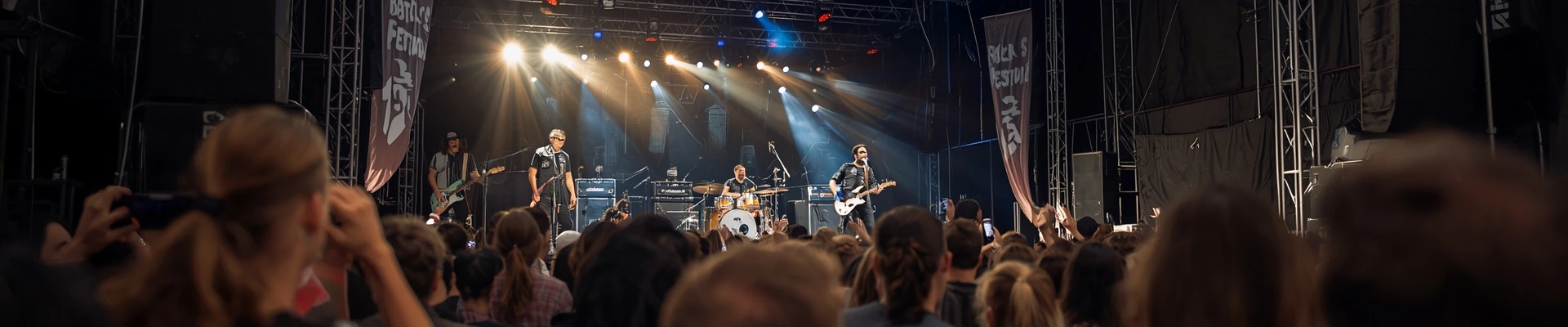
San Jose's most internationally famous musical chapter is its role as one of the foundational cities of Bay Area thrash metal in the early 1980s. Testament, formed in nearby Berkeley in 1983 but with deep San Jose roots through guitarist Eric Peterson and the city's club circuit, became one of the "Big Eight" thrash bands. Death Angel, formed in 1982 by five Filipino-American teenagers from the Excelsior and the South Bay, was one of the youngest and most acclaimed bands in the early Bay Area thrash scene; their The Ultra-Violence (1987) remains a thrash landmark. Vio-lence, Forbidden, and a long lineage of South Bay thrash bands rehearsed in garages across San Jose and Santa Clara County and played the Keystone Palo Alto, the Stone in San Francisco, and Ruthie's Inn in Berkeley alongside Metallica, Exodus, and Slayer. The Bay Area thrash sound — fast, technical, politically engaged, and rooted in the working-class suburbs — owes as much to San Jose as to Oakland or Berkeley.
The 1990s remade the city again. Smash Mouth, formed in San Jose in 1994 by Steve Harwell, Greg Camp, Paul De Lisle, and Kevin Coleman, broke nationally with Fush Yu Mang (1997) and Astro Lounge (1999) — and its songs "Walkin' on the Sun," "All Star," and "I'm a Believer" became global pop staples and (in the case of "All Star") an entire generation's internet meme. Smash Mouth's ska-influenced pop-rock came directly out of the South Bay's mid-1990s ska, swing, and alternative-rock circuit. Papa Roach, while Vacaville-based, played heavily on the San Jose circuit through their early years. The Donnas, formed in nearby Palo Alto in 1993, built one of the most beloved late-1990s and 2000s garage-rock catalogs through a teenage-girl punk-rock aesthetic. Stroke 9, The Brodys, Limp (the punk band, not Limp Bizkit), and a thriving South Bay punk and ska scene around the Cactus Club, The Edge, and One Step Beyond in Santa Clara built the modern San Jose alternative identity.
San Jose's Latin music scene is one of the most consequential in California. The city's vast Mexican-American population — concentrated on the East Side, the Alum Rock and King-Story corridors, and through East San Jose — has sustained a continuous Tejano, norteño, banda, regional Mexican, mariachi, and modern corridos tumbados ecosystem for more than a century. Pete Escovedo and his daughter Sheila E. — the Latin jazz, funk, and pop family central to the Santana band's universe and Prince's later career — were raised in Oakland but with deep ties across the South Bay Latin music scene. Los Lobos, while Los Angeles–based, are part of the broader California Latin alternative tradition that runs through San Jose. Carlos Santana lived in San Jose during his early career; Santana's self-titled 1969 debut and the band's blend of Latin, blues, and rock have remained central to Bay Area music. The Voodoo Glow Skulls (Riverside-based but with significant San Jose touring) and Ozomatli's tour stops feed the broader California Latin alternative circuit. Mariachi Mexicapan, Mariachi Azteca de San Jose, and a long lineage of mariachi conjuntos play weddings, quinceañeras, and festivals across the East Side. Latin urban, reggaeton, trap en español, and bachata scenes have boomed through clubs across San Jose.
San Jose is also a major Vietnamese music city. The roughly 100,000-strong Vietnamese-American community concentrated in the Story Road and Tully Road corridors of East San Jose has built one of the largest Việt nhạc (Vietnamese popular music) ecosystems in North America, with a deep network of recording studios, live venues, religious music programming at Buddhist temples and Catholic churches, and a continuous touring circuit for major Vietnamese-language artists. Filipino-American music — R&B, hip-hop, pop, and turntablism — has a deep San Jose lineage through the Mountain Dew Q-Tip turntablism community and a long tradition of Filipino DJ collectives. Indian classical and Bollywood scenes have grown rapidly with the tech-era South Asian migration. Hip-hop has its own San Jose lineage through artists like The Jacka (raised in nearby Pittsburg but with deep East Bay/South Bay ties), Equipto, Andre Nickatina's tour stops, P-Lo, and a current generation of trap and drill artists. Indie rock runs through bands working out of clubs across downtown and the Japantown corridor.
Venues and neighborhoods
San Jose's venue ecosystem is well-developed. At the top sit the SAP Center at San Jose (home of the Sharks and the city's largest concerts), Levi's Stadium in Santa Clara (the city's largest stadium, host of stadium tours and the Super Bowl), the California Theatre, the San Jose Center for the Performing Arts, the Hammer Theatre Center, and the Mexican Heritage Plaza. The midsize tier includes The Ritz, The Continental Bar Lounge & Patio, the Caravan Lounge, The Brass Tap, Cafe Stritch, the Mountain Winery in Saratoga, and the Shoreline Amphitheatre in nearby Mountain View. Beneath them is a deep club layer — The Ritz, The Continental, Caravan Lounge, Cafe Stritch, Cafe Pink House, The Tabard Theatre, Art Boutiki, Catalyst Club (the long-running Santa Cruz venue that San Jose audiences treat as part of the city's circuit), and a network of bars and DIY rooms across downtown, Japantown, Willow Glen, the SoFA District, and the East Side. Latin music has homes at clubs across the East Side, including Club Caribe, Mexico Bar & Grill, and a long lineage of dance halls. Vietnamese music has homes at venues across the Tully Road and Story Road corridors.
Different neighborhoods carry different musical identities. Downtown San Jose and the SoFA (South of First Area) District anchor the indie rock and DIY scenes. Japantown — one of only three remaining historic Japanese-American neighborhoods in the United States — supports a smaller cluster of jazz and Asian-American music venues. The East Side, including the Alum Rock, King-Story, Mayfair, and Sunnyhills corridors, is the heart of the city's Mexican-American and Vietnamese-American communities. Willow Glen and The Rose Garden support the country, jazz, and singer-songwriter circuits. The South Side and Almaden Valley support a smaller cluster of country and rock venues.
Festivals and signature events
The festival calendar reflects the city's range. San Jose Jazz Summer Fest at Plaza de César Chávez each August is one of the largest jazz festivals on the West Coast, drawing more than 100,000 attendees with a lineup that spans jazz, Latin jazz, blues, and world music. Mariachi and Mexican Heritage Festival at the Mexican Heritage Plaza, Subzero Festival, Music in the Park, Christmas in the Park's music programming, Cinequest Film and Creativity Festival's music programming, San Jose Pride, Vietnamese Tết Festival at the County Fairgrounds, Lunar New Year Festival, Festival India, Cinco de Mayo in the Mexican Heritage Plaza, and the Northside Theatre Company's music programming add cultural and community programming. Levi's Stadium and Shoreline Amphitheatre in nearby Mountain View host most of the area's major touring acts. BottleRock Napa Valley and Outside Lands in San Francisco draw heavily on the San Jose audience.
What ties it all together is the city's combination of working-class immigrant density and proximity to one of the wealthiest technology corridors in the world. San Jose musicians grow up in a city where Death Angel laid foundations for thrash metal in 1982, where Smash Mouth became Smash Mouth in the mid-1990s ska-and-pop circuit, where Vietnamese pop concerts fill auditoriums every weekend, where the East Side mariachi tradition runs unbroken from the Spanish mission era to the present, and where the orchards and canneries that once defined the valley have been replaced by a music scene that is more diverse, more polyglot, and more sonically distinctive than its tech-headline city is generally given credit for.