
Santa Clara sits at the geographic center of Silicon Valley, tucked between San Jose to the east and Sunnyvale to the west, running from the foothills of the Diablo Range down to the southern arm of San Francisco Bay. With roughly 126,000 residents, the city is smaller in population than its immediate neighbors but outsized in economic and cultural footprint: Intel Corporation has been headquartered here since 1968, and the city's industrial parks, office campuses, and research facilities have housed dozens of the technology industry's most consequential firms. Levi's Stadium, opened in 2014 as the home of the San Francisco 49ers, sits on the city's northwest edge near the junction of the 101 and the Great America Parkway, transforming Santa Clara into one of the Bay Area's primary concert venues for arena-scale touring acts. The SAP Center, technically addressed in San Jose but immediately adjacent to Santa Clara's eastern border, further anchors the South Bay's claim as a major stop on national touring circuits. This combination of world-class infrastructure and Silicon Valley professional demographics gives Santa Clara a music scene defined by large-event capacity, high spending power, and a surprisingly active community layer that most visitors never encounter.
A brief history
The land that is now Santa Clara has been home to the Ohlone people — specifically the Tamyen band of the Muwekma Ohlone Tribe — for thousands of years. The Spanish colonial mission system arrived in 1777 with the founding of Mission Santa Clara de Asís, the eighth of the California missions, established beside the Guadalupe River. The mission became the nucleus of what would grow into the modern city: Santa Clara is the oldest chartered city in California, incorporating in 1852 just four years after statehood. The Santa Clara Valley it anchors was, through the late nineteenth and early twentieth centuries, one of the most productive agricultural regions on the continent — prunes, apricots, cherries, and walnuts covered the land that is now covered by semiconductor campuses and parking structures.
The transformation came through the mid-twentieth century. Stanford University's proximity (in Palo Alto, twelve miles northwest) and the federal defense investment triggered by World War II and the Cold War created the conditions for the electronics industry. Shockley Semiconductor Laboratory opened in Mountain View in 1956; the engineers who left to found Fairchild Semiconductor in 1957 included individuals who would later found Intel, which Robert Noyce and Gordon Moore established in Santa Clara in 1968. The integrated circuit, the microprocessor, and the foundational hardware of the modern computing era were all developed within miles of Santa Clara's city center. That technological heritage has never been abstract scenery — it directly shaped the demographics, the economics, and the social character of the city's music life.
Music identity
Santa Clara's most enduring and internationally recognized musical contribution is not rock, pop, or hip-hop but marching percussion. The Santa Clara Vanguard, founded in 1967, is one of the most decorated drum corps in the history of Drum Corps International — 19 DCI World Championships, a record of innovation in brass voicing, percussion arrangements, and theatrical production design that has influenced competitive marching music globally. The Vanguard's alumni network extends through the professional music world, into orchestra percussion sections, studio musician circles, recording engineers, and band directors across North America. The corps' annual summer competitions at Levi's Stadium and regional venues draw audiences of thousands and represent Santa Clara's most distinctive claim on the musical landscape — a contribution that most casual listeners don't know exists, but that insiders in the competitive marching world regard as definitive.
In the broader popular music landscape, Santa Clara's geography — the meeting point of the South Bay and the wider Bay Area circuit — means the city has been part of the regional fabric across every major genre wave. The Bay Area punk scene of the late 1970s ran through the Santa Clara Valley as well as San Francisco; the hardcore and new wave circuits of the 1980s touched South Bay venues. The thrash metal movement that emerged from the Bay Area in the early 1980s — Metallica, Exodus, Testament, Death Angel — grew partly from South Bay rehearsal spaces and club gigs, and Santa Clara's industrial zones provided cheap rehearsal space for bands that couldn't afford San Francisco commercial rates.
The 1990s alternative rock and ska-punk boom had a genuine South Bay dimension. The Ataris, though originally from Indiana, built a significant following through the South Bay circuit. One Step Beyond in neighboring Santa Clara (the club operated on El Camino Real and became a landmark for South Bay ska, swing, and punk in the mid-1990s) helped anchor a generation of South Bay bands. The ska revival of 1996–2000 produced a particular density of groups in the Santa Clara–San Jose corridor; the scene was tight enough that clubs like One Step Beyond, Johnny V's in San Jose, and The Cactus Club in San Jose functioned as a circuit rather than isolated venues.
Electronic music has Silicon Valley inevitability in Santa Clara. The concentration of audio engineers, signal processing researchers, and hardware designers in the tech industry has always fed an active synthesizer-building, modular synthesis, and experimental electronics community in the South Bay. The annual Moogfest (held in other cities but followed closely here) and the local circuit of modular synth meetups and electronic music events at spaces like the San Jose Museum of Art draw heavily from Santa Clara and Sunnyvale. Club music — particularly the South Asian club and DJ circuit — runs actively through the Grand Century Mall corridor in neighboring San Jose's Vietnamese commercial district, with events drawing from Santa Clara's large Vietnamese, Filipino, and South Asian communities.
Vietnamese-American culture is deeply embedded in Santa Clara's music life. The city's significant Vietnamese population — concentrated particularly in neighborhoods along El Camino Real and near the commercial corridors connecting to San Jose's Little Saigon on Story Road — sustains a world of Vietnamese pop concerts, traditional music programming, community karaoke culture, and professional music events that operate largely outside mainstream Anglo music media. Vietnamese pop stars touring from southern California or directly from Vietnam regularly play venues in the South Bay corridor, and Santa Clara's Vietnamese community centers and restaurants are regular hosts for live performance.
Filipino-American music culture similarly runs deep, shaped by the large Filipino tech-worker and healthcare-worker communities in the Santa Clara Valley. Filipino-American hip-hop, R&B, and pop artists — many connected to the broader Bay Area Filipino creative community in Daly City, South San Francisco, and the East Bay — perform regularly in South Bay venues, and the Filipino community's tradition of amateur singing competitions and videoke culture keeps music-making embedded in social life at a granular level.
Venues and neighborhoods
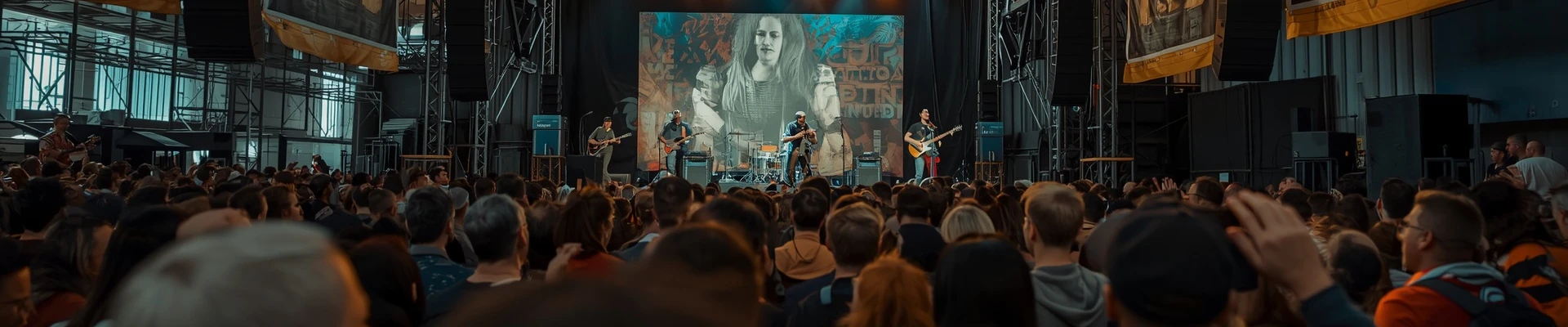
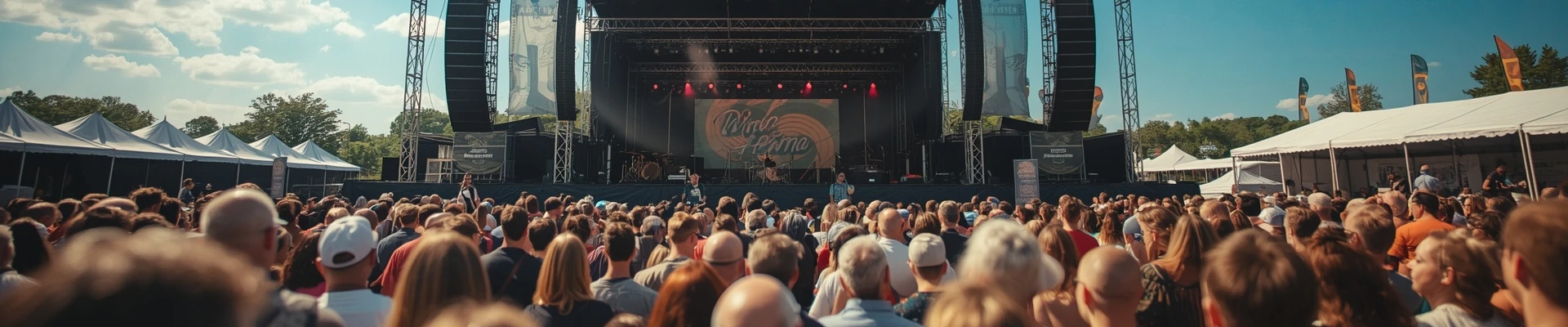
Santa Clara's venue landscape divides between stadium-scale infrastructure and neighborhood-scale community rooms. Levi's Stadium (opened 2014, capacity ~70,000) has hosted Super Bowls, international soccer, and a continuous procession of stadium-level touring acts — Taylor Swift, Beyoncé, Coldplay, U2, The Rolling Stones, Metallica, and virtually every act that plays at that scale has played Levi's. The stadium has been criticized for its acoustics (designed for football, not music) but its sheer size and location make it irreplaceable on the Bay Area touring map. Adjacent to Levi's, California's Great America amusement park has historically hosted outdoor concert series.
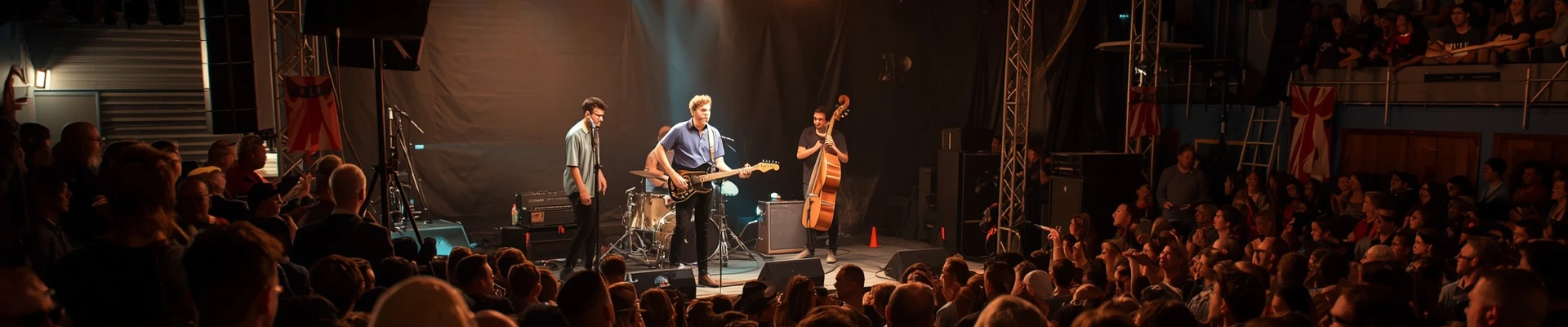
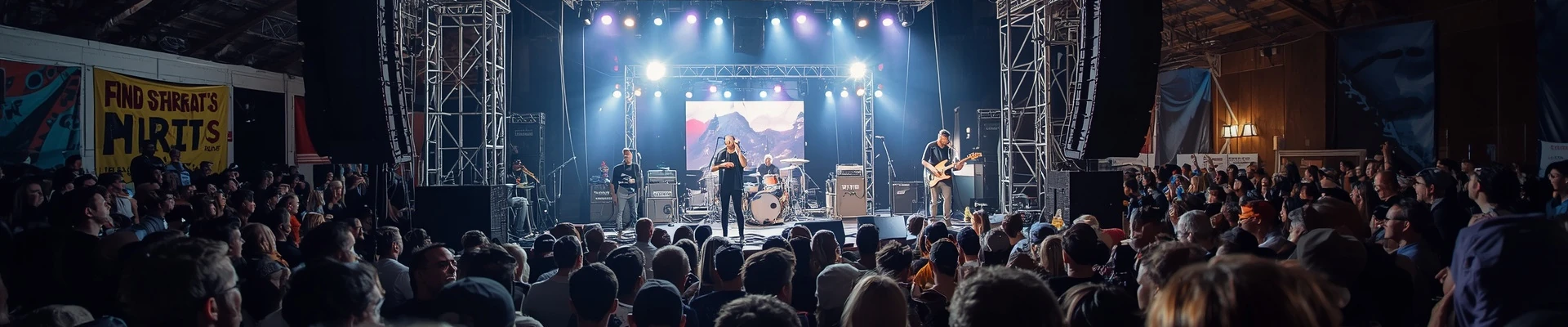
For mid-size and club-level music, Santa Clara depends on the broader South Bay circuit: The Willow Glen neighborhood entertainment corridor and SAP Center in San Jose; the Paramount Theatre in Oakland; The Warfield in San Francisco for touring mid-size acts. Within Santa Clara itself, the Santa Clara Convention Center hosts occasional large-scale events, and the Mission City Center for the Performing Arts (now the Triton Museum's adjacent performance space) provides civic programming. University venues — particularly the Louis B. Mayer Theatre at Santa Clara University — offer an ongoing program of classical, jazz, and world music performance.
The city's neighborhoods carry distinct musical characters. The Old Quad around Mission Santa Clara de Asís and Santa Clara University is the historic core; the university's music department runs active programming. Central Park and the surrounding neighborhoods host outdoor summer concert series. The El Camino Real corridor — the old Spanish road running northwest toward Palo Alto and southeast into San Jose — is Santa Clara's commercial spine, lined with Vietnamese restaurants, Filipino businesses, South Asian groceries, and the small commercial spaces that sustain immigrant community music events. The North Santa Clara tech campus zone around the Great America Parkway is largely commercial by day and transforms around Levi's Stadium on event nights.
Festivals and signature events
Santa Clara's signature event calendar is anchored by Levi's Stadium concerts — individual stadium shows rather than a single recurring festival, but collectively forming the most financially significant music programming in the South Bay. The Santa Clara Parade and Community Day incorporates live music. The Silicon Valley Pride festival in San Jose draws from Santa Clara's LGBTQ+ community. The Vietnamese New Year (Tết) celebrations — particularly the large Tết events at the San Jose Convention Center and along the Little Saigon corridor — include traditional music, contemporary Vietnamese pop performance, and folk music programming that draws from Santa Clara's Vietnamese population.
Drum Corps International competitions at Levi's Stadium and other Bay Area venues bring the competitive marching music world into Santa Clara's orbit annually. The Santa Clara Vanguard season culminates each summer at DCI Finals. Santa Clara University's performing arts season runs classical music, jazz, world music, and theater across its campus venues. Christmas in the Park in neighboring San Jose (adjacent to the SAP Center) anchors a winter music calendar that draws South Bay audiences including Santa Clara residents.
What ties it all together
Santa Clara's defining musical signature is the contrast between its stadium-sized ambitions and its granular community music life — the city simultaneously hosts the largest touring acts in the world at Levi's Stadium and sustains, in Vietnamese community centers and Filipino churches and South Asian cultural organizations along El Camino Real, music cultures that most of its tech-executive residents have never encountered. The Santa Clara Vanguard is the city's most original and consequential musical contribution: a drum corps that has, over half a century, shaped how competitive marching music sounds globally, pioneered brass and percussion innovations that filtered into professional recording and orchestral practice, and built an alumni network that touches every corner of the music industry. And underneath the corporate campuses and the NFL stadium, the South Bay's tradition of cheap rehearsal space, all-ages shows, and community-built scenes continues in Santa Clara exactly as it does in every other South Bay city — quietly, persistently, and largely uncelebrated by music press that prefers the mythology of San Francisco to the reality of the valley floor.