
Santa Clarita is the fourth-largest city in Los Angeles County and the third-largest in all of Southern California, with roughly 182,000 residents within its incorporated limits and more than 290,000 in the broader Santa Clarita Valley. Incorporated in 1987 through the merger of the unincorporated communities of Newhall, Saugus, Canyon Country, and Valencia, the city occupies a wide basin where the Santa Clara River cuts through the transverse ranges roughly 35 miles north of Downtown Los Angeles via the Interstate 5 corridor. The San Gabriel Mountains close the valley to the east and south; the drier Sierra Pelona Ridge and Vasquez Rocks country open toward the Mojave to the northeast. The Newhall Pass — the narrow gateway through the mountains that made this corridor a critical supply and migration route since the Spanish mission era — still channels most of the commuter traffic between the San Fernando Valley and the Antelope Valley, giving Santa Clarita a transit-hub character that shapes its demographics and economy.
The city is one of the most rapidly grown in California's modern history. Valencia in particular was developed from scratch as a planned community beginning in the 1960s by the Newhall Land and Farming Company, and the orderly cul-de-sac grid of master-planned neighbourhoods spread through the valley over the following decades. Six Flags Magic Mountain — the landmark theme park that opened in 1971 in the Valencia portion of the valley — became one of the largest employers in the region and a cultural landmark for generations of Southern California teenagers. The broader economy is anchored by entertainment production (film, television, and commercial), healthcare, retail, and the massive commuter residential base that feeds the Los Angeles economy.
A brief history
Long before Spanish colonization, the Santa Clarita Valley was home to the Tataviam people, also called the Fernandeño — a group whose territory extended across the western slopes of the San Gabriel Mountains and into the valleys above. The Mission San Fernando Rey de España (established 1797) absorbed much of the Tataviam population into its mission system. The valley later became part of Rancho San Francisco, a large Mexican land grant. Henry Mayo Newhall purchased the land in the 1870s, and the community that bore his name — Newhall — grew up around the Southern Pacific railroad line that pushed through the Newhall Pass in 1876.
The valley's proximity to Los Angeles and its diverse terrain of rolling hills, chaparral, arroyos, and open grassland made it a natural location for the film industry almost from the medium's earliest days. The Melody Ranch in Newhall — originally built in 1915 as the Providencia Ranch — became one of the defining backlot locations in American film history. Gene Autry purchased the property in 1952 and renamed it; over the following decades it hosted hundreds of Westerns, television series, and country music films. After being seriously damaged in a fire in 1962 it was rebuilt, and today the Melody Ranch Motion Picture Studio remains an active production facility used by productions including Deadwood, Westworld, and numerous music videos. The ranching, railroad, and film heritage of old Newhall established the valley's Western identity — an identity that persists in the city's country music culture and its rodeo and livestock traditions.
The 1971 Sylmar earthquake (6.6 magnitude, centered near the northern end of the San Fernando Valley) caused severe damage across the region and temporarily slowed growth. The more catastrophic 1994 Northridge earthquake prompted another wave of families and businesses to relocate north into the relative quiet of the Santa Clarita Valley. The area's population surged in the 1990s and 2000s as housing prices in the San Fernando Valley made the longer commute to Santa Clarita an economic trade-off many families were willing to make.
Music identity
Santa Clarita's music identity is defined by two parallel energies: a deep country and Americana tradition rooted in the valley's ranching and Western heritage, and a heavy rock and metal scene shaped by the working-class suburban sprawl that grew around it. Both scenes have fed significant talent into the larger Los Angeles music industry, and the city's concentration of entertainment-industry families means a disproportionate number of professional musicians grew up attending its schools.
The Western and country roots of the valley go back to the Melody Ranch era and the circuit of cowboy performers and honky-tonk players who worked the San Fernando Valley and Antelope Valley corridor through the mid-20th century. Newhall in particular retains a Western bar culture built around venues like The Painted Pony — a genuine honky-tonk that operated for decades in old Newhall and became one of the valley's most important live country venues. The Hart Park Amphitheater and the outdoor spaces around William S. Hart County Park (the preserved estate of the silent-film Western star) have hosted country and folk events that connect explicitly to the valley's frontier mythology.
The city's most prominent connection to mainstream rock history runs through the Newhall area's concentration of entertainment-industry families. Dave Navarro — the guitarist for Jane's Addiction and later Red Hot Chili Peppers — grew up in the Santa Clarita Valley and attended Hart High School in Newhall, the same school that has produced a steady stream of musicians who later entered the Los Angeles industry. Navarro's presence in one of the most influential alternative rock bands of the late 1980s and 1990s — Jane's Addiction's Nothing's Shocking (1988) and Ritual de lo Habitual (1990) remain landmarks of the era — gave Santa Clarita a legitimate claim on the LA alternative rock lineage.
Hard rock and metal took hold in the valley's suburban landscape during the 1980s, when the same forces that drove heavy music through the San Fernando Valley — working-class frustration, miles of parking lots and strip malls, the proximity of the Sunset Strip's storied club circuit — operated here in concentrated form. Golden Valley High School and Saugus High School produced metal and punk bands that fed the Los Angeles club circuit through the hair metal era. The SCV's distance from Hollywood gave it a slightly rawer, less polished edge than the Calabasas or Sherman Oaks suburban rock scene — bands here tended toward the heavier end of the spectrum.
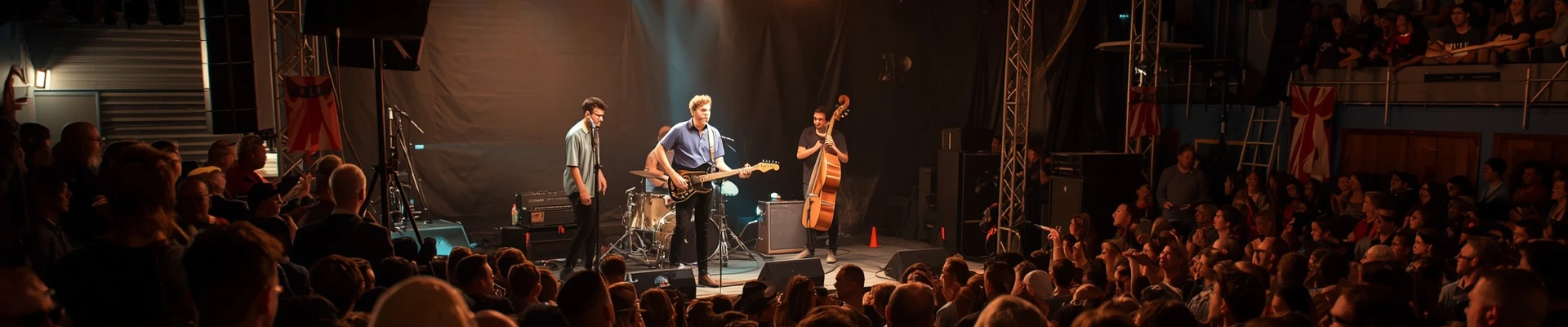
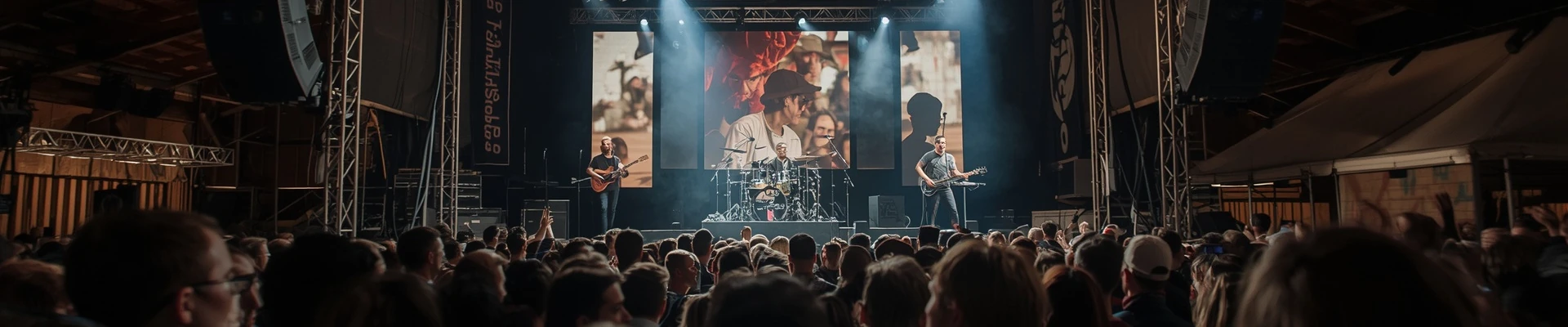
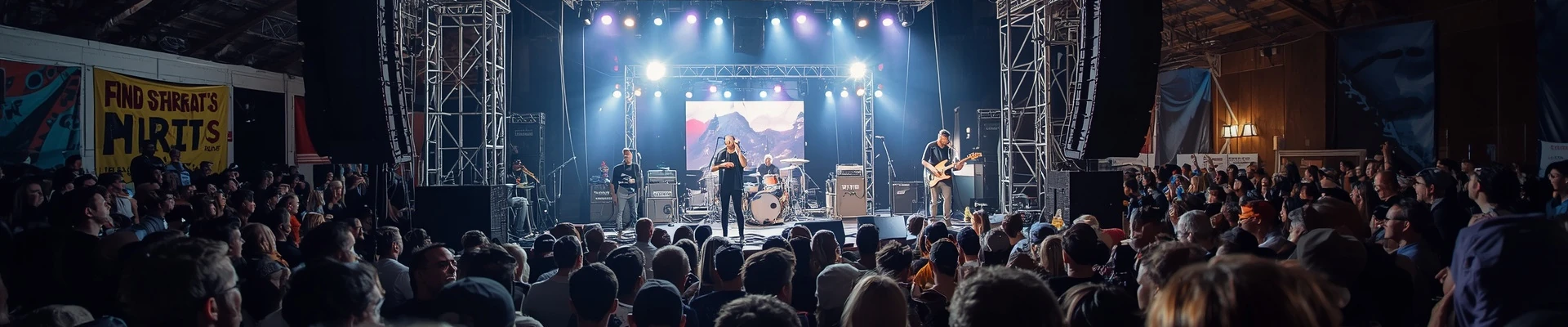
The contemporary scene maintains a working rock ecosystem centred on a handful of mid-size venues in Newhall's downtown corridor — the stretch of Main Street and Lyons Avenue that has been the focus of a sustained revival effort since the late 2000s. The Canyon — the city's flagship live music club, opened in 2001 in Valencia and eventually establishing a second location — has hosted national touring acts across country, rock, blues, and Americana, programming at a level that would be notable in a much larger city. The Canyon's booking has introduced thousands of Santa Clarita residents to touring music that otherwise would require a drive to Los Angeles.
CalArts (the California Institute of the Arts) — located in the Valencia section of Santa Clarita — is one of the most distinguished arts institutions in the United States, with a music school covering classical composition, jazz, world music, experimental/electronic music, and music technology that has trained generations of avant-garde and contemporary classical composers and performers. CalArts alumni in music include figures who have shaped experimental and contemporary classical music for five decades: its faculty roster has included Morton Subotnick (a pioneer of electronic music and one of the creators of the Buchla synthesizer tradition), and its graduates include a remarkable list of composers, sound designers, and experimental musicians who have gone on to major careers in film scoring, contemporary classical composition, and electronic music. The presence of CalArts gives Santa Clarita a high-art music credential that coexists strangely but productively with the city's country bars and hard rock venues.
Venues and neighborhoods
The live music geography of Santa Clarita centres on two distinct districts. Old Town Newhall — the original 19th-century commercial core clustered around Main Street, Lyons Avenue, and Railroad Avenue — has been the focus of a deliberate revitalisation effort that has brought restaurants, bars, galleries, and music venues back to streets that had emptied out during the suburban sprawl of the 1980s. The Newhall community retains a weathered, unpretentious character that feels distinct from the planned Valencia neighbourhoods and sustains a bar-and-venue scene with more character than most cities of comparable size.
The Canyon (originally at 26669 The Old Road, Valencia, subsequently at a Newhall location) is the city's premier live music room — a properly equipped listening venue with sight lines, a real sound system, and consistent booking of national and regional touring acts in country, blues, classic rock, and Americana. The Canyon Club legacy (related ownership operates a venue in Agoura Hills in the western Santa Monica Mountains) has given the Santa Clarita entertainment community a venue infrastructure that supports a serious live music culture.
William S. Hart County Park provides an outdoor performance context tied directly to the valley's Western heritage, with summer concert programs on the grounds of the preserved Hart estate. The Repertory East Playhouse in Newhall programs theatrical productions that regularly incorporate musical performance. Henry Mayo Newhall Hospital's Foundation and College of the Canyons (the community college serving the valley) both program performance events.
Valencia — the master-planned northern half of the city — houses CalArts and most of the large retail and commercial infrastructure. The Valencia Town Center area has hosted outdoor concerts and community music events. College of the Canyons runs a performing arts centre with a theatre that programs visiting performers.
Festivals and signature events
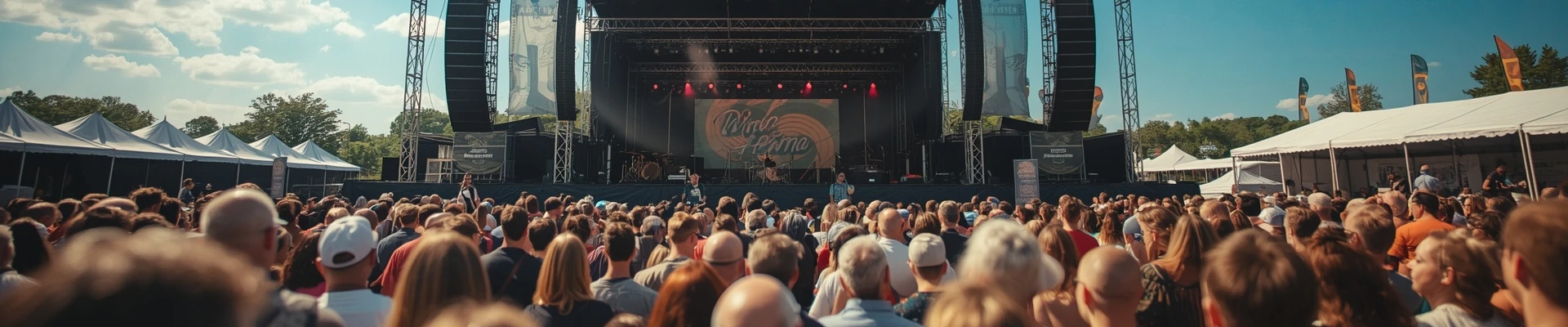
The Santa Clarita Cowboy Festival — held annually at William S. Hart County Park since 1993 — is the city's most distinctive and nationally recognized cultural event: a multi-day celebration of Western music, cowboy poetry, and ranch culture that draws performers and audiences from across the American West. The festival's dedication to authentic cowboy and Western swing traditions rather than commercial country positions it as a genuine folk arts event and a continuation of the valley's ranching identity.
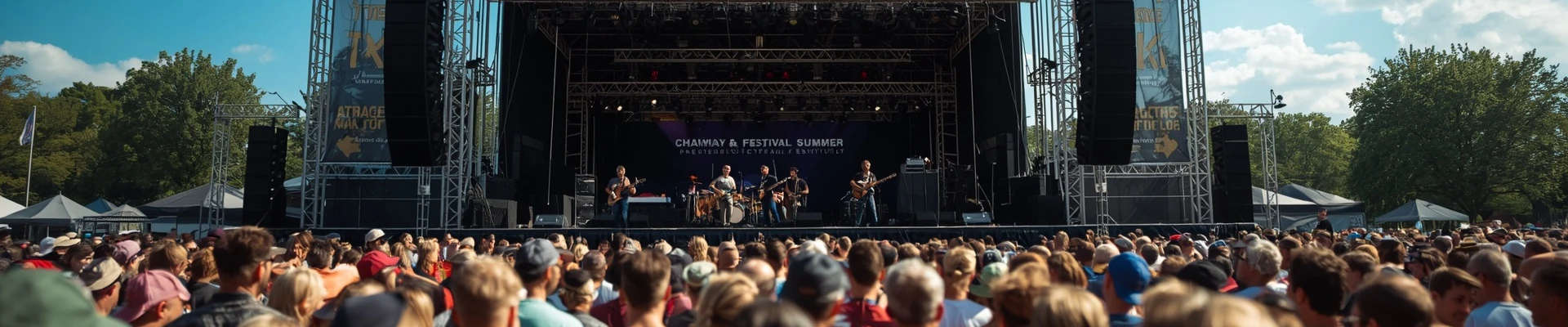
Concerts in the Park programs summer live music in Bridgeport Park and other Santa Clarita green spaces, presenting local and regional acts across multiple genres. The Newhall Arts District hosts periodic outdoor music events tied to gallery openings and arts walks on Main Street. Six Flags Magic Mountain programs concert events on its grounds during special seasons. The College of the Canyons Performing Arts Center and CalArts both run their own annual performance series that bring significant visiting artists to the valley.
The SCV Senior Center Concerts and Saugus Train Station events represent the community programming side of Santa Clarita's music calendar — free and low-cost concerts that serve the valley's diverse, multigenerational residential population.
What ties it all together
What gives Santa Clarita its particular character is the collision of the Western frontier mythology that the Melody Ranch and the Hart estate still make concrete, the entertainment-industry familiarity that comes from decades of proximity to Hollywood production, and the working-class suburban ambition that drove the valley's explosive growth. These forces produced a music community that is both more sophisticated (CalArts, professional entertainment families, proximity to the LA industry) and more rootsy (genuine cowboy culture, country bars, honky-tonk lineage) than its suburban reputation suggests. Dave Navarro's art-school ferocity and the Cowboy Festival's two-stepping faithful coexist in the same valley — held together by the Newhall Pass, the Santa Clara River, and the peculiar density of talent that the entertainment industry, even at a remove of 35 miles, seems to generate wherever it takes root.