
Santa Maria is a city of approximately 105,000 residents in northern Santa Barbara County, California, sitting at the southern end of the Santa Maria Valley roughly 100 kilometres northwest of Santa Barbara and 230 kilometres south of San Francisco. It is the largest city in Santa Barbara County and the commercial hub of the Santa Maria Plain — a broad, fog-cooled coastal valley running east from the Pacific Coast toward the Santa Lucia Range foothills. The Santa Maria River marks the county boundary between San Luis Obispo and Santa Barbara counties to the north, and the valley's microclimate — persistent marine layer, cool summers, exceptional diurnal temperature swings — has made it one of the most celebrated wine-growing regions in California. The city itself is not a wine destination in the way that nearby Los Olivos or Buellton are, but the vineyards of Bien Nacido, Cambria, and Byron directly encircle the municipality and the wine economy is woven into Santa Maria's civic identity.
Santa Maria's economy rests on agriculture (strawberries, broccoli, wine grapes, and leafy greens are leading products), the defense and aerospace sector centred on Vandenberg Space Force Base (approximately 30 kilometres northwest, the nation's primary West Coast launch facility, with major presence from SpaceX, United Launch Alliance, and the US military), oil and gas (Santa Maria Basin production has been active since the early 20th century), and regional retail serving the surrounding communities of Orcutt, Guadalupe, Lompoc, and the greater North County. The Santa Maria Valley is one of the few places in California where a predominantly Latino city of over 100,000 residents exists largely outside of the Los Angeles and San Diego metropolitan footprints — it is not a suburb but a functioning independent regional centre, and that distinction matters enormously for understanding the city's culture.
A brief history
The Santa Maria Valley was home to the Chumash people for thousands of years before Spanish colonization. The valley fell within the orbit of Mission La Purísima Concepción (established 1787 at modern Lompoc) and Mission Santa Inés (established 1804 at Solvang). The rancho era following Mexican independence in 1821 saw the valley divided into large cattle estates. Anglo American settlement accelerated after California statehood in 1850, and the town of Central City was platted in 1875 before being renamed Santa Maria in 1885, the same year the Pacific Coast Railway arrived and connected the valley to the coast. The late 19th century brought a diverse immigrant wave — Swiss-Italian and Portuguese dairy farmers, Japanese agricultural workers, and the seeds of the Mexican-American community that would eventually come to define the city's identity.
The 20th century brought dramatic demographic transformation. Mexican and Mexican-American workers arrived in large numbers during the Bracero Program era (1942–1964) to harvest the valley's expanding row-crop agriculture. The postwar era brought economic growth tied to Vandenberg Air Force Base (established 1941), the oil industry, and agricultural expansion. By the 1980s Santa Maria's Latino population had surpassed 50% of residents; by 2010 it exceeded 70%; today the city is roughly 75% Hispanic or Latino, predominantly of Mexican origin with significant populations from Oaxaca (including indigenous Mixtec and Triqui communities), Jalisco, Michoacán, and Guerrero. Santa Maria is one of the most heavily Latino mid-size cities in California.
The city's most internationally famous contribution to culture is not musical but culinary: Santa Maria-style BBQ, a centuries-old tradition of open-pit grilling beef tri-tip over red oak coals, seasoned with salt, pepper, and garlic, and served with pinquito beans, fresh salsa, and garlic bread. This tradition — rooted in the rancho-era vaquero culture and formalized at events hosted by the Santa Maria Club, the Elks Club, and community festivals throughout the 20th century — has become the city's defining cultural export, celebrated nationally and listed on the American Hearth Society's inventory of regional barbecue styles alongside Kansas City, Memphis, and Texas traditions.
Music identity
Santa Maria's music scene flows almost entirely from its Mexican-American majority culture. The city is one of the most vital regional Mexican music markets on the Central Coast. Norteño — the accordion-driven, two-step dance music of northern Mexico — has deep roots here, particularly in the working-class neighborhoods of south and west Santa Maria where Mexican-born immigrants from Jalisco, Zacatecas, and Sinaloa settled through the mid-20th century. Banda sinaloense — the brass-heavy big-band form that exploded nationally in the 1990s and 2000s through artists like Banda El Recodo, Banda Los Recoditos, and Los Tucanes de Tijuana — has been a constant at Santa Maria's dance halls and quinceañera venues for three decades. Major banda touring acts route through Santa Maria regularly, playing the Santa Maria Fairpark exhibition halls and outdoor venues. Grupero (the romantic balladry of Los Angeles-based Mexican-American artists), cumbia, huapango, and contemporary corridos tumbados (the trap-influenced narco-adjacent genre championed by Natanael Cano and Peso Pluma) all have active fanbases.
The Oaxacan community — substantial and growing, with Mixtec and Triqui speakers among the most recent arrivals — has brought distinct musical traditions including marimba (the Oaxacan marimba ensemble tradition differs markedly from Mexican norteño) and música de viento (traditional brass-band music tied to village festivals and Catholic feast days). The Oaxacan community organizes its own cultural events, Guelaguetza celebrations, and musical gatherings that are largely invisible to outsiders but deeply embedded in community life.
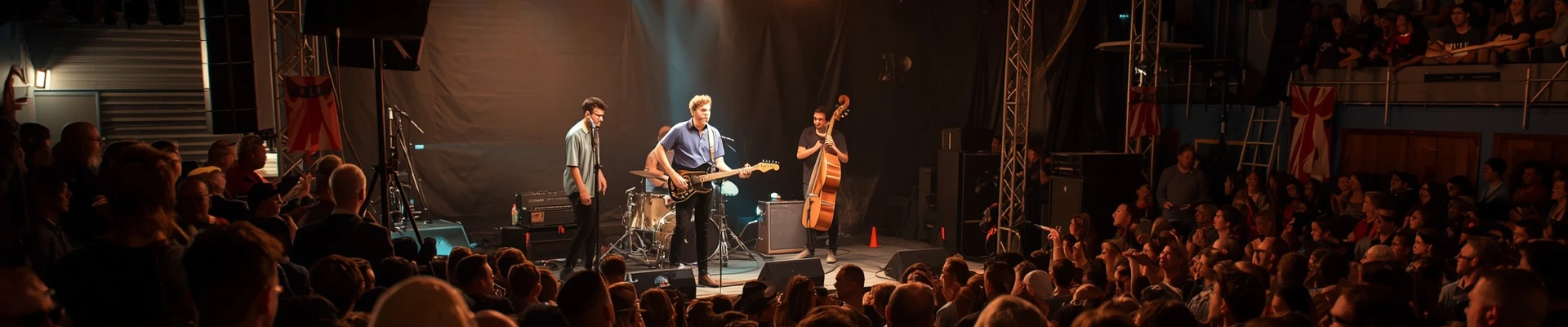
Beyond regional Mexican music, Santa Maria has a modest but genuine indie and DIY rock scene built around Allan Hancock College (the community college serving the valley with about 11,000 students) and a cluster of independent venues and bars. The city lacks a dedicated mid-size music club in the tradition of a college-town music hub, but the bar and venue scene along Broadway and Main Street in downtown Santa Maria has sustained local rock, country, and blues artists for decades. Country and western music has deep roots in the valley's ranching culture — Santa Maria's cowboy tradition predates Anglo settlement and was sustained by Mexican vaquero culture, and mid-20th century honky-tonk and country music found receptive audiences among the agricultural working class of all backgrounds.
The Central Coast wine country that surrounds Santa Maria has created a significant live music at wineries economy in the broader region. Presqu'ile Winery (directly north of the city) has hosted outdoor concerts; other valley wineries program acoustic and folk music at weekend events. This is not a rock venue circuit but it represents genuine live music infrastructure.
Notable Santa Maria-area artists include Adam Lambert (the American Idol runner-up and Queen vocalist who was born in Indianapolis but raised in Santa Maria — he attended Santa Maria High School before his family moved to San Diego), connecting the city to mainstream pop. The broader Central Coast has produced artists including members of Ozomatli (the Los Angeles-based Latin funk and cumbia collective with Central Coast roots), and the Santa Barbara County arts community — strengthened by the proximity of UC Santa Barbara in Goleta — provides regional cultural programming that benefits northern county residents.
The city's radio landscape reflects its demographics: Spanish-language radio stations dominate the dial, with regional Mexican formats (La Que Buena, Que Buena, and similar regiotonal formats) reaching far more Santa Maria residents than any English-language music station.
Venues and neighborhoods
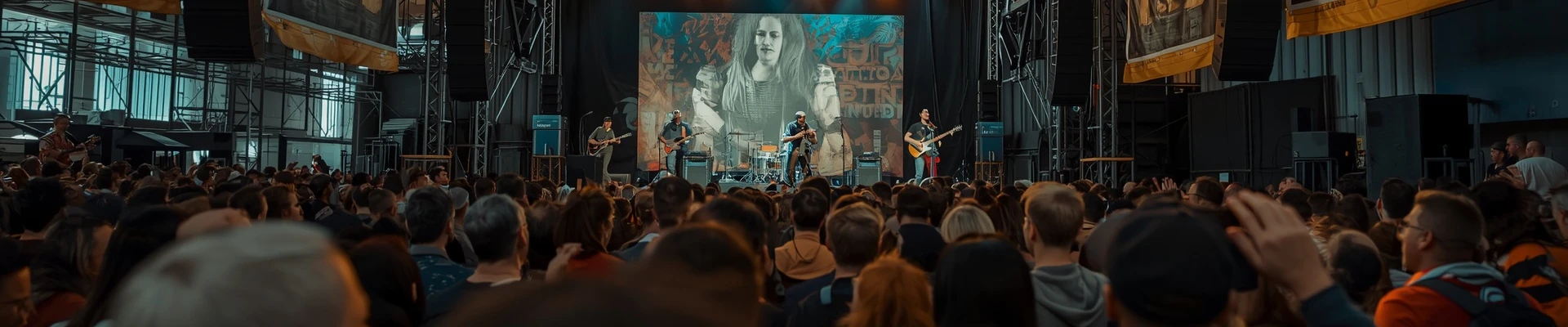
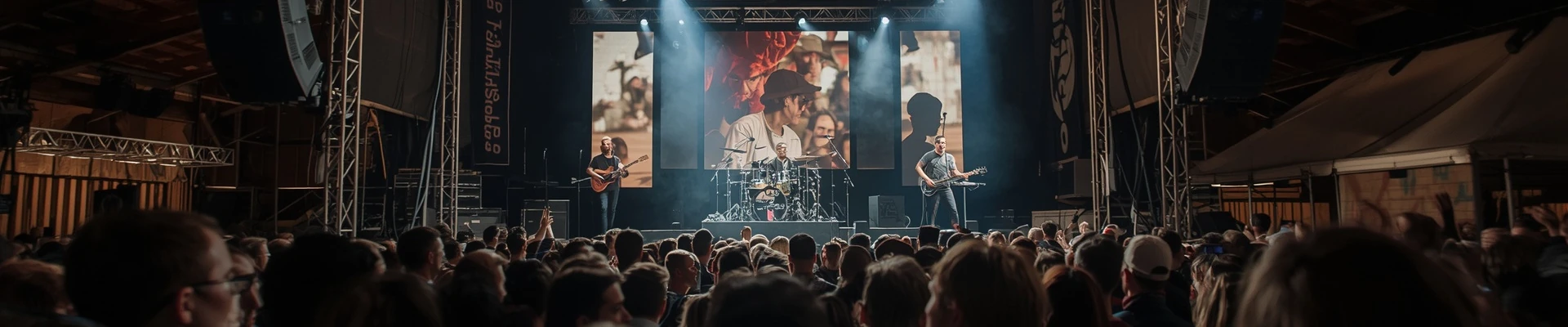
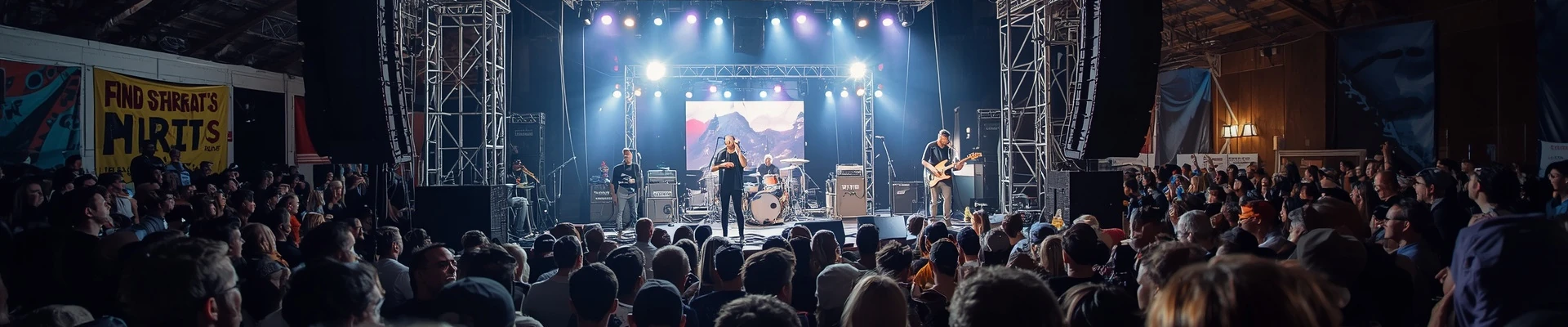
Santa Maria's music infrastructure is modest but functional. The Santa Maria Fairpark (the Santa Barbara County Fairgrounds, which hosts the Santa Barbara County Fair each July) is the city's largest event space, with outdoor grandstands seating several thousand and indoor exhibition halls that accommodate concerts, quinceañeras, and community events. The facility is the primary venue for major banda and regional Mexican touring acts in the northern county. Presqu'ile Winery's outdoor venue hosts seasonal concerts in a vineyard setting north of the city.
Downtown Santa Maria along Broadway and Main Street anchors the modest live music bar scene. Venues like The Porch and various restaurants with live music programming represent the local rock and country tier. The Ethel Pope Auditorium at Allan Hancock College (approximately 600 seats) provides the primary classical and theatrical performance space. The Pacific Conservatory Theatre at Allan Hancock College — known as PCPA — is one of the most respected regional theatre companies in California, founded in 1964, with professional company productions that occasionally include musically-centered programming.
The Orcutt Road corridor to the south connects Santa Maria's suburbs to wine country and carries wine-tourism traffic. The neighborhoods of Old Orcutt — a historic mining-era community now incorporated into greater Santa Maria — have a small-town commercial strip with bars and restaurants. Guadalupe (the small farming community 15 kilometres west, with a deeply Mexican-American character and a significant Filipino fishing community) is technically a separate city but culturally continuous with Santa Maria.
Festivals and signature events
The Santa Barbara County Fair (held at the Fairpark each July) is the city's largest annual event, drawing major regional Mexican, country, and pop touring acts for its grandstand concert series — this is the single most significant music programming moment in Santa Maria's annual calendar. The Elks Rodeo and Parade (held each Memorial Day weekend since 1921) is one of the oldest PRCA rodeos in California, drawing country and western programming alongside the rodeo events. Fiestas Patrias (Mexican Independence Day, September 15–16) is the largest street celebration in the city, with live regional Mexican music, dancing, and community gatherings. The Dia de los Muertos celebration at Santa Maria Fairpark has grown significantly in recent years, programming traditional Mexican music and cultural performance. Guelaguetza celebrations organized by Oaxacan community organizations bring traditional Oaxacan dance and music to the city each year.
The broader Central Coast wine country festival calendar — the Pinot Days festival in the Santa Maria Valley, Celebration of Harvest in the Santa Ynez Valley, and various winery events — generates live music programming at venues within easy reach of Santa Maria residents.
What ties it all together
Santa Maria's musical identity is inseparable from its demographic reality: this is a majority-Mexican-American city where regional Mexican music is not a niche but the mainstream, where banda sinaloense and norteño are the dominant popular forms, and where the county fair's grandstand shows — headlined by acts like Banda El Recodo, Los Tigres del Norte, or La Arrolladora Banda El Limón — draw as many or more attendees than any Anglo country or rock act. The Santa Maria style of BBQ may be the city's most famous cultural export globally, but the music that fills the city's halls, cars, and quinceañera venues on any given weekend is regional Mexican in all its forms. The city's cowboy and vaquero heritage, the influence of the Vandenberg defense community, the wine country adjacency, and the Oaxacan indigenous community's distinct musical traditions all layer onto that foundation. Santa Maria is not a music destination — no visitor arrives because of its venues — but it is a city with genuine music in its blood, rooted in a working-class immigrant community that has made the Central Coast's largest city unmistakably its own.