



Thousand Oaks occupies the Conejo Valley in Ventura County, roughly 55 kilometres northwest of Downtown Los Angeles and 25 kilometres inland from the Pacific coast at Point Mugu. The city is bounded by the Santa Monica Mountains to the south and the Conejo Grade — a steep pass on the US-101 freeway — to the southeast, which has historically given the Conejo Valley a degree of geographic and cultural separation from the sprawl of the San Fernando Valley. To the north and west lie Camarillo and Moorpark; to the east, the adjacent communities of Agoura Hills and Westlake Village blend seamlessly into the same suburban fabric. With a population of approximately 129,000, Thousand Oaks is one of the ten largest cities in California that is almost entirely residential and suburban in character — a city that was deliberately planned, deliberately landscaped, and deliberately insulated from the kind of density that generates independent music scenes.
That deliberateness is central to understanding Thousand Oaks: it was incorporated in 1964 as one of the most intentionally designed planned communities in Southern California, with wide streets, deed-restricted open space, and a long-standing ordinance that limits light pollution and preserves the valley's dark skies. Amgen, one of the world's largest biotechnology companies, has its global headquarters in Thousand Oaks, and the broader Conejo Valley has attracted aerospace, pharmaceutical, and financial services firms that give the city an unusually high median household income. It is, in the Southern California typology, the kind of place where you move when you want good schools, low crime, and a yard — not when you are looking for a rock club or an open mic.
Geography and the Conejo Valley
The Conejo Valley sits at the intersection of Ventura and Los Angeles Counties and is defined geographically by the ring of low mountains and hills that enclose it: the Santa Monica Mountains National Recreation Area to the south, the Simi Hills to the north, and the chaparral-covered ridgelines that drop toward the valley floor. The Arroyo Conejo creek runs through the city, feeding into an extensive network of parks and open space that gives Thousand Oaks more green area per capita than most cities in the region. Conejo Valley Botanic Garden, Wildwood Regional Park, and Conejo Open Space give the city a distinctly naturalistic character — the kind of landscape that, in an earlier era, attracted the folk-commune aesthetic that found its most concentrated expression a few miles south in Topanga Canyon.
The Chumash people inhabited the Conejo Valley for thousands of years before Spanish colonization. Their place names and archaeological sites are embedded in the landscape — the name "Conejo" itself (Spanish for "rabbit") comes from early contact with Chumash communities in the area. Rancho El Conejo was one of the largest Spanish land grants in the region, and the ranching era left an imprint on the valley's culture that persisted well into the twentieth century. That ranching heritage — combined with the city's position between Los Angeles and Ventura County's agricultural corridor — partly explains why country music found such deep roots in the Conejo Valley's entertainment culture.
Music identity
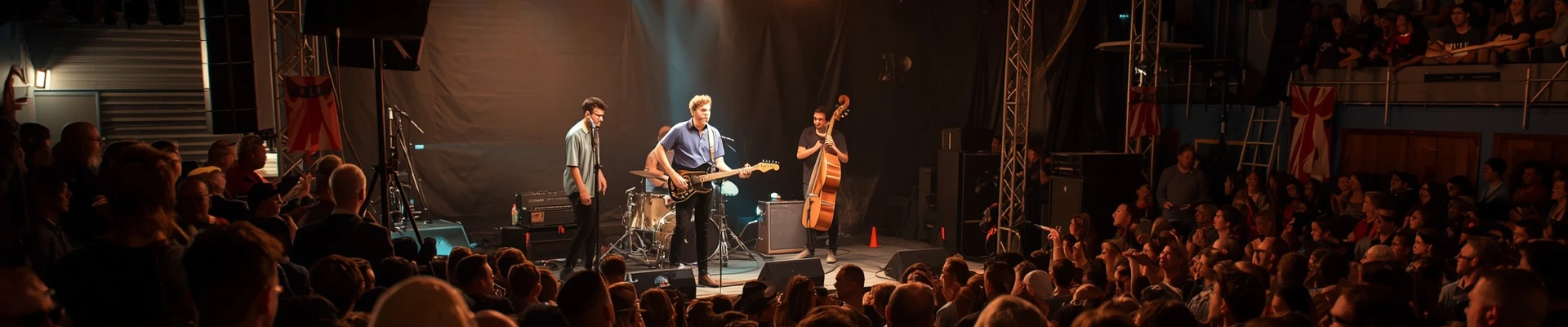
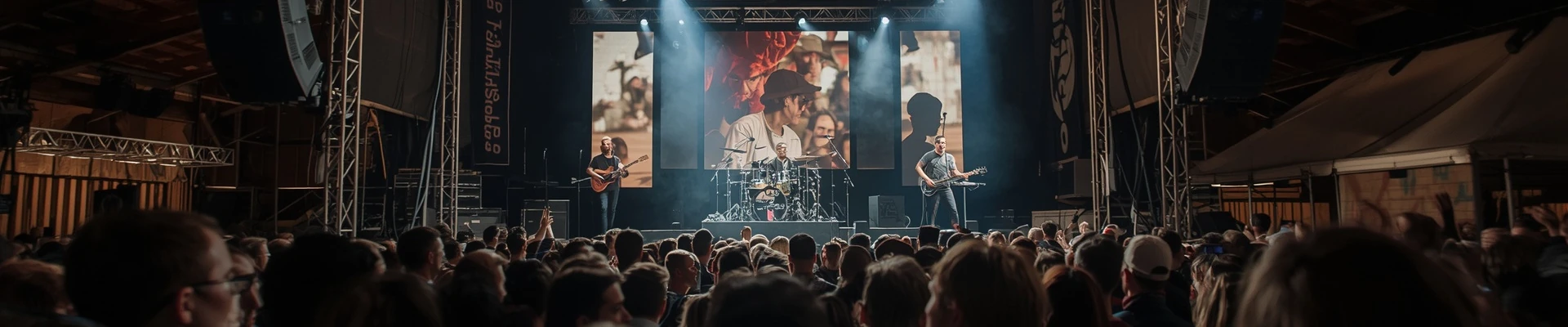
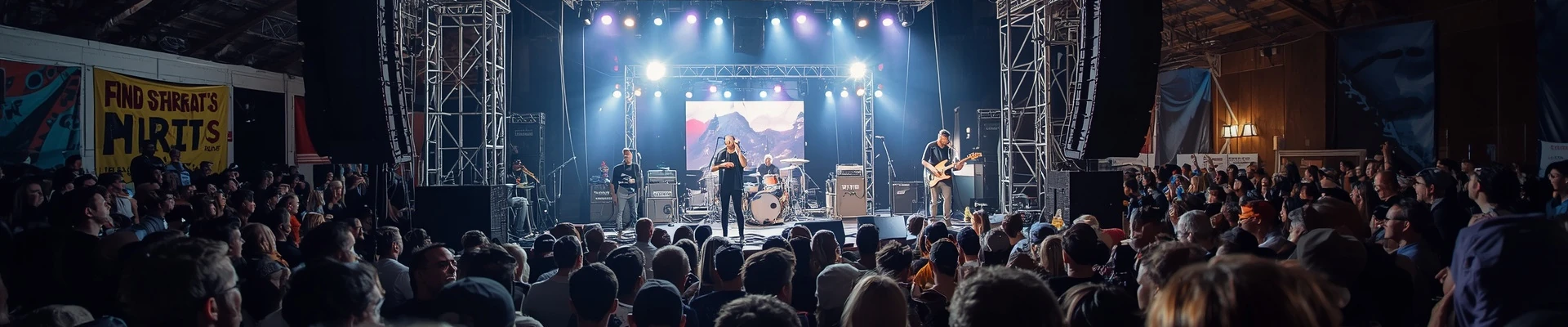
Thousand Oaks is not a city that created a genre or launched a label. Its contribution to music is social and infrastructural rather than creative: it sustained a live music audience and a venue circuit for country, rock, and pop performers who needed a draw between the San Fernando Valley and the Ventura County coast. For the better part of three decades, the region's flagship venue was the Borderline Bar & Grill in Thousand Oaks — a dance hall and live music club that presented touring country and rock acts in an intimate setting and became, for fans across the western San Fernando Valley and Conejo Valley, the definitive local night-out music experience.
The Borderline Bar & Grill opened in the 1990s and quickly became the social centre of Conejo Valley nightlife for country music fans and line dancers. Its stage presented a mix of regional country acts, up-and-coming Nashville artists on west-coast tours, and local country bands who built devoted followings on the Ventura County honky-tonk circuit. The club's Wednesday college nights drew students from California Lutheran University in nearby Westlake Village, and its weekend shows were routinely packed. The Borderline was not glamorous — it was a wood-panelled dance hall with a good sound system and a faithful crowd — and that honest, unpretentious character made it something rarer and more durable than a trendy venue. On November 7, 2018, a mass shooting at the Borderline killed twelve people during a college country night. The tragedy devastated the community and ended the club's run in that location; the Borderline name and spirit have persisted in various forms since, and its history remains freighted with both the joy of what live music meant to this community and the grief of what was lost.
Adjacent to Thousand Oaks, in Agoura Hills, The Canyon Club has operated since 2000 as one of the premier mid-size music venues in the greater Los Angeles area — presenting national touring acts across rock, country, pop, blues, and roots music in a 1,000-capacity room with outstanding acoustics and production values. The Canyon has hosted Counting Crows, Gin Blossoms, Collective Soul, Todd Rundgren, Los Lobos, Toad the Wet Sprocket, and hundreds of other acts, giving the Conejo Valley music fan a destination-quality concert experience without requiring a drive into the city. The Canyon and the Borderline together defined the regional live music ecosystem: the Canyon for seated-concert touring artists, the Borderline for dancing and country community.
The region's proximity to Topanga Canyon — the unincorporated community in the Santa Monica Mountains that was a centre of California's folk, rock, and countercultural music in the late 1960s and early 1970s — is worth noting. Neil Young wrote and recorded much of his foundational solo work in Topanga, and the canyon attracted a community of musicians, artists, and idealists that included figures from the broader Laurel Canyon scene. That spirit has been a quiet undercurrent in the Conejo Valley's cultural self-image, even if the valley itself is more suburban than bohemian. Local acoustic and folk acts have found consistent audiences at coffee houses and small venues throughout the Conejo corridor.
The region has also functioned as a bedroom community for working musicians who perform in Los Angeles but prefer the space and relative affordability of the suburbs. Session musicians, touring band members, and studio professionals have long made the Conejo Valley home. Rick Springfield — the Australian-American singer-songwriter and actor whose 1981 hit "Jessie's Girl" made him a household name and whose broader career in new wave pop brought him considerable fame — has been associated with the Los Angeles suburban corridor. Ozzy Osbourne and Sharon Osbourne famously lived in the Hidden Hills community adjacent to the Conejo Valley for years; while Hidden Hills is technically in Los Angeles County, the Osbournes were very much part of the Conejo Valley social fabric, and Ozzy's proximity was a point of local mythology. Their presence underlines the Conejo Valley's role as a retreat for successful musicians who prefer quiet suburban space to the bustle of Hollywood.
California Lutheran University (Cal Lutheran), located in Thousand Oaks, maintains music programs and regularly presents student and faculty concerts. The university's Preus-Brandt Forum serves as a campus performing arts venue. Cal Lutheran's music culture reflects the broader suburban Ventura County aesthetic: choral, classical, and acoustic pop programming are central. The city's high schools — Newbury Park High School, Westlake High School, and Thousand Oaks High School — all maintain strong band and choral programs, reflecting the community's investment in arts education as part of its suburban excellence brand. The Southern California competitive marching band circuit has seen Conejo Valley schools compete regularly at regional and state levels.
Venues and neighborhoods
Thousand Oaks does not have a walkable entertainment district. Its commercial life is organized around strip malls, the Thousand Oaks Town Center, and the Janss Marketplace rather than a compact downtown. Performing arts are anchored at the Fred Kavli Theatre (formerly the Civic Arts Plaza), an 1,800-seat hall that presents Broadway touring productions, symphony performances, and headline music acts in a well-appointed civic setting. The Scherr Forum Theatre, a smaller 400-seat house adjacent to the Kavli, presents more intimate performances. The Bank of America Performing Arts Center umbrella covers both halls and represents the city's investment in cultural programming as a civic amenity.
Beyond the civic halls, Thousand Oaks' live music scene operates through bars, restaurants with weekend live music, and the Cal Lutheran campus calendar. The Hillcrest Center for the Arts presents community theatre and music. Outdoor events at Conejo Community Park have included summer concert series. The region's most dedicated music fans also drive south to Ventura for the Majestic Ventura Theater or deeper into Los Angeles for larger amphitheatre and arena shows.
Festivals and signature events
Conejo Valley Days is the city's largest annual civic celebration — a multi-day fair and festival with carnival rides, a rodeo, and live entertainment including country and rock bands on outdoor stages. The event draws tens of thousands of visitors and is the social anchor of the community calendar. The Thousand Oaks Film Festival has included music programming. Stagecoach Festival in Indio, the great California country music gathering held each spring, draws heavily from the Conejo Valley fan base, and local bars organize around it. The Greek Theatre in Los Angeles, the Hollywood Bowl, and the Ventura County Fair summer concert series are regional destination events for which Thousand Oaks residents routinely make the drive.
What ties it all together
Thousand Oaks is a city whose music identity is defined by its audience rather than its artists — by the concentration of people who love live music, who filled the Borderline on Wednesday nights and the Canyon Club on Saturdays, who packed the Fred Kavli for touring Broadway shows and regional symphony performances. The Borderline Bar & Grill was, for two decades, the social and musical heart of a community that did not have many other gathering places of comparable warmth and regularity. Its loss in 2018 was not just the closure of a venue but the loss of a communal institution — the kind of place that a suburban city builds its memory around. The Conejo Valley's music scene is quieter than its neighbors and more audience-driven than artist-driven, but the depth of that audience — loyal, local, willing to show up week after week for country nights and touring rock acts — is its own kind of contribution to the culture.