
Vacaville is a city of roughly 97,000 people in Solano County, California, positioned at the geographic midpoint of one of the busiest highway corridors in the American West. Interstate 80 threads directly through town — Sacramento lies 55 kilometres to the northeast and the San Francisco Bay Area begins roughly 85 kilometres to the southwest — placing Vacaville in an unceasing stream of commuter, commercial, and touring traffic. The city spreads across gently rolling foothills at the western edge of the Sacramento Valley, with the blue profile of the Vaca Mountains to the southwest and the flat, agricultural floor of the valley opening to the east. Travis Air Force Base, located just seven kilometres south in the adjacent city of Fairfield, is one of the largest air mobility installations in the United States and has shaped Vacaville's economy, demographics, and social fabric since the Second World War. Agriculture — once dominated by orchards and Bartlett pears, hence the city's historic identity as an orchard town — gave way across the late twentieth century to logistics hubs, retail corridors, and a sprawling suburban footprint that serves as a bedroom community for both Sacramento and the Bay Area. The result is a city that defies easy categorization: too large to feel like a small town, too suburban and highway-oriented to have built the kind of dense cultural district that anchors a genuine arts scene, but home to real communities — military, agricultural, working-class, and immigrant — whose musical tastes and informal gathering spaces have kept a live-music thread alive through every decade.
A brief history
The land here belonged to the Patwin people, one of the Wintun-speaking peoples of the Sacramento Valley and Coast Range foothills, before Spanish missionaries and then Mexican ranchers transformed the landscape. The rancho grants of the Mexican period carved the valley into vast cattle ranges; Juan Manuel Vaca and Juan Felipe Peña received the Rancho Los Putos grant in 1843, and Vaca's name eventually attached to the city that grew on the rancho's eastern edge. American settlers arrived after the Mexican-American War and California statehood in 1850; Vacaville was incorporated in 1892, built on wheat farming, orchards, and a Southern Pacific Railroad stop.
The early twentieth century saw the pear and cherry orchard economy flourish. Vacaville became known throughout California as a source of premium Bartlett pears, and orchard culture gave the city its original identity as an agricultural hub rather than a commercial centre. The landmark that would define mid-century Vacaville was not a government building or a church but a roadside stand: the Nut Tree, opened in 1921 by Ed and Helen Power as a walnut stand along the Lincoln Highway and expanded over subsequent decades into a beloved California roadside institution with a restaurant, toy store, miniature railroad, and landing strip. For generations of Californians driving between San Francisco and Sacramento, the Nut Tree was the essential stop — a fixture of family road-trip memory and a genuine piece of California highway vernacular culture. The original Nut Tree closed in 1996 after decades of decline, but a successor retail and entertainment complex opened in 2006 under the same name, preserving the brand if not the magic of the original.
Travis Air Force Base arrived during the Second World War — originally Fairfield-Suisun Army Air Field, renamed for Brigadier General Robert F. Travis after his death in a 1950 crash — and became a permanent presence in the regional economy. Travis's population of active-duty personnel, dependents, and civilian employees has consistently bolstered Vacaville's working-age population, shaped its political orientation, and contributed a rotating cast of transplants from every region of the United States. The California Medical Facility, a state prison opened in 1955 just north of downtown, became another major employer — a quieter, more complicated fixture of the city's economic life.
Post-war suburban expansion accelerated through the 1960s, 1970s, and 1980s as highway improvements made Bay Area commutes viable, land prices remained lower than in the Bay proper, and Vacaville grew rapidly. By the 1990s the city had acquired the full infrastructure of California suburbia: big-box retail along Nut Tree Road and Peabody Road, master-planned subdivisions spreading into the foothills, and a downtown that struggled to compete with the commercial strips. The twenty-first century has brought further growth, some downtown revitalization efforts, and an increasingly diverse population that includes substantial Hispanic/Latino, Filipino, and African American communities alongside the city's Anglo working-class and military-connected base.
Music identity
Vacaville's music identity is best understood in relation to its geography. The city sits inside the Sacramento metropolitan area's musical orbit — a regional scene anchored by Sacramento itself, which produced Cake, Tesla, Death, and numerous punk and alternative bands — while also catching signal from the East Bay punk and indie ecosystem that generated Green Day, Operation Ivy, Rancid, and the Gilman Street DIY tradition. Vacaville itself is not a scene city in the way that Sacramento's midtown or Berkeley's Telegraph Avenue are — it lacks the density, the critical mass of venues, and the concentration of creative institutions — but it sits at the intersection of those two spheres, and local musicians have always moved fluidly between them.
Green Day's connection to the broader Solano-and-Contra Costa corridor — Billie Joe Armstrong grew up in Rodeo, just across the Carquinez Strait from Solano County, and the band formed out of the East Bay punk circuit that played small venues throughout the I-80 corridor — means that Vacaville youth culture in the early 1990s absorbed the DIY punk ethic at close range. Vacaville kids went to East Bay shows at 924 Gilman Street in Berkeley; Bay Area bands played the Vacaville circuit on the way to or from Sacramento; and the I-80 corridor functioned as a permeable border that blurred the distinction between East Bay and Sacramento music culture for a generation of local bands and fans.
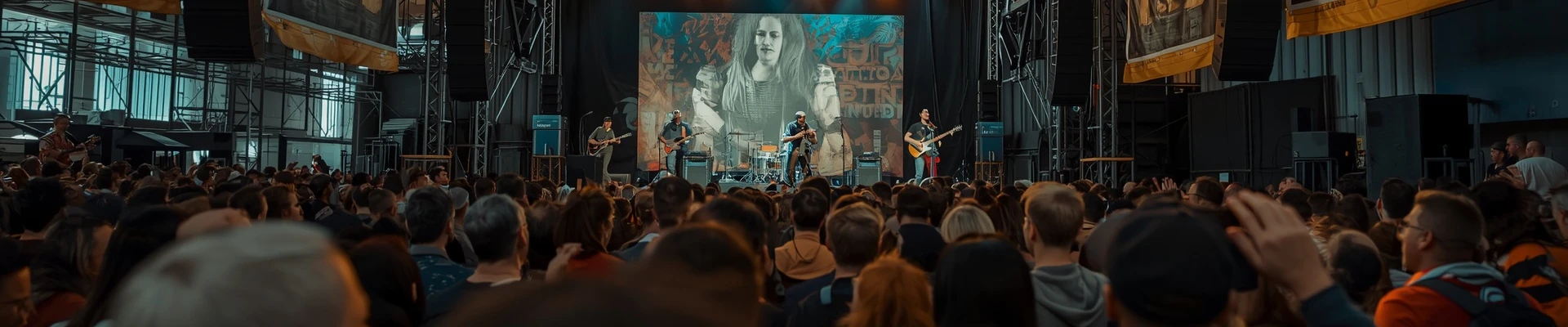
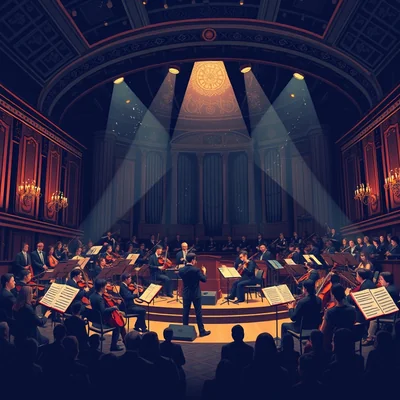
The city's own live-music infrastructure has been modest but continuous. The Vacaville Performing Arts Theatre (now the Vacaville Performing Arts Center — seating approximately 600), operated by the Vacaville Unified School District, serves as the city's primary formal performance venue, hosting school productions, community theatre, and occasional touring acts. A rotation of bars and taverns along Monte Vista Avenue, Merchant Street in the old downtown, and the strip-commercial corridors have hosted local rock, country, and cover bands through the decades — Aviator's Bar and Grill (near Travis AFB, with a clientele heavy on military personnel), Fuel 44 (a sports bar with live music programming), and a handful of similar establishments provide the informal backbone of the local circuit.
The city's country music tradition is genuine and deep-rooted. The agricultural and military population, combined with Central Valley cultural currents that flow west along I-80, makes Vacaville solidly country-and-classic-rock territory. Honky-tonk bars, line-dancing events, and country cover bands have long been part of the local entertainment calendar. The Filipino-American community — substantial in Vacaville, as in much of the Bay Area corridor that borders military installations — has sustained its own karaoke culture, OPM (Original Pilipino Music) events, and community entertainment circuits. The Hispanic/Latino community, concentrated in parts of south and east Vacaville, sustains norteño, cumbia, and regional Mexican music through quinceañeras, family gatherings, and occasional restaurant and club programming.
Travis AFB itself contributes to the music life of the area through Morale, Welfare, and Recreation (MWR) programming — concerts, talent shows, and entertainment events for military personnel that occasionally reach the broader Vacaville community. The base's rotating population has also introduced musical genres and artists from across the country to the local scene, making Vacaville's musical tastes broadly eclectic in the way that military-adjacent communities often are.
As a highway city on a corridor where major tours move between the Bay Area and Sacramento, Vacaville occasionally benefits from touring stops — acoustic shows, smaller-scale touring acts testing California routing — but the nearest large venues are in Sacramento (Golden 1 Center, Aftershock Festival at Discovery Park) or the Bay Area (Chase Center, Shoreline Amphitheatre, the East Bay club ecosystem), and most Vacaville music fans drive to those destinations for major shows rather than waiting for arena-scale concerts to materialize locally.
Venues and neighborhoods
The performing-arts anchor is the Vacaville Performing Arts Center, an approximately 600-seat theatre near downtown that serves as the closest thing the city has to a dedicated music venue. Andrews Park in the heart of downtown has hosted summer concerts and community events — the city's Concerts in the Park series brings free outdoor music to residents during warmer months. The Vacaville Premium Outlets vicinity, while primarily retail, anchors a commercial zone that includes restaurants with occasional live-music programming.
The old downtown core along Merchant Street and Monte Vista Avenue contains a handful of bars and small restaurants with live music, most programming local and regional cover acts on weekends. North Vacaville and the commercial corridors along Nut Tree Road and Peabody Road contain the city's larger hospitality establishments. The neighborhoods nearest Travis AFB's influence — south Vacaville and the communities closest to Fairfield — have a denser concentration of bars oriented toward military personnel and their families.
Festivals and signature events
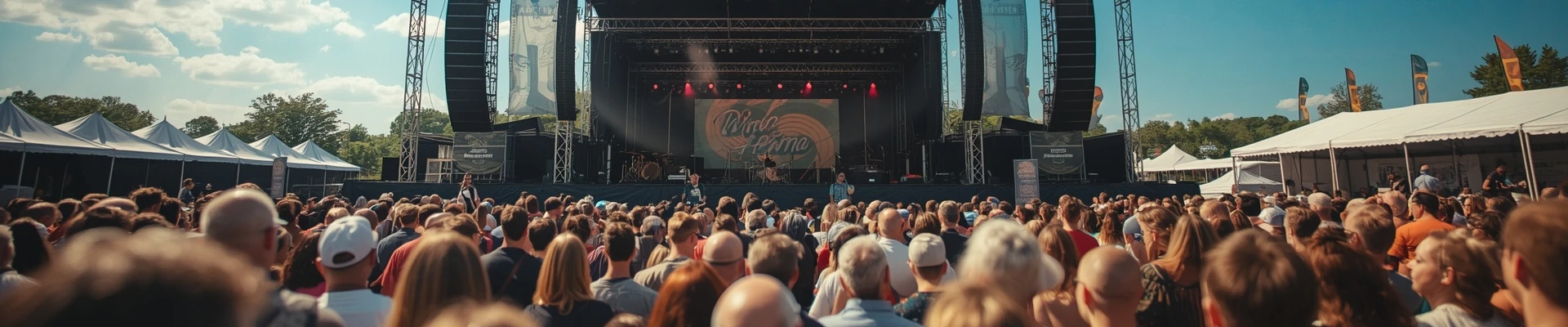
The city's signature annual event is Fiesta Days, a long-running summer festival that includes a parade, carnival, and outdoor entertainment with local bands and occasional touring regional acts. The Vacaville Museum programs cultural events tied to local history and the agricultural heritage of Solano County. Travis AFB's periodic air shows — large-attendance public events that include live entertainment alongside aviation displays — draw tens of thousands of visitors to the Fairfield-Vacaville area and represent some of the largest-attended public events in the region. The Nut Tree Holiday Nights event during the Christmas season draws families to the retail complex for outdoor programming.
The California State Fair in Sacramento (roughly 50 kilometres away) functions as a regional festival anchor for Vacaville residents, with its outdoor concert series drawing significant Bay Area and Sacramento acts each summer. Closer to home, the Solano County Fair in Vallejo programs a modest concert series alongside its traditional county-fair attractions.
What ties it all together
Vacaville's musical character is the character of a transit city — a place defined by movement, by the constant passage of people, goods, and culture between two of the most musically fertile regions in America. The Sacramento Valley punk and rock tradition, the East Bay DIY ethic, the country and norteño sounds of Central California, the OPM and karaoke culture of the Filipino-American military community, and the working-class bar-band tradition of highway America all converge on this stretch of I-80, creating a musical environment that is less a scene than a crossroads. What Vacaville lacks in density and institutional infrastructure it compensates with genuine community: the summer concerts in Andrews Park, the honky-tonk bars near Travis, the quinceañera cumbia, the Filipino community hall karaoke, the downtown bar where a local rock band has been playing Friday nights for fifteen years. That is the sound of Vacaville — not famous, not mythologized, but continuous.