
Geography and framing
Aurora sprawls east from Denver across the High Plains, a city of roughly 360,000 that occupies pieces of Arapahoe, Adams, and Douglas counties and covers more land area than Denver itself. The terrain is flat to gently rolling, climbing slowly toward the Palmer Divide in the south, with the Front Range rising as a serrated wall on the western horizon. Cherry Creek slices through the southern half on its way to its reservoir, and the Plains Conservation Center preserves a slice of the shortgrass prairie the city was built on. Aurora's elevation hovers around 5,400 feet — high enough for the dry, thin air and bluebird winter days that define the Front Range, low enough to escape the snowpack of the foothills.
The economy runs on three big engines. Buckley Space Force Base anchors the east side and brings a steady population of military families, contractors, and intelligence workers. The Anschutz Medical Campus — University of Colorado Hospital, Children's Hospital Colorado, the VA, and the CU School of Medicine — is one of the largest health-sciences campuses in North America and the city's largest civilian employer. Denver International Airport sits just over the northern line and feeds aviation, logistics, and hospitality jobs throughout the city. Add a long string of aerospace and defense contractors along the I-225 corridor and you have a workforce that skews technical, transient, and globally connected.
What makes Aurora distinct from its larger neighbor, though, is the people. Aurora is one of the most diverse cities in the United States — more than 160 languages are spoken in its public schools, and the East Colfax corridor between Yosemite and Peoria streets has become the de facto cultural main street for Ethiopian, Eritrean, Somali, Burmese, Bhutanese, Nepali, Vietnamese, Korean, and Mexican immigrant communities. The city's restaurants, grocery stores, places of worship, and social clubs reflect that mosaic, and so — quietly, often outside the view of the Denver music press — does its music.
History
The land was Cheyenne and Arapaho territory before treaties and broken treaties pushed Indigenous peoples south and east. Anglo-American settlement began in the 1880s when a businessman named Donald Fletcher platted a town on the prairie east of Denver and named it after himself. Fletcher went bankrupt in the silver crash of 1893 and the residents — left holding worthless bonds — voted in 1907 to rename the place Aurora, after the Roman goddess of dawn.
For its first half-century Aurora was a sleepy farming and railroad-siding town overshadowed by Denver. The transformation came with World War II and the establishment of Fitzsimons Army Hospital (now the Anschutz campus) and Lowry Air Force Base nearby, followed by Buckley Field (originally a bombardier-training school, now a Space Force base). Returning veterans and their families filled new subdivisions in the 1950s and 60s, and the population exploded from 11,000 in 1950 to over 158,000 by 1980. Annexation east toward the airport in the 1980s and 90s gave the city its current sprawling footprint.
The 2000s and 2010s brought waves of refugee resettlement — the official refugee-resettlement agencies route arrivals from East Africa, South Asia, and Southeast Asia to Aurora because of affordable housing, transit access along Colfax, and an existing immigrant infrastructure. The city was thrust into national headlines in July 2012 when a gunman opened fire at a midnight screening of The Dark Knight Rises at the Century 16 theater, killing twelve and wounding seventy. The community's long, careful response to that tragedy — including the 7/20 Memorial in the Aurora Municipal Center reflecting garden — shaped a generation of civic life.
Music identity
Aurora doesn't have a "sound" in the way Bakersfield or Tulsa or Seattle do — and any honest writeup has to start with that admission. For most of its history Aurora's musicians have either commuted west into Denver's clubs and recording rooms or worked within their own community circuits without much crossover. But the picture has shifted in the last fifteen years, and the most interesting story now is the layered immigrant-and-diaspora music ecosystem that operates almost entirely along East Colfax and in the East Iliff and Havana Street corridors.
The Ethiopian and Eritrean community is the largest single immigrant group, and Aurora hosts one of the densest concentrations of Habesha restaurants, cafes, and event halls in the country. Wedding bands and azmari-style singers playing krar and masenqo are a regular weekend fixture at venues like the Nile Ethiopian Restaurant and at rented ballrooms along Havana. Touring Ethiopian pop stars from Addis Ababa and from the Washington, D.C. diaspora regularly route through Aurora; the audience is large enough to fill a thousand-seat hall and loyal enough to fly artists in for a single night.
The Korean community is the second long-standing pillar — Aurora's H Mart at Havana and Mississippi anchors a stretch of karaoke rooms (noraebang), Korean churches with extensive worship-band programs, and a steady pipeline of Korean Christian music. The Vietnamese community along South Federal extends into west Aurora and supports a circuit of bolero singers and Paris by Night-style variety shows.
More recent arrivals from Burma (the Karen, Karenni, and Chin communities), Nepal, Bhutan, Somalia, and Afghanistan have brought their own traditions — Karen church choirs are particularly developed, and you can hear Nepali lok dohori sessions at private events along Iliff. None of this music shows up on Denver alt-weekly listings, but it is the city's actual musical bedrock.
The mainstream/American side of Aurora's music identity has historically been military-base culture — country radio, classic rock, the cover-band ecosystem that surrounds any large base — and a hip-hop and R&B scene that overlaps heavily with Denver's east-side and Montbello scenes. Aurora-raised rappers like Trev Rich (signed briefly to Cash Money) and A.G. Cubano have repped the city in their lyrics, and the Original Aurorans crew of producers and MCs has put out a steady stream of mixtapes documenting east-side life. The city has also produced metal and hardcore bands working out of practice spaces along the I-225 industrial strip, most of whom play Denver venues like the Marquis or the Hi-Dive when they tour.
Venues and neighborhoods
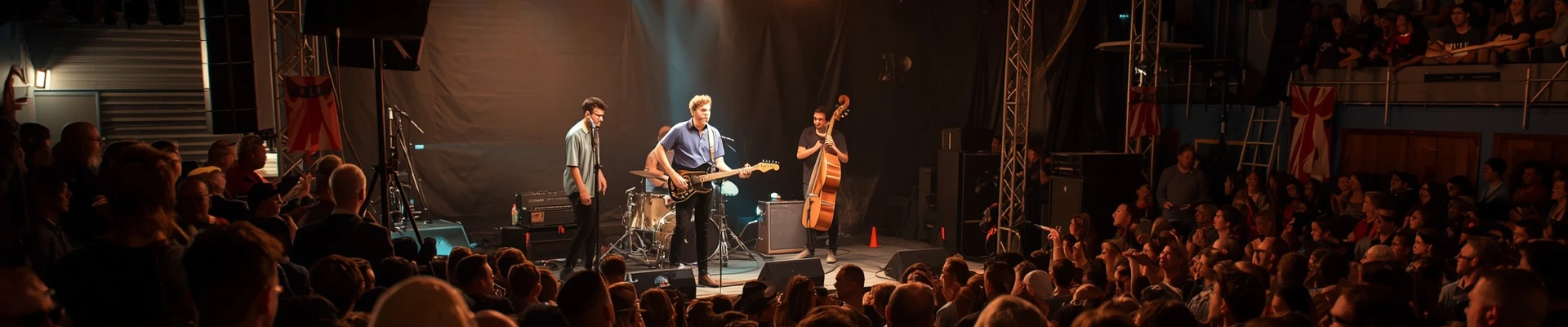
Aurora has historically lacked a flagship music venue of its own — Denver's Mission Ballroom, Ogden, Bluebird, and Red Rocks are all a short drive west, and most Aurora-based artists treat those as their home rooms. The city's own venue ecosystem skews toward multi-purpose halls and restaurant stages.
The Aurora Fox Arts Center on East Colfax is the city's flagship performing-arts venue — a restored 1946 movie house that hosts theater, cabaret, and singer-songwriter shows in a 245-seat room. The Vintage Theatre on East 17th Avenue is another renovated movie house with a cabaret-style music programming arm. Stampede, a massive country dance hall on East Virginia Avenue, has been a Front Range destination for line-dancing, two-stepping, and country touring acts for decades. Stanley Marketplace, the converted aviation factory on the Aurora-Stapleton line, programs a steady stream of local acoustic and Americana acts in its food-hall space and hosts the popular Stanley Beer Hall music nights.
For the immigrant and diaspora scenes, the venues are mostly community halls, rented ballrooms, and restaurants: the Ethiopian Community Center, the Karen Organization of Colorado's gathering spaces, several Nepali and Bhutanese cultural associations along Iliff, and a long list of Korean churches whose worship teams function as semi-professional bands. The Aurora Hills Community Center and the Moorhead Recreation Center host community festivals that bring these scenes into public view.
Neighborhoods to know: Original Aurora (the historic core north of Colfax), Del Mar Park and Hoffman Heights (post-war neighborhoods with strong Latino and Vietnamese populations), Centretech (the south-Aurora cluster around the community college and the Anschutz campus), Saddle Rock and Tallyn's Reach (the affluent southeast), and Green Valley Ranch (technically Denver but functionally part of east Aurora's cultural orbit).
Festivals and signature events
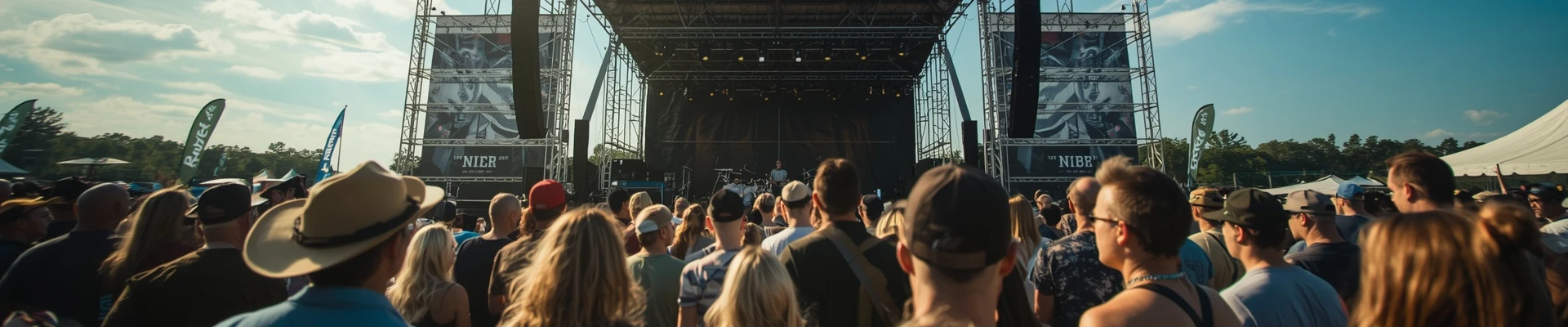
The city's biggest annual event is the Global Fest, held each summer at the Aurora Municipal Center, which leans hard into the city's diversity with food, dance troupes, and music from dozens of immigrant communities on multiple stages. The KidSpree festival is a long-running family event with national touring kids' acts. The Punkin Chunkin and Hammond's Candy Cane Festival anchor the fall and winter calendars but are more food-and-craft than music-driven.
The Stanley Marketplace programs an annual summer concert series in its outdoor courtyard, and Stampede hosts country music festivals tied to the National Western Stock Show season. The Ethiopian community's Enkutatash (New Year, in September) and Meskel (in late September) celebrations bring large public concerts to community halls along Havana, and the Tet celebrations along South Federal pull thousands.
Aurora is also the gateway to the Denver-area summer concert circuit — Red Rocks Amphitheatre is a thirty-minute drive west, Fiddler's Green Amphitheatre sits just south in Greenwood Village, and the National Western Complex is just over the line in Denver — meaning Aurora residents have access to one of the densest summer touring markets in the West without ever programming a major outdoor venue inside city limits.
What ties it all together
Aurora's musical signature is layered coexistence — a city where a Karen church choir, a Habesha wedding band, an Anschutz med student's indie folk project, an east-side rap cypher, and a Stampede line-dance lesson can all be happening on the same Friday night within a few miles of each other, and almost none of those scenes know the others exist. The city is too big and too new and too fast-growing to have congealed into a single sound, and the most honest framing is to say that Aurora is a federation of musical communities held together by Colfax, by Havana Street, by Buckley, and by the long sightline to the Front Range. The story that's still being written is whether the next generation — the kids being raised tri-lingual in Aurora's public schools, who grew up on TikTok rather than community radio — will be the ones who finally fuse those scenes into something the rest of Colorado has to reckon with.