
Boulder sits at the base of the Rocky Mountain Front Range, 51 kilometres northwest of Denver at an elevation of 1,655 metres above sea level. The city proper is home to roughly 107,000 residents, though the broader Boulder Metropolitan Statistical Area pushes past 330,000 when surrounding communities such as Longmont, Louisville, and Lafayette are included. Boulder is unmistakably shaped by two dominant forces: the University of Colorado Boulder (CU Boulder), which enrolls around 37,000 students and drives a perpetual influx of young creative energy, and the city's strict land-use and open-space preservation policies, which have kept Boulder physically small, geographically compressed, and politically distinct from the sprawling suburban growth that defines the rest of the Denver metro. The Flatirons — the tilted sandstone slabs rising directly behind the city — are among the most photographed natural formations in Colorado, and the immediate access to hiking, climbing, trail running, and skiing within minutes of downtown has made Boulder a magnet for athletes, scientists, writers, and musicians drawn to the compressed intensity of a city that genuinely runs out of room to grow. Economically, Boulder clusters around biotechnology, aerospace, software, environmental science, and federal research agencies — NIST, NOAA, NCAR, USGS, and the National Center for Atmospheric Research all maintain major campuses in or near the city. The result is a city that punches far above its population weight in per-capita income, education levels, and cultural output — including music.
A brief history
The land at the base of the Flatirons was Southern Arapaho territory — the region the Arapaho called Niiniinoowu — before Anglo-American gold rush prospectors arrived in 1858. The town of Boulder City was platted in 1859 as a supply point for the mountain mining camps, and it was incorporated in 1871. The University of Colorado was established in Boulder in 1876, the same year Colorado achieved statehood, a founding pairing that permanently linked Boulder's identity to higher education. The silver and gold economy brought short booms and longer busts; by the turn of the 20th century Boulder had settled into a modest university-and-agriculture town rhythm. The post-WWII federal investment in research infrastructure — particularly the siting of major scientific agencies along the Foothills Parkway corridor — seeded the technology and research economy that defines modern Boulder. The arrival of the 1960s counterculture hit Boulder with unusual force: the city became a refuge for musicians, writers, poets, and seekers of all kinds, and that countercultural imprint — left-libertarian, environmentalist, experimentalist — has shaped the city's music and arts character ever since. Naropa University, founded in Boulder in 1974 by the Tibetan Buddhist teacher Chögyam Trungpa Rinpoche and closely associated with Beat poets including Allen Ginsberg, became an international arts and contemplative education centre that further magnetised creative figures to the city.
Music identity
Boulder's most internationally consequential musical contribution is its role in the American folk revival and the fertile tradition of acoustic, roots, and jam-band music that grew out of it. The city's music identity has always been shaped by its geography and its student population — high altitude, outdoor culture, and a captive young audience have produced a scene that prizes improvisation, acoustic authenticity, and communal live performance over polished commercial pop.
The gravitational centre of Boulder's music history is Macky Auditorium at CU Boulder and the surrounding campus performance culture, but the commercial scenes that matter most trace back to Pearl Street Mall — the pedestrianised downtown spine lined with independent restaurants, shops, and music venues. The folk and roots tradition runs from the early 1960s through the present: Boulder was a stop on the folk revival circuit, and local coffeehouses and small venues hosted a continuous string of singer-songwriters and acoustic bands that fed directly into the 1970s country-rock and Americana currents. Judy Collins, who grew up partly in Denver and Boulder, emerged from this tradition. Tim Curry — not the actor, but the broader folk-circuit culture — and a string of now-forgotten but locally beloved acoustic performers built the template for what Boulder's music would become.
The jam-band tradition is Boulder's most distinctive and nationally recognized musical identity. String Cheese Incident, formed in Crested Butte but Boulder-based through their entire rise to national prominence in the 1990s, brought together bluegrass, funk, electronic music, and improvisation in a way that became the template for the so-called Colorado Sound — a mountain-influenced approach to extended live performance that placed the in-the-room experience above the studio recording. Leftover Salmon, formed in Boulder and named after the town of Salmon, Idaho (and a deliberate play on the Salmon, Idaho geography of the band's origins in the Colorado bluegrass scene), pioneered what they called Polyethnic Cajun Slamgrass — a wildly eclectic collision of bluegrass, zydeco, punk energy, and mountain-town irreverence that became foundational to the Boulder scene. The Samples, a reggae-inflected college-rock band formed at CU Boulder in 1987, built a devoted national following through relentless touring and word-of-mouth before digital music changed the model. Hazel Miller (the R&B and soul vocalist known as "The Queen of the Boulder Music Scene") has anchored the live music ecosystem for three decades. Gregory Alan Isakov, the South African-born, Boulder-based singer-songwriter, has become one of the most internationally recognized indie-folk voices of the 2000s and 2010s — his pastoral, introspective sound, deeply coloured by the Colorado landscape, is among the most direct expressions of Boulder's acoustic identity. Nathaniel Rateliff grew up in rural Missouri but developed his sound in the Denver-Boulder orbit and remains closely associated with the Colorado music community. Firefall, the Colorado-based soft-rock and country-rock group, formed in Boulder in the mid-1970s and scored national radio hits before the genre faded; keyboardist Mark Andes had previously played with Spirit and Heart.
Boulder's electronic music scene — driven by CU Boulder students and the city's festival culture — has produced a string of artists in the psytrance, downtempo, and bass music traditions. Pretty Lights (Derek Vincent Smith), though formed in Fort Collins, built his national profile partly through the Denver-Boulder festival corridor. STS9 (Sound Tribe Sector 9) have a deep Boulder following and have headlined the city's festivals repeatedly. The city's electronic scene runs through dedicated nights at venues such as The Fox Theatre, which has been one of the most important mid-size music venues in Colorado since 1992.
The classical and contemporary classical tradition at CU Boulder is substantial — the College of Music has graduated nationally prominent composers, performers, and conductors, and the Colorado Music Festival brings world-class orchestral programming to the Chautauqua Auditorium each summer.
Venues and neighborhoods
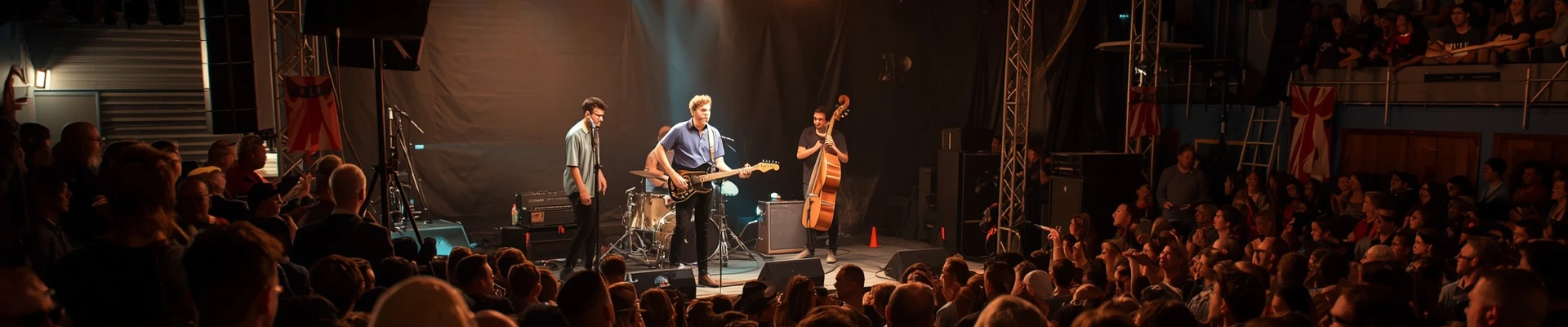
Pearl Street Mall is Boulder's cultural and commercial spine — a pedestrianised strip from 11th to 15th Streets that anchors the downtown entertainment ecosystem. The Fox Theatre (capacity approximately 625), on 13th Street just off The Hill (the student neighbourhood adjacent to CU Boulder), is the city's flagship independent music venue and has hosted virtually every mid-size touring act that routes through Colorado for three decades — from Phish side projects to Ween to Tedeschi Trucks Band to Gogol Bordello. The Boulder Theater (capacity approximately 1,000), a 1906-vintage cinema converted to a concert venue on 14th Street, programs a broader range of touring acts and local showcases. Chautauqua Auditorium (capacity approximately 1,300), the 1898 wooden amphitheatre on the south edge of town at the base of the Flatirons, is one of the most beautiful outdoor-adjacent music venues in Colorado and hosts the Colorado Music Festival classical series alongside roots, folk, and Americana programming through summer. Macky Auditorium at CU Boulder (capacity approximately 2,000) handles large-venue campus events and touring orchestral and classical acts. eTown Hall — the recording studio and performance space behind the long-running environmental music and culture radio show eTown, hosted by Nick Forster of Hot Rize — has been an intimate home for acoustic and roots performances since 1991.
The Hill neighbourhood (University Hill, the commercial strip around 13th Street and College Avenue adjacent to CU Boulder) has historically been Boulder's most active small-venue zone, anchored by student bars, coffee shops, and the Fox. Downtown Boulder along Pearl Street hosts restaurants with live music programming, the Boulder Farmer's Market (which programs local musicians through the summer), and the dense pedestrian traffic that sustains a year-round street performance culture.
Festivals and signature events
Bohemian Nights at NewWestFest (August) is Fort Collins-based but draws Boulder participation; Boulder's own equivalent anchor is the Colorado Music Festival at Chautauqua (June–July), which runs a full orchestral season under international guest conductors. Arise Music Festival (Loveland, but drawing heavily from the Boulder-Denver corridor) programs jam, roots, and electronic music at the Sunrise Ranch amphitheatre. Arise and Sonic Bloom (a Colorado psychedelic and electronic music festival) function as the signature summer festival events for the Boulder-oriented jam and electronic community. Rocky Mountain Folks Festival at Planet Bluegrass in Lyons — just 24 kilometres north of Boulder — is one of the most important acoustic-music festivals in the American West and has been running since 1993, programming national folk, bluegrass, and Americana headliners alongside Colorado originals. Planet Bluegrass also hosts RockyGrass (the pure bluegrass festival in Lyons) in late July, which is deeply woven into the Boulder-area music calendar. Bolder BOULDER (the Memorial Day 10K road race), while primarily a running event, programs live music at every mile marker and has a cultural footprint far beyond its sport. The CU Concert Hall and Glenn Miller Ballroom at CU Boulder program student, faculty, and guest performances across the academic year. eTown records live tapings at eTown Hall that function as a de facto intimate concert series through the year.
Boulder's music economy benefits enormously from its proximity to Denver (51 km south), which provides arena-scale infrastructure — the Ball Arena, Fiddler's Green Amphitheatre, Red Rocks Amphitheatre (the Morrison, Colorado outdoor amphitheatre that is arguably the most iconic concert venue in the United States) — within comfortable driving distance. Boulder music fans regularly make the run to Red Rocks for summer headline shows while returning to the Pearl Street and CU orbit for the small-to-mid-size touring and local acts that define the city's daily music life.
What ties it all together
Boulder's defining musical signature is the acoustic, improvisational, and communally engaged — a scene that grew organically from the folk revival, was supercharged by the counterculture, was sustained by three decades of university students and outdoor-culture migrants, and has produced in String Cheese Incident, Leftover Salmon, and Gregory Alan Isakov three genuinely nationally recognized voices that sound exactly like the landscape they emerged from: spacious, unhurried, technically accomplished, and relentlessly committed to the live experience over the polished product. The city is too small and too expensive to build the kind of sprawling multi-genre scene that Denver hosts, but its concentration — 107,000 people, two flagship venues, a world-class auditorium at the base of the Flatirons, and a university that never stops producing new audiences — gives it a musical density and consistency that cities three times its size rarely achieve. In Boulder, the mountains are always visible, the open space ordinances keep the city from eating itself, and the music reflects both: tight, contained, and reaching for something genuinely elevated.