

Centennial is a city in Arapahoe County, Colorado, incorporated on February 7, 2001 — making it one of the youngest cities in the United States and at the time of its incorporation the largest newly incorporated city in American history, with roughly 100,000 residents from day one. Situated in the South Denver Metro corridor approximately 24 kilometres south of downtown Denver and 13 kilometres southeast of Englewood, Centennial sprawls across a largely flat High Plains terrain at roughly 1,840 metres of elevation, in the rain shadow of the Front Range of the Rocky Mountains. The city is bounded by Greenwood Village to the northwest, Littleton to the west, Parker to the southeast, Aurora to the northeast, and Lone Tree to the south. The South Suburban and Arapahoe County jurisdictions that Centennial absorbed upon incorporation included long-established unincorporated communities such as Castlewood, Foxridge, and Willow Creek that had grown rapidly during the post-World War II suburban expansion of the Denver metro.
With a population of approximately 110,000 and a median household income well above the national median, Centennial ranks among the most affluent mid-size cities in Colorado. Its economy is anchored by the corporate presence of major employers — Comcast Business, DXC Technology, DigitalBridge, and dozens of technology, finance, and energy sector firms with regional offices in the Centennial Center Park and surrounding commercial corridors. The city is home to the Arapahoe County Fair and the Arapahoe Park horse racing track. Centennial is the county seat of Arapahoe County in all but formal designation — the county administration sits here even though Littleton is the technical seat — and the Arapahoe County Courthouse complex anchors the civic centre.
A brief history
The land that is now Centennial was ancestral territory of the Arapaho and Cheyenne peoples, for whom the broader Denver region was seasonal hunting ground and a node in the vast Great Plains trade network. The 1864 Sand Creek Massacre — the destruction of a peaceful Cheyenne and Arapaho encampment at Sand Creek, approximately 160 kilometres to the southeast — reverberates through the history of this land. Euro-American settlement of the area south of Denver accelerated in the 1870s and 1880s as agricultural homesteads were established across the High Plains, and Arapahoe County was organized in 1864 as one of the original counties of Colorado Territory.
The post-World War II era transformed the area dramatically. As Denver expanded southward through the 1950s and 1960s, unincorporated residential subdivisions proliferated across what is now Centennial — Cherry Hills developments, the growth of Englewood and Littleton, and the construction of I-25 and later E-470 (the eastern beltway) drove suburban expansion. By the 1990s the area held over 100,000 residents in unincorporated Arapahoe County territory, creating a de facto city without formal government. Incorporation efforts had been attempted and defeated in previous decades, but a November 2000 ballot measure passed — and on February 7, 2001, Centennial was incorporated. It was named after Colorado's history as the "Centennial State," admitted to the Union in 1876, the centennial year of American independence.
The early 2000s and 2010s saw Centennial build its civic infrastructure from scratch — city hall, public works, parks and recreation, and the transition from county services. The Streets at SouthGlenn (the city's major mixed-use retail and entertainment district, opened 2009 on the former SouthGlenn Mall site) became the city's de facto downtown and social centre. The Centennial Center Park attracted major corporate tenants. By the 2010s Centennial had stabilized as one of Colorado's most financially sound municipalities — low crime, strong tax base, good schools (served by Littleton Public Schools and Cherry Creek School District), and high quality-of-life metrics.
Music identity
Centennial's music identity is inseparable from its status as a prosperous suburban city on Denver's southern fringe. The city does not have a home-grown distinct music scene in the sense that Denver, Fort Collins, or Boulder do — it lacks the density, the university energy, and the historic bohemian corridors that generate original scenes. What it has instead is a population with strong disposable income and robust demand for live music, which it largely satisfies by accessing the broader Denver metro music infrastructure while hosting its own community-scale events.
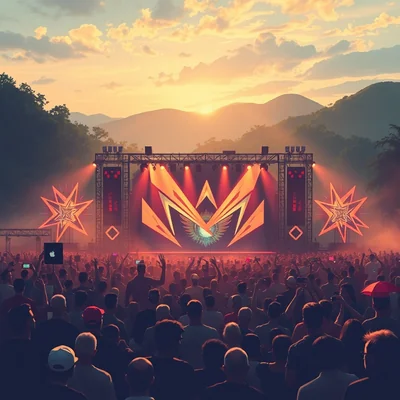
The most important musical geography in Centennial's vicinity is the Fiddler's Green Amphitheatre — an outdoor amphitheatre in the neighbouring city of Greenwood Village that sits just inside what most maps show as the Centennial urban area. With a capacity of approximately 18,000 (7,500 fixed seats plus lawn), Fiddler's Green is one of the primary mid-to-large touring concert venues in the Denver metro and the Rocky Mountain region. It has hosted virtually every major touring act that plays Denver without needing arena scale — Dave Matthews Band, Phish, Widespread Panic, Bob Dylan, Radiohead, Foo Fighters, Alanis Morissette, Tom Petty, Pearl Jam, Red Hot Chili Peppers, James Taylor, Garth Brooks, Kenny Chesney, Zac Brown Band, Widespread Panic, and hundreds more across its decades of operation. For Centennial residents, Fiddler's Green is effectively the local major venue — it's closer to most Centennial neighborhoods than downtown Denver's Ball Arena or Red Rocks Amphitheatre in Morrison, and it anchors the summer concert calendar.
Centennial itself has produced a handful of musicians of note. OneRepublic — the pop-rock band led by Ryan Tedder — has its roots in the Centennial-Littleton area; Tedder grew up in the South Denver suburbs and attended Arapahoe High School in Centennial before moving to Nashville and then Los Angeles to launch one of the most commercially successful songwriting careers of the 2000s and 2010s. Tedder has written or co-written hits for Beyoncé, Adele, Taylor Swift, Leona Lewis, Timbaland, Ellie Goulding, and dozens of other artists, making Arapahoe High School arguably one of the most consequential suburban Colorado music alumni institutions in the country. OneRepublic's debut album Dreaming Out Loud (2007) and its signature song "Apologize" brought the band to global prominence, and the group's subsequent output — Waking Up (2009), Native (2013), Oh My My (2016) — has made them one of the best-selling acts of the streaming era.
The broader South Denver suburban corridor has connections to other Colorado music figures. The Fray — the piano-rock band whose 2005 song "How to Save a Life" became one of the defining songs of the mid-2000s — formed in Denver but drew from the broader metro, including south suburban communities. Nathaniel Rateliff & the Night Sweats are based in Denver and perform regularly at venues accessible to Centennial residents. The Colorado Symphony performs at Boettcher Concert Hall in Denver's Performing Arts Complex, and the south suburbs have a strong tradition of classical education through the Cherry Creek and Littleton school districts' acclaimed music programs.
The Cherry Creek School District — which serves much of Centennial — has a nationally recognized music education tradition. Cherry Creek High School, Arapahoe High School, and Grandview High School produce consistently strong band, orchestra, and choir programs that have sent musicians to conservatories and university music programs across the country. The south suburban classical and ensemble tradition is real if unglamorous.
Centennial's demographic profile skews toward affluent white professionals with significant representation from the technology, finance, and healthcare sectors, and the music culture reflects this — strong demand for classic rock, country, Americana, folk-adjacent singer-songwriter, and family-friendly pop. There are smaller communities including a growing South Asian professional community, particularly in the tech corridor, that sustain South Asian cultural events through community centres in neighbouring Aurora and Littleton.
Venues and neighborhoods
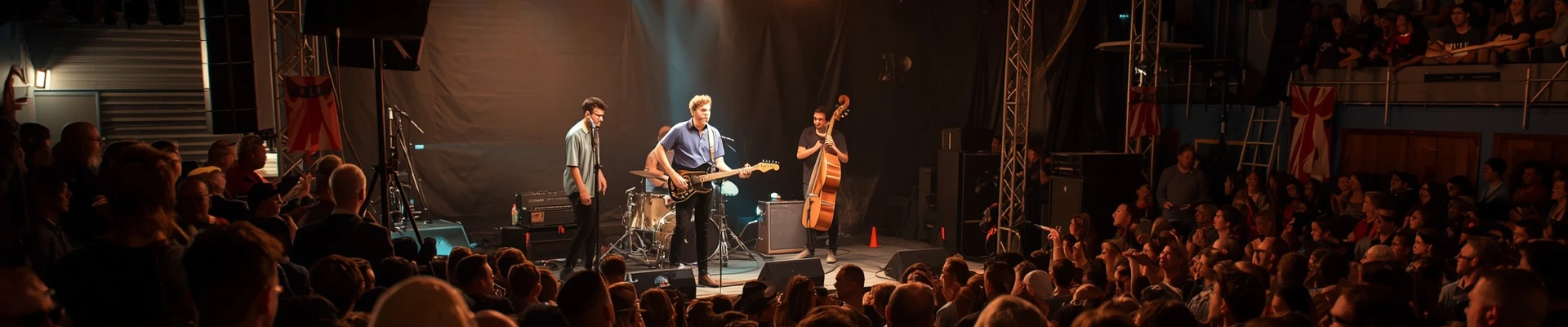
Centennial's internal venue infrastructure is modest. The Streets at SouthGlenn hosts outdoor concerts, festivals, and community events on its plaza and at its handful of bars and restaurants with live music programming. Lone Tree Arts Center — technically in neighbouring Lone Tree but easily accessible to Centennial's southern neighborhoods — is a 2,000-seat performing arts centre that hosts touring Broadway productions, comedy, classical ensembles, and mid-size pop and folk acts. Centennial Center Park hosts outdoor corporate events and community concerts. A network of bars and restaurants across the city — including areas along Arapahoe Road and Yosemite Street — provide small-scale live music on weekends.
The dominant venue geography for Centennial residents is external. Fiddler's Green Amphitheatre (Greenwood Village, ~5 km from central Centennial), Red Rocks Amphitheatre (Morrison, ~35 km west — the most beloved outdoor amphitheatre in America), Ball Arena (Denver, ~24 km north — home to the Nuggets, Avalanche, and major arena tours), Empower Field at Mile High (Denver, ~27 km northwest — for stadium concerts), Mission Ballroom (Denver, ~25 km north — the 3,900-capacity all-ages venue that has become Denver's premier mid-size concert hall), The Ogden (Denver, ~25 km north — a 1,600-capacity historic theatre), and Gothic Theatre (Englewood, ~15 km northwest — an intimate 1,000-capacity room) all sit within easy driving distance. Centennial's music life flows outward to these nodes.
Festivals and signature events
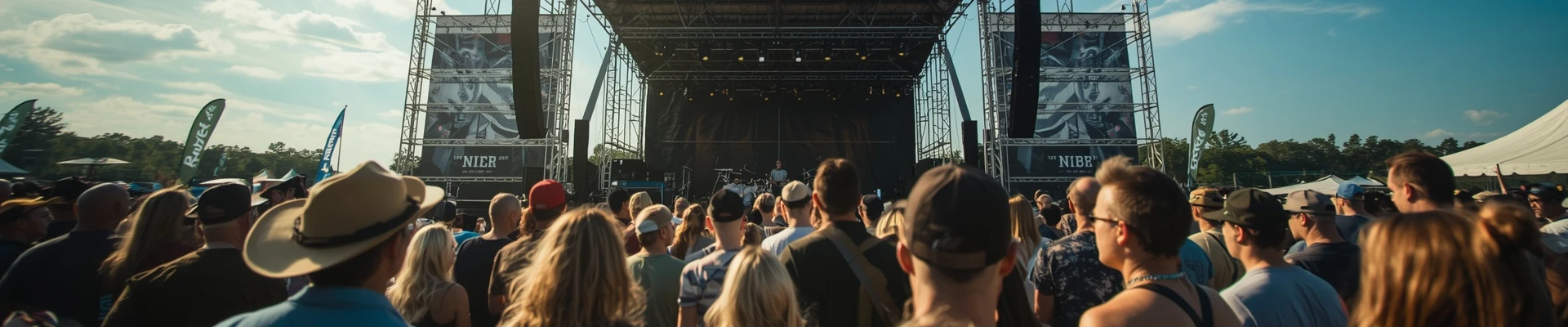
Centennial's own festival calendar is community-scaled. The Centennial Fall Festival on the Streets at SouthGlenn plaza programs local and regional bands. The Arapahoe County Fair (held at the Arapahoe County Fairgrounds in Centennial) includes country and roots music programming alongside 4-H exhibits, rodeo events, and carnival rides — it is one of the largest county fairs in Colorado and draws significant attendance from across the South Metro area. The SouthGlenn Summer Concert Series programs free outdoor concerts on the Streets at SouthGlenn plaza through the summer months. The Centennial Center Park Summer Events series brings family-friendly music to the corporate park's outdoor spaces.
For festival-scale music, Centennial residents access the Denver metro circuit: Underground Music Showcase (Denver's annual South Broadway indie music marathon), Jazz in the Park (Stapleton), Denver Botanic Gardens Summer Concert Series, Fiddler's Green summer programming, and Red Rocks season shows — all are within comfortable driving range.
What ties it all together
Centennial is not a city that invented a sound or launched a movement — it is a city that educated musicians, supported their ambitions, and sent them outward. Ryan Tedder's trajectory from Arapahoe High School to global hitmaker is the clearest expression of what Centennial contributes to music: excellent schools, comfortable suburban stability, and enough ambition to push toward larger stages. The city's residents, meanwhile, are among the most active concert-going audiences in the Denver metro, feeding the south suburban demand that keeps Fiddler's Green viable as a major touring venue and that fills the south-side bars and theatres with weekend live music. Centennial is a city where the music happens nearby — at Red Rocks at sunset, at Fiddler's Green on a July evening, at the Mission Ballroom on a Friday night — and where the musicians who grew up here often had to leave to make their biggest mark. That is an honest description of most suburban cities, and Centennial wears it without apology.