
Greeley is the largest city in Weld County and the seat of county government, sitting on the High Plains of northern Colorado at an elevation of roughly 1,433 metres — about 80 kilometres north of Denver and 65 kilometres east of the Rocky Mountain foothills that anchor the western edge of the Great Plains. With a population approaching 109,000, it is the eleventh-largest city in Colorado and the commercial and educational hub of a large agricultural county that stretches from the South Platte River corridor to the Wyoming border. The city is oriented around University of Northern Colorado (UNC, roughly 12,000 students), one of the few state universities in the American West with a dedicated music conservatory and music education tradition — and around a beef and cattle industry that makes Weld County one of the largest agricultural-producing counties in the United States by dollar value, driven by the massive JBS USA (formerly Monfort) beef processing plant on the eastern edge of the city, which at peak is one of the largest beef-processing operations in North America. Greeley is also a major natural gas extraction hub: Weld County sits atop the Wattenberg Gas Field, one of the most productive natural gas plays in the country. The combination — university town, agricultural processing capital, energy extraction hub — gives Greeley a character that is simultaneously academic, blue-collar, and boom-and-bust in ways that shape its cultural life.
A brief history
The land along the Cache la Poudre River and the South Platte was Arapaho and Cheyenne territory before Anglo-American settlement. Greeley was founded in 1869 as Union Colony, one of the most ambitious utopian agricultural cooperative experiments in American history — organized by Nathan Meeker, the agricultural editor of Horace Greeley's New-York Tribune, and backed by Horace Greeley himself, who lent his name to the city. Union Colony attracted temperance-committed settlers from the East who established cooperative irrigation ditches, planted orchards, and built a community explicitly modelled on cooperative principles and moral reform. The temperance tradition ran so deep that Greeley was legally dry until 1969 — exactly 100 years after the colony's founding — a fact that shaped the city's entertainment culture for generations. The late 19th and early 20th centuries brought the University of Northern Colorado (founded as State Normal School in 1890, now a comprehensive research university), the sugar beet industry (which drew large waves of German-Russian, Mexican, and Japanese-American workers), and the construction of the irrigation infrastructure that made the South Platte corridor one of the most productive dryland-turned-irrigated agricultural zones in the West.
The Monfort Beef empire began in the 1930s when Warren Monfort began a cattle feedlot operation that grew into the largest beef-packing company in the United States by the 1960s. The Monfort plant — and its successor JBS USA — became the economic backbone of Greeley's working class. The post-World War II decades brought the cattle feeding boom, natural gas development, and UNC's growth. The 1970s and 1980s brought Greeley's first sustained downtown entertainment district alongside UNC's expansion. The late 20th century brought a massive surge in Latino immigration — both established Mexican-American families with roots in the sugar beet era and newer arrivals from Mexico and Central America — that has transformed Greeley into a city where roughly 40% of the population is Hispanic or Latino, the highest proportion of any mid-size Front Range city.
Music identity
Greeley's most nationally consequential musical contribution runs through University of Northern Colorado. UNC's School of Music has been producing jazz musicians, music educators, and composers for over a century, and it is home to one of the most important jazz programs in the Rocky Mountain West. The UNC Jazz Lab Bands have been recording and performing since the 1960s and have won DownBeat magazine's Student Music Award multiple times. UNC Jazz Press — the university's jazz publishing arm — has published big band arrangements and educational jazz materials distributed internationally. The university has trained generations of music educators who have spread into K-12 and college programs across the Mountain West. The University of Northern Colorado Symphony Orchestra, Wind Ensemble, A Cappella Choir, and Jazz Ensemble are the primary classical and jazz performance ensembles in the city.
The Greeley music scene has also produced and incubated artists across roots, country, and rock. Hazel Miller — the Denver-based R&B and soul singer who became one of the most beloved performers in Colorado — has deep connections to the northern Colorado region. The Front Range country and Americana scene runs through Greeley, with the High Plains agricultural culture sustaining a working country music circuit through bars, honky-tonks, and dance halls. Dan Seals (the country singer who scored a string of Number One country hits in the 1980s, one half of the England Dan & John Ford Coley duo) spent time in the region. Greeley has also been a stop on the touring circuit for Colorado country and Americana acts that move between Fort Collins (40 km northwest), Loveland (25 km west), and the broader Northern Colorado music ecosystem.
The city's Latin music scene is one of the most active in non-metro Colorado. The substantial Mexican-American and broader Latino community — built on sugar beet worker roots in the early 20th century and deepened by the JBS plant workforce over the past four decades — sustains a continuous norteño, banda, cumbia, and regional Mexican music circuit. Quinceañeras, community festivals, and a network of Latino-owned bars and restaurants along 8th Avenue and the broader east side maintain this scene with far greater depth than Greeley's overall size might suggest. Mexican Independence Day celebrations, Cinco de Mayo events, and the Fiestas Patrias are the annual anchors.
The city's evangelical Christian and church music community is substantial, reflecting the Northern Colorado religious character. Praise and worship bands, gospel choirs, and church-based music programs contribute to the performing ecosystem in ways that are often invisible to outside coverage but deeply embedded in local musical life.
Venues and neighborhoods
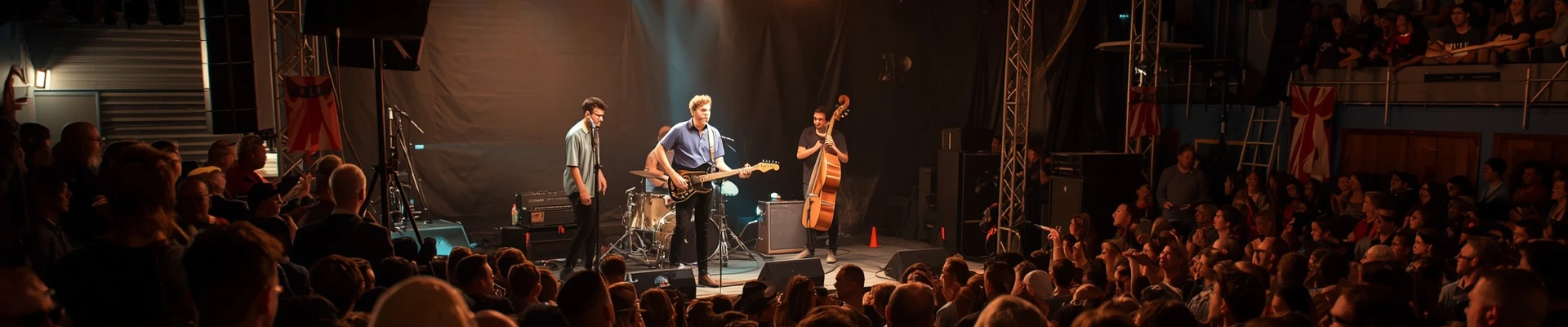
Greeley's venue landscape is modest but functional for a university and agricultural city of its size. The primary concert venue is the Union Colony Civic Center — a 1,700-seat performing arts centre in Downtown Greeley that hosts touring acts, UNC performances, Broadway touring productions, the Greeley Philharmonic Orchestra, and community events. The Monfort Concert Hall on the UNC campus is the primary academic music venue, seating roughly 600 and hosting the UNC School of Music's major ensembles throughout the academic year. The Greeley Stampede grounds host the signature outdoor festival events. Downtown Greeley's 9th Street and 8th Avenue corridors anchor the bar and live music club circuit — venues like Moxi Theater (a 420-capacity mid-size music club that has become the primary stop for touring indie, alt-country, and rock acts in Greeley) and a collection of sports bars and country bars make up the working club ecosystem.
The University of Northern Colorado campus is the cultural gravitational center of Greeley, pulling events, audiences, and performers into the city from across Northern Colorado. Island Grove Regional Park — the city's major outdoor event space on the east side — hosts the Greeley Stampede and other large outdoor events. The Greeley Recreation Center and the Aims Community College campus round out the public performance infrastructure. East Greeley and the 8th Avenue corridor anchor the Latino music scene with its own network of bars, clubs, and event spaces oriented toward norteño, cumbia, and regional Mexican programming.
Festivals and signature events
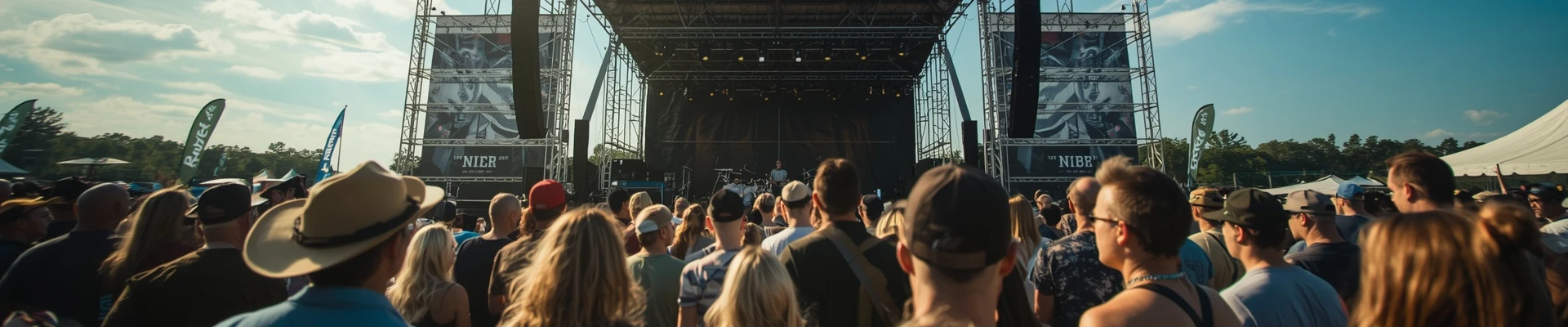
The Greeley Stampede — held annually around the Fourth of July — is Greeley's signature event and one of the oldest and largest rodeo and country music festivals in Colorado, dating to 1922. The Stampede combines PRCA rodeo competition with a major country music lineup: past headliners have included Luke Bryan, Dierks Bentley, Chris Stapleton, Blake Shelton, Miranda Lambert, Jason Aldean, Florida Georgia Line, Tim McGraw, and dozens of other major country touring acts. The Stampede draws 150,000-plus attendees over its ten-day run and is among the most attended annual events in Colorado. It is Greeley's clearest national music claim: a city of 109,000 running a country music festival that books acts that play arenas.
Bands, Brews & BBQ at Island Grove is a summer festival combining local and regional bands with craft beer and food. The University of Northern Colorado runs Arts Alive, a performing arts series that brings touring classical, jazz, and world music acts to Greeley through the academic year. The Greeley Philharmonic Orchestra — one of the oldest orchestras in Colorado, founded in 1911 — presents a regular season at Union Colony Civic Center. Fiestas Patrias and Cinco de Mayo celebrations anchor the Latino cultural calendar. UNC Jazz Fest brings student and professional jazz ensembles to campus annually.
What ties it all together
Greeley's defining musical signature is the collision of an unusually strong academic jazz and music education tradition — built over more than a century at UNC — with a deeply embedded country and rodeo culture rooted in the High Plains agricultural world, all layered over a Latino community whose musical roots are as old as the city's sugar beet fields. The Greeley Stampede brings Nashville to the High Plains every July with headliners who sell out arenas. UNC's jazz program produces musicians and educators who spread the city's academic music legacy across the Mountain West. The norteño and cumbia circuits along 8th Avenue keep a continuous Latin music scene alive through communities that predate the modern city's entertainment infrastructure. Moxi Theater anchors the indie and alternative club scene for Northern Colorado between Fort Collins and Denver. And the Greeley Philharmonic — founded in 1911, still performing — holds the city's classical tradition together across more than a century of growth and change. Greeley is not a city that invented a sound, but it is a city that has sustained musical life with remarkable persistence across a wide range of traditions — from the university's jazz heritage to the Stampede's country headliners to the accordion-driven corridos of its Mexican-American west side.