

Lakewood is Colorado's fifth-largest city and the most populous municipality in Jefferson County, with approximately 153,000 residents inside the city limits and nearly 3 million across the broader Denver-Aurora-Lakewood metropolitan area. Sitting immediately west of Denver along the US-6 and US-40 corridors, Lakewood occupies a transitional zone between the urban grid of the Mile High City and the foothills and mesa country that rises toward the Rocky Mountain front range. The city's terrain is defined by the dramatic green spine of Green Mountain (2,500 acres of open space straddling the southwestern corner of the city), the William Frederick Hayden Park system, and the South Platte River tributary network. Lakewood's neighborhoods range from post-war residential subdivisions in the east to the revitalized Belmar mixed-use district at its center to the hillside communities adjacent to Red Rocks Amphitheatre (technically in unincorporated Jefferson County, but culturally inseparable from Lakewood's identity) to the west.
Economically, Lakewood functions as a major employment center in its own right — housing the Denver Federal Center, one of the largest concentrations of federal agencies outside of Washington D.C., as well as substantial corporate headquarters in the aerospace, energy, and technology sectors. The city's median household income exceeds the national average, its population skews relatively young, and its proximity to both Denver's urban amenities and the mountains' outdoor recreation culture gives it a demographic profile that sustains active nightlife and live music consumption.
A brief history
The land that became Lakewood was part of the territory of the Arapaho and Cheyenne peoples and later crossed by trails connecting the plains to the mountain passes. American settlement began in earnest after the 1858–1859 Pikes Peak Gold Rush drove a wave of migrants through the Platte River corridor; the area initially developed as agricultural land supplying the boomtown of Denver. The Colorado Agricultural College (now Colorado State University) extended its reach into Jefferson County's educational ecosystem, and the area's good soil and mild growing seasons sustained orchards, dairy farms, and truck gardens into the early 20th century.
Lakewood's urbanization accelerated dramatically during and after World War II, when the Denver Ordnance Plant (later converted to the Denver Federal Center) brought tens of thousands of workers to the area, and veterans returning from the war built modest ranch-style homes throughout what had been farmland. The postwar decades produced the characteristic first-ring suburb landscape: strip malls, car culture, single-family neighborhoods, and a civic identity tied more to the mountain lifestyle than to any deep urban tradition. Lakewood was formally incorporated as a city in 1969 — one of the last major Colorado cities to incorporate, having long resisted annexation by Denver — and its growth since incorporation has been steady, reshaping the commercial corridors along Colfax Avenue and Wadsworth Boulevard while preserving the open space that defines the city's western character.
The Belmar district — built on the former Villa Italia Mall site after it was demolished in the early 2000s — represents Lakewood's most deliberate effort at urban placemaking: a new urbanist grid of streets, restaurants, shops, apartments, and the Heritage Lakewood Belmar Park (featuring historic structures moved from around Jefferson County) that transformed a dead mall site into a mixed-use destination with outdoor festivals, farmers' markets, and concert programming.
Music identity
Lakewood's music identity is inextricably linked to the Denver metro scene — the city is too close to Denver, and the live music infrastructure too interconnected, for Lakewood to maintain a fully separate scene. But several elements give Lakewood its own musical signature.
The city's most totemic music connection is Red Rocks Amphitheatre — the 9,525-capacity outdoor concert venue carved into the Morrison Formation red sandstone just west of Lakewood's city limits in Morrison, Colorado. While technically outside Lakewood, Red Rocks is the experiential anchor of the western suburban music world, and Lakewood residents are its nearest urban neighbors. The venue's list of legendary performances reads as a history of American concert music: The Beatles played Red Rocks in 1964 (famously in a half-empty house during a rainstorm); U2 filmed their iconic Under a Blood Red Sky live album there in 1983; Jimi Hendrix, Bruce Springsteen, The Grateful Dead, Phish, Radiohead, John Denver, Ween, and hundreds of others have marked career-defining nights on that stage. Red Rocks programs approximately 150 shows per summer season, drawing audiences from across the metro and the country. Lakewood's hospitality economy — its hotels, restaurants, and bars — capture significant overflow from the venue's audience.
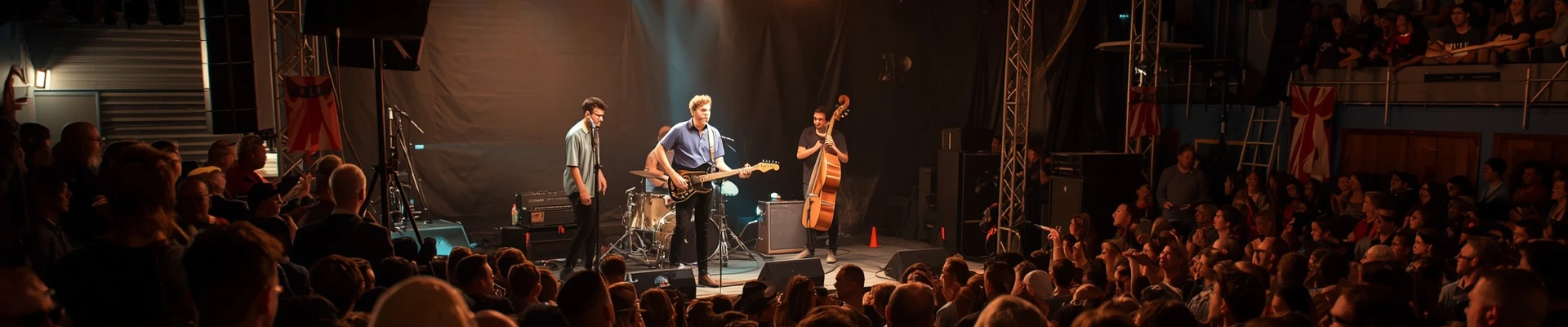
Within the city itself, the Belmar district has developed a modest live music footprint since its opening in the early 2000s. The Tap and various restaurants and bars in the Belmar grid program local and regional acts on weekend nights. The Heritage Lakewood Belmar Park outdoor amphitheatre hosts the Belmar Concert Series during summer months, programming local and regional acts across rock, folk, jazz, and Americana.
The Colfax Avenue corridor — the highway running through Lakewood from Denver's western edge — carries a continuous chain of bars and clubs that participate in the broader Denver Colfax music circuit. Venues along the Lakewood stretch of Colfax have historically hosted local rock, country, and working-class bar bands. Rockies Brewing and similar local taprooms program acoustic and small-group acts regularly.
Lakewood has contributed to Colorado's punk and hardcore lineage through bands that used cheap suburban rehearsal spaces and Denver's venues. The Jefferson County school district — which includes much of Lakewood — produced a consistent stream of musicians who moved into the Denver scene: Five Iron Frenzy, the Christian ska-punk band that became one of the most successful Christian alternative acts of the late 1990s and 2000s, formed in Denver but drew substantially from the western suburban Christian community that included Lakewood. The band's All the Hype That Money Can Buy (2002) and their 2011 reunion were significant events in the national Christian alternative world.
Country and Americana have deep roots in Lakewood's working-class western suburbs. The city's bars sustain a consistent honky-tonk and country circuit tied to Denver's robust country scene — Lakewood has historically been home to a blue-collar demographic that supported country radio and live country performance at the kind of neighborhood bars that defined Colorado's rural-meets-suburban culture.
The city's Latino community — concentrated in the eastern neighborhoods near Denver and along the Colfax corridor — sustains regional Mexican, cumbia, and norteño performance and recording. The Jefferson County Hispanic community's growth through the 1990s and 2000s mirrored the broader Denver metro trend, and Lakewood's eastern side is home to a cluster of Mexican restaurants, quinceañera venues, and social clubs that program live music.
Bluegrass and folk maintain a presence in Lakewood through the broader Jefferson County outdoor-culture community. The proximity to the mountains and the city's strong hiking, climbing, and skiing culture creates a natural audience for acoustic string music, and venues from Belmar to neighborhood bars program bluegrass regularly.
Venues and neighborhoods
The venue landscape is modest compared to Denver proper but coherent as a suburban circuit. Red Rocks Amphitheatre (Morrison, immediately west) is the aspirational ceiling for the entire metro's concert market. The Belmar district anchors Lakewood's most concentrated live music footprint, with the Heritage Lakewood Belmar Park amphitheatre and surrounding bars and restaurants programming regular shows. The Lakewood Cultural Center — the city's main performing arts facility — programs theatrical productions, dance companies, and chamber music. Crown Hill Park and the broader Jefferson County Open Space system host outdoor concert events during summer.
Along Wadsworth Boulevard and Alameda Avenue, a series of bars and restaurants with live music — Tony's Meats & Market (a longtime community institution), neighborhood Mexican restaurants, honky-tonk bars — represent the bread-and-butter working musician's circuit. The Colorado Mills mall area has generated some entertainment development, and the West Alameda corridor hosts a scattering of music venues tied to the city's largest commercial strips.
Neighborhoods define distinct experiences: Belmar anchors the arts-minded, restaurant-going, live music audience. The Eiber and Glennon Heights neighborhoods on the city's north side are quiet residential zones whose residents travel downtown or to Belmar for shows. Union Boulevard and South Lakewood are working-class zones with their own bar cultures. Green Mountain — the western mesa neighborhood — is oriented toward outdoor recreation but generates a community that participates in the acoustic music world.
Festivals and signature events
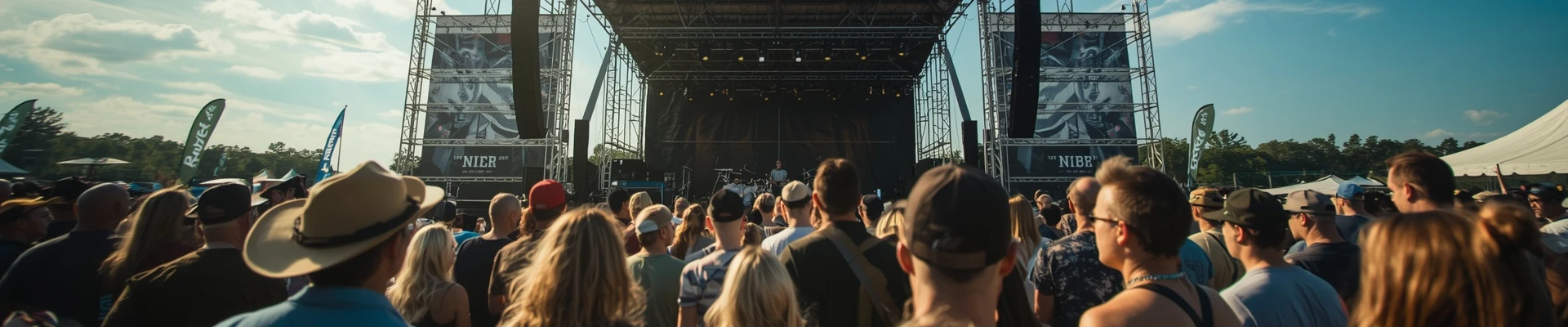
Lakewood's festival calendar is anchored by events that use its outdoor spaces and the Red Rocks cultural gravity well. The Belmar Concert Series programs outdoor music on summer evenings in the Belmar park space. The Colorado Dragon Boat Festival (on nearby Sloan's Lake, shared with Denver) incorporates musical performance from Asian-American musical traditions. The Lakewood Heritage Festival (at Heritage Lakewood Belmar Park) programs local acts alongside historical demonstrations and family programming. Cinco de Mayo celebrations along the Colfax corridor include live regional Mexican and mariachi performance. Jefferson County Fair programs country and Americana acts in its entertainment lineup.
The Red Rocks concert season — while not a Lakewood festival per se — effectively functions as the city's festival calendar. From May through October, the amphitheatre programs multiday events including the Red Rocks Jazz Festival, Country Jam (periodic large-scale country events), Phish and String Cheese Incident multinight runs, and themed genre weekends. The audience traffic through Lakewood's US-6 and Morrison Road corridors makes Red Rocks as present in the city's summer consciousness as any locally organized event.
What ties it all together
Lakewood's musical identity is shaped by its position in the Denver metro's geography and social fabric: close enough to Denver's dense venue ecosystem to participate fully in the regional circuit, distinct enough — in its outdoor culture, its working-class western-suburb character, its federal-employee demographic, and its mountain-facing lifestyle — to maintain its own flavor. The dominant note is Red Rocks: no city of Lakewood's size in the United States is as closely identified with a major concert venue as Lakewood is with the sandstone amphitheatre just over its western border. The venue's programming sets the cultural baseline for what a Lakewood music fan expects from a live performance, and local venues — from the Belmar amphitheatre to the Colfax bars — operate in the knowledge that their audiences have been to one of the most beautiful outdoor music settings in the world and will return for the next show. That aspiration, paired with the city's genuine suburban warmth and mountain-state openness, gives Lakewood its understated but real place in Colorado's musical story.