
Geography and framing
Thornton sits on the High Plains just north of Denver, straddling the Adams-Weld county line along the I-25 corridor. The terrain is quintessential Front Range flatland — wide streets, wide sky, the Rockies rising in a jagged line to the west and not much else interrupting the horizon until you hit the South Platte River bottomland on the city's western edge. Elevation is around 5,200 feet, and the climate brings the characteristic Colorado extremes: bluebird sunshine three hundred days a year, violent spring hailstorms, and occasional blizzards that stop Denver's airport and leave the northern suburbs digging out for days.
The city covers roughly 95 square kilometres, making it geographically compact compared to its southern neighbour Aurora, and its population of roughly 133,000 makes it the sixth-largest city in Colorado — a fact that surprises many Coloradans who still think of it as a suburb that grew up and forgot to announce itself. The economy is almost entirely service-oriented: retail along 104th Avenue and the Thornton Promenade, healthcare at the North Suburban Medical Center, and a steady stream of distribution and light-industrial employers along the 120th Avenue corridor that feeds the Denver metro's logistics chain. The city is a bedroom community in the truest sense — most working-age residents commute south on I-25 — but the community life that has grown up in those bedrooms is richer and more layered than the reputation suggests.
History
The land was Arapaho and Cheyenne territory before the Sand Creek Massacre and subsequent forced removal made it available for Anglo-American settlement. The Denver Pacific Railroad ran north through the area in 1870, and a small agricultural community called Thornton appeared on maps by the 1890s, named after an early settler family. For most of the first half of the twentieth century it was little more than irrigated farmland and a few scattered homesteads on the edge of Adams County.
The postwar suburban explosion transformed it. Thornton was incorporated as a statutory city in 1953, platted in the same national tide that built Levittown and Prairie Village — cheap land, cheap houses, FHA loans, and thousands of veterans who wanted grass and a garage. The Denver and Rio Grande Western Railroad's freight corridor and the newly built US-85 highway made the location practical. By 1960 the population had hit 13,000; by 1980 it was over 40,000 and growing fast.
Growth accelerated in the 1990s and 2000s as Denver's metro expanded northward and Latino families — many of them first-generation immigrants from Mexico, Guatemala, and El Salvador — settled in the affordable neighbourhoods east of Colorado Boulevard. By the 2020 census the Hispanic or Latino population had reached roughly 42 percent, reshaping the city's schools, commercial corridors, grocery stores, churches, and ultimately its music scenes. The 144th Avenue and Colorado Boulevard intersection became the informal commercial and cultural centre of this community, lined with carnicerías, panaderías, quinceañera shops, and norteño CD racks.
Music identity
Thornton does not have a sound of its own in the way that Denver has its jazz history, or Pueblo its conjuntos. But it is not musically empty — it is musically channelled, with most of the energy flowing along two distinct circuits: the Latino popular music ecosystem that thrives in the city's churches, event halls, and backyard palenques, and the suburban rock-and-hip-hop pipeline that feeds Denver's larger mid-size venues.
The Latino music life is the more distinctive. Norteño, banda, cumbia, and regional Mexican genres dominate the soundtrack of Thornton's Latino neighbourhoods, played live at quinceañera halls along Washington Street, at the Thornton Event Center, and at the sprawling outdoor celebrations that fill backyard lots in the summer. Local DJs and bands — many operating as family enterprises mixing a father on accordion, a son on bass guitar, a daughter on vocals — work a circuit of Catholic parish halls, XV receptions, and Mexican independence Day Fiestas Patrias celebrations that peaks every September. The Assumption of the Blessed Virgin Mary Catholic Church on 88th Avenue is one of the largest Spanish-language parishes in Adams County and its festival grounds host one of the most attended Fiestas Patrias weekends in the north metro.
The city has produced artists who crossed over into the broader Colorado and national scenes. Héctor Gómez, a Thornton-raised corrido and norteño vocalist, spent several years touring the Southwest and recording for independent Texas labels before returning to a local-legend status in the north Denver corridor. The hip-hop and trap side of the scene has been represented by a loose network of Thornton and north-metro rappers — names like Sik Wit It and the North Side collective — whose SoundCloud presence and local shows at clubs in Denver's Five Points and the Larimer corridor have built real audiences even without major-label traction.
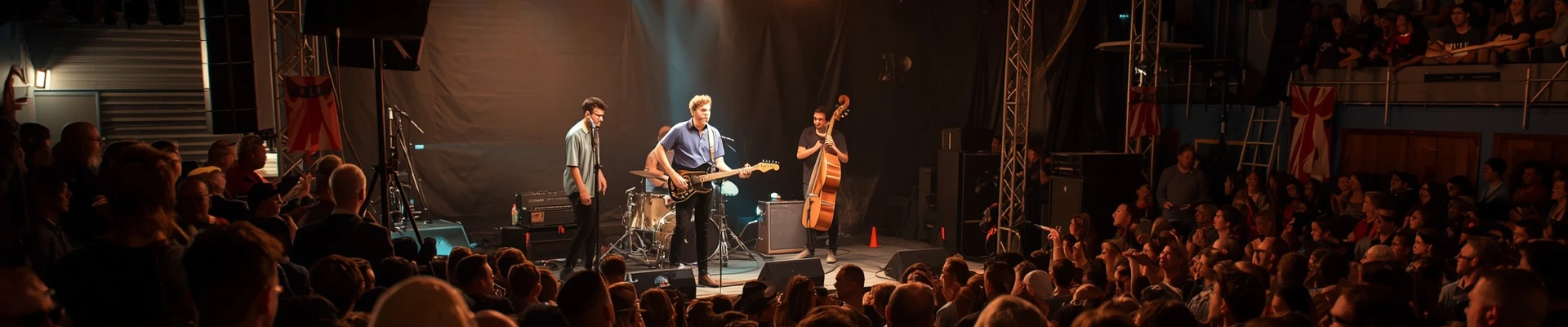
The suburban rock tradition is harder to pin down by name but visible in practice: Thornton has a dense web of church-based worship bands, high school garage bands, and adult-league cover-band circuits (the latter centred on venues like Mountain Lions Taproom and bars along 104th). The Thornton High School and Mountain Range High School music programs have consistently placed in state competitions and fed students into the Denver metro's music-education pipeline. Alumni who went on to professional music careers in Denver's indie and session-work circuits are common; Thornton-specific credits in those careers are rare, because the city operates as a feeder to Denver's ecosystem rather than as a standalone scene.
Venues and neighborhoods
Thornton's venue infrastructure is limited by design — a city this residential, with most entertainment infrastructure pointing south toward Denver, has historically prioritized parks and recreation over concert halls. The major commercial entertainment venues are outside city limits or in adjacent unincorporated corridors.
The closest large-capacity venue is Pepsi Center (now Ball Arena), twenty minutes south in Denver. Dick's Sporting Goods Park in Commerce City — five minutes from Thornton's southern edge — is a 20,000-seat soccer and concert venue that has hosted outdoor shows by touring acts ranging from Kenny Chesney to Twenty One Pilots. The 1stBank Center in Broomfield, ten minutes to the west, fills the mid-size theatre gap for the north metro.
Within Thornton proper the venues are smaller and community-focused. The Thornton Community Center and the Margaret W. Carpenter Recreation Center host civic events and smaller performances. The Thorncreek Golf Course clubhouse hosts private event bookings. The Senior Resource Center on Huron has been a steady host of big-band and oldies tribute shows popular with the city's older Anglo-American population. The Latino event-hall circuit — rental spaces along Washington and Colorado, the quinceañera palaces on Federal Boulevard just south of the city line — functions as an informal venue ecosystem with no centralised booking but real commercial volume.
Neighbourhoods to know: North Washington (the oldest part of the city, now heavily Latino), Eastlake (a lakeside residential enclave with an annual summer concert series at Eastlake Park), Orchard Hills (middle-class suburban sprawl north of 104th), and Thornton Crossroads (newer mixed-use development around the Regional Transportation District's North Metro Line station at 112th Avenue that opened in 2016 and changed commuting patterns into Denver).
Festivals and signature events
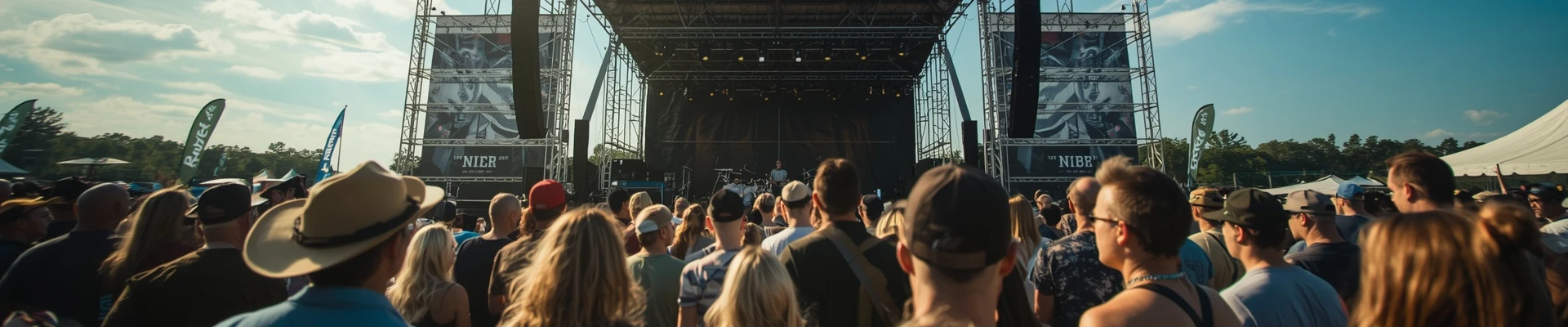
The biggest recurring event is the Thornton Summer Concert Series at Thornton City Hall and Todd Creek Farms Park — free outdoor concerts through June, July, and August that draw families from across the north metro. The programming skews to cover bands, tribute acts, and local original artists, with occasional regional touring acts filling the headliner slots.
Fiestas Patrias celebrations in September are the city's most culturally significant annual event, anchored at the Assumption parish festival grounds but extending through Washington Street businesses. Live norteño and banda acts, folklórico dance troupes, and vendor markets turn the north side of the city into a multi-day outdoor festival.
The Eastlake Community Concert Series runs summer evenings at the park on the lake, with free programming by local original and cover acts. The Thornton Promenade hosts seasonal events — holiday markets, summer sidewalk festivals — that occasionally include live music stages.
The city falls within the orbit of the Denver Arts Week and Mile High Music Festival ecosystem; residents are frequent attendees at those events even though the events are not in Thornton. The Colorado Dragon Boat Festival at Sloan's Lake, the People's Fair on Capitol Hill, and the Cinco de Mayo festival on Civic Center Park are all short drives south and draw heavily from the Thornton Latino community.
What ties it all together
Thornton's musical identity is ultimately the identity of a working-class, majority-minority suburb that is still writing itself. The norteño accordion at a quinceañera in a Washington Street event hall, the youth worship band at a Pentecostal iglesia on 88th, the cover band playing classic rock at a taproom on 104th, the north-metro rapper posting a new track from a bedroom studio on 128th — these are all Thornton music, and none of them would describe the scene that way, because the city has not yet generated the cultural infrastructure (venues, labels, press) that would let them recognise each other. What the city has instead is momentum: a young, growing, diverse population, a Regional Transportation District light-rail link to Denver, and a generation of kids whose musical influences span the entire global streaming catalogue. The sound that emerges from that combination, if it emerges, will be recognisably Front Range — wide, flat, reaching.