
Westminster is a mid-size city on Colorado's Front Range, positioned at the northern edge of the Denver metro area in Jefferson and Adams counties. With a population of roughly 116,000, it is the most populous city in Adams County and one of the ten largest in Colorado. The city sits at an elevation of approximately 5,460 feet — high enough to feel the altitude but low enough to look up at the Rocky Mountain front without being in it. Standley Lake anchors the western edge of the city, and the Big Dry Creek Trail threads through neighborhoods before connecting to the South Platte River corridor. Westminster shares borders with Broomfield to the northwest, Thornton to the northeast, Arvada to the south, and the city of Westminster's connection to US Highway 36 — the so-called Boulder Turnpike — makes it a natural commuter corridor between Denver and Boulder, a geographic position that has shaped everything from its demographics to its music tastes.
The city is roughly equidistant between the twin poles of Colorado's cultural life: Denver sits about 12 miles to the southeast and Boulder about 12 miles to the northwest. That corridor position means Westminster residents move constantly between two very different music cultures — Denver's urban rock, hip-hop, and country bar strip and Boulder's jam-band, folk, and experimental scene — without being fully claimed by either. Westminster is where those influences settle into something more suburban, more eclectic, and quietly sustaining.
A brief history
The Westminster area was part of the land cession by the Arapaho and Cheyenne peoples following the 1864 Sand Creek Massacre, and Euro-American agricultural settlement began in the 1870s on the semi-arid plains east of the mountains. Westminster University — a small Presbyterian institution — was founded in 1908 and gave the community its name. The university closed in 1917, a casualty of the economic pressures of World War I, but the name persisted.
Westminster incorporated as a city in 1911 and grew slowly through the mid-20th century as an agricultural community and then as a suburban bedroom community for Denver workers. The postwar boom transformed it: US 36 opened in the 1950s, connecting Denver and Boulder and making Westminster a practical place to live for people working in either city. Residential growth accelerated through the 1960s and 1970s.
The defining architectural fact of Westminster's civic life arrived in 1977 with Westminster Mall — one of the first enclosed indoor malls in Colorado, which became the commercial anchor of the city and in the process functioned as the de facto downtown that Westminster had never built. The mall oriented the city around automotive retail rather than a walkable street grid. For three decades it thrived; then the familiar cycle of suburban mall attrition set in — anchor stores departing, foot traffic declining, the commercial ecosystem hollowing out. Westminster Mall closed in 2001 and the site sat derelict for years. The city eventually demolished it and launched an ambitious mixed-use redevelopment project that became The Orchard Town Center, a lifestyle center and adjacent development that opened in phases beginning in 2015. The Orchard represents Westminster's attempt to build the downtown it never organically developed — a pedestrian-scaled entertainment and retail district designed from scratch.
Alongside that civic reinvention, the Westminster Promenade on West 92nd Avenue — a mid-2000s entertainment complex featuring a 24-screen cinema, restaurants, and live event space — served as an earlier iteration of the same instinct: building urban density by design rather than letting it accumulate. The Promenade hosted mid-tier touring acts and local concert events through the late 2000s and 2010s.
Music identity
Westminster's music identity is inseparable from its metropolitan context. This is a city where people drive to shows. Red Rocks Amphitheatre, perched in the foothills near Morrison about 25 miles south, is arguably the greatest outdoor music venue in North America, and for Westminster residents it is a 35-minute drive in light traffic — close enough to feel local, close enough to attend on a weeknight. The gravitational pull of Red Rocks means that Westminster audiences have seen — and music venues in the area have been shaped by proximity to — an astonishing cross-section of global touring acts. The venue draws the kind of headliners that smaller metro areas never see, and the Westminster music audience has developed corresponding expectations.
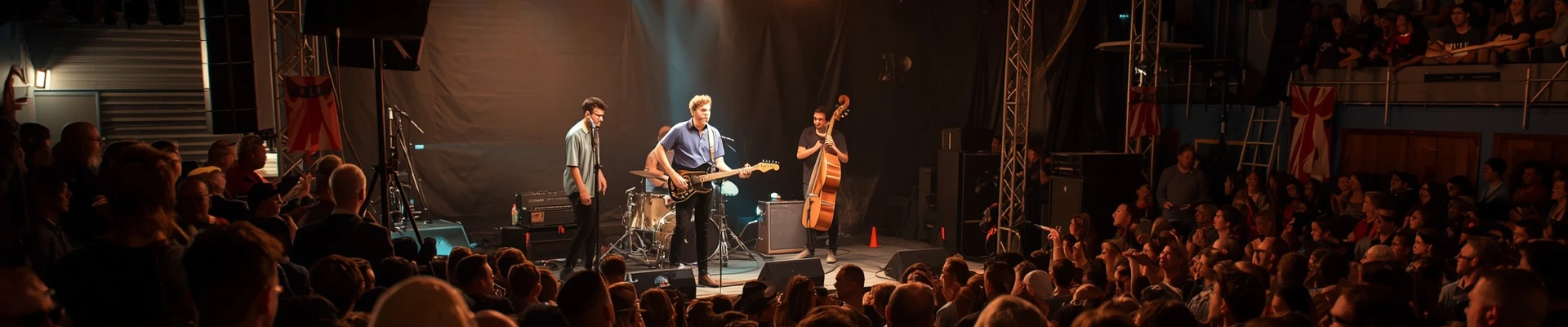
Closer to home, the dominant genres in Westminster's own club circuit are country, classic rock and its modern derivatives, and the singer-songwriter folk-pop that the Denver–Boulder axis has sustained since the early 1970s. The city's bar and entertainment venues program country nights, cover-band residencies, and local original-music showcases in roughly equal measure. The audience is suburban, largely white and Latino, with the economic range of a bedroom community — people who know their music, have disposable income for tickets, and are thirty minutes from every major venue in the metro.
The Latino music scene is a meaningful part of Westminster's cultural fabric. Adams County — which covers Westminster's eastern half — has one of the higher concentrations of Latino residents in the Denver metro, and the norteño, cumbia, and regional Mexican music that those communities sustain flows through Westminster's eastern neighborhoods. The La Familia Recreation Center and the community spaces along Federal Boulevard (which runs through neighboring Thornton and Westminster) anchor an informal circuit of quinceañeras, community dances, and Latin radio promotion that rarely appears in the mainstream music press but represents a substantial portion of the city's actual live music culture.
The Front Range Community College Westminster campus has a music program that feeds students into both the classical and pop performance pipelines across the metro. Alumni regularly appear in Denver's orchestra and chamber music ecosystem and in the city's independent rock scene.
Nathaniel Rateliff, the Denver-based soul and Americana singer-songwriter who fronts Nathaniel Rateliff & the Night Sweats, grew up in the Hermann, Missouri area but spent formative years in the Denver metro and played the Front Range circuit — including Westminster and Arvada venues — extensively before his 2015 debut for Stax Records broke him nationally. The Night Sweats' raw, horns-and-sweat soul sound reflects the Denver metro's eclectic-roots eclecticism rather than any single geographic identity, and they represent the kind of artist Westminster audiences claim through attendance and community even when they can't claim them by birth certificate.
Opeth, Mastodon, and other prog-metal and metal touring acts have historically used Colorado as a touring anchor state, and Westminster venues have captured that spillover — the city has sustained a small but committed heavy music scene connected to the broader Colorado metal network centered in Denver.
Venues and neighborhoods
The Westminster Promenade complex on West 92nd Avenue remains the city's most concentrated entertainment node, with its cinema anchoring a restaurant and bar district that has hosted live music ranging from jazz and acoustic sets to tribute band residencies and DJ nights. The adjacent Alamo Drafthouse Cinema — the Austin-founded cinema chain that has expanded nationally — hosts occasional music events and film-adjacent programming.
The Orchard Town Center — the redeveloped former Westminster Mall site — has gradually added food and beverage tenants with live music programming. The center's outdoor amphitheater space hosts summer concert series events drawing suburban crowds with a mix of tribute acts, local originals, and occasional regional touring artists.
Breckenridge Brewery Westminster — the taproom location of the iconic Colorado craft brewery, opened at the Westminster Promenade — has hosted acoustic and small-band live music events, continuing the Denver metro trend of breweries as informal live music venues. WestFax Brewing and smaller craft operations in the area follow the same model.
The Standley Lake area on Westminster's western edge — a nature preserve and reservoir — attracts trail runners, cyclists, and outdoor recreationists who represent a demographic that overlaps heavily with the jam-band and folk audiences sustained by Boulder's scene to the northwest.
Bradburn Village — a New Urbanist planned community in Westminster's northeast quadrant — represents one of the city's more interesting experiments in creating walkable neighborhood density: townhomes, street-front retail, and public spaces designed around pedestrian life rather than automobile access. The neighborhood has generated a small local café and bar scene that hosts acoustic acts.
Festivals and signature events
Westernaires — a long-running youth equestrian performance group based in Westminster — has no direct music connection, but the organization's public shows and Western heritage emphasis reflect a cultural background that feeds directly into the country music enthusiasm the city's venues sustain.
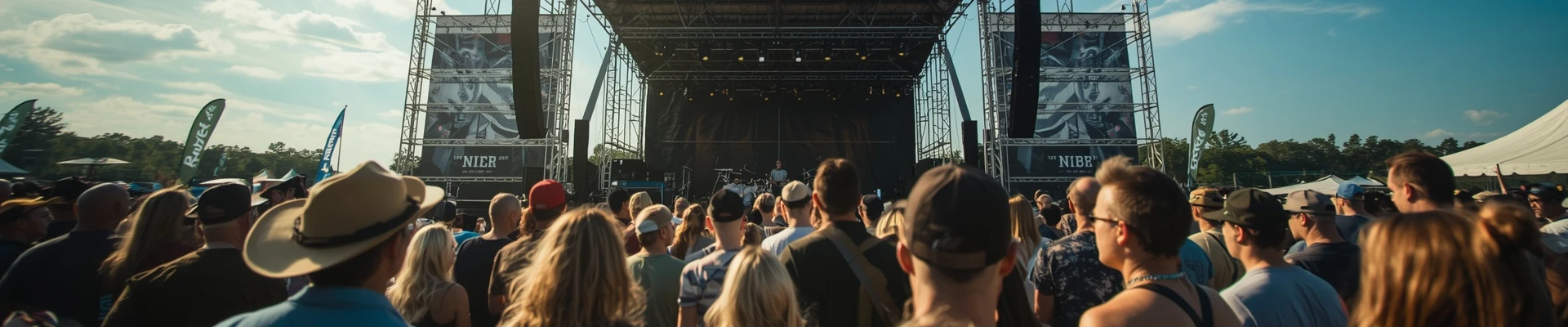
The Westminster Jazz Festival — a community event typically held in summer at the Promenade or City Park — brings regional jazz talent to public outdoor performances. The city's Farmers Market summer series on the Promenade regularly incorporates live acoustic music. The Westminster City Park Concerts summer series has historically programmed local and regional acts across country, folk, and classic rock genres for free outdoor attendance.
WestFest — Westminster's annual community festival held in late summer — incorporates live music programming alongside food, arts, and civic activities. It represents the city's investment in creating a hometown cultural event without the commercial infrastructure of a Denver or Boulder to anchor it.
The proximity to Denver's concert calendar means Westminster residents have effectively unlimited access to the metro's full festival ecosystem: the Civic Center Park events, the Ogden Theatre calendar, Mission Ballroom, and the sprawling Red Rocks season from May through October.
What ties it all together
Westminster is a city still learning what it wants to be — a suburb that has spent the last two decades actively trying to build the civic core it skipped by going straight from agricultural service town to car-dependent bedroom community. The music scene reflects that becoming: it is not a city with a singular sound or a legendary venue or a defining festival, but it is a city of engaged audiences who know the metro's music landscape intimately and who sustain local original acts with the kind of weeknight attendance that keeps the ecosystem viable. The US 36 corridor makes Westminster a crossroads between Denver's working-class electric energy and Boulder's thoughtful acoustic introspection. Red Rocks is close enough to be a backyard, and the city's Latino communities carry norteño and cumbia traditions that give the area its most authentically local sound. Westminster is a suburb that takes music seriously even if music doesn't always return the favor — and in that tension, something honest and sustaining persists.