
Savannah is the oldest city in Georgia and the county seat of Chatham County, situated at the mouth of the Savannah River on Georgia's Atlantic coast roughly 18 miles inland from the open ocean. The city proper holds approximately 147,000 people; the broader Savannah metropolitan statistical area encompasses around 400,000 across Chatham, Bryan, and Effingham counties. Savannah sits 250 miles southeast of Atlanta, 100 miles south of Charleston, and 115 miles north of Jacksonville — a position that placed it at the commercial heart of the colonial South and kept it a working deepwater port into the present day. The Port of Savannah is consistently one of the busiest container ports on the East Coast, a logistics hub whose volume rivals Baltimore and exceeds Boston. The city's economy rests on port logistics, tourism, healthcare, advanced manufacturing, and the massive economic footprint of the Savannah College of Art and Design (SCAD), which enrolls more than 14,000 students across its Savannah and Atlanta campuses and has functionally reshaped the city's cultural infrastructure since its founding in 1978.
A brief history
The land along the lower Savannah River was home to the Yamacraw people when English General James Oglethorpe landed in 1733 and established Savannah as the first city and capital of the Georgia colony — the last of the original thirteen. Oglethorpe's grid plan, organized around a series of square parks with surrounding lots for churches, civic buildings, and residences, produced the famous ward system of 22 surviving historic squares that remain the city's defining spatial signature. Savannah grew as a cotton port — by the antebellum period it was one of the wealthiest cities in the South, its fortune built on the forced labor of enslaved people who worked the coastal Sea Islands rice and long-staple cotton plantations that fed the port's warehouses. The city surrendered to General Sherman's Union Army in December 1864, the culmination of the March to the Sea, and Sherman reportedly cabled President Lincoln offering the city as a Christmas gift — a story that became part of both cities' lore.
After the Civil War Savannah rebuilt more slowly than Atlanta. Its architectural stock survived — by accident of war's end and by the relative poverty that prevented wholesale demolition — and became the foundation of the historic preservation movement that accelerated in the 1950s and 1960s under activists like Lee Adler and the Historic Savannah Foundation. The publication of John Berendt's Midnight in the Garden of Good and Evil (1994) and its 1997 film adaptation directed by Clint Eastwood brought a wave of tourism that permanently altered the city's self-image and economic trajectory. Today Savannah draws more than 14 million visitors annually, and its downtown and historic district — the National Historic Landmark District, one of the largest in the United States — are among the most photographed streetscapes in America.
Music identity
Savannah's music identity is more layered and harder to summarize than cities with a single dominant genre signature, because the city simultaneously sustains several distinct musical worlds that rarely overlap: a deep gospel and blues tradition rooted in the historically Black west-side and midtown neighborhoods; a nationally curated world and jazz festival circuit; a SCAD-energized indie and art-rock underground; and an Americana and singer-songwriter circuit that flows through the city's growing bar and venue scene on Broughton Street and Bay Street. What ties them is the city's consistent openness to live music as a civic practice — shaped by the leisure and pedestrian culture of the squares, the density of students, and a tourist economy that rewards ambient sound.
The most internationally significant musical figure associated with Savannah is Johnny Mercer, the lyricist and composer born in Savannah in 1909, who wrote the words to "Moon River," "Days of Wine and Roses," "One for My Baby," "Blues in the Night," "Ac-Cent-Tchu-Ate the Positive," and dozens of other American Songbook standards that defined the mid-century popular music canon. Mercer co-founded Capitol Records in 1942 and shaped American popular music from the swing era through the early rock and roll years. The Johnny Mercer Theatre inside the Savannah Civic Center honors his legacy, and the Johnny Mercer Foundation funds music education programs in the city. His contribution — a body of lyrics whose melodic intelligence rivals any in the Tin Pan Alley tradition — is Savannah's most globally consequential musical export.
The gospel tradition is the root system beneath the city's Black music culture. The coastal Georgia and Sea Islands region sustains the Gullah Geechee cultural tradition — the distinct African-inflected culture of enslaved Africans and their descendants on the low-country coast — and Gullah Geechee musical practice, including the ring shout (one of the oldest surviving African American religious music forms in continuous practice), is part of Savannah's deep musical heritage. The First African Baptist Church on Franklin Square, organized in 1773 and considered among the oldest Black churches in North America, has been a center of African American sacred music in the city for over two centuries. Savannah's praise house and missionary Baptist church traditions fed the gospel choirs and shaped the R&B and soul acts that performed on the east coast touring circuits through the 1950s and 1960s.
James Brown — the Godfather of Soul — was born in Barnwell, South Carolina, but was raised primarily in Augusta, 120 miles to the northwest, and made Augusta his permanent base; Savannah claims a cultural connection through the broader Lowcountry region's Black music tradition but does not share Brown's biography. More direct is Savannah's connection to the hip-hop world through Ludacris (Christopher Brian Bridges), who was born in Champaign, Illinois, but spent formative childhood years in Savannah and Georgia before relocating to Atlanta — a nuanced geography that the Atlanta hip-hop scene generally claims entirely. The Savannah native hip-hop community is smaller but real: Silentó (Richard Lamar Hawk), whose 2015 single "Watch Me (Whip/Nae Nae)" became one of the most viral pop-culture moments of the decade, is from the Atlanta area, not Savannah; but the coastal Georgia hip-hop tradition maintains active local scenes in Savannah proper, particularly around the Eastside and West Savannah neighborhoods.
The SCAD effect on Savannah's contemporary music scene is substantial and often underestimated. A nationally and internationally recruited art and design school enrolling 14,000 students — many of them musicians, sound designers, film scorers, and multimedia artists — concentrates creative talent in a city of 147,000 in a ratio that produces disproportionate musical output. SCAD students and alumni have fueled the growth of recording studios, DIY performance venues, experimental electronic music, and art-rock bands throughout the city. The school's sound design and music for film programs produce graduates who enter scoring, production, and studio work, and its campus buildings — including converted historic structures throughout the landmark district — have added rehearsal and performance spaces to the city's inventory. While SCAD does not have the same music-scene generative power as, say, Berklee in Boston or NYU in New York, its scale relative to Savannah's size makes it the single most important institutional force shaping the city's contemporary music culture.
Venues and neighborhoods
Club One, the long-running LGBTQ+ venue and cabaret on Jefferson Street, is one of Savannah's most historically significant performance spaces — featured in Midnight in the Garden of Good and Evil as the home of the drag performer The Lady Chablis, who appeared as herself in Berendt's book and the subsequent film. Club One has sustained a performance culture of drag, cabaret, live music, and DJs for over three decades and remains an anchor of the city's queer arts community.
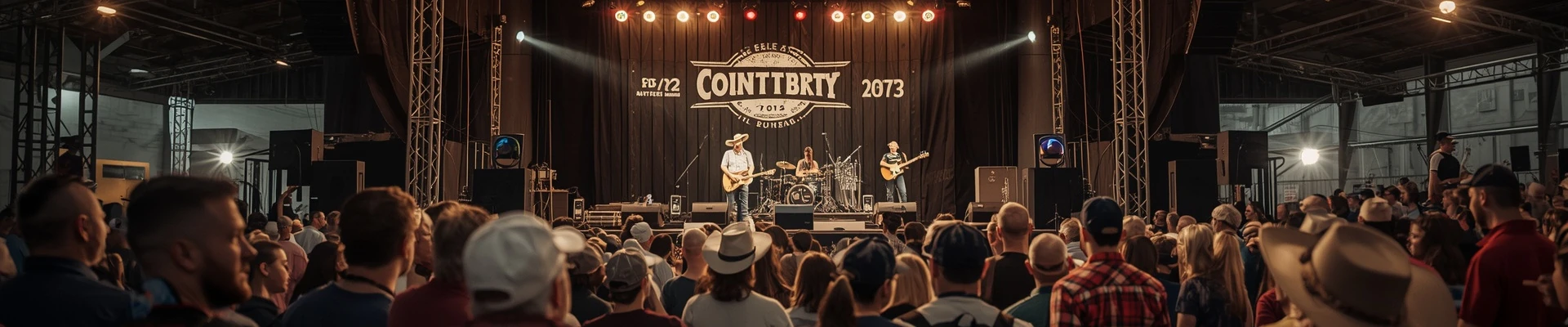
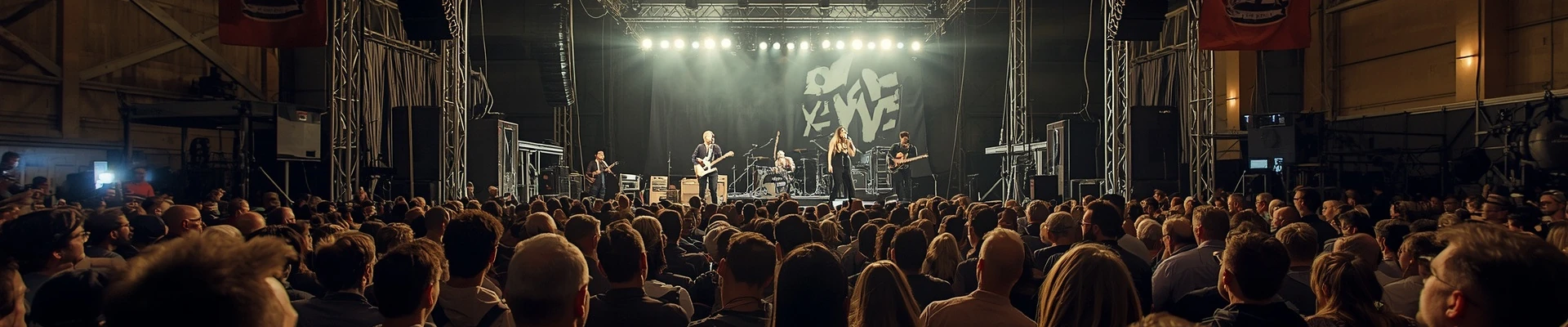
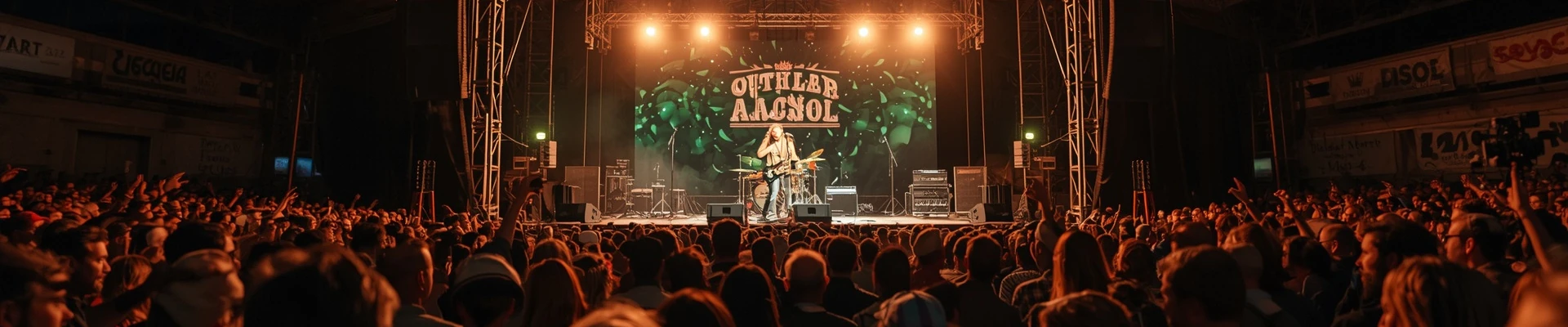
Victory North, a converted industrial warehouse on the northside, is one of Savannah's premier mid-capacity concert venues — accommodating roughly 1,000 standing — and has hosted national touring acts across rock, hip-hop, electronic, and Americana genres. Its industrial aesthetic and flexible layout have made it the go-to for mid-size touring shows that outgrow the bar circuit but can't fill the Enmarket Arena (the 9,500-capacity arena that opened in 2022, replacing the old Savannah Civic Center as the city's flagship arena venue).
The Jinx, on Montgomery Street, is the city's emblematic indie rock club — a small, sweaty, unpretentious bar-venue that has hosted local and touring bands for decades and functions as the center of gravity for Savannah's guitar-rock and punk underground. El Rocko Lounge and Sentient Bean (a coffee shop and community venue in Forsyth Park) round out the DIY and acoustic ends of the spectrum.
Broughton Street — Savannah's historic main commercial street — has experienced a dramatic revival and now hosts a dense corridor of restaurants and bars with live music, from jazz brunches to late-night R&B sets. The City Market district near Ellis Square is another live-music hub, particularly for acoustic and traditional jazz programming aimed at the tourist market.
The Johnny Mercer Theatre within the old Savannah Civic Center campus hosts theatrical productions, concerts, and performing arts events in its 2,500-seat configuration. The Lucas Theatre for the Arts, a restored 1921 movie palace on Abercorn Street, is the city's most elegant mid-size performance venue — hosting chamber music, film screenings, dance performances, and acoustic concerts in an acoustically excellent 1,200-seat house that makes it one of the jewels of coastal Georgia's performing arts infrastructure.
Festivals and signature events
Savannah Music Festival is the city's most nationally prominent annual music event — a two-and-a-half-week, multi-venue festival held each spring (late March through early April) that draws internationally curated programming across jazz, blues, Celtic, bluegrass, world music, classical, and American roots traditions. The festival uses the Trustees Theater, the Lucas Theatre, Trinity United Methodist Church, and other historic venues throughout the landmark district, programming a mix of international headliners and emerging artists with a curatorial seriousness that distinguishes it from more purely commercial festivals. Founded in 1989, the Savannah Music Festival has built a national reputation as one of the best-curated multi-genre festivals in the South.
Savannah Stopover is a music industry showcase festival held each March, designed as a geographically convenient stop for bands traveling between the South by Southwest festival in Austin and their northeastern touring markets. Launched in 2011, Stopover programs dozens of emerging and independent artists across Savannah's club venues in a SXSW-style wristband format — functioning as an industry showcase and press preview event that brings talent buyers, journalists, and label scouts to Savannah at a moment of concentrated booking activity. For a city of Savannah's size, hosting an industry-facing showcase with this degree of national music-press engagement is an unusual distinction.
Savannah St. Patrick's Day — one of the largest St. Patrick's Day celebrations in the United States, drawing upward of 400,000 people to the historic district each March — has a substantial live-music component, with stages and performance platforms distributed across the squares and waterfront for Irish traditional music, rock, and pop programming throughout the day.
What ties it all together
Savannah's musical identity is shaped by the same contradiction that defines the city itself: a place of extraordinary physical beauty and historical density whose cultural life is partly lived for visitors and partly lived for itself, and the two modes are not always easy to separate. The historic squares create a city that moves slowly, at a pedestrian scale, in a subtropical climate that makes outdoor gathering habitual — and live music flows through that physical environment naturally, from the jazz guitarists in City Market to the gospel choirs audible through open church windows on Sunday mornings. What the city has built, through the Savannah Music Festival and Savannah Stopover, is a festival infrastructure serious enough to attract national and international attention without compromising the intimate, neighborhood-scaled character of the music culture that sustains it between festival weeks. The result is a city where Johnny Mercer's melodic intelligence, the Gullah Geechee ring-shout tradition, the SCAD art-rock underground, and the Enmarket Arena touring circuit coexist in a compact geographic space held together by Spanish moss, squares, and the slow brown current of the Savannah River.