




South Fulton is a young city by any measure — it was incorporated on May 1, 2017, making it one of the newest municipalities in Georgia and one of the youngest cities of its size anywhere in the United States. With a population of roughly 107,000, it occupies the southwestern quadrant of Fulton County, immediately south and southwest of Atlanta's city limits. The incorporation resolved a long-standing tension: the communities of unincorporated southwest Fulton County had for decades been governed directly by Fulton County government, without the representational structures of a proper municipality. The push for cityhood was community-driven, and the city's first mayor, Khalid Kamau — a socialist, a community organizer, and one of the more unusual political figures in Georgia's recent history — set the tone for a city uninterested in performing the conventional script of suburban governance.
South Fulton is bounded by East Point, College Park, and Hapeville to the north and northeast (the communities that ring Hartsfield-Jackson Atlanta International Airport, the world's busiest airport, which sits at South Fulton's northeast corner), Fairburn and Union City to the south and southwest, and Chattahoochee Hills to the west. The city's terrain rolls through the red-clay piedmont of north Georgia, with the Chattahoochee River corridor defining its western edge. The landscape is a mixture of established residential neighborhoods — many built in the 1960s, 1970s, and 1980s as Atlanta's Black middle class suburbanized southward — newer subdivisions, commercial corridors along Camp Creek Parkway and Flat Shoals Road, and stretches of green space along creek corridors.
A brief history
The land that became South Fulton was Creek and Cherokee territory before Anglo-American and enslaved African settlers arrived in the 1820s and 1830s following the forced removal of Indigenous peoples. The area developed as agricultural land through the 19th century, and the proximity to Atlanta — incorporated in 1847 — shaped its development trajectory from the beginning. The late 19th and early 20th centuries brought the expansion of Atlanta's Black community southward as the city's segregated geography pushed African American neighborhoods toward the south and west.
The mid-20th century was transformative. Camp Creek Parkway was built as a federal project corridor, and Hartsfield Atlanta International Airport (now Hartsfield-Jackson) grew from a small airfield into one of the world's great air hubs, anchoring an enormous amount of economic activity around the southwestern edge of the county. The communities of southwest Fulton — Cascade Heights, Campbellton, Greenbriar, Sandtown, Fairburn Road, and the corridors along Old National Highway — grew into established working-class and middle-class Black neighborhoods as Atlanta's Black population suburbanized following desegregation.
Through the 1980s and 1990s, the absence of city governance meant that southwest Fulton communities received county services without the zoning control, local police force, or representational structures of a proper municipality. Advocates for cityhood argued that incorporation would give the community control over its own development, its own code enforcement, and its own public safety priorities. After years of legislative effort, the Georgia General Assembly approved cityhood in 2016, the incorporation vote passed in November 2016, and South Fulton officially became a city on May 1, 2017. Khalid Kamau, a democratic socialist who had previously served on the College Park City Council and who had been involved in the Ferguson, Missouri, solidarity movement, became South Fulton's first mayor — an extraordinary political moment for a majority-Black municipality in the American South.
Music identity
South Fulton's music identity cannot be fully separated from the broader Atlanta music ecosystem — but the separation matters, because southwest Atlanta and the communities that are now South Fulton have produced and nurtured musical talent in ways that are specifically rooted in this geography rather than in the Midtown or Buckhead or East Atlanta axes of the Atlanta music narrative.
The ATL trap sound — the genre that has reshaped global popular music since the mid-2000s — is Atlanta-wide in its geography, but its roots run deepest in the southern and southwestern quadrants of the metro. T.I. (Clifford Harris Jr.), one of the architects of the trap genre, grew up in Bankhead on Atlanta's west side and built his career through the communities that connect Atlanta's urban core to what became South Fulton. Gucci Mane, Young Jeezy, and the network of producers and engineers who built the Trap Music genre — Shawty Redd, Zaytoven, the 1017 Records ecosystem — all operated in a geography that includes the Camp Creek and Campbellton corridors.
Ludacris (Chris Bridges), one of the defining figures of early 2000s Southern rap, has deep Atlanta roots and has been a consistent presence in the southwest Atlanta music ecosystem. Lil Baby (Dominique Jones), one of the most commercially successful rappers of the 2010s and 2020s, was born in Atlanta and raised in the Oakland City neighborhood — directly adjacent to what became South Fulton's northern border — and has spoken extensively about how the geography of southwest Atlanta shaped his worldview and his music. His label, 4PF (4 Pockets Full), and its relationship with Quality Control Music (the Atlanta label that also launched Migos, City Girls, and Lil Uzi Vert) represent the most recent chapter in a long lineage of southwest Atlanta-rooted music entrepreneurship.
21 Savage (Shéyaa Bin Abraham-Joseph), the Atlanta-raised rapper (originally from Newham, London) whose immigration status became a national news story in 2019, has lived and built his career in the Atlanta southwest — his Slaughter Gang imprint and his collaborative work with Metro Boomin and Drake are deeply embedded in the south Atlanta geography. Offset (Kiari Cephus) of Migos was raised in the Gwinnett County area but the Migos ecosystem is woven through the entire Atlanta metro south.
The gospel tradition in South Fulton is arguably as consequential as its hip-hop lineage. The churches of southwest Fulton County — New Birth Missionary Baptist Church connections, the Ben Hill United Methodist Church community, the congregations along Campbellton Road and Cascade Road — have sustained a gospel choir tradition of extraordinary depth. The intersection of gospel and hip-hop in the Atlanta south is not incidental: Kirk Franklin, Donnie McClurkin, and the entire contemporary gospel landscape of the 2000s and 2010s drew from the musical training infrastructure of Black churches in communities like the ones that became South Fulton. Lecrae, the Christian hip-hop artist whose Reach Records label has been based in Atlanta, has deep connections to the southwest Atlanta faith community.
R&B runs through South Fulton's musical fabric at every level. Usher (Usher Raymond IV) is Chattanooga-born but Atlanta-raised, and his career has been rooted in Atlanta's south-side music infrastructure. Monica (Monica Arnold), the Atlanta-born R&B singer whose career from the 1990s through the 2010s made her one of the most successful female R&B artists of her generation, grew up in the College Park area — immediately north of South Fulton — and has been a consistent presence in the south Fulton County music community.
South Fulton's music production infrastructure overlaps substantially with broader Atlanta's. The studio corridors along Camp Creek Parkway and the home studios scattered through its residential neighborhoods have been recording spaces for a continuous stream of trap, R&B, and gospel production. So Icey Entertainment, 1017 Records, and a network of smaller independent labels have operated in the South Fulton–Camp Creek–College Park geography.
Venues and neighborhoods
South Fulton's venue landscape is modest relative to the scale of musical talent the community has produced and nurtured — a reflection of the community's history as unincorporated territory without the development infrastructure of a proper city. The major live music and entertainment venues that South Fulton residents have traditionally accessed are across the city limits in Atlanta proper: the State Farm Arena, Infinite Energy Arena (now Gas South Arena, in Duluth), Mercedes-Benz Stadium, and the club corridors of Little Five Points, East Atlanta Village, and Edgewood Avenue.
Within South Fulton, the primary entertainment corridors run along Camp Creek Parkway (with its retail and dining corridor), Old National Highway (historically the commercial spine of southwest Fulton County, now anchored by the Greenbriar Mall corridor), and Campbellton Road. Greenbriar Mall has historically hosted concerts and entertainment events and remains a cultural anchor for the southwest Fulton community. The South Fulton Arts Center in nearby Fairburn hosts community performances. The Camp Creek Marketplace area has developed a dining and entertainment node. Church facilities — large auditoriums in the major congregations along Cascade Road, Campbellton Road, and Old National Highway — serve as the primary mid-size performance spaces for gospel and community music events.
The Oakland City and Sandtown neighborhoods along South Fulton's northern edge (technically inside Atlanta's city limits but part of the same cultural geography) have historically been tied to the same music infrastructure. The Camp Creek area at the southwestern edge anchors the newest residential development and the most active current commercial growth.
Festivals and signature events
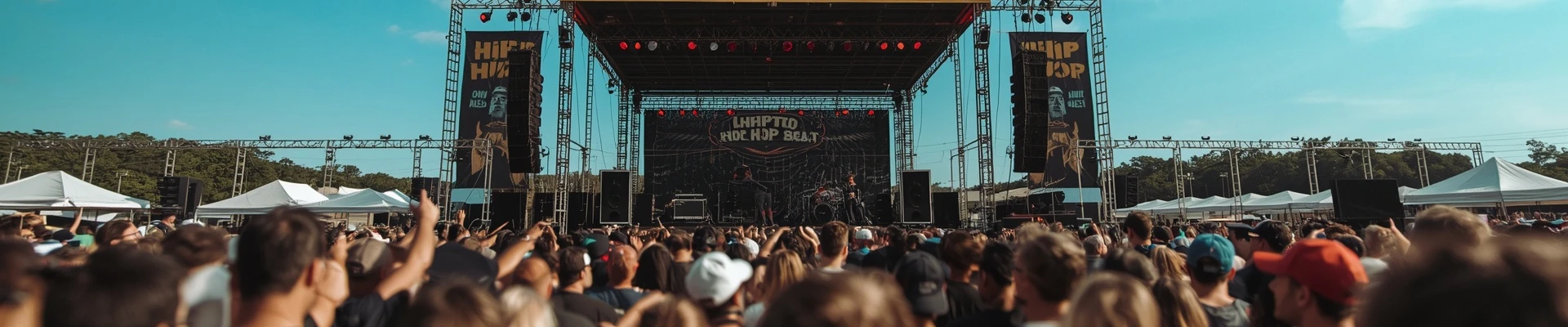
South Fulton's festival calendar is still developing, as a young city building its institutional infrastructure. The city has hosted outdoor music and community events at Wolf Creek Amphitheater — a 12,000-capacity outdoor amphitheater in southwestern Atlanta (immediately adjacent to South Fulton's northern boundary) that has been one of the most important mid-size outdoor venues in metro Atlanta for gospel, hip-hop, and R&B concerts. The annual Morehouse College homecoming and the Clark Atlanta University homecoming events, while officially Atlanta-based, draw heavily from the South Fulton community. The Cascade Road church corridor anchors an annual cycle of gospel concerts, choir competitions, and revival events that constitute the most consistent live music programming in the community.
Juneteenth celebrations, MLK Day events, and community festivals organized through South Fulton's parks and recreation department have become anchors of the young city's emerging cultural calendar. The Camp Creek Parkway corridor has hosted outdoor entertainment events as the commercial node has developed. The proximity to Hartsfield-Jackson Atlanta International Airport has created a unique relationship with the touring ecosystem — acts routing through Atlanta for major arena shows at State Farm Arena or outdoor shows at Wolf Creek often connect with the South Fulton community through church events, club nights in adjacent College Park, and informal community appearances.
What ties it all together
What ties South Fulton together musically is the same thread that ties it together politically and culturally: it is a Black city — majority-Black by population, Black-led by its political structure, Black-rooted by its history and its cultural geography — that has been producing and sustaining extraordinary musical talent for decades while operating in the shadow of Atlanta proper. The trap sound that has defined global popular music for the past fifteen years did not emerge from Midtown studios or Buckhead boardrooms — it emerged from the southwest Atlanta geography, from the Camp Creek corridors and the Campbellton Road churches and the Oakland City blocks that are now South Fulton's immediate neighbors and in many cases South Fulton itself. The gospel tradition that trained a generation of singers and musicians who went on to careers in R&B, hip-hop, and contemporary gospel runs through the church auditoriums along Cascade Road and Campbellton Road. The R&B and soul lineage that connects Monica and Usher to the 1960s and 1970s roots of Atlanta's Black music scene runs through the same geography.
South Fulton as a city is still young — barely a decade old — and its institutional cultural infrastructure is still being built. But its musical legacy, rooted in the communities that predate cityhood and extend back through generations of Black Atlanta music-making, is among the deepest and most globally consequential of any municipality its size in the United States. It is, in essence, a city whose music was already famous before the city itself existed.