
Fort Wayne is Indiana's second-largest city, home to roughly 260,000 residents inside the city limits and about 420,000 in the greater metropolitan area. It sits in the northeastern corner of the state at the confluence of the St. Marys River, the St. Joseph River, and the Maumee River — three waterways that join here to form the Maumee, which flows east toward Toledo and Lake Erie. That convergence gave Fort Wayne its earliest strategic importance as a trading post and military garrison; it gives the city its current identity as a place where geography shapes neighborhood character and recreational life. At roughly 250 metres above sea level, Fort Wayne sits on the continental divide between the Great Lakes and Mississippi River watersheds — the summit of the divide between two of North America's largest drainage basins, a fact reflected in its oldest and most enduring nickname: the Summit City.
The city's economy, historically rooted in manufacturing — especially automotive components, wire and cable production, and defense electronics — has diversified into healthcare (with Parkview Health and Lutheran Health as major employers), insurance, logistics, and higher education (Purdue University Fort Wayne, Indiana University Fort Wayne merged as Purdue Fort Wayne, University of Saint Francis, and Indiana Tech). Fort Wayne is also the hometown of one of American broadcasting's most influential figures: Philo Farnsworth invented and demonstrated electronic television here in the 1920s, a fact the city marks at the Farnsworth Museum.
A brief history
The site was a crossroads of Miami, Potawatomi, Lenape (Delaware), and Shawnee nations long before European contact. French traders established a post here in the late 17th century; the British took it in 1760; and American forces under General Anthony Wayne captured it in 1794 after the Battle of Fallen Timbers, the decisive engagement of the Northwest Indian War. The city was platted in 1829, incorporated in 1840, and grew rapidly as a rail hub — by the 1850s three major rail lines converged here, giving Fort Wayne the freight connectivity that made it a manufacturing center for the next century and a half. The Lincoln Highway (the first transcontinental highway in America) runs through Fort Wayne, and the city's position at the intersection of rail, road, and river corridors made it a natural distribution center for the Midwest.
The city's manufacturing base grew through the early 20th century with General Electric (which opened a major plant here in 1912 and employed thousands through the Cold War era), International Harvester, Magnavox (Fort Wayne was Magnavox's home for decades — one of America's most important consumer electronics brands), and a network of auto-parts suppliers. Magnavox in particular wove Fort Wayne into American entertainment culture: Magnavox produced radios, televisions, and consumer audio equipment here, making the city a center of sound technology even as its music scene developed separately. Deindustrialization hit in the 1970s and 1980s, as GE and other manufacturers restructured, but the city's diversified economy and lower cost of living allowed it to weather the transition more successfully than many comparable Midwestern cities.
Music identity
Fort Wayne's most internationally recognizable musical claim is Charlie Pride — though Pride was born in Mississippi, he lived and worked in Fort Wayne in the early 1960s before his country career launched, and local memory claims him. But the more honest frame for Fort Wayne's music identity is the Midwest hardcore and metal underground and the culture of large-capacity clubs that support national touring acts. The city isn't a birthplace-of-a-genre city — it is, more precisely, a city that sees everything, a touring market with infrastructure that punches well above its population.
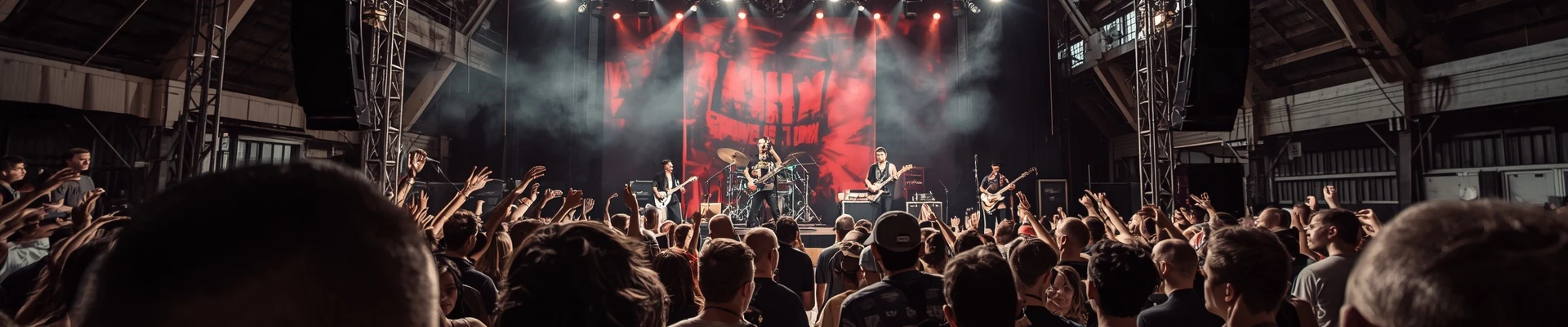
The gravitational center of that infrastructure is Piere's Entertainment Center — a 4,000-capacity club on the city's north side that has been operating since the early 1970s. Piere's is one of the largest clubs in the United States, and its sheer size (combined with Fort Wayne's position equidistant between Detroit, Chicago, Cleveland, and Indianapolis) has made it a required stop for virtually every major touring act passing through the Midwest for five decades. Metallica, Alice Cooper, Madonna, R.E.M., The Ramones, The Clash, Motörhead, Iron Maiden, Nine Inch Nails, Garth Brooks, Nirvana, Pearl Jam, Tool, Phish, and hundreds of others have played Piere's. For many, it was their first large-club show after years in small venues — a rite of passage in the touring circuit. The club's combination of capacity, acoustics, and booking ambition built Fort Wayne's identity as a serious music city in the eyes of national tour managers.
Fort Wayne's metal and hardcore underground runs deep. The city produced and nurtured acts across the extreme metal spectrum — Tourniquet (the Christian metal band whose Fort Wayne connection put the city on the Christian metal map), and a network of local metalcore, death metal, and grindcore acts that fed into national scenes through the 1990s and 2000s. The DIY punk and hardcore circuit used Fort Wayne as a natural Midwest stopping point on the college-town circuit, with local promoters connecting shows between Detroit and Chicago. The Indianapolis scene bleeds into Fort Wayne through shared booking agents and venues.
Gospel and church music run deep in the city's African American community, historically concentrated in the Hanna-Creighton neighborhood and surrounding south-side districts. The Allen County Gospel Music Association programs events that anchor this tradition. Fort Wayne's jazz history is anchored in the mid-20th century supper club and lounge circuit — a network of venues that brought big-band and bebop acts through as part of the Midwest booking circuit.
Country music has always had a strong presence in Fort Wayne, reflecting the city's position at the edge of Indiana farm country. Local country and country-rock acts fill the area's honky-tonks and the Fort Wayne civic auditorium circuit. William Foster McDaniel — the early country and western performer — had Fort Wayne connections. The broader northeastern Indiana country scene sustains a network of smaller venues and radio programming anchored by local country stations.
Hip-hop grew steadily through the 1990s and 2000s, with Fort Wayne-rooted MCs and producers building a local scene anchored in the south and southeast neighborhoods. Fort Wayne rapper T-Pain is sometimes cited in Fort Wayne hip-hop discussions, though T-Pain is from Tallahassee — the confusion speaks to how hungry Fort Wayne has sometimes been for nationally recognized rap representation. Local producers working in trap, drill, and boom-bap have built a streaming presence through the 2010s and 2020s.
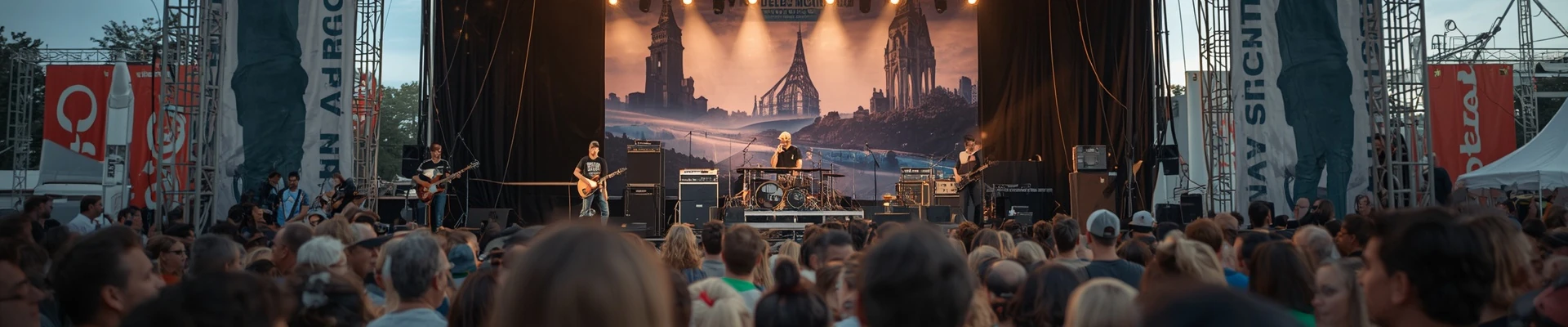
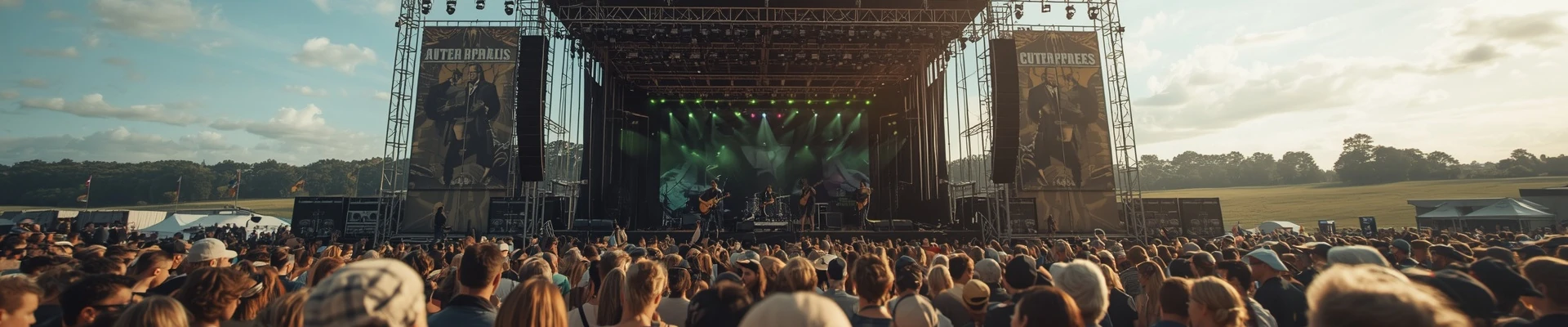
The Three Rivers Festival — the city's signature summer outdoor festival, held annually since 1969, drawing 500,000-plus attendees — has always included music programming as a core component, bringing national touring acts to outdoor stages along the riverbanks.
Venues and neighborhoods
The Embassy Theatre is Fort Wayne's crown jewel architectural venue: a 1928 Baroque-revival movie palace and concert hall on Jefferson Boulevard in downtown, with 2,500 seats, a Wurlitzer organ, ornate plasterwork, and one of the most beautiful interiors of any mid-size American venue. The Embassy books the Fort Wayne Philharmonic, touring Broadway productions, nationally known stand-up comedians, and pop and rock acts whose scale fits the seated-theatre format. It's the kind of venue that makes out-of-towners understand why Fort Wayne residents feel proud of their city's cultural infrastructure.
Piere's Entertainment Center (north side, on Coliseum Boulevard) remains the anchor of Fort Wayne's live music scene — the 4,000-capacity standing-room club with a storied history of national bookings. The Clyde Theatre (on the city's south side, a renovated historic cinema) opened in 2019 as a 1,400-capacity listening-room-style venue with excellent acoustics and a craft beverage program, immediately filling a gap in the city's mid-size market. The Brass Rail (downtown) has been a key small-venue anchor for indie rock, punk, and alternative acts. Club Soda (downtown) handles jazz, blues, and R&B programming. Pint&Slice and other smaller downtown bars run acoustic and indie programming at the 100–300 person level.
Geographically, live music clusters around downtown (Embassy, Brass Rail, Club Soda, Pint&Slice) and the north side around Piere's and Coliseum Boulevard. The Electric Works development — a massive adaptive reuse of the former General Electric campus, opened in phases from 2022 onward — is becoming a new cultural anchor on the city's east side, with event space, creative businesses, and the promise of a new entertainment district built around the rehabilitated factory campus.
The Allen County War Memorial Coliseum (18,000-capacity arena) hosts the largest touring acts when they come through — major arena-rock tours, country stadium acts, and arena pop. The coliseum has been a Fort Wayne concert anchor since its opening in 1952.
Festivals and signature events
Three Rivers Festival (mid-July, downtown along the riverbanks) is Fort Wayne's defining annual event — one of Indiana's largest festivals, drawing 500,000-plus over ten days with outdoor stages, food, arts, and rides. Music programming spans country, pop, blues, and rock on outdoor stages. Taste of the Arts (fall arts festival, downtown) programs live music alongside visual arts and food. Foellinger-Freimann Botanical Conservatory outdoor concerts run through the summer. The Embassy Theatre's season anchors the performing arts calendar. PFW Mastodon Arts Festival at Purdue Fort Wayne brings national and regional acts to campus. The Northeast Indiana Jazz Orchestra programs jazz events throughout the year.
What ties Fort Wayne together is the combination of geography, infrastructure, and tenacity. The confluence of three rivers that gave the city its strategic importance in the 1790s still shapes its character — Fort Wayne is a crossroads city, a place things pass through, and that transit energy is exactly what built the touring-market identity centered on Piere's. The Embassy Theatre's Baroque-revival grandeur speaks to a moment in the city's history when Fort Wayne aspired to be an equal of Indianapolis or Cincinnati. The Electric Works campus speaks to a present-tense reinvention of industrial heritage. And the hardcore and metal underground — sustained across decades by a chain of promoters, record stores, and all-ages shows in church basements and Piere's parking lots — is the most honest expression of Fort Wayne's cultural character: heavy, durable, and quietly formidable.