
Topeka is the capital of Kansas and the seat of Shawnee County, with roughly 126,000 residents inside the city limits and approximately 235,000 across the greater Topeka metropolitan area. Situated on the south bank of the Kansas River (locally called the Kaw River) in the rolling tallgrass prairie country of northeast Kansas, Topeka sits about 60 miles west of Kansas City, 55 miles east of Manhattan (home of Kansas State University), and 200 miles northeast of Wichita. The city is known nationally for two things above almost everything else: it was ground zero for Brown v. Board of Education — the 1954 Supreme Court case that dismantled school segregation in America — and it was for a century one of the great railroad hubs of the middle continent, the headquarters city of the Atchison, Topeka & Santa Fe Railway. Both legacies — railroad wealth and civil rights struggle — shaped the city's cultural landscape in ways that still reverberate through its music and community life.
A brief history
The land around the Kansas River was long home to the Kaw Nation (Kansas people), the Shawnee, and the Potawatomi, among other nations. American settlement arrived rapidly after the Kansas-Nebraska Act of 1854 opened the territory to white settlers, and Topeka was platted the same year by a group of Free-State settlers who were determined to keep Kansas out of the slave system. The city's identity as a Free-State capital — it was the site of the rival Topeka Constitution government during "Bleeding Kansas" — gave it a progressive civic heritage that set the stage for its central role in the civil rights movement a century later.
The Atchison, Topeka & Santa Fe Railway made Topeka one of the most consequential railroad cities west of the Mississippi. The company's general offices, machine shops, and maintenance facilities were headquartered here, and the railroad employed thousands of workers — including a large population of African American and Mexican American laborers — who brought with them musical traditions from the Deep South, the Gulf Coast, and Mexico. The Santa Fe's enormous Topeka Shops (at their peak employing 6,000 workers) made the city a working-class industrial town as much as a political capital.
The early 20th century brought Capper Publications — the media empire of Governor and Senator Arthur Capper — which published Capper's Weekly and Household Magazine and gave Topeka an outsized national cultural reach for a city of its size. The Great Depression and the Dust Bowl years brought waves of displaced farmers and laborers from western Kansas and Oklahoma whose musical culture — country, western swing, gospel, blues — infused the city's entertainment landscape. The postwar decades brought rapid suburban expansion, the arrival of Washburn University, and eventually the landmark civil rights case filed in Topeka's own school district that would reshape the nation.
Music identity
Topeka's music identity is rooted in the confluence of traditions that the Kansas River valley's geography brought together: African American church music and gospel from the Deep South migration corridor, country and western swing from the Dust Bowl diaspora, honky-tonk from the railroad workers' neighborhoods, and a proximity to Kansas City's jazz universe that never quite produced a Topeka jazz scene but put the city's musicians in constant dialogue with one of America's greatest musical cities 60 miles to the east.
Gospel is arguably Topeka's most musically consequential tradition. The city's historically Black churches — particularly in the NOTO Arts District area and the neighborhoods east of downtown — sustained a continuous gospel tradition from the post-Civil War era through the 20th century that fed into both the civil rights movement and the city's contemporary faith-music community. The gospel tradition in Topeka was deeply intertwined with the African American community's political engagement — churches were the organizing centers of the NAACP chapters that brought the Brown v. Board case.
Country and honky-tonk form the dominant popular music tradition for the city's white working-class communities. Topeka sits in a belt of Kansas where Western swing, Oklahoma-influenced country, and Dust Bowl balladry all intersect. The city's bar and club circuit has sustained country touring acts for decades, and the surrounding Shawnee County fair and rodeo circuit connects Topeka to a deep network of rural music venues across northeast Kansas. Chris Cain, the blues guitarist from nearby Kansas City who performed extensively in the Topeka region, represents the cross-pollination between Kansas City's blues infrastructure and Topeka's club scene.
Rock, punk, and alternative scenes emerged from Washburn University and the city's younger population through the 1980s and 1990s. The university's radio station KTWU and independent venues in the NOTO Arts District (North Topeka) fostered DIY shows, original bands, and a culture of touring indie acts stopping between Kansas City and Denver. Notable Topeka-area musicians include Janelle Monáe, who was born and raised in Kansas City, Kansas — just across the state line and within the regional orbit — and began performing in the greater KC metro that Topeka exists within. The rock band Filter recorded in the Kansas City area; the Topeka scene fed into the broader Kansas-Missouri rock corridor.
Classical and symphonic music in Topeka is anchored by the Topeka Symphony Orchestra, which was founded in 1946 and programs a full season at the Topeka Performing Arts Center. The symphony has been a continuous presence in the city's cultural life for nearly eighty years, with notable music directors including Vinnie Rho and a history of collaborations with the Kansas Association of Jazz Educators and local chamber ensembles. Washburn University's music department provides the educational infrastructure that keeps classical and jazz training active in the city.
The Topeka Blues Society has organized the city's blues community since the 1990s, and the Topeka Jazz Festival — a summer event held at Gage Park — draws regional jazz artists and puts Topeka's music scene in conversation with the larger Kansas City and Wichita jazz networks.
Venues and neighborhoods
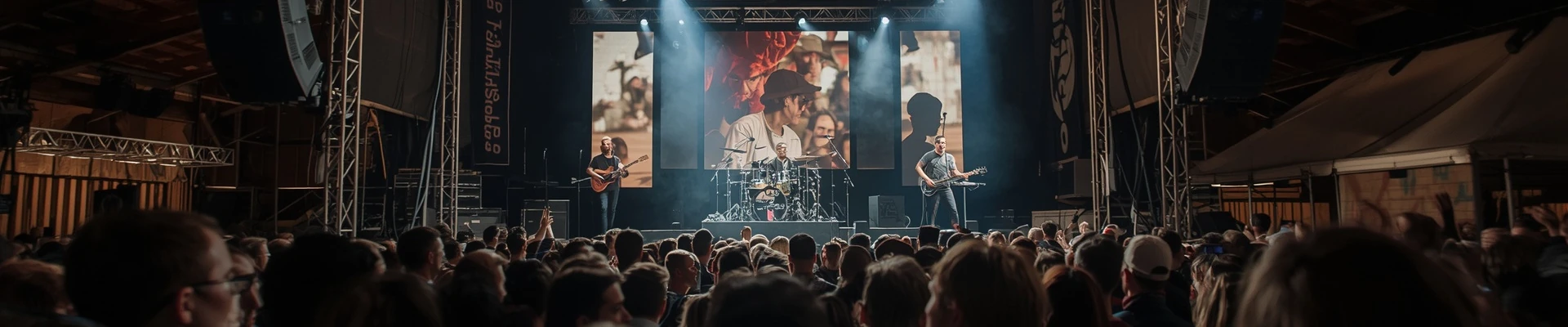
Topeka's venue landscape is modest but functional for a city of its size. The Topeka Performing Arts Center (TPAC) — a 2,500-seat auditorium housed in a former municipal auditorium on SW Van Buren Street — is the city's flagship performance space, home to the Topeka Symphony Orchestra, touring Broadway productions, and major visiting acts. Stormont Vail Events Center (formerly the Kansas Expocentre's Landon Arena) is a 10,000-capacity arena that books large touring country, rock, and pop acts and serves as the region's primary major-show venue.
The NOTO Arts District in North Topeka — a revitalized warehouse and storefront corridor along N. Kansas Avenue — is the center of the city's independent music and arts scene. The Noto Arts Center, Carp Creative Coworking, and a constellation of bars, galleries, and event spaces anchor live music programming for local and regional acts. The district has become the primary address for original music, independent booking, and DIY shows in the city.
The Hundred (on SW 6th Street), Celtic Fox, and a network of bar venues in the Downtown Topeka core program live music on weekends. Holyrood Cemetery Amphitheater and Gage Park stage outdoor summer concerts. Washburn University's White Concert Hall serves the academic music community. Evergy Plaza in downtown programs outdoor concerts and festivals seasonally.
The NOTO neighborhood anchors the independent arts and music community. Downtown Topeka (the government and commercial center) contains the TPAC and the bar circuit. The Westboro and College Hill neighborhoods near Washburn contain the university-adjacent music culture. The East Topeka and Oakland neighborhoods carry the city's African American community and gospel tradition.
Festivals and signature events
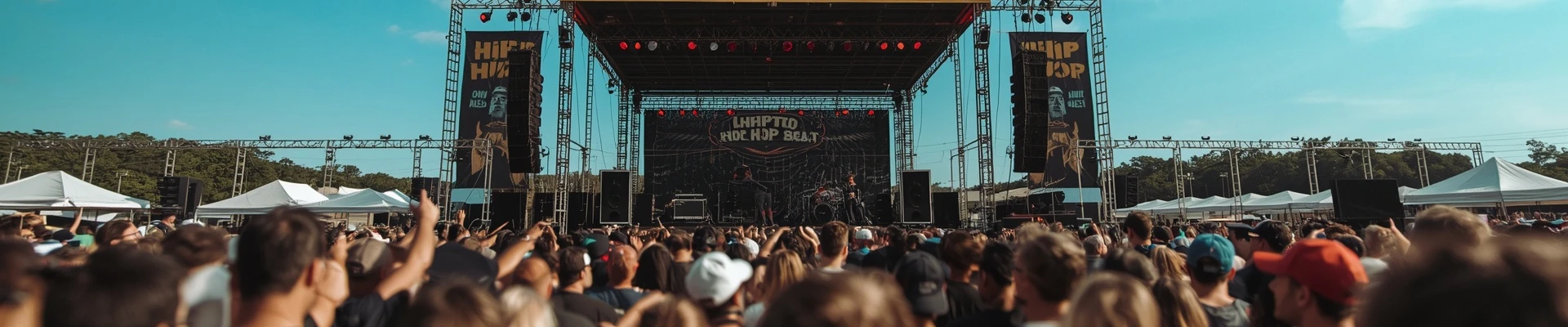
Topeka Jazz Festival at Gage Park is the city's signature annual music event, drawing regional and national jazz acts to the public park in summer and pulling the city's cultural scene together for a weekend of outdoor performance. The festival maintains an educational component through the Kansas Association of Jazz Educators.
NOTO First Fridays is a monthly arts walk through the North Topeka district that programs live music alongside gallery openings, food trucks, and street performance — functioning as a de facto monthly music festival for the independent scene.
Heartland Jazz & Blues programs blues and jazz at indoor and outdoor venues in the metro area. The Kansas State Fair (held in nearby Hutchinson, the fair's permanent home 95 miles southwest) draws major country and rock touring acts that the Topeka area audience regularly attends.
Free State Festival — an annual summer arts event combining film, music, and literary programming in downtown Topeka — has grown in recent years and reflects the city's effort to cultivate a creative economy around its civil rights history and progressive heritage.
What ties it all together
What defines Topeka musically is not a single dominant sound but a particular flavor of Great Plains cultural mix: the railroad town's working-class honky-tonk, the African American church and gospel culture rooted in the same civil rights struggle that made the city famous, the university's sustaining influence on classical and jazz, and a post-industrial creative economy trying to regenerate around the NOTO Arts District and its independent music scene. The Kaw River — the route the Santa Fe Railway followed west — is the city's deepest geographic metaphor: a conduit that carried people, cultures, and musical traditions from east to west and back again. Topeka is a city that never produced a globally dominant music scene but has always been a working music town, with venues open on weeknights, gospel choirs rehearsing in church basements, and country bands driving in from across northeast Kansas for the weekend circuit. Its civil rights heritage, its railroad bones, and its ongoing creative reinvention through districts like NOTO give it a cultural density that outlasts the modest population numbers.