

Wichita is the largest city in Kansas and the 51st-largest in the United States, with roughly 396,000 residents inside the city limits and more than 650,000 across the surrounding metropolitan area. Sitting on the Arkansas River at the confluence with the Little Arkansas River in south-central Kansas, on the western edge of the Flint Hills prairie, Wichita is the financial, manufacturing, and cultural capital of central and western Kansas. The city is known as the "Air Capital of the World" for its century-long history as a major center of aircraft manufacturing — Boeing Wichita (now Spirit AeroSystems), Cessna, Beechcraft, Learjet, and Stearman all built or built aircraft here, and aviation remains the city's defining industry. Wichita is home to Wichita State University (with more than 14,000 students), Friends University, Newman University, and a substantial military presence at McConnell Air Force Base. The city is roughly 17% Hispanic and 11% Black, with significant Vietnamese, Lao, and Laotian Hmong communities arriving since the 1970s.
A brief history
The land at the confluence of the Arkansas and Little Arkansas Rivers was Wichita and Osage territory before American settlers arrived in the mid-19th century. The town of Wichita was established in 1864 and grew rapidly as the terminus of the Chisholm Trail — the legendary cattle-drive route that brought Texas longhorns north to Kansas railheads through the 1870s. Wichita's brief but legendary cowtown era (roughly 1872-1876) made it one of the wildest of the Kansas cattle towns, frequented by figures like Wyatt Earp (who served as a Wichita lawman). After the cattle trade moved west, Wichita rebuilt as an agricultural and oil-discovery boomtown in the early 20th century. Clyde Cessna built his first airplane here in 1916, and through the 1920s and 1930s Walter Beech, Lloyd Stearman, and a network of aviation pioneers turned Wichita into the most important light-aircraft manufacturing centre in the world. World War II turbocharged the industry — Boeing Wichita built thousands of B-29 bombers — and the postwar era cemented aviation as the city's identity. The 1970s and 1980s brought significant immigration from Southeast Asia, particularly Vietnamese refugees, and a more recent Hispanic population growth has reshaped the city's cultural makeup.
Music identity
Wichita's musical identity sits at the crossroads of Western Swing, country, gospel, rock, and the broader Plains musical tradition. The city's most internationally consequential rock connection is to Joe Walsh — the future James Gang and Eagles guitarist who attended Wichita State University in the late 1960s and played his earliest professional gigs in Wichita clubs before relocating to Cleveland to form the James Gang. Kansas (the progressive rock band whose 1976 Leftoverture and 1977 Point of Know Return — featuring "Carry On Wayward Son" and "Dust in the Wind" — became defining 1970s American prog-rock albums) was formed in nearby Topeka, but the band has deep Wichita touring roots and the broader Kansas progressive rock scene runs through the city. The Embarrassment (the cult Wichita post-punk band of the early 1980s, often cited as one of the most influential underrated American indie bands of the era), Get Up Kids (Kansas City formed but with deep Kansas connections), Splitsville, and a continuous Kansas indie rock scene work through Wichita.
The city's country scene is one of the most active in the Plains. Wichita has a deep Western Swing tradition — the Bob Wills lineage that crossed from Texas through Oklahoma into Kansas — and the city's honky-tonk circuit through the 1950s, 60s, and 70s sustained a continuous country presence. Sons of the Pioneers, Roy Clark (born in Virginia but based in Tulsa, Wichita's regular tour stop), and the broader Plains country circuit. Cowtown Coliseum's shows, the Wichita Cowboy Mounted Shooting Association events, and the Kansas Star Casino's country programming sustain the contemporary country scene.
Wichita's Black music tradition runs through the historic McAdams and Northeast Wichita neighborhoods. The NAACP's 1958 sit-in at the Dockum Drug Store (one of the earliest civil rights sit-ins in America, predating Greensboro by 18 months) is part of the city's Black cultural history, and the gospel and blues tradition has continued through churches and clubs for decades.
The city's classical tradition runs through the Wichita Symphony Orchestra at Century II Concert Hall and the Music Theatre of Wichita (one of the most respected regional summer musical theatre companies in America, training young Broadway performers since 1979).
The Vietnamese, Lao, and Hmong communities — substantial since the 1970s refugee resettlement — sustain traditional and contemporary Southeast Asian music scenes through churches, community centres, and restaurants on South Broadway and the broader south Wichita corridor.
The city's hip-hop scene runs through clubs across Old Town and Delano, with a small but active local scene programmed alongside touring acts. XV (the Wichita rapper) had a moment of national attention in the early 2010s.
Venues and neighborhoods
Wichita's venue ecosystem is well-developed for its size. At the top sit INTRUST Bank Arena (the 15,000-capacity downtown arena that opened in 2010, the city's largest indoor venue, hosting major touring rock, country, and pop acts), Century II Performing Arts and Convention Center (the iconic round-domed performing arts complex that opened in 1969, home of the Wichita Symphony Orchestra, Music Theatre of Wichita, and Wichita Grand Opera), and the Hartman Arena in nearby Park City. The midsize tier includes the Cotillion (the legendary 2,500-capacity rock and country dance hall in west Wichita that has been operating since 1960 and is one of the most beloved mid-size venues in the Plains), the Orpheum Theatre (the restored 1922 movie palace that programs concerts and theatre), and the Wave. Beneath them is a club layer running through Old Town (the redeveloped warehouse district that anchors the bar and live music circuit) — including Barleycorn's, Kirby's Beer Store (the long-running indie rock bar), Doo-Dah Diner's music programming, and Lucky's Burgers and Brews. The Delano District along West Douglas Avenue anchors a secondary entertainment circuit. The Kansas Star Casino in nearby Mulvane programs major country and rock acts.
Different neighborhoods carry different musical identities. Downtown Wichita and Old Town anchor the major venue circuit and indie rock scene. Delano anchors a secondary entertainment district. Northeast Wichita anchors the historic Black music community. South Broadway anchors the Vietnamese, Lao, and Hispanic music scenes. East Wichita (along Kellogg) anchors the broader chain-restaurant and country-honky-tonk circuit. West Wichita anchors the Cotillion and the suburban country scene.
Festivals and signature events
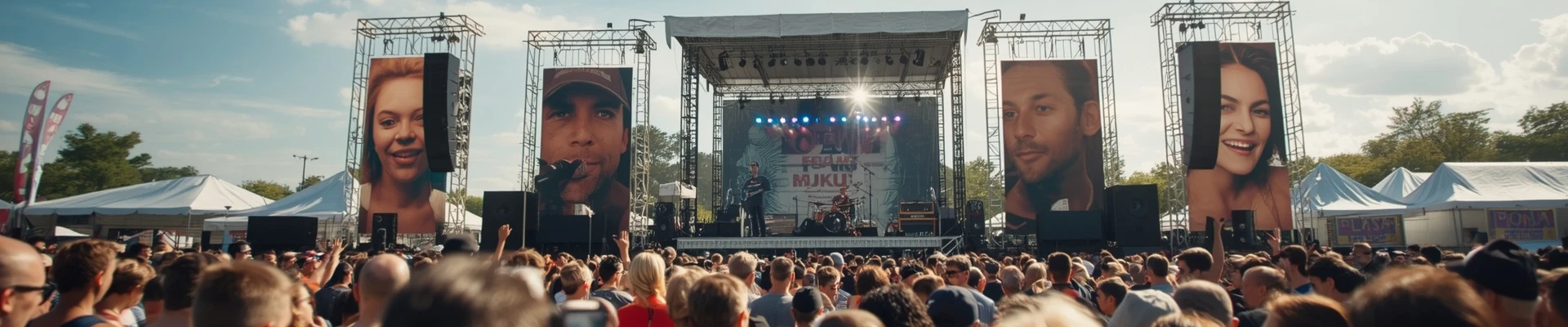
The festival calendar reflects the city's range. Wichita Riverfest (the city's signature ten-day summer festival along the Arkansas River, with massive music programming since 1972 and one of the largest community festivals in the Plains, drawing 400,000+), Wichita Jazz Festival, Tallgrass Film Festival's music programming, Wichita Pride, Asian Festival at Old Cowtown, Kansas State Fair in nearby Hutchinson (which programs major country and rock acts each September at the grandstand), Wichita Black Arts Festival, Wichita Folk Music Society programming, Music Theatre of Wichita summer season, and the Wichita Symphony's outdoor pops concerts round out the calendar. Mountain Jam in nearby Newton and a network of bluegrass and folk festivals across central Kansas program traditional and contemporary roots music.
What ties it all together is Wichita's combination of cattle-trail history, aviation industry, Plains geography, and a musical identity that fuses Western Swing, gospel, country, and rock at the crossroads of the Great Plains. Wichita is the city where Wyatt Earp once kept the law, where Clyde Cessna built the first airplane that became the foundation of light-aviation manufacturing worldwide, where Joe Walsh played his first paying gigs at Wichita State, where The Embarrassment built a cult post-punk legacy in the early 1980s, where the Cotillion has been spinning Western Swing and country dancers since 1960, and where Riverfest fills the Arkansas River banks each summer with one of the largest community music festivals in the Great Plains.