
Baton Rouge is the capital of Louisiana and its second-largest city, with roughly 227,000 residents inside the city limits and more than 870,000 across the Baton Rouge Metropolitan Statistical Area. Straddling the east bank of the Mississippi River some 80 miles upriver from New Orleans, Baton Rouge sits at a geological and cultural crossroads: the last point where the Mississippi can be bridged before the river fans into the delta, the dividing line between the Cajun and Creole cultures of the western prairie and the Anglo-Protestant cultures of the Florida Parishes to the east. The city is dominated by Louisiana State University (LSU), one of the largest universities in the American South with more than 35,000 students and the immense gravitational pull of Tiger Stadium — the largest football-stadium crowd in the NFL on Saturdays in the fall. The economy runs on petrochemicals, healthcare, and government; the ExxonMobil Baton Rouge Refinery, one of the largest in the country, defines the skyline north of downtown alongside the State Capitol Building (the tallest in the United States). The city is majority Black — roughly 55% African American — with deep roots in both the plantation history of the river parishes and the great migration patterns that shaped the blues and gospel traditions here.
A brief history
The site at the river bluff was named by French explorer Iberville around 1699 after a red stick (bâton rouge) used as a boundary marker between Houma and Bayougoula tribal territories. The French established a military post here in the 1720s; the city passed through Spanish, British, and American hands over the following century. Louisiana entered the Union in 1812 and Baton Rouge became the state capital in 1849 — briefly losing that status during the Civil War, then recovering it in 1882. The plantation economy along the river parishes before the war sustained the enslaved Black population that would, in the following generations, produce one of the most consequential regional blues traditions in America. After Reconstruction, Baton Rouge grew as a rail hub and river port; the Standard Oil refinery opened in 1909 and transformed the city's economy and skyline. The 20th century brought massive industrial expansion, the growth of LSU (founded 1853 but built into a major university from the 1920s under Huey Long's patronage), the construction of the current State Capitol in 1932, and the slow suburbanization of the city driven by white flight after the civil rights era — a pattern that shaped the modern city's racial geography and political culture profoundly.
Music identity
Baton Rouge's most internationally significant musical contribution is the Baton Rouge Blues — the raw, country-inflected electric blues tradition that emerged from the poor Black neighborhoods of South Baton Rouge and the surrounding parishes in the late 1940s and 1950s and became one of the defining regional blues styles of the 20th century. The key figures are enormous. Buddy Guy (born in Lettsworth, Louisiana, 65 miles northwest of Baton Rouge; raised and first recorded in the city) played the Baton Rouge club circuit through the late 1950s before moving to Chicago where he became one of the most influential electric guitarists in blues history. Slim Harpo (James Moore, born in Lobdell, just across the river) recorded his definitional swamp blues hits — "I'm a King Bee," "Rainin' in My Heart," "Baby Scratch My Back" — for Excello Records out of Nashville while living and performing in Baton Rouge; his recordings were pillaged by the Rolling Stones, The Kinks, and The Yardbirds during the British Invasion and became foundational blues-rock texts. Lazy Lester (Leslie Johnson, born in Torras, Louisiana; recorded in Baton Rouge), Lightnin' Slim (Otis Hicks, who recorded for Excello), Silas Hogan, Whispering Smith, Henry Gray (who played piano for Howlin' Wolf before returning to Louisiana), and Guitar Kelly all recorded in and around Baton Rouge for producer Jay Miller's Crowley-based operation that supplied Excello Records — making the Baton Rouge-to-Crowley-to-Nashville pipeline one of the most productive regional blues recording networks of the era. The Baton Rouge Blues sound — loose, raw, with deep swamp atmosphere and a direct relationship to the land — influenced virtually every blues-rock band of the 1960s and beyond.
The city's zydeco and Cajun connections flow in from the west. While the heartland of Cajun music is Lafayette and the Cajun prairie, Clifton Chenier — the undisputed King of Zydeco — recorded extensively in Baton Rouge, played the city's clubs for decades, and is as much a Baton Rouge cultural figure as a Lafayette one. The zydeco circuit running through Baton Rouge's Black Creole community has sustained since Chenier's era, with clubs in the North Street and South Baton Rouge corridors programming French Creole music alongside contemporary R&B.
Gospel is the musical bedrock. Baton Rouge's majority-Black population and deep church culture sustains one of the most active gospel scenes in the South — the Mount Zion First Baptist Church (where Buddy Guy's family worshipped), the Greater St. Paul Baptist Church, and dozens of Holiness and Pentecostal congregations sustaining gospel choirs, sanctified piano traditions, and contemporary praise music across the city.
Southern soul and R&B run continuously through the city's clubs. Tabby Thomas (Henry Thomas, the Baton Rouge bluesman and club owner who ran Tabby's Blues Box on North Boulevard from 1979 onward, becoming the city's most important living-blues institution for three decades), Chris Thomas King (Tabby's son, who expanded the Baton Rouge blues tradition into hip-hop blues), and a continuous lineage of soul and R&B performers have worked the city's club circuit.
The country scene runs through the parishes east of the city — the Florida Parishes have a strong white-country tradition — and through the LSU bar strip. Baton Rouge's rock scene has produced Adrenalin O.D. (early hardcore), and the university-driven bar strip along Highland Road and the Tigerland area sustains a continuous live rock circuit of original bands cycling through college audiences. Anders Osborne — the Swedish-born New Orleans and Baton Rouge blues-rock songwriter — bridges the two river cities musically.
Venues and neighborhoods
The venue ecosystem splits along geographic and demographic lines. At the top tier sits the Raising Cane's River Center (the 13,000-capacity arena downtown on the river that programs major touring acts across rock, country, R&B, and hip-hop), the LSU Amphitheater at PMAC, and Tiger Stadium itself (which has hosted enormous rock concerts in the off-season, from the Rolling Stones to Garth Brooks). The mid-size tier runs through Chelsea's Café (the long-standing live music anchor in Mid-City), the Varsity Theatre on Highland Road (a 1,000-capacity converted cinema that programs indie rock, hip-hop, and touring alternative acts near LSU), and the Shaw Center for the Arts (the refined performing arts complex at LSU that programs classical, jazz, and literary events).
The historic blues circuit ran through North Boulevard (now largely demolished for urban renewal) and the South Baton Rouge corridor around North Street. Tabby's Blues Box, which operated from the early 1980s until the 2010s, was the city's most important living-blues venue and archive — Tabby Thomas documented the scene with interviews and recordings and made the Blues Box a pilgrimage point for researchers and fans. The contemporary blues and roots circuit runs through clubs downtown and in Mid-City. The Tigerland area (the bar district on College Drive near LSU, named for the Tiger Stadium adjacency) anchors the college-rock and dance-club circuit — The Reggie's, Fred's Bar, Bogie's and their neighbors servicing the Greek and general LSU population. Highland Road between the university and Perkins Road anchors a more refined mid-size live music corridor. Spanish Town (the historic neighborhood west of the Capitol) sustains Mardi Gras culture and a continuous bohemian bar scene.
Mid-City — the mixed-income residential neighborhood north of downtown — has been the center of the city's independent arts revival since the late 2000s, with venues, studios, galleries, and restaurants anchoring a creative district distinct from the university strip.
Festivals and signature events
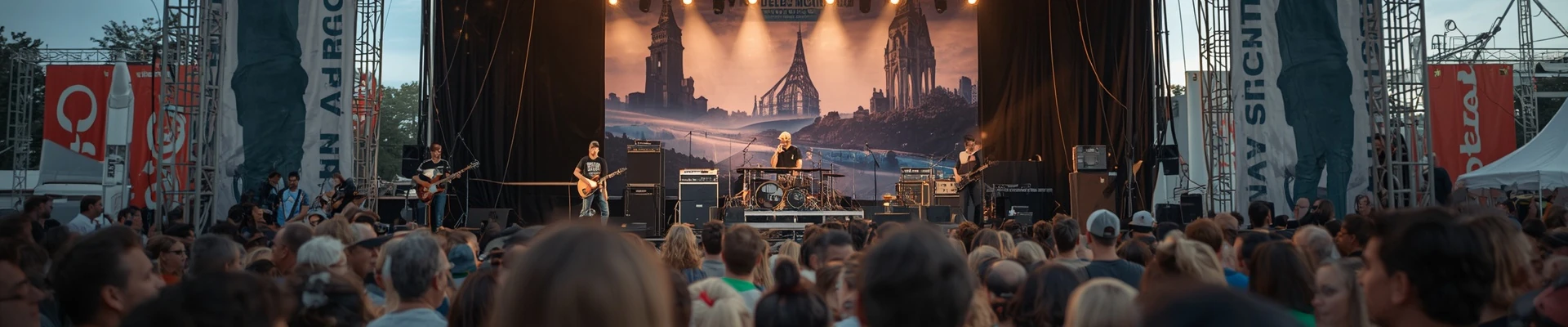
Baton Rouge Blues Festival — free, held on the grounds of the State Capitol in April, the city's flagship celebration of its blues heritage, programming national and local acts — is the most important annual musical event. Festival International de Louisiane in Lafayette draws Baton Rouge musicians and audiences alike and represents the regional Francophone music tradition. Bayou Country Superfest (the massive multi-day country festival held at Tiger Stadium, drawing 100,000+ over two days, with headliners like Kenny Chesney, Tim McGraw, and Brad Paisley) was the largest country festival in the American South from 2010 through the late 2010s before going on hiatus. Essence Festival in New Orleans (an 80-mile drive down River Road) draws the Black cultural community from Baton Rouge in enormous numbers each July 4th weekend and is considered a regional event by Baton Rouge residents. Mardi Gras in Baton Rouge — the Spanish Town parade (one of Louisiana's most satirical and irreverent Mardi Gras parades) and downtown festivities — programs live brass band, zydeco, and rock acts through February.
The Baton Rouge Symphony Orchestra at the Raising Cane's River Center Concert Hall programs the classical season; Manship Theatre programs jazz and chamber music; LSU's School of Music produces dozens of concerts per year across classical, jazz, and new music.
What ties it all together is the peculiar pressure of a majority-Black Southern capital city dominated by a massive football-university culture — a place where Buddy Guy played the same raw blues that would travel to England and return as rock and roll, where Slim Harpo's swamp-drenched shuffle became the vocabulary of the British Invasion, where Tabby Thomas kept the blues alive in a storefront bar for thirty years, and where on fall Saturdays 100,000 people fill Tiger Stadium and the whole city vibrates to a frequency that belongs to no genre but is completely, unmistakably Louisiana.